The next eclipse is a total solar eclipse on 12 August 2026, visible from Iceland, Spain and a small section of northern Portugal.
On that day a partial solar eclipse will be visible over the rest of Europe, including the UK and Ireland, as well as the northernmost parts of North America.
There's something magical about an eclipse – be it solar or lunar – and once one is over, those lucky enough to see it are asking when the next one will take place.
Luckily astronomers know exactly when and where eclipses will happen and which parts of the world will get the best views.
Here we'll look at all the eclipses that will be visible in 2025, including how to get the best views and what you can expect to see.
This is everything you need to know about when, where and for how long each solar eclipse and lunar eclipse will occur over the coming years.
Based in the UK? Find out when the next UK eclipses are taking place.
Fan of the full Moon? Find out when the next full Moon is visible.
3 March 2026 – total lunar eclipse
About 58 minutes of lunar totality will be observable from the U.S., Australia and East Asia, though since the Moon’s southern limb only just makes it inside Earth’s shadow, our satellite may remain fairly bright.
12 August 2026 – total solar eclipse
Iceland, Spain, Portugal
A sky full of auroras during totality in Iceland!? That is very unlikely. More probable is that the ‘Land of Fire and Ice’ will be clouded-out. However, while a 2 minutes 10 seconds totality will occur 25º above the horizon from Iceland’s Snæfellsnes peninsula, in northern Spain it will be just 10º up, and decreasing to a risky eclipsed sunset from Majorca. Wherever you watch from you’ll be on tenterhooks for clear skies.
28 August 2026 – partial lunar eclipse
The Americas, Europe and Africa
With a magnitude of 0.93, this deep partial eclipse will see nearly the entire Moon enter Earth’s shadow. It will be a treat for observers in the Americas, who will see the event high in the sky, while those in Western Europe and Africa will witness the Moon set or rise while partially eclipsed.
6 February 2027 – annular solar eclipse
South America, West Africa
A 'ring of fire' eclipse will be visible primarily in Chile and Argentina, but also regions of Uruguay and Brazil. It will also be visible in parts of West Africa, including Nigeria and Ghana.
A partial solar eclipse will be visible across most of South America and the western half of Africa, as well as the southern tip of Spain.
How to see the next solar eclipse
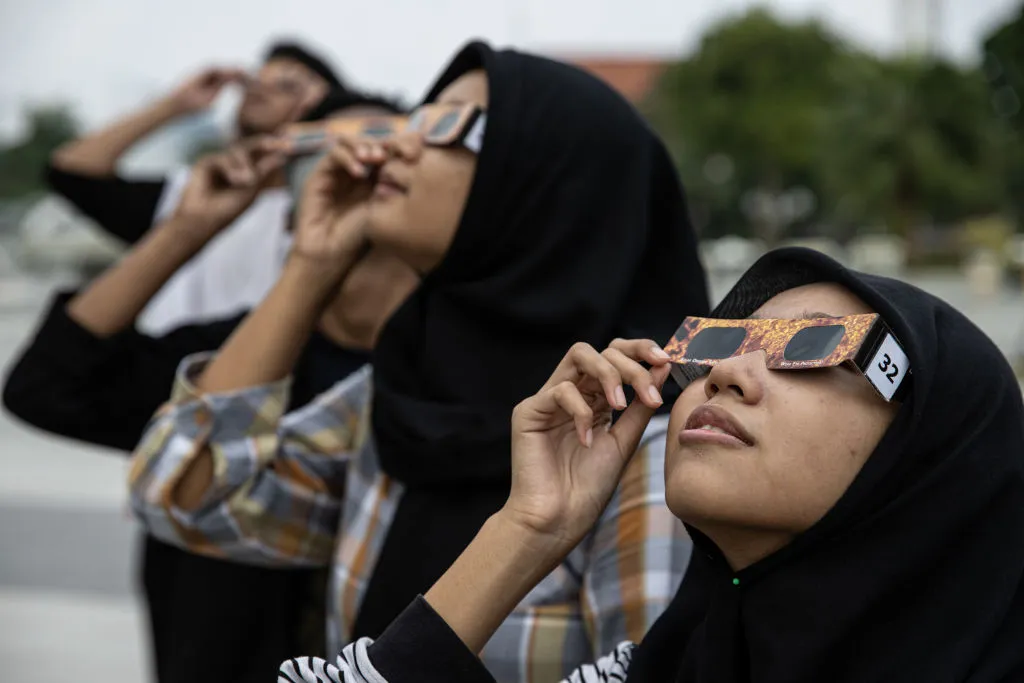
Observing a solar eclipse is a beautiful, memorable experience, but as with all solar observing, care must be taken.
Looking directly at the Sun with the naked eye will damage your eyesight, but there are ways to observe safely.
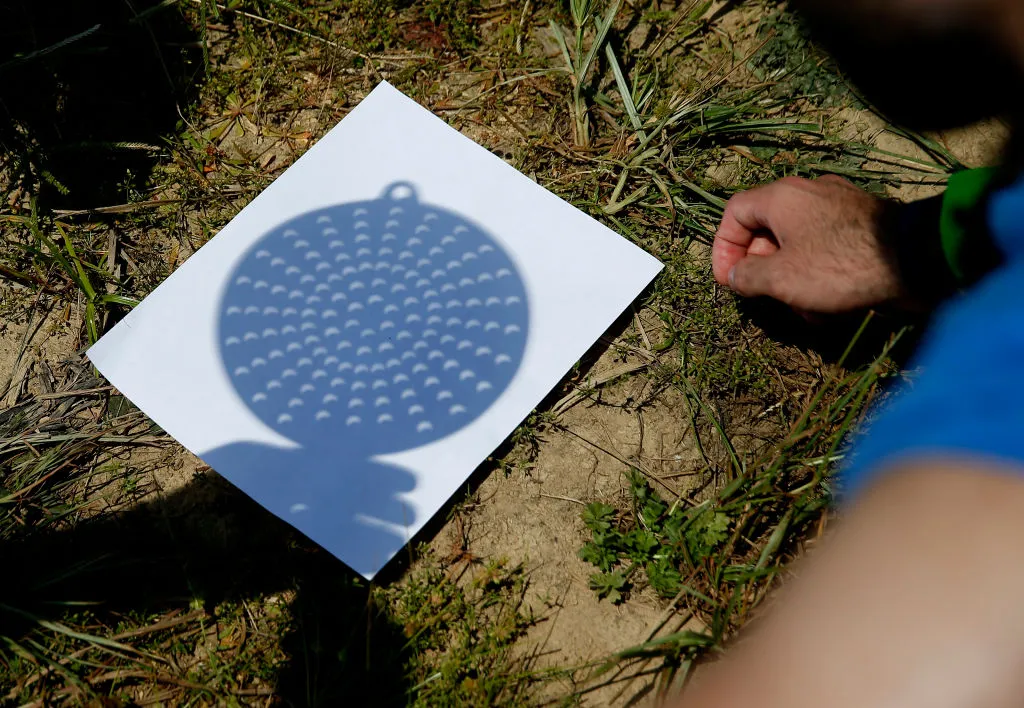
Projection is a great method, and involves indirectly observing the Sun by projecting its image onto a screen.
This isn't as difficult and can be done with a projection screen or a colander and a piece of paper!
Eclipse glasses are fitted with solar filters for safe viewing. But you must always by proper certified glasses from a reputable supplier - accept no substitutes!
Other methods include fitting a white light filter to your telescope and using a hydrogen-alpha telescope.
Or you could also use a dedicated solar telescope to get a close-up view.
How to see the next lunar eclipse
Share your observations and images with us by emailing contactus@skyatnightmagazine.com.


