As we find more planets in the habitable zones around other suns, we ask Neil deGrasse Tyson what would happen if we did meet intelligent alien life and discuss his book, Take Me to Your Leader.
Tell us about your new book, Take Me to Your Leader
I thought it was time to anchor everyone’s enthusiasm and conversations about intelligent life into
real science.
I lead off with the very blunt fact that, when I was a kid, I wanted to be abducted by aliens.
Looking up at the night sky, I wanted a beam of light to come down and take me away – not because I wanted to escape Earth, but I was curious about what other life forms would be like.
The book is not so much an act of debunking aliens as it is an act of celebrating the fact that people feel the way they do about them.
They have these urges to want to meet them, and there’s excitement not only among regular folk but among government officials, at least in the United States.
SQUIRREL_13991421
More on alien life
Interestingly, the English-speaking world reports vastly more UFO sightings than any other language group in the world.
Australia, Canada, United States, New Zealand and the UK are responsible for 90% of the world reports of UFOs.
I also noticed that religious people have less confidence that the Universe is inhabited by aliens.
And that brings up an interesting question: when we all look up, do we need something up there that we can imagine or feel or long for?
The book is an exploration of all of that.
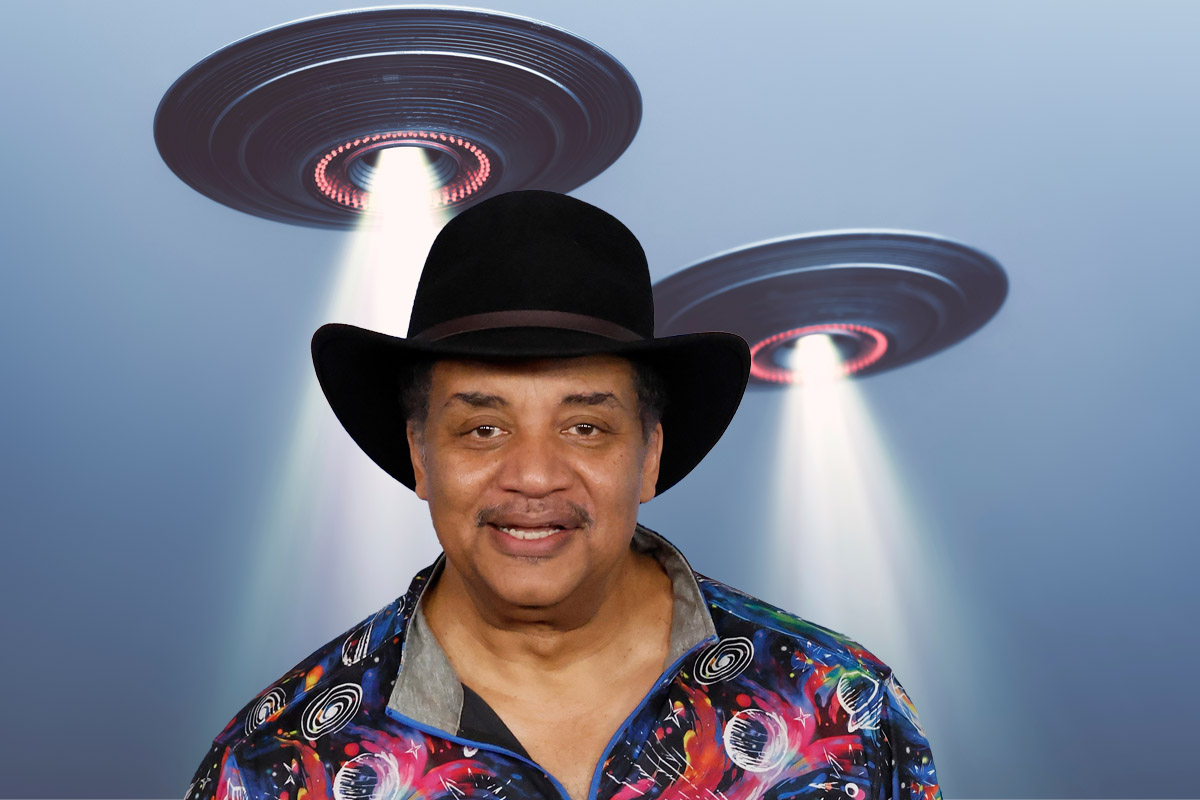
Do you think aliens have already been to Earth?
There is a widespread belief that governments are holding secret visits from aliens from the public.
But how is it that only the government has access to aliens? Are the aliens visiting only government installations?
I mean, think this through. Most people own a smartphone. Last time I checked, there were six billion smartphones in the world, each capable of high-resolution video and photos.
Yet no one has produced a high-resolution video or photo of aliens.
If there’s an alien invasion, the most data we’re going to get on that is from the crowdsourced photography of six billion people in the world.
Also, these cover-ups would require thousands of people to keep secrets. At least, given the size of the agencies involved and the magnitude of what you’re hiding.
I’m reminded of Benjamin Franklin, who wrote “Three people can keep a secret if two of them are dead.”
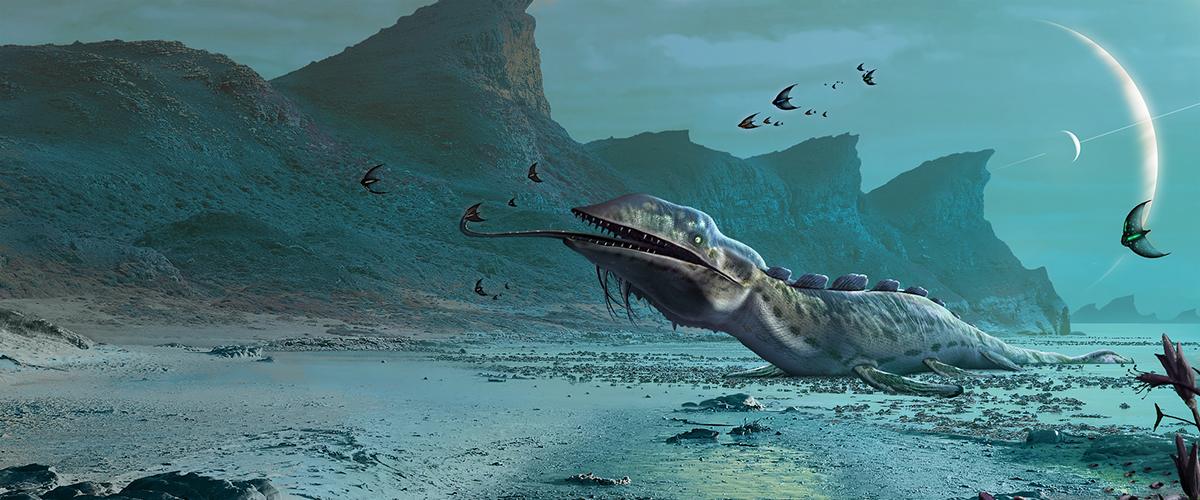
What might alien life look like?
Hollywood aliens can show a profound absence of creativity and imagination. It’s often still basically humanoid.
When we look at all the life on Earth with which we have DNA in common, very little of it looks like us.
I make the point that humans and bananas share 25% identical genes. We’re from the same planet, but look how different we are.
If you’re from a different planet and have no genes in common with us, or no genes at all, then you should look at least as different from humans as humans and bananas look from each other.
How might you approach communicating with an intelligent alien life form?
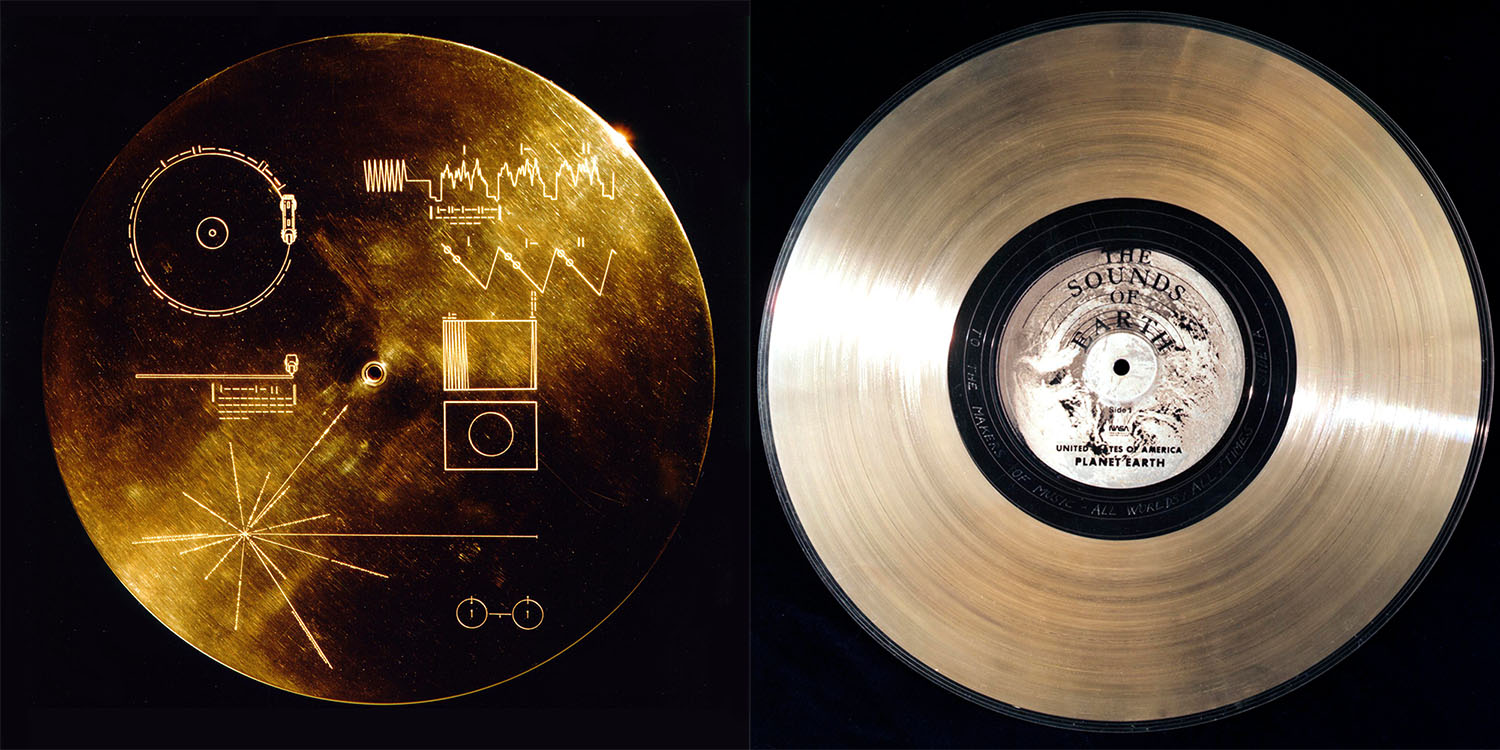
You would find something you know you have in common, like science and certain elements of mathematics.
For example, the value of pi. A circle is a circle, a diameter is a diameter, no matter what you call it.
Or the Pythagorean Theorem. It’s profoundly simple, but a brilliant way to communicate that we understand mathematics as a species.
I’m also a fan of the periodic table of elements. Of course, aliens would use different symbols, but if they made materials and they’re moving around the Universe, they would have access to the same elements.
These sorts of scientific concepts are starting points and we could increment from there. Later on, we might figure out how to say ‘hi’.
Why are some people so afraid of aliens?
There are movies like War of the Worlds which are terrifying because the Martians didn’t come to have a conversation; they came to destroy us.
Why do we suppose that aliens would be evil, rather than peace-loving, olive-branch-offering life forms?
I have to conclude that the way we suppose aliens will behave is derived from how we know we behave to one another.
Any time one part of civilisation has had more technology or power than another, and they meet, it has never boded well for the part of civilisation that has less technology.
Part of me wants to say that the ‘evil alien’ trope emerges from a mirror that we are unwittingly holding up to ourselves.
What inspires your writing?
A big part of my book is to take you from places where people have attempted to imagine aliens and then anchor that in science.
I like to think it’s a unique combination of physics, astrophysics and pop culture.
As an educator, I spend a lot of my time thinking about pop culture, because it gives me a scaffold to reach the public.
What excites you most in astronomy right now?
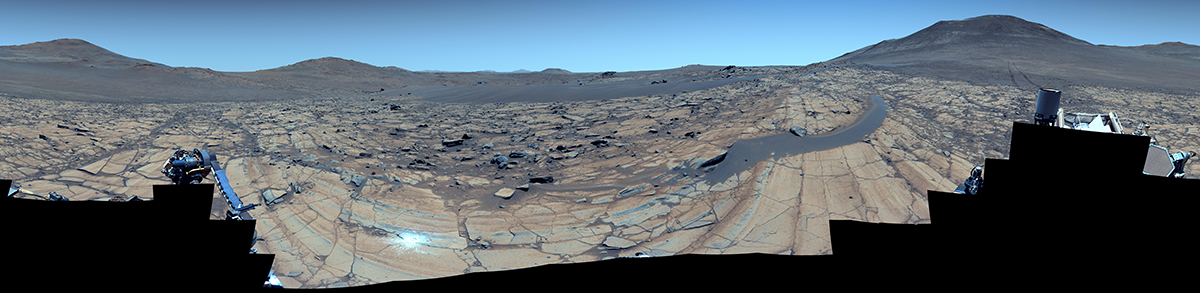
We’re still searching for life on Mars with an SUV-sized rover, plunked down a few years ago.
NASA’s mantra is ‘follow the water’. There’s evidence of water having coursed over the surface of Mars in the distant past.
Where is that water today? Is it below the surface? Is there life embedded within it?
We’re also looking for life in the subsurface ice oceans of Jupiter’s moon, Europa. There’s a mission called Europa Clipper headed there now.
It has a special kind of radar that can look through the ice and check for organic molecules.
What are some of the biggest challenges facing astronomy right now?
It’s always funding. I would also say, since everyone wants to go back to the Moon, it would be nice
if we all cooperated with each other.
In our Artemis mission, [the USA] brought a Canadian astronaut [Jeremy Hansen] with us. That’s the first time a non-American has ever left low Earth orbit.
Maybe space and its exploration will represent the greatest unifying force the world has ever known, bringing countries together with a common goal and a common mission.
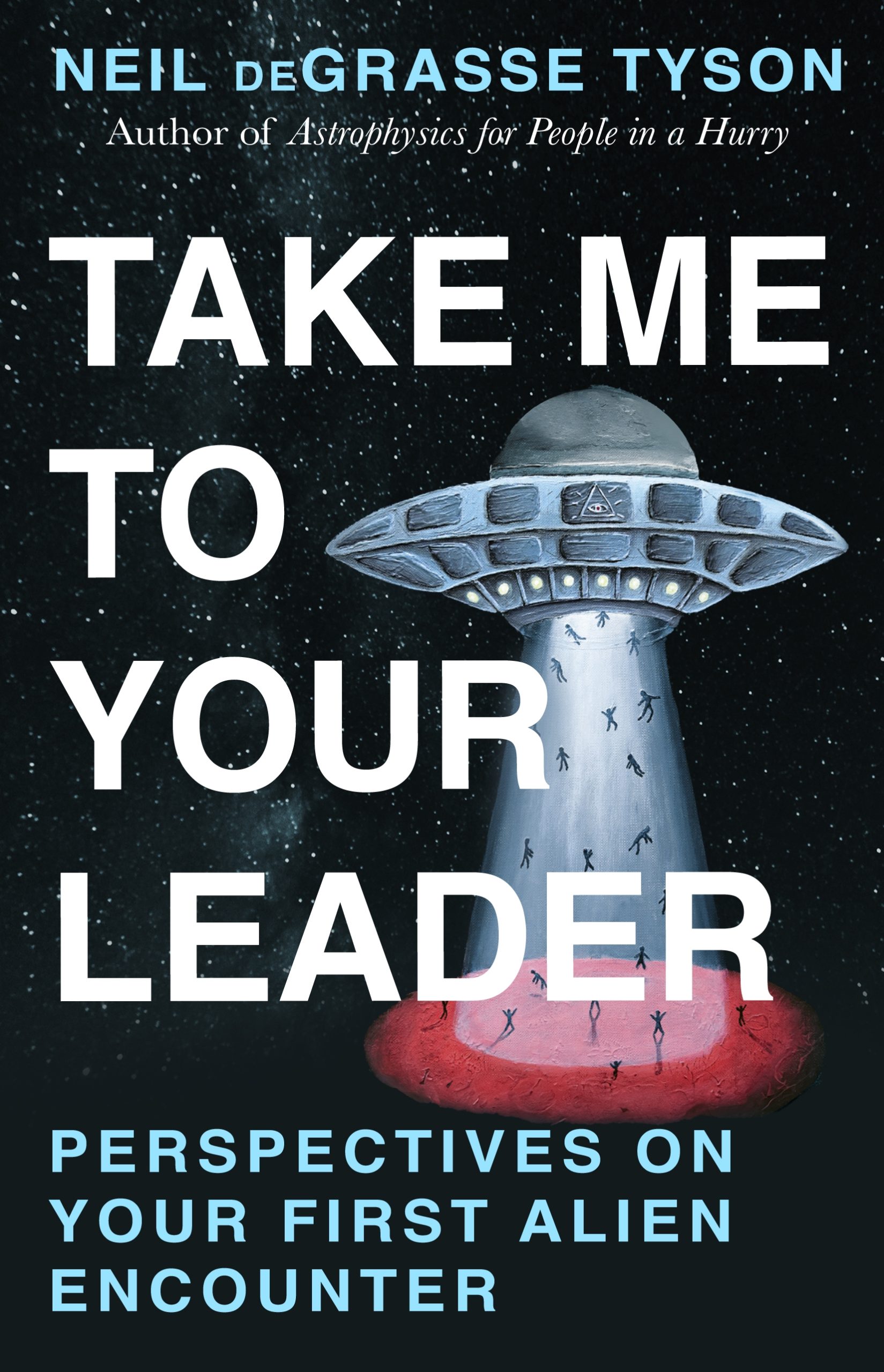
Take Me To Your Leader by Neil deGrasse Tyson is published by Hutchinson Heinemann