
The Universe is a big place. If we're ever to find life beyond Earth, it might feel like a bit of a needle-in-a-haystack situation at first.
But since the first planets beyond our Solar System were discovered in the 1990s, astronomers have built up a pretty big catalogue of alien worlds, now reaching over 6,000 confirmed exoplanets.
Many of these are rocky worlds orbit at the right distance from their host star, so that liquid water can pool on their surface without either freezing or evaporating into space.
These Earth-like exoplanets in the so-called Goldilocks Zone around their stars may be our best chances of finding alien life.
In a new study, a team of scientists have identified nearly 50 rocky worlds we know of that are most likely to be habitable.
Read more about exoplanets

A Project Hail Mary scenario?
The authors of this new study point to Project Hail Mary, a sci-fi novel by Andy Weir that was released as a blockbuster movie in 2026, in which the protagonist travels to an exoplanet system in search of a way to save Earth.
If we're ever to find extraterrestrial life in the Universe, these astronomers have pinpointed the best places to look for it.
The study was led by Professor Lisa Kaltenegger, director of the Carl Sagan Institute at Cornell University, and a team of undergraduate students.

They used data from the European Space Agency's Gaia mission – which catalogued nearly 2 billion stars in the Milky Way – and NASA's Exoplanet Archive to find planets in the habitable zone around their stars.
This habitable zone – often called the Goldilocks Zone – is the area around a star that, astronomers say, is not too hot and not too cold, but just right for an orbiting planet to have water on its surface.
Water being a key ingredient for life as we know it, it's an essential piece of puzzle in the search for life beyond Earth.
The paper is entitled Probing the limits of habitability: a catalogue of rocky exoplanets in the habitable zone, and also reveals the exoplanets that receive energy from their star similar to what Earth gets from our Sun.
"As Project Hail Mary so beautifully illustrates, life might be much more versatile than we currently imagine, so figuring out which of the 6,000 known exoplanets would be most likely to host extraterrestrials could prove critical," Professor Kaltenegger says.
"Our paper reveals where you should travel to find life if we ever built a 'Hail Mary' spacecraft."

The best planets for alien life
The paper highlights 45 rocky exoplanets that could support life in the habitable zone, and another 24 in a narrower '3D habitable zone' where the amount of heat the worlds receive stretches the bounds of what could be considered habitable conditions.
Exoplanet fans will recognise some of the names on the list, which includes Proxima Centauri b (orbiting the star closest to Earth), TRAPPIST-1f and Kepler 186f, as well as less-well-known worlds like TOI-715 b.
The authors say the most interesting worlds are TRAPPIST-1 d, e, f and g, which are 40 lightyears from Earth, and which made headlines in 2017 when their discovery was announced to the world.
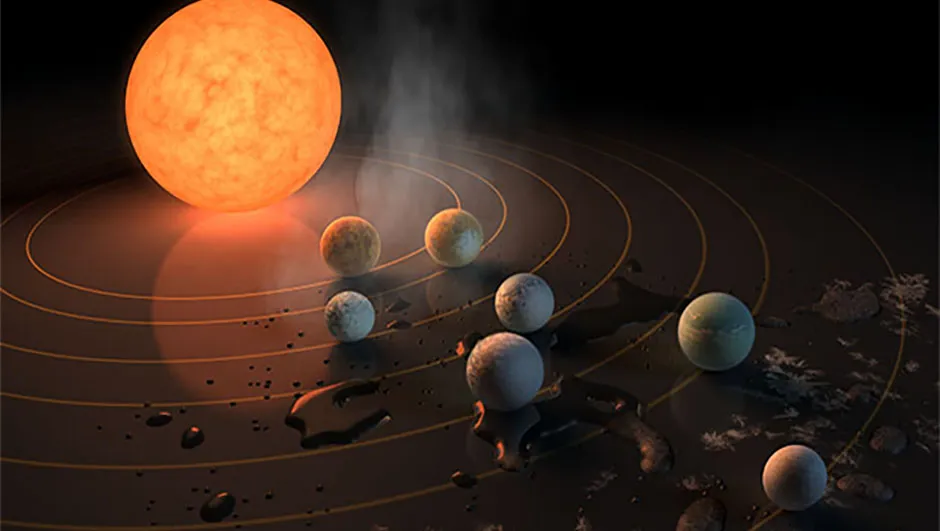
Also LHS 1140 b, which is 48 light-years away and which data from the James Webb Space Telescope suggests could be a water-world with a nitrogen atmosphere similar to Earth’s.
The team say the exoplanets that receive light from their suns similar to what Earth receives from our Sun, are TRAPPIST-1 e, TOI-715 b, Kepler-1652 b, Kepler-442 b, Kepler-1544 b and Proxima Centauri b, GJ 1061 d, GJ 1002 b, and Wolf 1069 b.

What these worlds can tell us about alien life
The authors of the study say these exoplanets can tell us a lot about the conditions for life across the Galaxy.
They hope the selected worlds near the edges of the habitable zones around their stars might reveal more about where a star's habitable zone ends, and whether our scientific assumptions need adapting.
Some exoplanets have highly elliptical orbits around their star, meaning their orbits are egg-shaped, causing the planet to swing out far from the host star, then skim in close.
This pulling and pushing of gravitational interaction between planet and star can cause 'tidal heating' through friction.
Could such a hot-cold planet host life? The team hope study of these worlds could reveal something about the chances for habitability on planets with strange orbits.
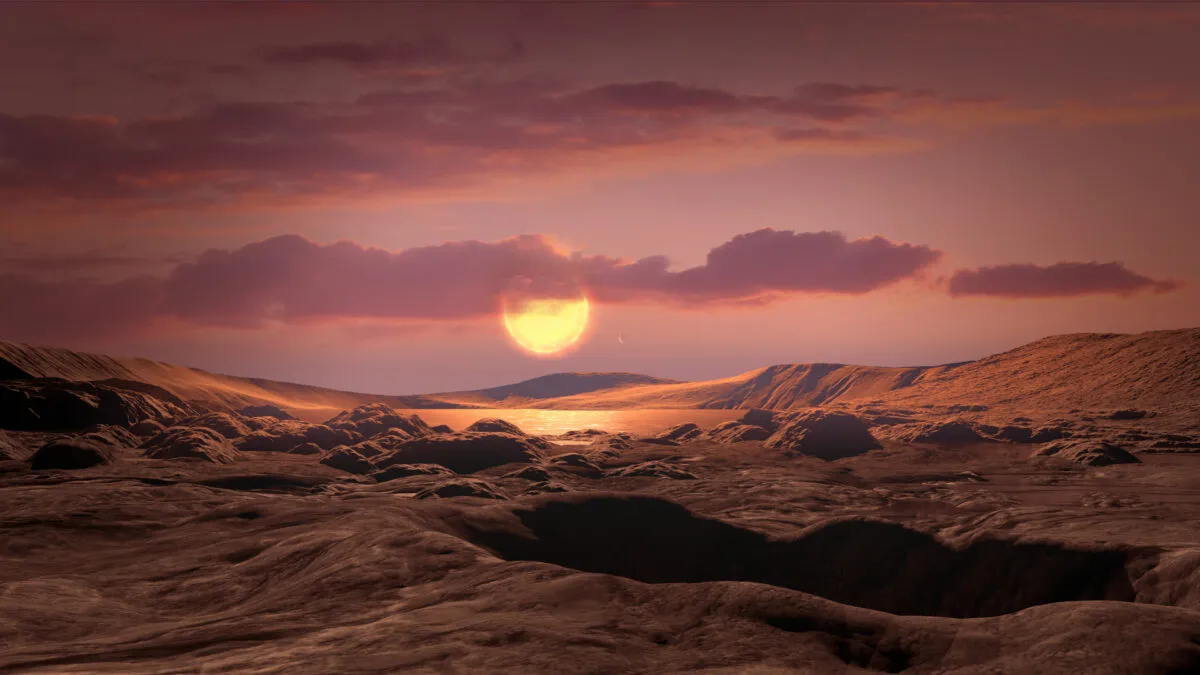
They say the planets that transit their star – i.e. pass in front of their star, as seen from Earth – and which are at the limit of habitability on the inner edge of the habitable zone are K2-239 d, TOI-700e and K2-3d.
Also exoplanets Wolf 1061c and GJ 1061c, which make their stars wobble as they orbit.
Trappist-1g and Kepler-441b and GJ 102 can probe the outer edge of habitability, where it gets extremely cold, the team say.
Study co-author Abigail Bohl, of Cornell University, says: "We know Earth is habitable, while Venus and Mars are not. We can use our Solar System as a reference to search for exoplanets that receive stellar energy between what Venus and Mars get.
"Observing these planets can help us understand when habitability is lost, how much energy is too much, and which planets remain habitable – or maybe never were.

"The same idea applies to eccentric planets: how much orbital eccentricity can a planet have while still holding onto its surface water and habitable conditions?
"We identified planets at the inner and outer edges of the habitable zone, as well as those with the highest eccentricities, to test our understanding of what it takes for a planet to be and remain habitable.
"We also identified the targets that are most observable with the James Webb Space Telescope (JWST) and other telescopes."
The full list of potentially habitable exoplanets
- GJ 1002 b
- GJ 1002 c
- GJ 1061 c
- GJ 1061 d
- GJ 251 c
- GJ 273 b
- GJ 3323 b
- GJ 667 C c
- GJ 667 C e
- GJ 667 C f
- GJ 682 b
- K2-239 d
- K2-288 B b
- K2-3 d
- K2-72 e
- Kepler-1229 b
- Kepler-1410 b
- Kepler-1544 b
- Kepler-1606 b
- Kepler-1649 c
- Kepler-1652 b
- Kepler-186 f
- Kepler-296 e
- Kepler-296 f
- Kepler-441 b
- Kepler-442 b
- Kepler-452 b
- Kepler-62 e
- Kepler-62 f
- L 98-59 f
- LHS 1140 b
- LP 890-9 c
- Proxima Centauri b
- Ross 508 b
- TOI-1266 d
- TOI-700 d
- TOI-700 e
- TOI-715 b
- TRAPPIST-1 d
- TRAPPIST-1 e
- TRAPPIST-1 f
- TRAPPIST-1 g
- Teegarden's Star c
- Wolf 1061 c
- Wolf 1069 b
Read the full paper in the Monthly Notices of the Royal Astronomical Society

