The Geminid meteor shower is one of the best meteor showers of the year, and is best seen between 13 - 15 December, as this is when peak activity occurs.
This is a rich shower with a peak zenithal hourly rate (ZHR) of 150 meteors per hour.
It’s a wonderful one to observe if you have clear, dark skies, as the radiant – close to the star Castor (Alpha (α) Geminorum) – rides high across the December sky.
A meteor shower’s radiant position is the area of sky from which its meteors appear to emanate.
Here we'll look at what the Geminid meteor shower is, and how to make sure you see a shooting star this December.
For regular stargazing advice, sign up to the BBC Sky at Night Magazine e-newsletter and subscribe to our YouTube channel

Geminids in 2025 – key facts
The Geminid meteor shower is active 4–17 December, but rates are typically fairly low across much of this period.
Things start to get interesting after 10/11 December in the run up to the peak period.
It’s only when you get within days of the predicted peak that activity increases significantly.
This year’s peak is predicted to occur at 08:00 UT on 14 December, meaning you should have a decent chance of seeing a Geminid between 8 and 16 December.
Of course, the darker your sky the better, and here the natural light pollution from the Moon will have an effect.
This affects all meteor showers and varies in interference levels from one year to the next.

For 2025, the Moon will be past its last quarter phase as it appears in the early morning sky around the time of the Geminid peak, so moonlight interference should be relatively limited.
Another major plus for the Geminids is the length of December nights.
Unlike the summer Perseid shower, which peaks around 12 August with around 4.5 hours of darkness, the Geminid shower can be enjoyed under dark-sky conditions for around 12 hours.
Just remember to wrap up warm!
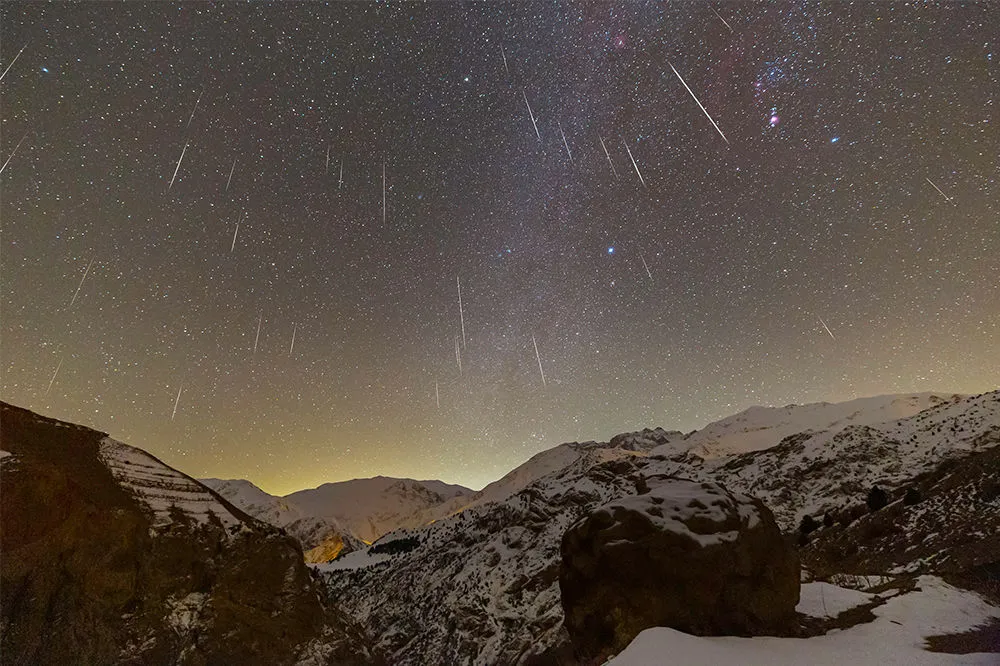
How many Geminids will you see?
The Geminid meteor shower has a high peak Zenithal Hourly Rate and a relatively broad peak period.
The Zenithal Hourly Rate for a meteor shower is a figure describing how many meteors you would ideally see during peak activity under perfect conditions.
If the Moon is out of the way, the weather kind, and you have dark skies, the Geminids can be awesome.
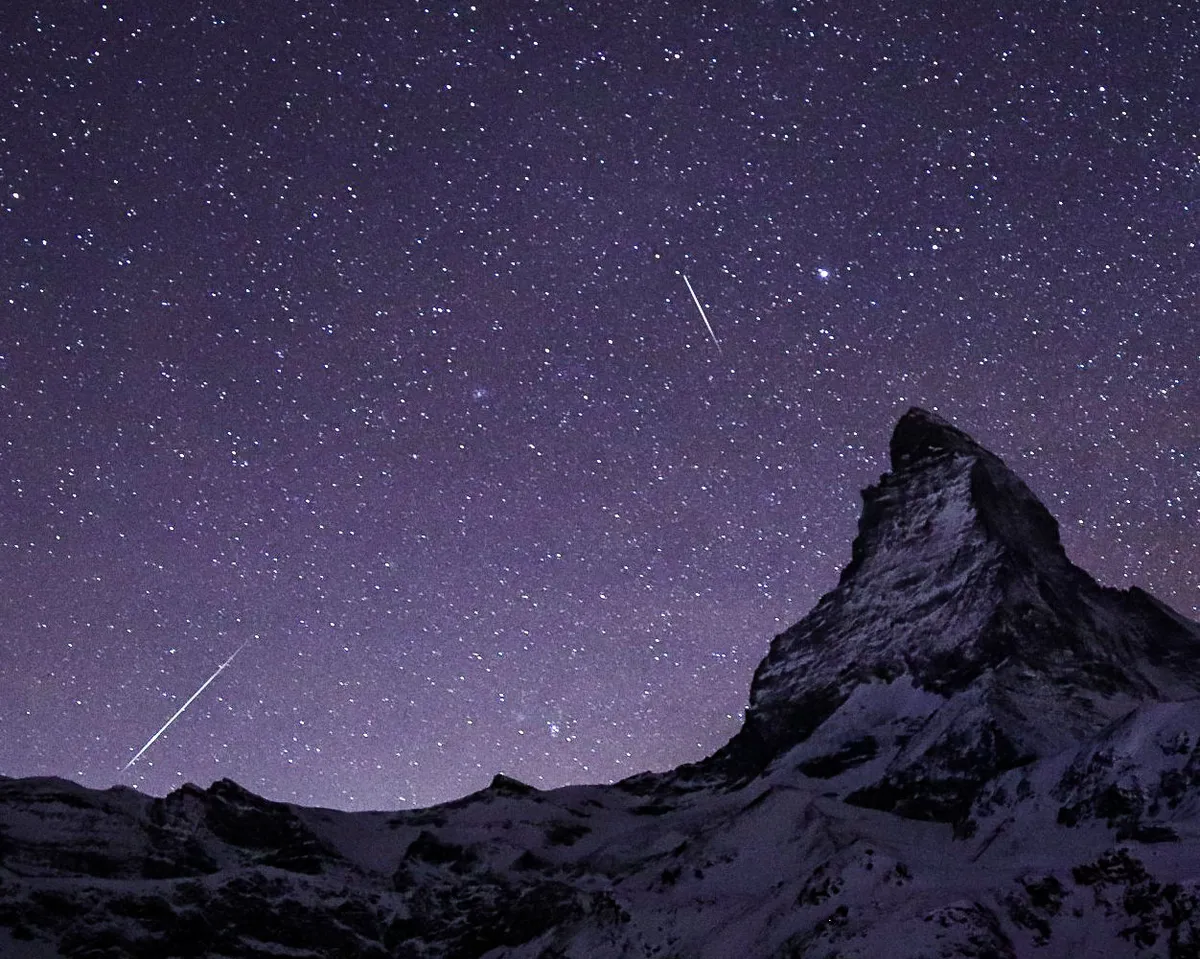
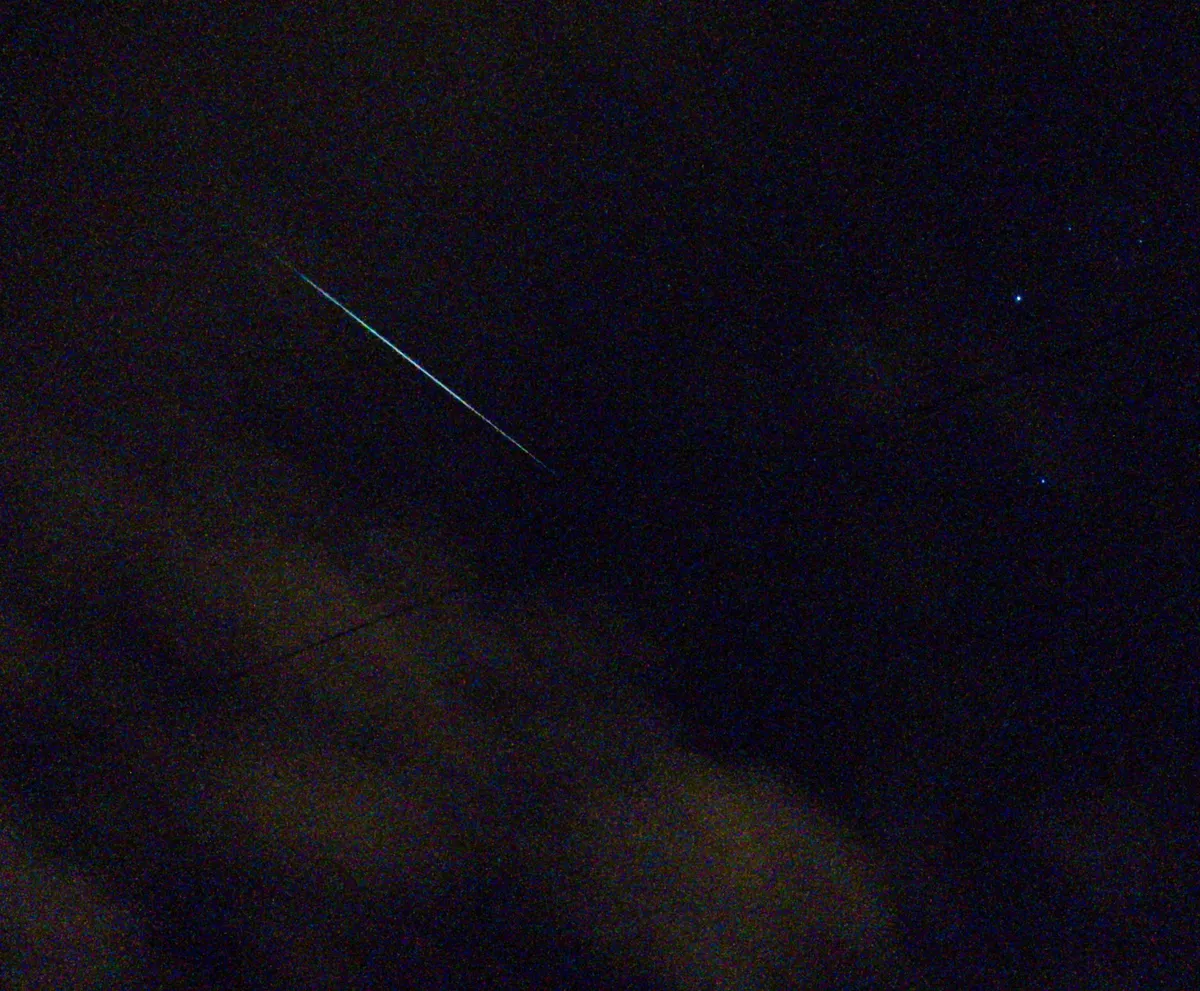
Equipment: Canon 200D DSLR, Rokinon 14mm f2.8 lens
Where to look to see the Geminid meteor shower
Meteor showers appear to emanate from a specific region of the sky, which is known as the shower 'radiant'.
The Geminid meteor shower's radiant is in the constellation Gemini and barely dips below the horizon mid-afternoon.
This means that Geminid shower meteors could, in theory, be seen as darkness falls.
However, bear in mind that the radiant altitude is very low early on and this will significantly reduce the number of meteors seen.
The good news is the radiant increases to a maximum altitude of 70° at around 02:20 UT.
Sleep management and warm clothing are a must for serious Geminid watchers!
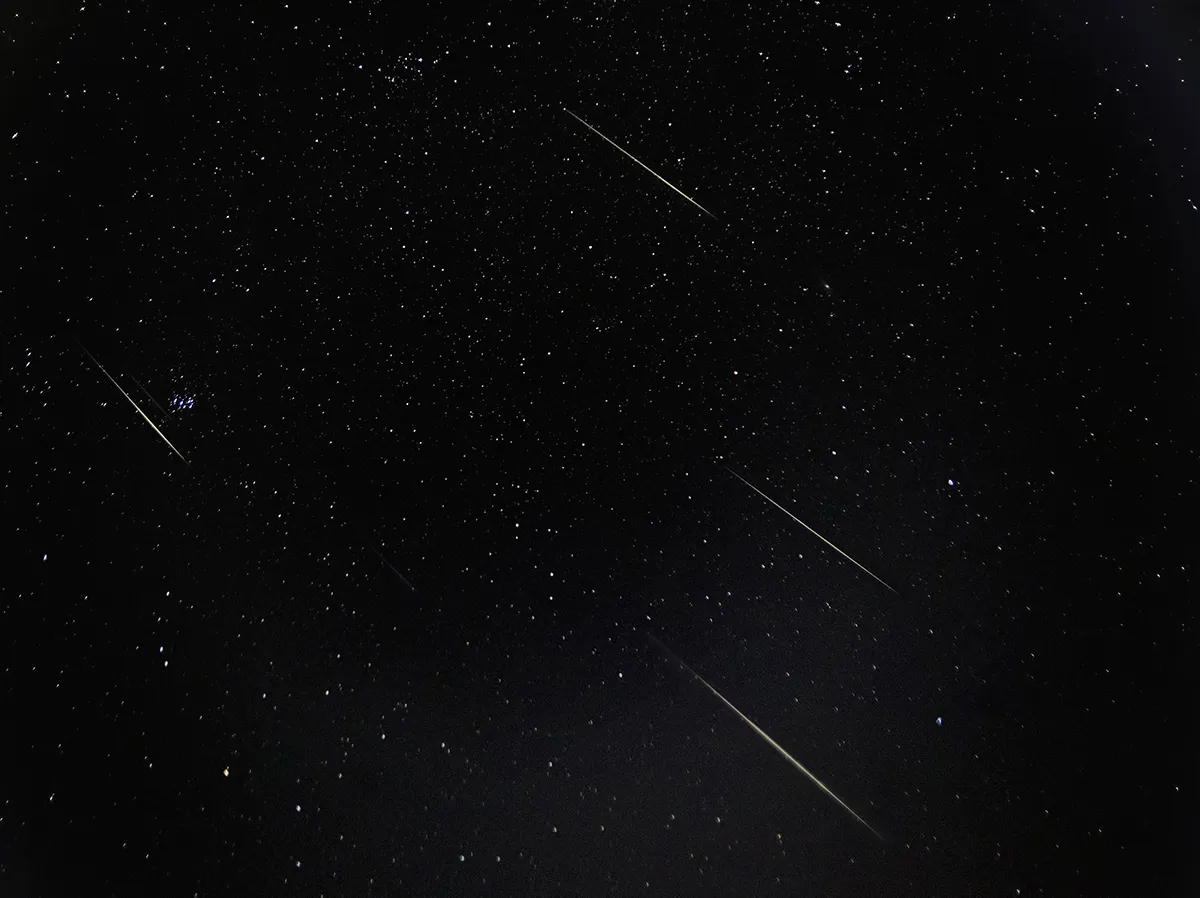
How to see a Geminid meteor
When observing the Geminid meteor shower, the best strategy is to wrap up warm and use something like a sun-lounger to lie on.
View at an altitude around 60°, this being where there’s a balance between atmospheric extinction – dimming of meteors due to a thicker atmospheric layer – and a thick enough section of atmosphere for meteors to occur in.
Directly overhead represents the thinnest layer of atmosphere you can look through.
In theory this would give the cleanest view, but at the cost of a reduced number of meteors.
Aim to keep watch in shifts, with comfort breaks in between.
A flask of hot tea or soup can really take the sting out of a long, cold December Geminid watch.
Give yourself at least 20 minutes in total darkness to properly dark adapt and don’t expose your eyes to any stray light throughout the watch.
If you must use light to write an observation or access a chart, use a dim red torch.

Zenithal hourly rate explained
The zenithal hourly rate, or ZHR, of a meteor shower is the total number of meteors you might expect to see during peak activity with absolutely perfect conditions, i.e. under clear, dark skies away from light pollution.
The ZHR is often quoted during big meteor showers, however given the above caveats, observers should expect the actual number to be somewhat lower.
A shower’s zenithal hourly rate is a normalised value: a figure that compensates for all the issues that degrade a shower’s visual performance.
The ZHR considers how much of the sky you can, or cannot see. It takes account of the radiant’s altitude and how clear your sky is.
Applying the ZHR correction to the number of meteors seen over a set period gives you a figure that more accurately represents a shower’s activity.
The Geminid shower has an excellent zenithal hourly rate (ZHR) of 140–150 meteors per hour.
A medium entry speed for the meteoroids also makes Geminid trails easier to photograph. A bright event can look pretty spectacular.
Geminid meteor top tips
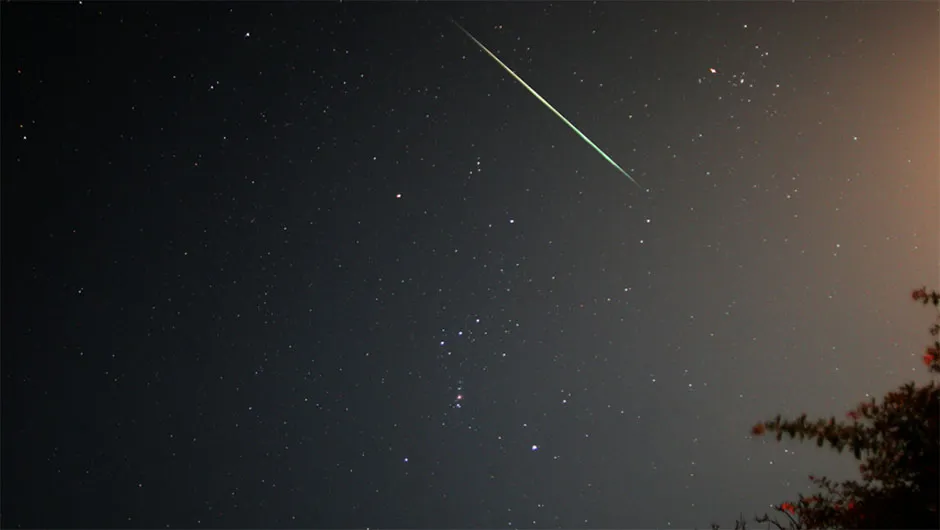
Get warm and comfortable
Meteor showers are one of the easiest astronomical events to observe as they are best seen with the naked eye.
This makes it the perfect opportunity to get both children and adult beginners excited about astronomy.
Prepare yourself with warm clothing and perhaps a hot drink in a flask.
A sun lounger or deck chair makes a great viewing platform as it allows you to watch in relative comfort.
Know where to look
Aim to view the sky at an altitude of 60º or so. Any direction is fine, although bear in mind that trails will be shortest closer to the radiant and longest 90° from the radiant.
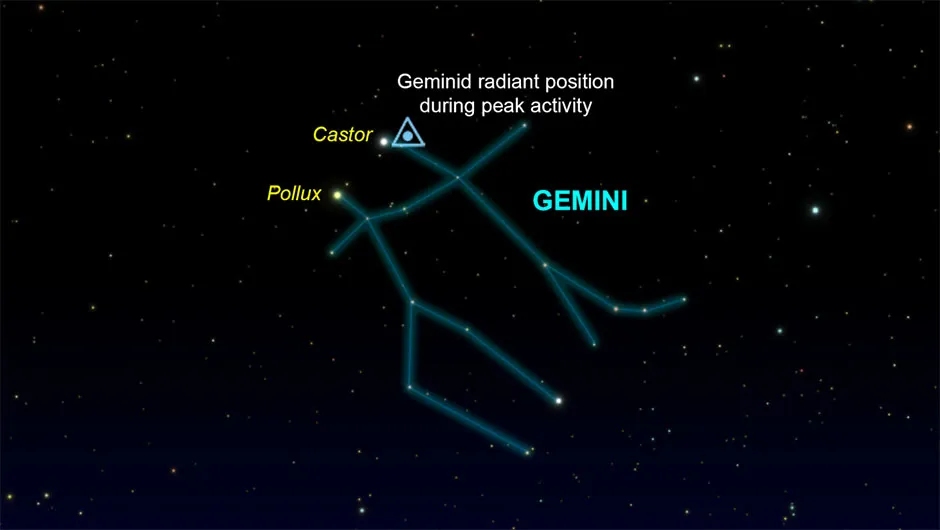
Convention dictates that a good compromise is to look 40–50° from the 'radiant' position, which is located near the star Castor (Alpha (α) Geminorum) in Gemini.
To find Gemini, imagine a line between Orion’s right foot (Rigel) and left shoulder (Betelgeuse).
Then follow that line on for around the distance between your thumb and little finger stretched out at arm's length.
There should be a pair of bright stars here: Castor and Pollux, the ‘heads’ of Gemini’s twins.
The radiant is just by Castor, but you want to look slightly away from this region rather than directly at it.
If you spot a meteor coming from this region, you've seen a Geminid.
Avoid bright lights
Find a place that is dark and away from light pollution, such as a location away from towns and cities, provided it is safe to do so.
If you are live under very dark skies and can observe from the comfort of your own garden, turn off the lights in your house so they don’t spoil the view.
Avoid using lights such as torches and mobile phones as this will spoil your dark adapted vision.
If you need to see in the dark, use a red torch.
If you need to look at your mobile phone, you may be able to turn your screen red in the settings.
It will take around 20 minutes for your eyes to dark adapt, but hopefully after a little wait you should start to see meteors shooting across the sky.
What causes the Geminid meteor shower?
Meteor showers usually occur when Earth passes through the trail of debris left by a comet.
The Geminids are unusual, however, in that the trail of debris was left behind by an asteroid, 3200 Phaethon.
For more info, read our guide What causes a meteor shower?
How many Geminids will you be able to see?
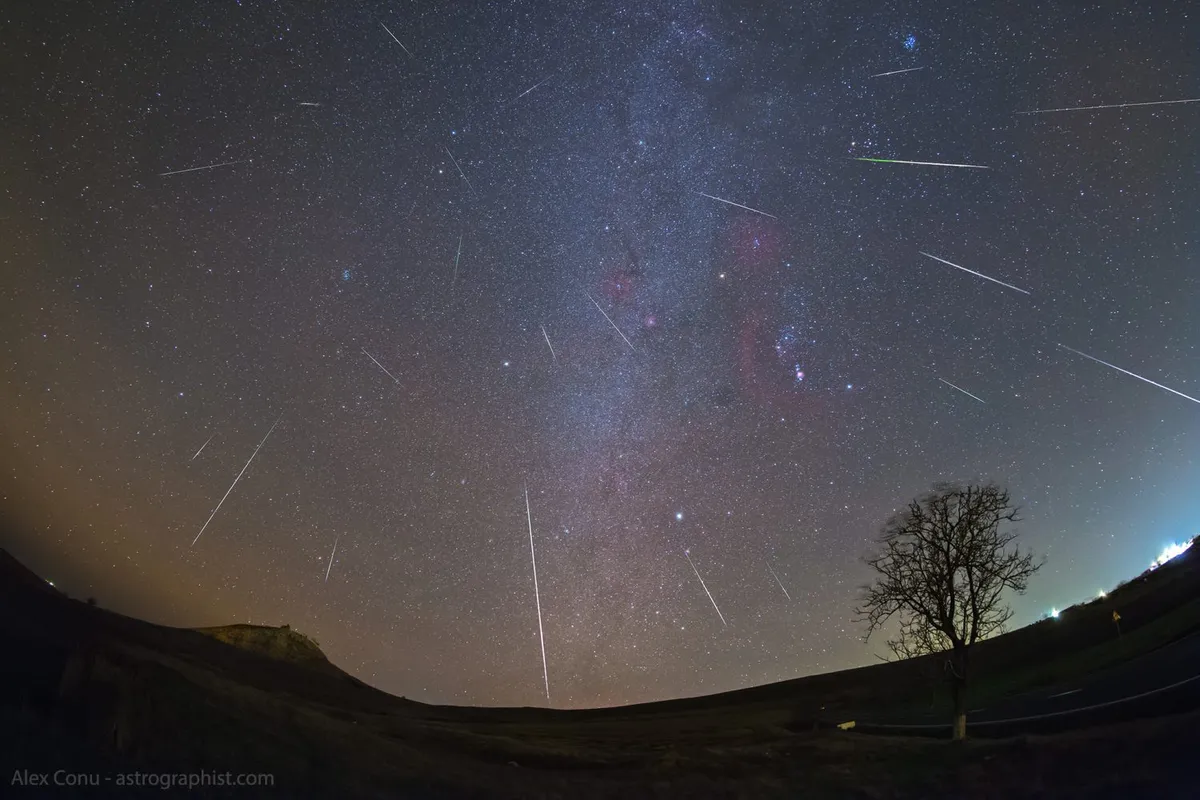
The period of peak Geminid activity is wide and over recent years its ZHR has been rising. Currently, the Geminid peak is around 140–150 meteors per hour.
The height of a shower’s radiant (where the it appears to originate, as viewed from Earth) is very important; for example, if a radiant is on the horizon, half of all trails would occur below the horizon.
A radiant at the zenith is desirable (hence ‘zenithal’ hourly rate), but 70˚ up is pretty good.
The Geminids enter our atmosphere at 35km/s, producing slower trails that make them relatively easy to photograph. The Geminid meteor's trails typically appear off-white.
Find out more in our guide on how to photograph a meteor shower.
Have you managed to see any Geminid meteors this year? Did you manage to photograph any? Let us know by emailing contactus@skyatnightmagazine.com or get in touch via Facebook, Twitter and Instagram.