Astronomers have pointed the James Webb Space Telescope at interstellar comet 3I/ATLAS and made some surprising discoveries about its chemistry – and also some surprising discoveries about our own Solar System.
Comet 3I/ATLAS originated in deep space, beyond our Solar System, and is only the third such object ever discovered.
By analysing tiny ice grains streaming from the interstellar visitor, a Southwest Research Institute-led team have uncovered clues about how the building blocks of planets form around distant stars.
The results show that while the comet initially looked very strange compared to most of the comets we know of, it actually bears a striking resemblance to the icy bodies on the outer edges of our Solar System.
More on 3I/ATLAS
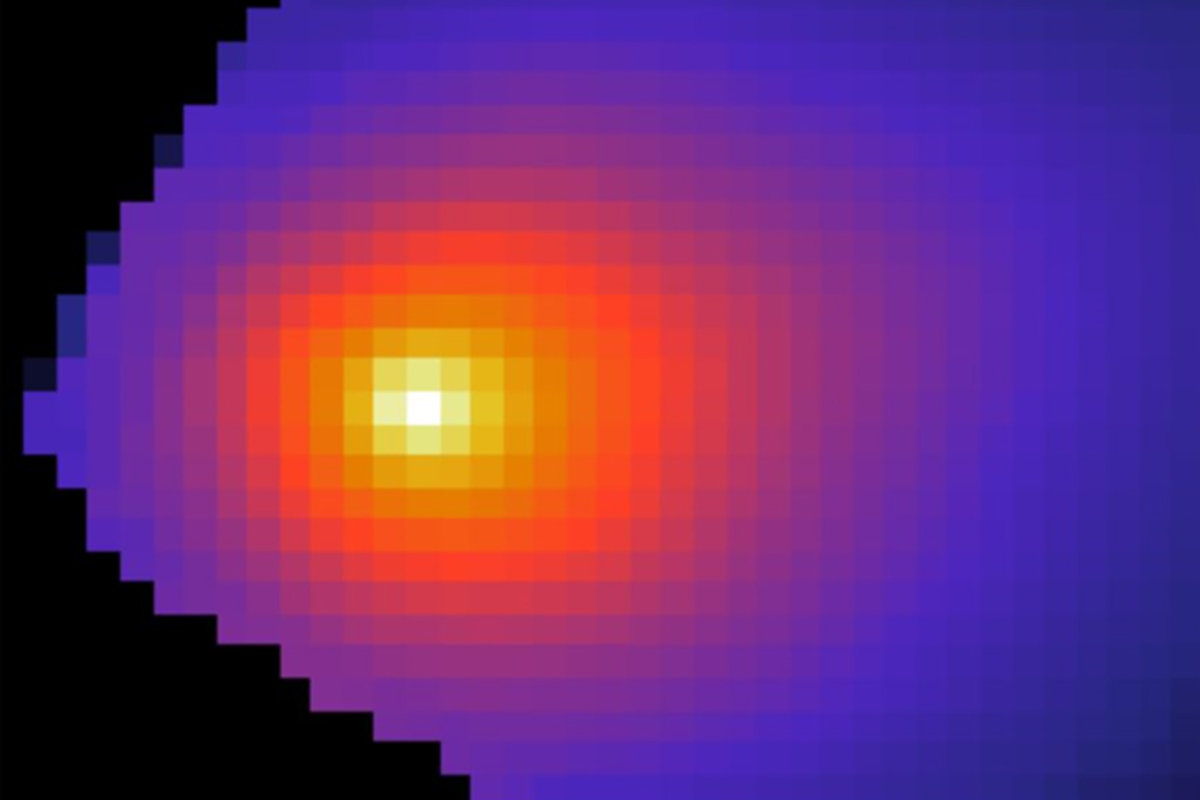
Catching an interstellar traveller
Interstellar comets are small, icy bodies that formed in the disks of gas and dust around distant stars.
Ejected from their stellar birthplaces, they wander through deep space and sometimes end up passing through our own Solar System.
But while the comets that originated within our own Solar System orbit the Sun in a continuous loop, interstellar comets are merely passing through and once they're gone, they're gone from our view forever.
Studies have shown that comet 3I/ATLAS is nearly as old as the Universe itself, making it a primordial time capsule that can reveal the secrets of the star system in which it formed.
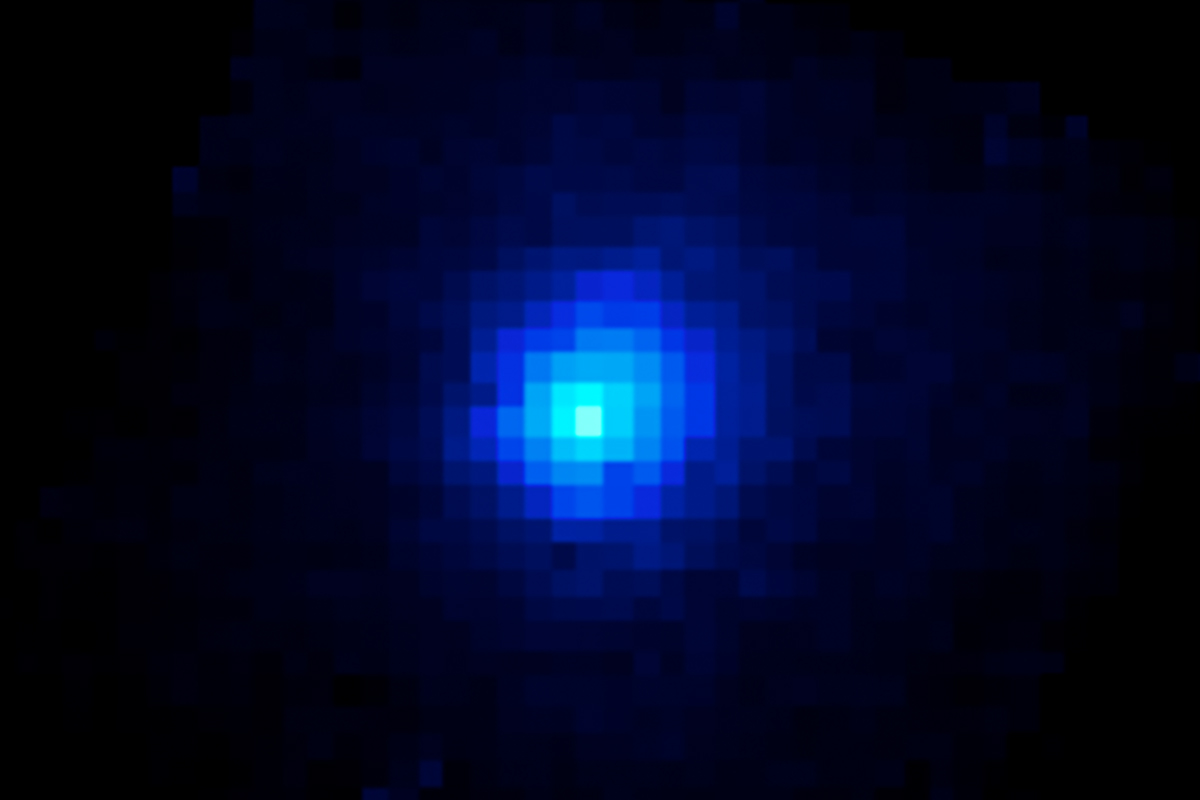
"As 3I/ATLAS warms up, gas escaping from its interior carries ice and dust grains into the surrounding cloud, or coma," says SwRI’s Dr Silvia Protopapa, lead author of a paper on this research.
"Those grains hold clues to the conditions where the comet was born."
The team used the James Webb Space Telescope's Near-Infrared Spectrograph to observe 3I/ATLAS three times between August 2025 and April 2026, tracking it both before and after its closest approach to the Sun.
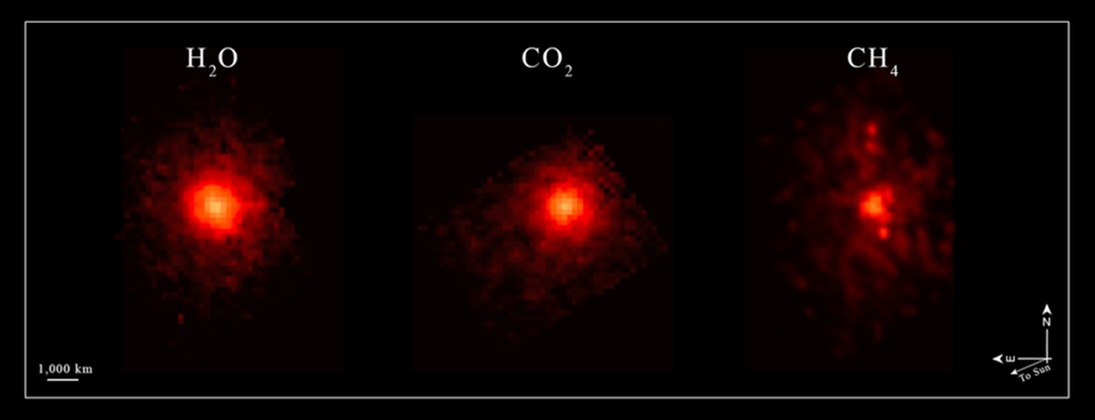
By splitting the comet's light into component wavelengths, the instrument revealed the precise composition and physical state of the material released into space.
What the comet's light tells us about its chemistry
Water ice leaves distinct chemical fingerprints in infrared light: a deep dip (absorption band) near 3 microns and two weaker bands near 1.5 and 2.0 microns.
Most icy comets in our Solar System show all three of these features.
However, 3I/ATLAS presented a puzzle to the team. Its 3-micron band was strong but the shorter 1.5- and 2.0-micron bands were exceptionally weak or missing entirely.
By comparing these results with detailed computer models, the team were able to learn more about the chemistry of 3I/ATLAS and how it compares to the bodies of our Solar System.
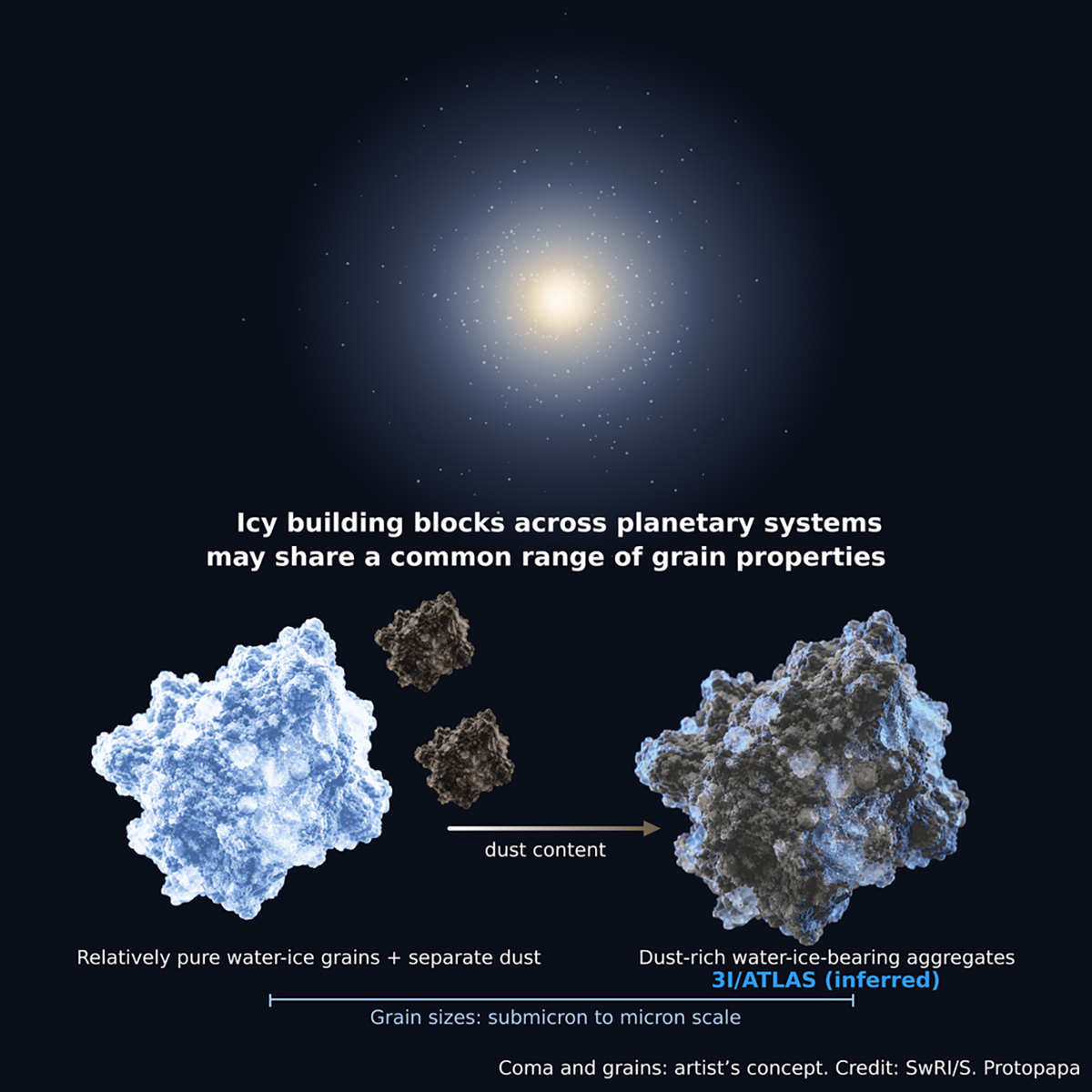
Their data reveals tiny aggregates – a micron or smaller – made of water ice but mixed heavily with dust.
In these small dusty grains, light travels only a short distance through the ice, which weakens the 1.5- and 2.0-micron bands while leaving the prominent 3-micron band intact.
Twins of the outer Solar System?
The properties of the grains appeared to transform as the comet made its journey around the Sun.
By the team's final observation of 3I/ATLAS in April 2026, as the interstellar comet was moving away from the Sun, Webb detected evidence of an additional population of larger, ice-rich grains (although still about a micron in size).
The team concluded there were two potential reasons for this shift.
The Sun may have heated the grains differently at each stage of the orbit, or the shift may have been a result of fresh material being exposed as the comet's surface was eroded by fierce heat from the Sun.
And the team say that, while 3I/ATLAS does differ from the comets we see in our own Solar System, its spectral signature closely mirrors trans-Neptunian objects.
These are the icy bodies that exist beyond the orbit of Neptune in the outer reaches of our Solar System.
They consist of the building blocks from which the bodies of our Solar System formed and, residing out in the cold, outer regions of the Solar System, are preserved, pristine material.
The team say these distant worlds similarly lack strong 1.5- and 2.0-micron water-ice bands and feature a matching 3-micron band shape.
 NSF–DOE Vera C. Rubin Observatory/NOIRLab/SLAC/AURA/R. Proctor. Acknowledgements: Star map: NASA/Goddard Space Flight Center Scientific Visualization Studio. Gaia DR2: ESA/Gaia/DPAC. Image Processing: M. Zamani (NSF NOIRLab)" class="wp-image-188613">
A recipe for planetary building blocks
As well as revealing the chemistry of 3I/ATLAS and how it compares to the chemistry of our own Solar System, the team's study offers clues about the wider Universe.
It suggests the building blocks of planets (planetesimals) around other stars could share a common spectrum of physical properties with those in our own Solar System.
Across planetary systems, water ice seems to start out as tiny, micron-scale grains ranging from relatively pure ice to dust-heavy mixtures, say the team, with 3I/ATLAS on the dustier end of the scale.
This could mean the physical form of water ice in planet-forming disks around stars is established early on and remains preserved in icy planetary bodies over time.
Hopefully, the team say, Webb observations of both Solar System comets and future interstellar visitors can help astronomers test these theories and determine whether 3I/ATLAS is a rare oddity, or typical of comets that form around stars in distant pockets of the Galaxy.