
Antimatter could be escaping from the Milky Way before annihilating in clouds of gas beyond our Galaxy, according to a new study of 20 years of gamma-ray observations.
The research, published in Astronomy & Astrophysics, suggests our Galaxy could produce two to three times more antimatter than currently thought.
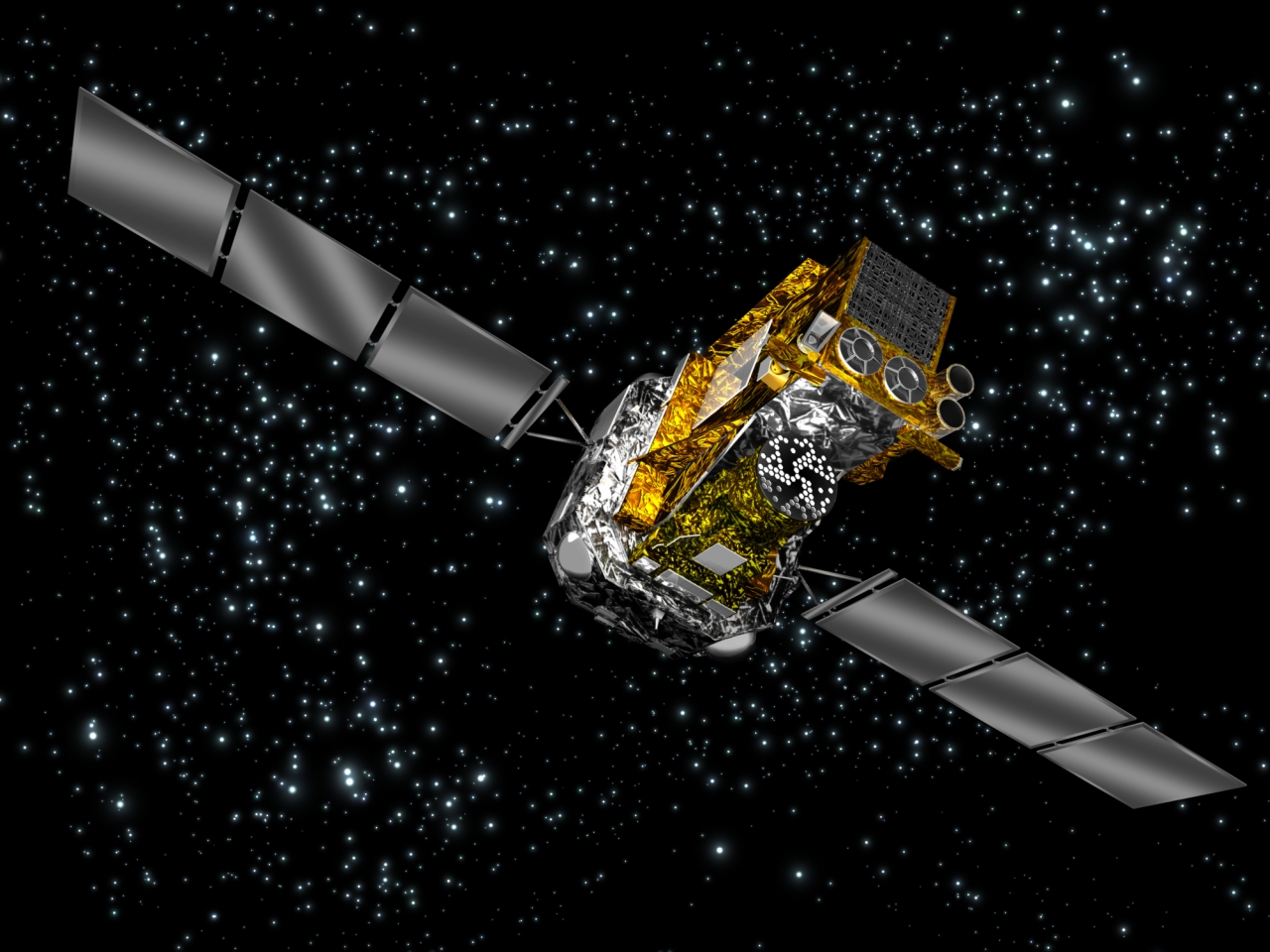
Using data from ESA’s INTEGRAL space telescope, researchers identified faint hotspots emitting the 511 keV (kiloelectronvolt) gamma rays produced when positrons – the antimatter counterparts of electrons – annihilate with ordinary matter.
More amazing space science
Most 511 keV emission detected by INTEGRAL comes from the central regions of the Milky Way.
Its origin has long been a puzzle because known sources, including radioactive material produced by stars, do not appear to account for the positrons being annihilated.
The researchers suggest that some positrons could be produced inside the Milky Way, then travel outwards before annihilating.
If so, we may have been underestimating how much antimatter our Galaxy produces because only positrons that annihilate within the Milky Way itself have been counted.
However, the signals are faint and, as yet, unconfirmed.
A definitive answer may come from NASA’s Compton Spectrometer and Imager (COSI), a new gamma-ray telescope scheduled for launch in 2027.
If the hotspots prove genuine, it could reveal that the Milky Way is considerably better at producing antimatter than astronomers estimated.
The authors also suggest some hotspots might arise from galaxies beyond the Milky Way.

