
Could you survive 10 days in a confined space the size of two minivans, as it's hurtled out into space, around the Moon and back?
Could you make it without all the comforts many of us enjoy in our own homes, from central heating and television to the food in our fridges and the fresh air in our back gardens?
That's what faces the four-person crew of the Artemis II mission, which is set to launch on its journey around the Moon some time in the first half of 2026.
More on Artemis II


What will life be like for the Artemis II astronauts inside their Orion capsule, which, according to NASA, measures just 330 cubic feet in volume?
What will they eat? Where will they sleep? How will they go to the toilet?
Luckily, NASA has provided a breakdown of daily life onboard the Artemis II mission, so we can find out what awaits the astronauts during their 10-day journey, as they travel further into space than any human before them.
Going to the toilet
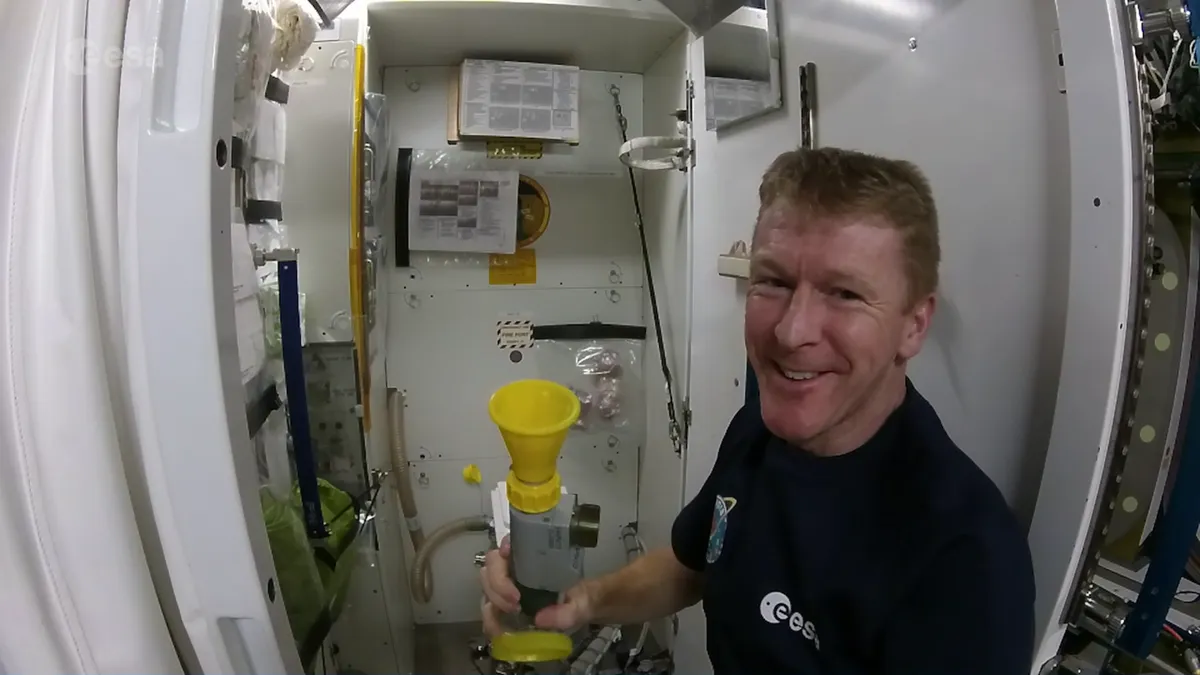
Let's start with the question people probably most ask about the life of an astronaut in space. Where do they poop? And how?
The Apollo astronauts' method of going to the toilet in space was primitive by today's standards, and involved sticking a plastic bag to their bottoms, then pooping, rolling the bag up and bringing it back to Earth.
Today, astronauts have a toilet on their space missions, but not like the toilets we have in our homes.
The toilet astronauts use is a device called the Universal Waste Management System, which helps them pee and poop while in space.
That's what the astronauts use onboard the International Space Station, and the Artemis II astronauts will use a model similar to the one on the ISS.
The Universal Waste Management System uses airflow to suck urine and faeces away from the body, because in the weightless environment of spaceflight, there's effectively no gravity to enable human waste to simply drop into the toilet, the way it does on Earth.

While the toilet system on the International Space Station recycles astronauts' urine into drinkable water, the Artemis II crew's short flight duration means their toilet will not have a water-recycling function.
Instead, the Artemis II astronauts' system will collect urine and faeces separately, venting the urine out into space and stowing the faeces for return and disposal back on Earth.
Should the Universal Waste Management System fail for whatever reason, NASA has a plan B: the Artemis II astronauts will use a system that collects their pee in a bag and vents it into space.
Faeces will still be collected in the Orion capsule's toilet, but without the airflow to assist.
Eating and drinking
Much like the biological disposal of food, the consumption of food has changed a lot since Apollo days.
Long gone are the tubes of paste that Apollo astronauts ate. Today's astronauts on the ISS enjoy a variety of foods like bacon sandwiches and hot coffee.
They even have a supply of fresh fruit delivered from time to time, which serves both as a vital source of vitamin C and a psychological boost – a reminder of home.
Artemis II astronauts will have a menu that's slightly more restricted than the options available to Space Station astronauts, but they have been given the option to select what food items they'll be bringing with them.
The crew spent time testing and selecting their food options for the Artemis II mission, and were able to choose from a menu that included chicken curry, shrimp cocktail and chocolate pudding cake, as revealed in an Instagram reel posted by NASA Johnson Space Center.
The crew will also have a ready supply of drinking water onboard, as well as a food re-hydrater and reheater.
Keeping clean

Most of the daily tasks we take for granted become instantly complicated, the moment you remove gravity from the equation.
Think about something as simple as squeezing toothpaste onto a toothbrush.
Artemis II astronauts will have a 'hygiene bay' onboard the Orion capsule, which has the aforementioned toilet, as well as space for their personal hygiene kits.
These kits include teeth-brushing equipment, soap, a hairbrush and items for shaving.
They'll have liquid soap, water and dry shampoo to keep clean and fresh.
For more on this, read our guide on how astronauts keep clean in space.
Staying fit
The minute you leave Earth and travel into space, moving around becomes much easier, in many ways.
While you can longer rely on gravity to pull you down towards the floor and keep you firm-footed, you are also relieved of the burden of fighting against the downward pull of Earth's gravity.
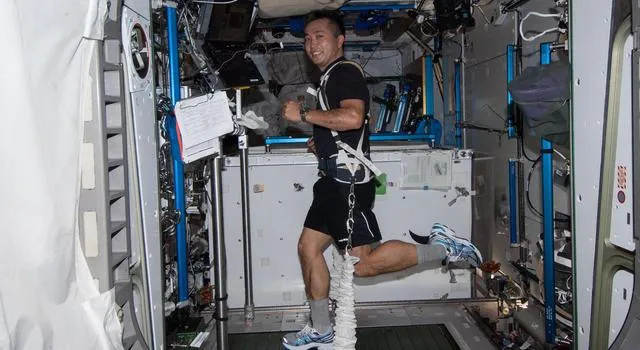
As a result, your muscles and bones quickly begin to deteriorate. That's why International Space Station astronauts need to exercise for two hours a day, during their six-month missions.

The Artemis II astronauts will still need to exercise during their shorter 10-day mission, but the regime isn't as strenuous.
They'll spend 30 minutes every day exercising using a 'flywheel', which is a small device that enables them to do workouts like rowing, squats and deadlifts to keep their muscles and bones strong and healthy.
Not bad for a device that's about the same size as a small suitcase.
Going to sleep
NASA says the Artemis II astronauts will have 8 hours of sleep scheduled into every day.
Given the mental and physical pressures of a journey around the Moon, it's no surprise that the crew have a good night's sleep in their itinerary.

But like most other simple daily tasks, getting into bed and going to sleep comes a lot more tricky without Earth's gravity pulling you down.
Since the astronauts can't simply lie down on a bed, instead they'll get themselves into hammock-like sleeping bags, which are tethered to handrails so they won't float away.
All four astronauts will mostly sleep at the same time, their sleeping bags attached to the Orion capsules' walls for stability.
Find out more with NASA's guide to life onboard Artemis II

