
On 13 April 2029, a huge asteroid about as tall as the Empire State Building is set to skim by Earth, and could be visible to the naked eye.
When it was first discovered, alarm bells were raised at the prospect the gigantic space rock could collide with our planet.
However, astronomers now say Asteroid (99942) Apophis will pass within 32,000km of Earth’s surface.
It will come so close it will, for a while at least, be closer to Earth than satellites in geostationary orbit.
Discovery
Asteroid (99942) Apophis was discovered in 2004 by astronomers at Kitt Peak National Observatory in the USA.
Initial observations showed there was a small chance it could hit Earth in 2029, 2036 or 2068, during one of its many orbits around the Sun.
Such a collision could have been catastrophic, which is why the asteroid was named by its discoverers after the Egyptian god of chaos and destruction.

It's the closest approach of an asteroid this size that humans have ever known about in advance.
Astronomers say Apophis likely formed in the asteroid belt between Mars and Jupiter 4.6 billion years ago, at the dawn of our Solar System, and is about 375m across.
Since its formation, it's been jostled about by gravitational interactions with the Solar System planets, and now (99942) Apophis crosses Earth's orbital path, making it a near-Earth asteroid.

Probability of an impact
When astronomers discover an asteroid or comet, they can use multiple observations – often from different observatories – to calculate its trajectory.
This can give them vital information to plot the asteroid's course around our Solar System over years or even decades.
Initial studies of (99942) Apophis saw the risk of it impacting Earth in 2029 rise as high as 2.7%.
That was the highest ever rating on the ‘Torino scale’, which is used to evaluate the threat that an asteroid poses to Earth.
As is often the case with newly-discovered asteroids – 2024 YR4 being a prime example – further observations saw the probability of impact decline.
Astronomers were quickly able to rule out the risk of (99942) Apophis hitting Earth in 2029 or 2036, but a small chance of impact in 2068 stubbornly remained for a number of years.

Ruling out (99942) Apophis and a 2068 impact
Part of the problem with the 2068 approach to Earth is that, when (99942) Apophis passes Earth in 2029, our planet's gravitational tug on the asteroid will change its orbit around the Sun.
That makes it difficult to predict what the asteroid's trajectory will be by 2068.
At the time, astronomers said there was a chance the 2029 flyby of Earth could alter (99942) Apophis's trajectory and send it on course for collision with our planet in 2068.
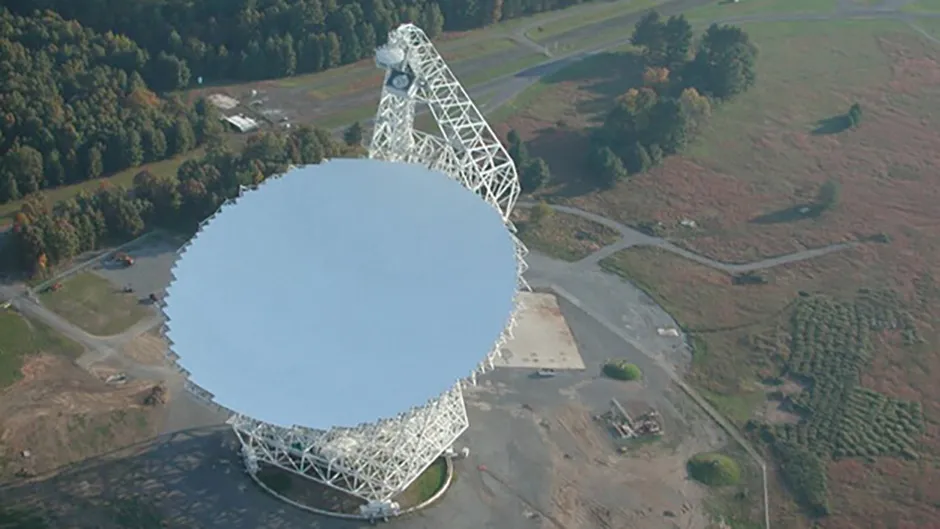
Enter NASA’s Goldstone Deep Space Communications Complex in California and the Green Bank Observatory, West Virginia, which carried out radar observations of the asteroid in March 2021.
That data, say astronomers, has enabled them to rule out any chance of Earth impact for at least 100 years.
2029 flyby
Asteroid (99942) Apophis will pass within 32,000km of Earth's surface on 13 April 2029, and should be visible in the night sky to the naked eye from parts of Europe, Africa and Asia, according to the European Space Agency.
It will move very quickly across the sky, so it could be hard to track, but its potential naked-eye visibility could enable it to be seen relatively clearly under good, dark skies.
It will be visible in the southern part of the Northern Hemisphere sky on 13 April 2029, but exactly where will depend on your location.
That's because it will be so close to Earth, the effect of parallax will be more pronounced.
Much like how if you hold one finger up in front of your nose, then close one eye after the other, your finger will appear to jump from side to side, so too will different observing locations on Earth put (99942) Apophis in different sections of the sky, from the viewer's perspective.
If you're viewing from Europe and the UK, it may be visible around the constellation Sextans. If observing in North America, it may be around Leo, Cancer and Gemini.
A good software programme like Stellarium will enable you to search for the asteroid and find out where it will be from your location at any given date and time.
When it does fly by our planet, Apophis will be pulled and squeezed by Earth's gravity. That could cause landslides to occur on the asteroid and could change its rotation and orbit.

Can we send a mission to study Asteroid (99942) Apophis?
Scientists are already planning two space missions to study (99942) Apophis.
One is Ramses, the Rapid Apophis Mission for Space Safety, which is a European Space Agency mission that will fly alongside the asteroid during its 2029 flyby to see how it's affected by Earth's gravity.
Ramses will carry two smaller spacecraft known as CubeSats and will also have scientific instruments of its own to study (99942) Apophis.
The other mission is OSIRIS-APEX, which is a re-assignment of NASA's OSIRIS-REx mission that successfully delivered a sample of asteroid Bennu to Earth.
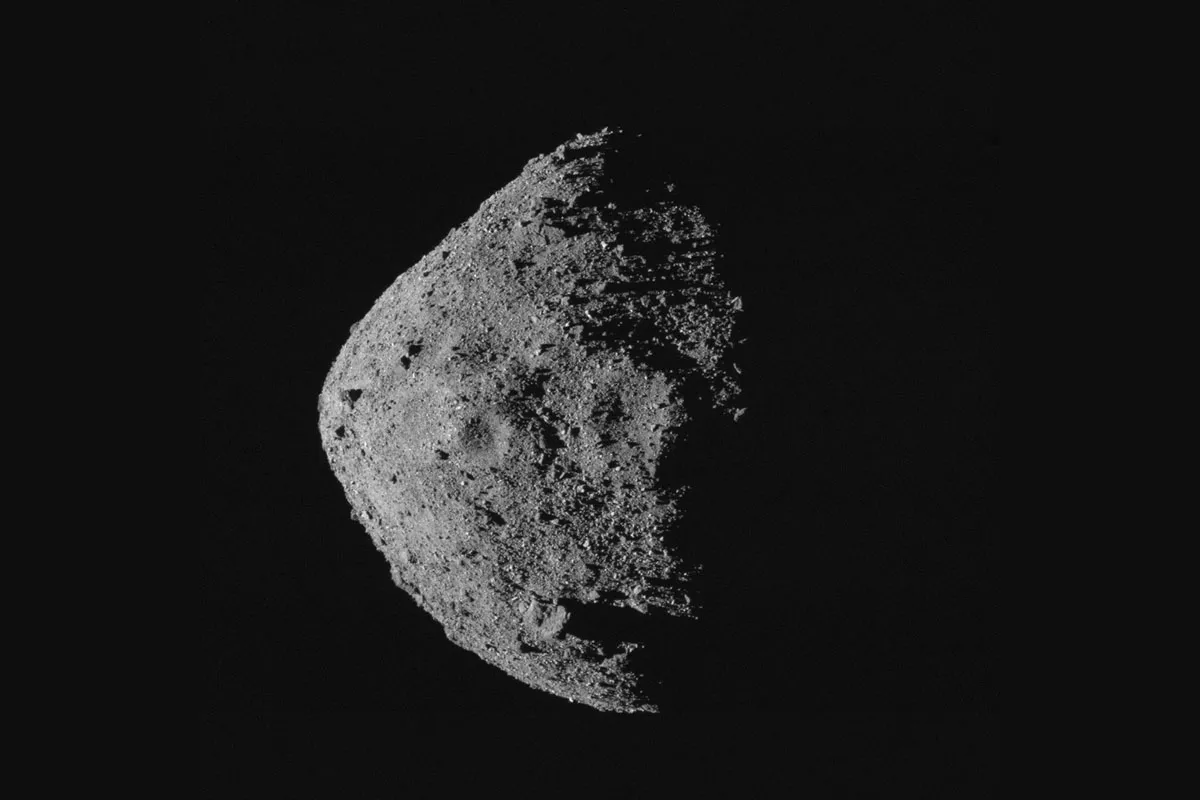
OSIRIS-APEX will arrive at Apophis after its close approach to Earth and will fire its engines at the surface to disturb loose rocks and dust, giving scientists a view of what's below.
Asteroids are primordial relics left over from the formation of the Solar System, so the chance to study a pristine sample – rather than one that has fallen to Earth and been contaminated – is a valuable scientific opportunity.
While (99942) Apophis poses no threat to Earth during its 2029 flyby, this close-approach to Earth could prove to be one of the biggest space events of the decade.

