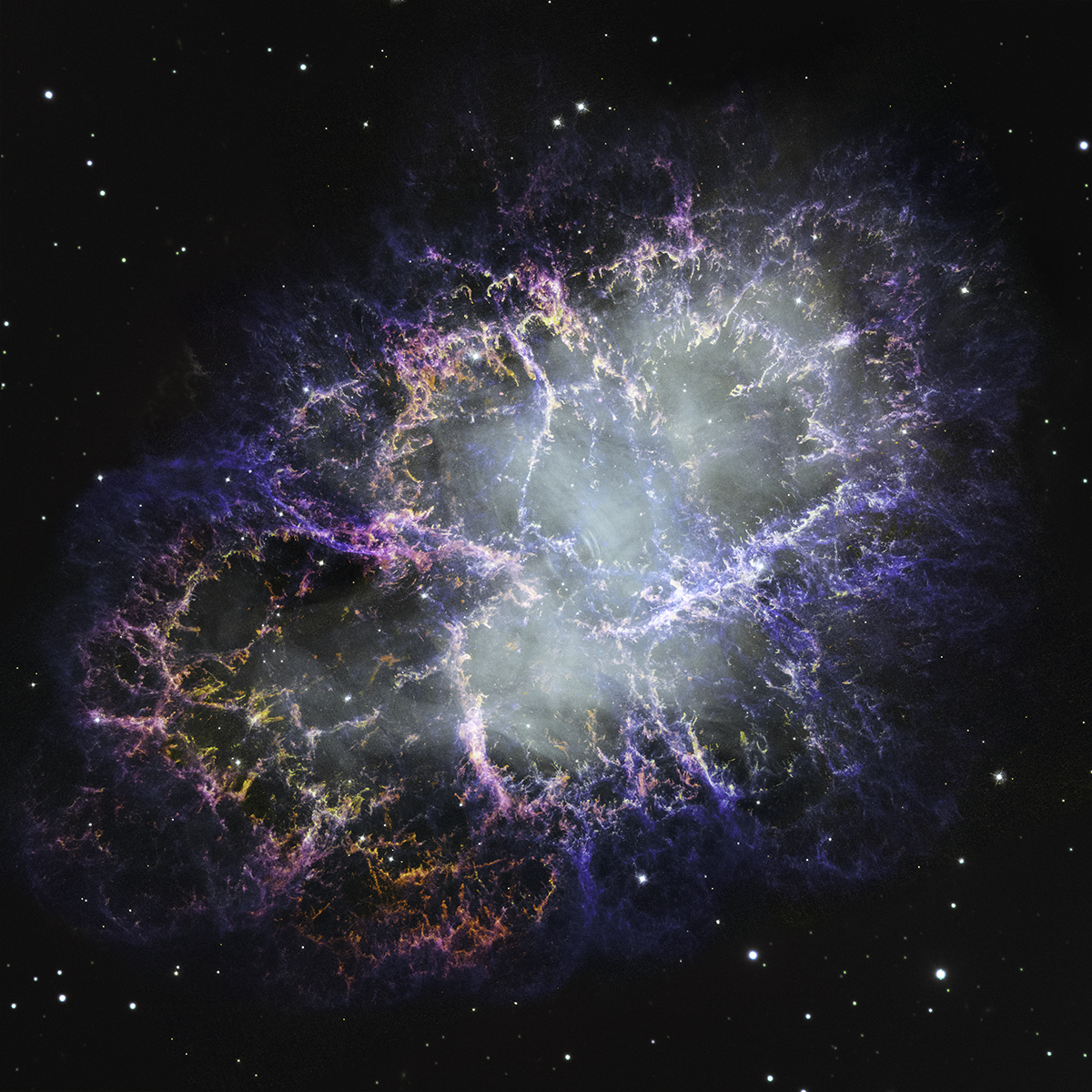
The Crab Nebula is one of the most famous deep-sky objects, the visual remnants of an exploded star whose sudden brightness was witnessed by astronomers in July 1054 AD.
This supernova remnant is known as the Crab Nebula because early observations and sketches depicted it as resembling the marine crustacean.
Now, a spacecraft bound for Mercury has captured an X-ray image of the Crab Nebula, as scientists seek to test out a vital instrument that will soon be used to unlock the secrets of the closest planet to our Sun.
More on BepiColombo
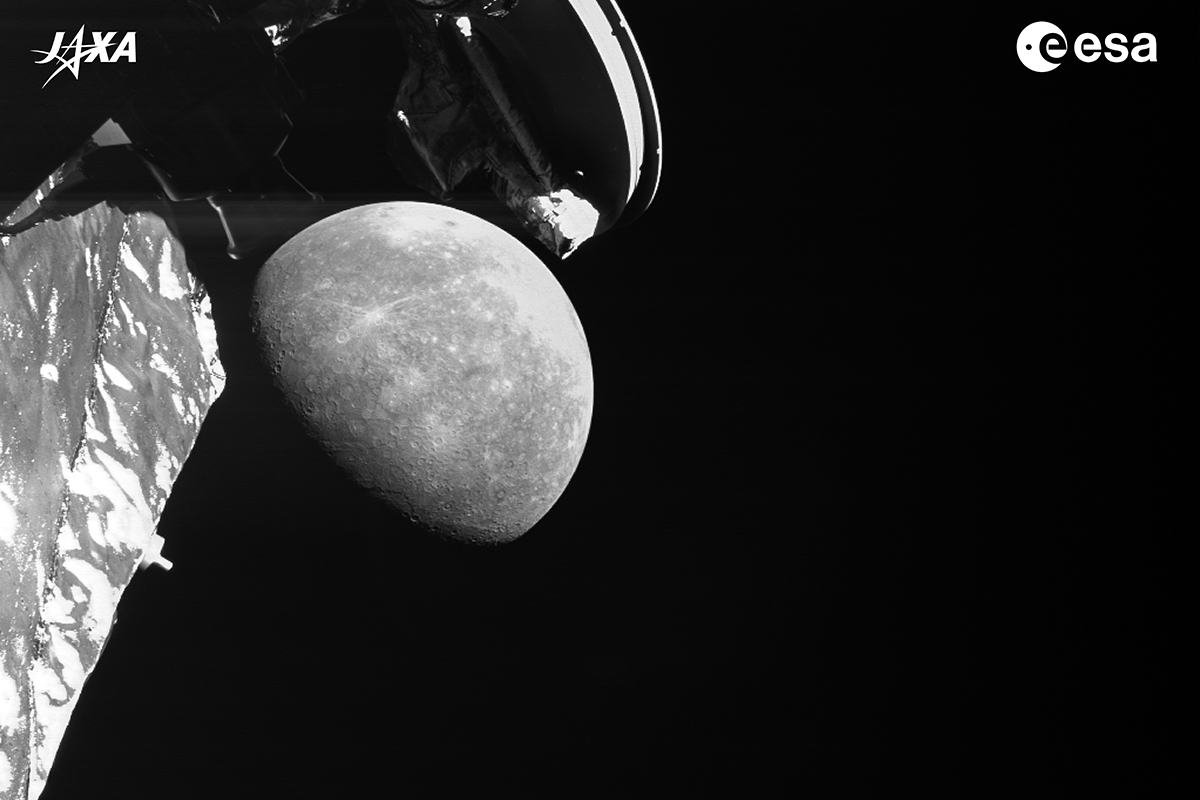
Testing the instrument that will give Mercury an X-ray
The image of the Crab Nebula below marks the first data gathered by a UK-built instrument currently on its way to Mercury.
In capturing the image, the instrument has given astronomers observations of one of the brightest X-ray sources in the sky.
The spacecraft is BepiColombo, which is a collaboration between the European Space Agency and the Japanese space agency, JAXA.
A team led by the University of Leicester in the UK have been undertaking calibration measurements with the Mercury Imaging X-ray Spectrometer (MIXS), which is one of the instruments on BepiColombo.
The spacecraft is due to enter orbit around Mercury on 21 November 2026 after eight years journeying across the Solar System.
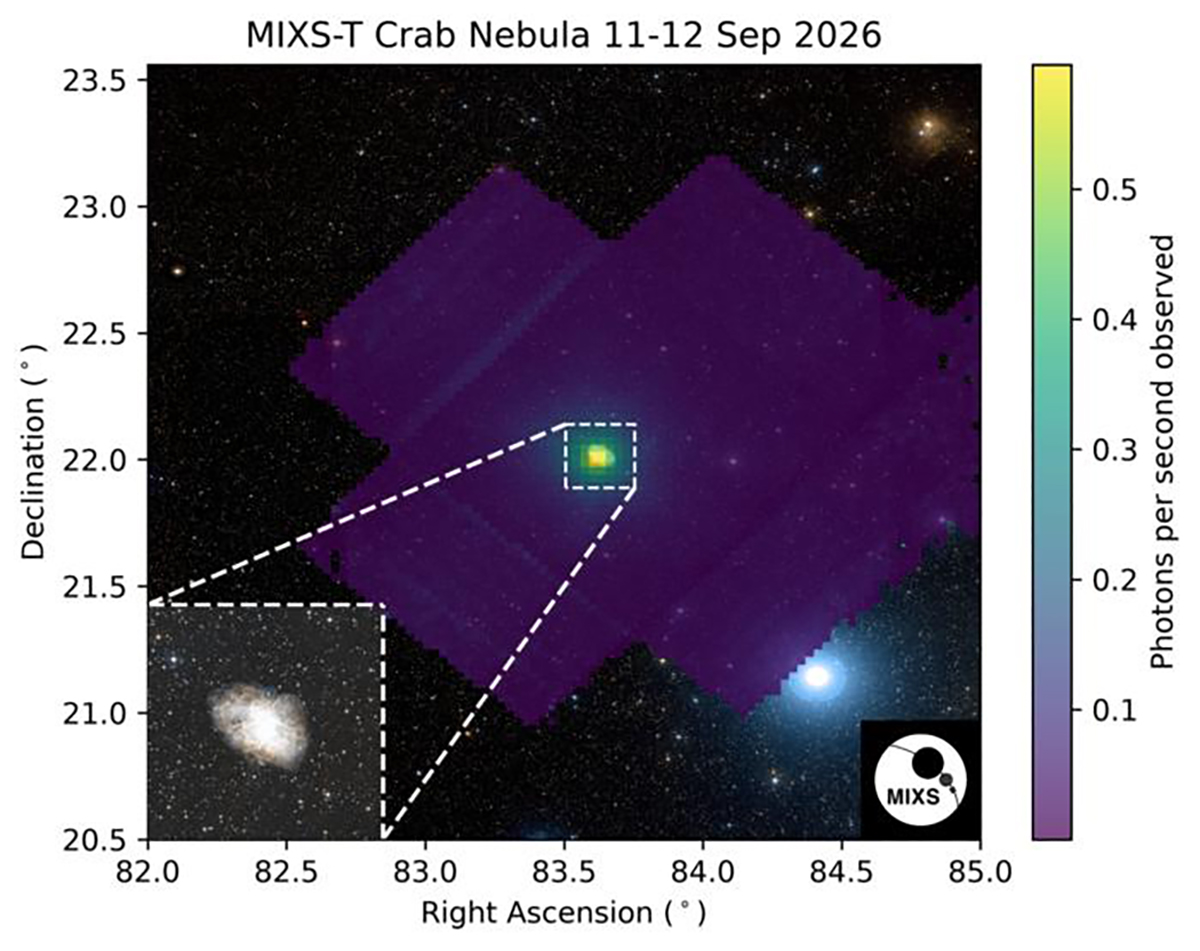
Naturally, the team behind the MIXS instrument were keen to check that their instrument is performing before it begins studying Mercury.
In September 2026, MIXS got its first glimpse of space and the team were able to make calibration measurements.
The calibration target was the Crab Nebula, located 6,500 lightyears from Earth.
Observations have enabled the team to determine the performance characteristics of MIXS in space and compare it with calibration measurements made back in a lab on Earth in 2015.
Performing the Crab X-ray
MIXS's main observation sequence consisted of 55 spacecraft slews with 39 hours of observations during 11–12 September 2026.
The team measured how much the Crab Nebula’s image is spread across the instrument's detector to determine how sharply it will be able to pick out features on Mercury's surface.
They say it's operating better than when it was tested in the lab in 2015.
"We have waited a long time to make measurements with MIXS and it is fantastic to see it operating brilliantly in space. 80% of the technology on MIXS is new," says Professor Emma Bunce, Principal Investigator for the MIXS instrument.
"During our calibration observations we have determined that MIXS is generally performing fantastically well in space.
"We have no effects in our images that are associated with ‘stray light’. We continue to see effects of galactic cosmic rays as we did during cruise, but we understand these and can filter them out.
"We see some self-fluorescence which appears when the Sun is illuminating the optic, but this won’t affect our dayside observations of Mercury’s surface. And the detector has suffered no radiation damage after eight years in space.
"We see some effects in the instrument that we are still studying and expect to undertake some optimisation procedures during the Mercury commissioning phase to fine-tune MIXS in preparation for the science phase."
What MIXS will do at Mercury
MIXS will work with other instruments on BepiColombo to make a global map of Mercury’s surface atomic composition.
It can analyse the surface composition by measuring fluorescent X-rays emitted by surface rocks after being hit by X-rays from the Sun.
MIXS will also observe X-rays on the nightside of the planet to study the connection between Mercury’s space environment and its surface.
"This first data is mind-blowing to me," says Dr Adrian Martindale of the University of Leicester’s School of Physics and Astronomy and MIXS Instrument Scientist.
"The last time we could see through this telescope it was in the basement under the School of Physics and Astronomy in Leicester, but after a rocket launch, eight years in space and 10 billion kilometres travelled it looks just the same. I can’t wait to see the science data it produces when we get into orbit."
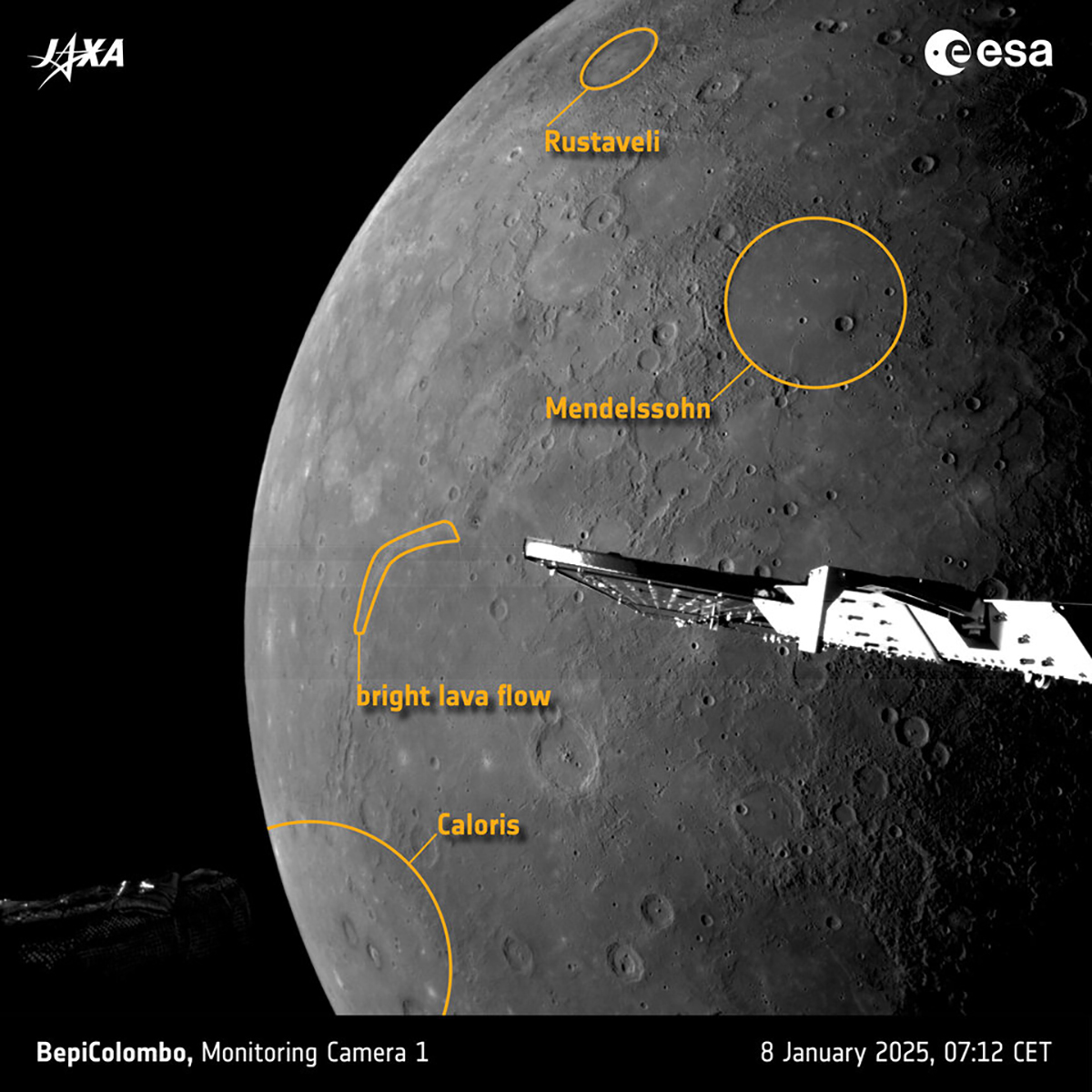
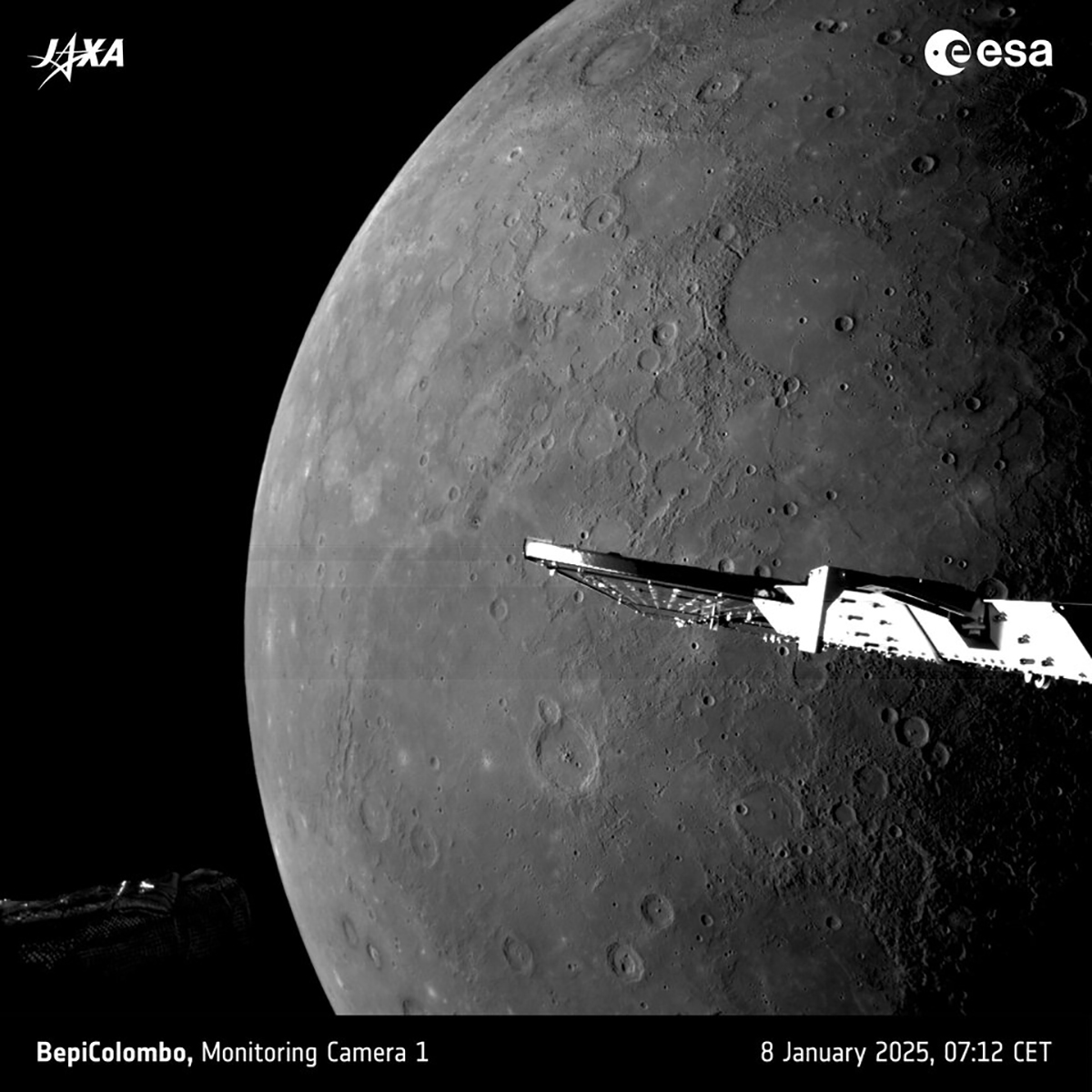
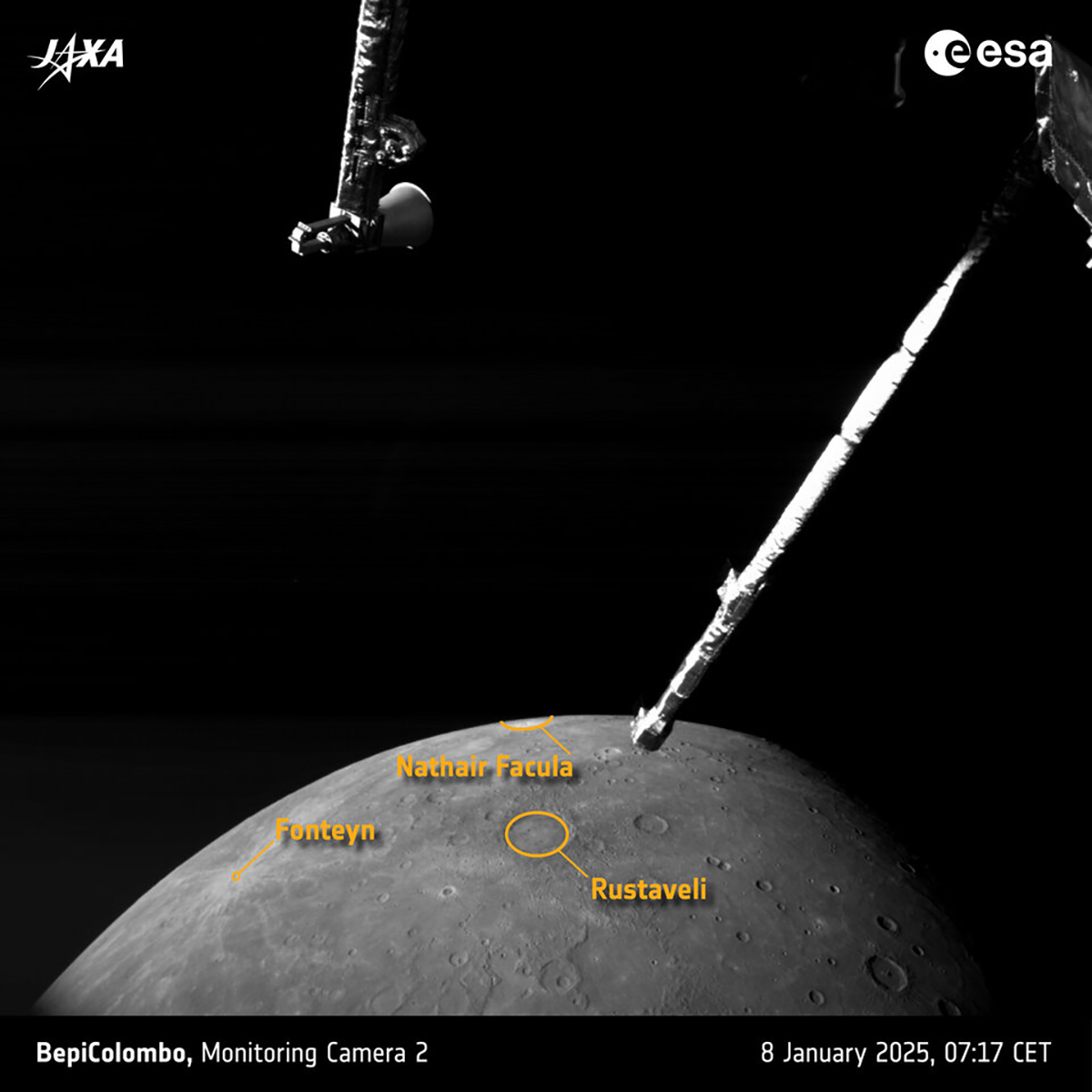
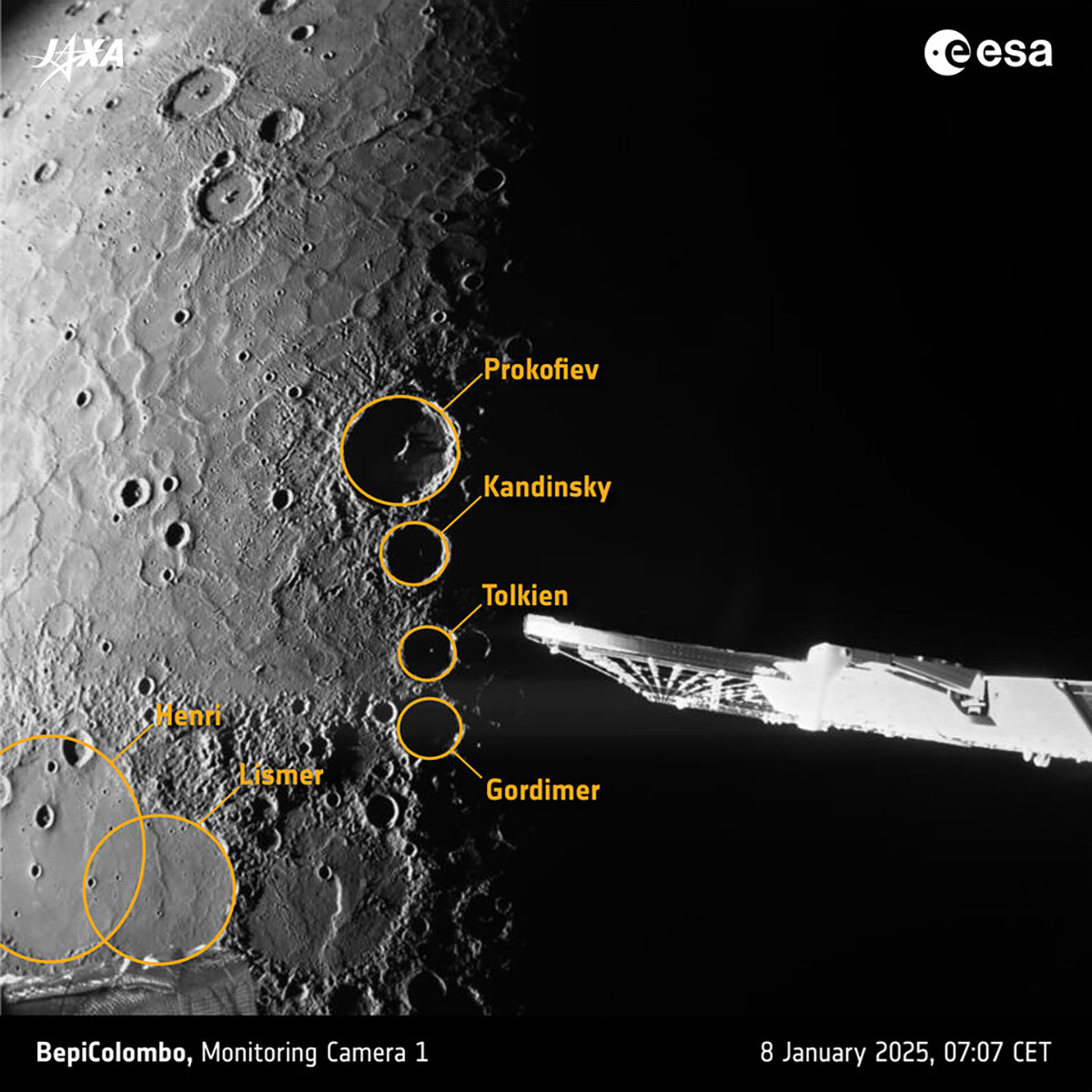
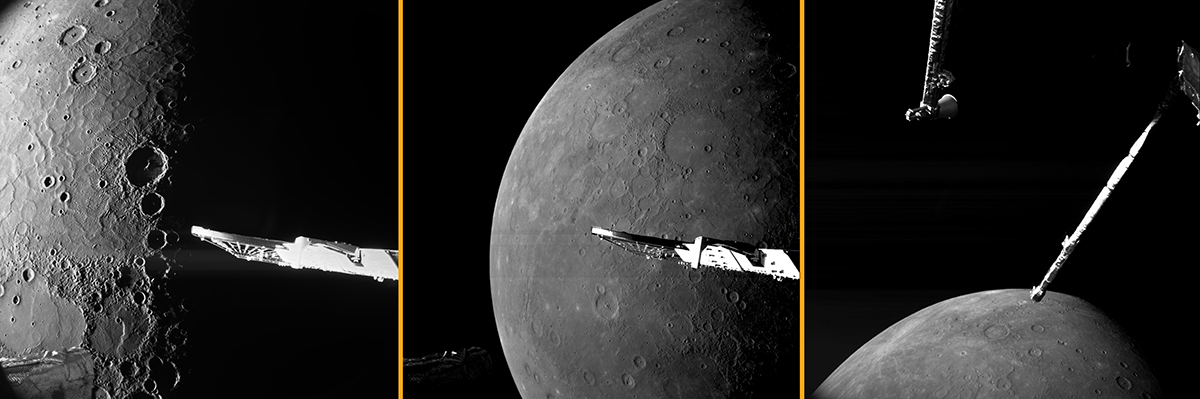
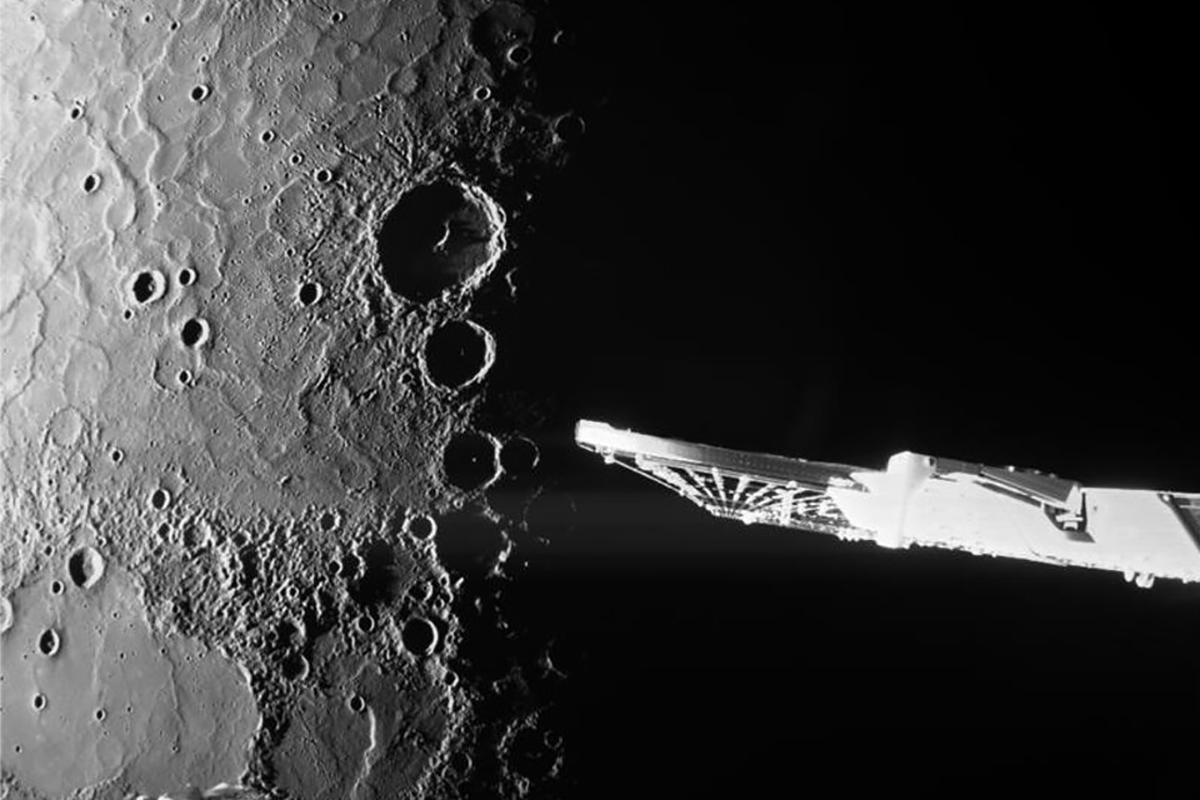
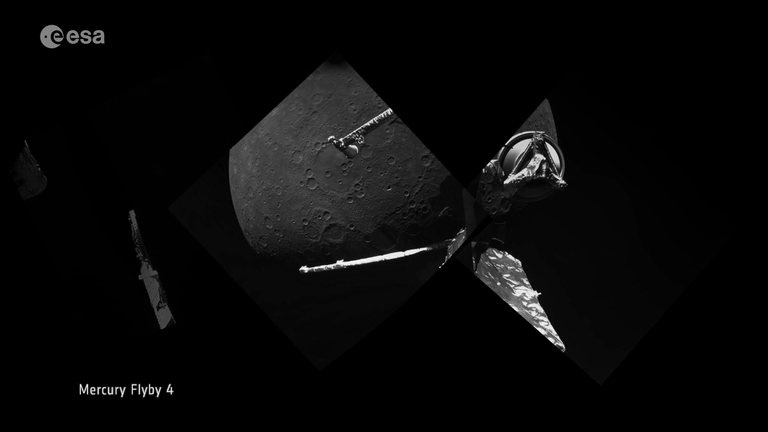
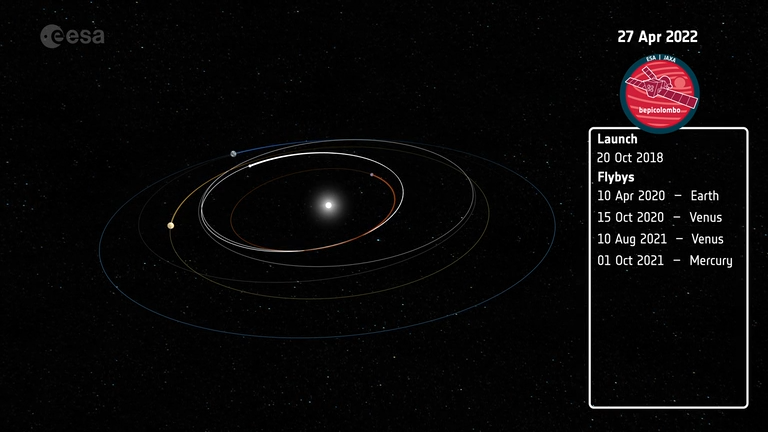
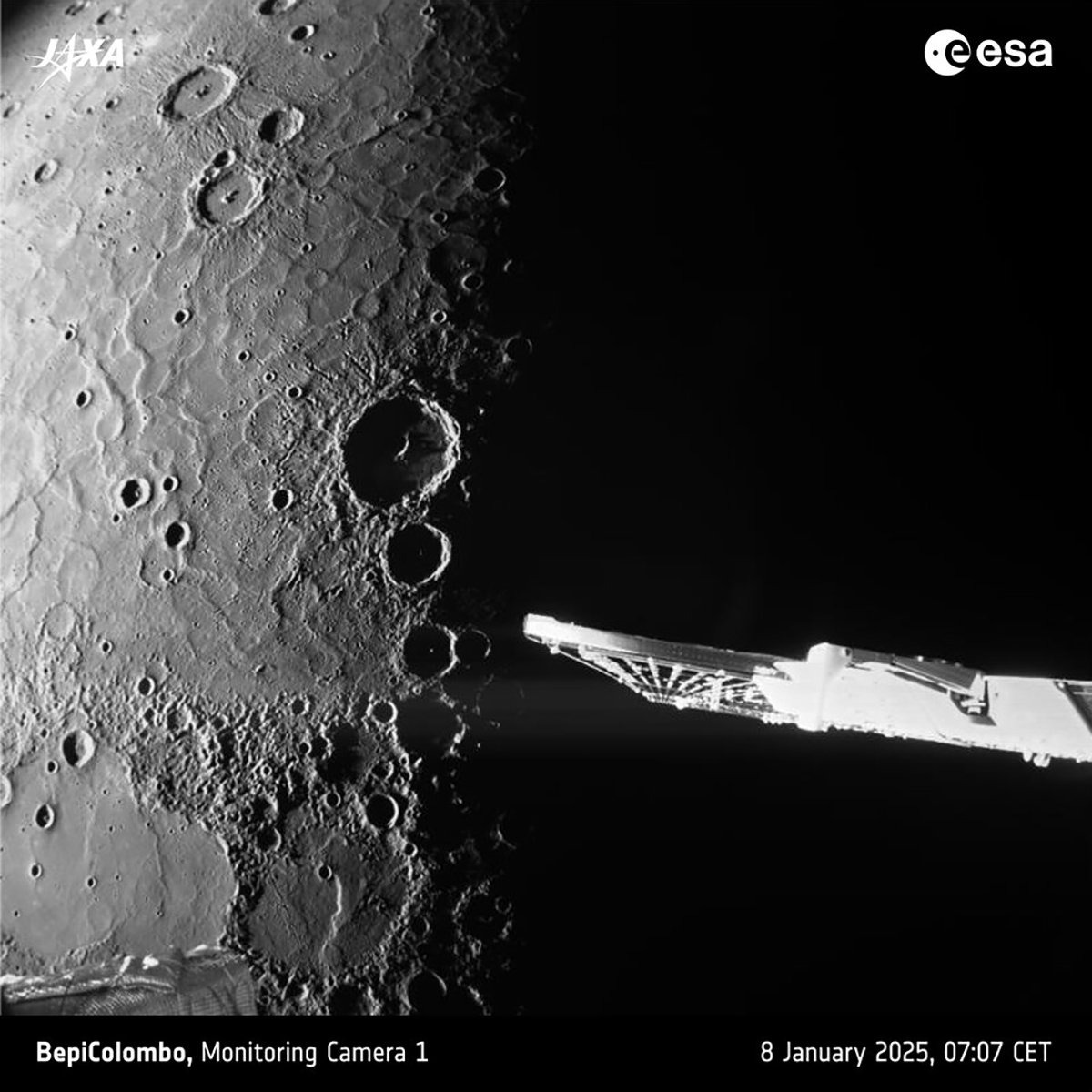
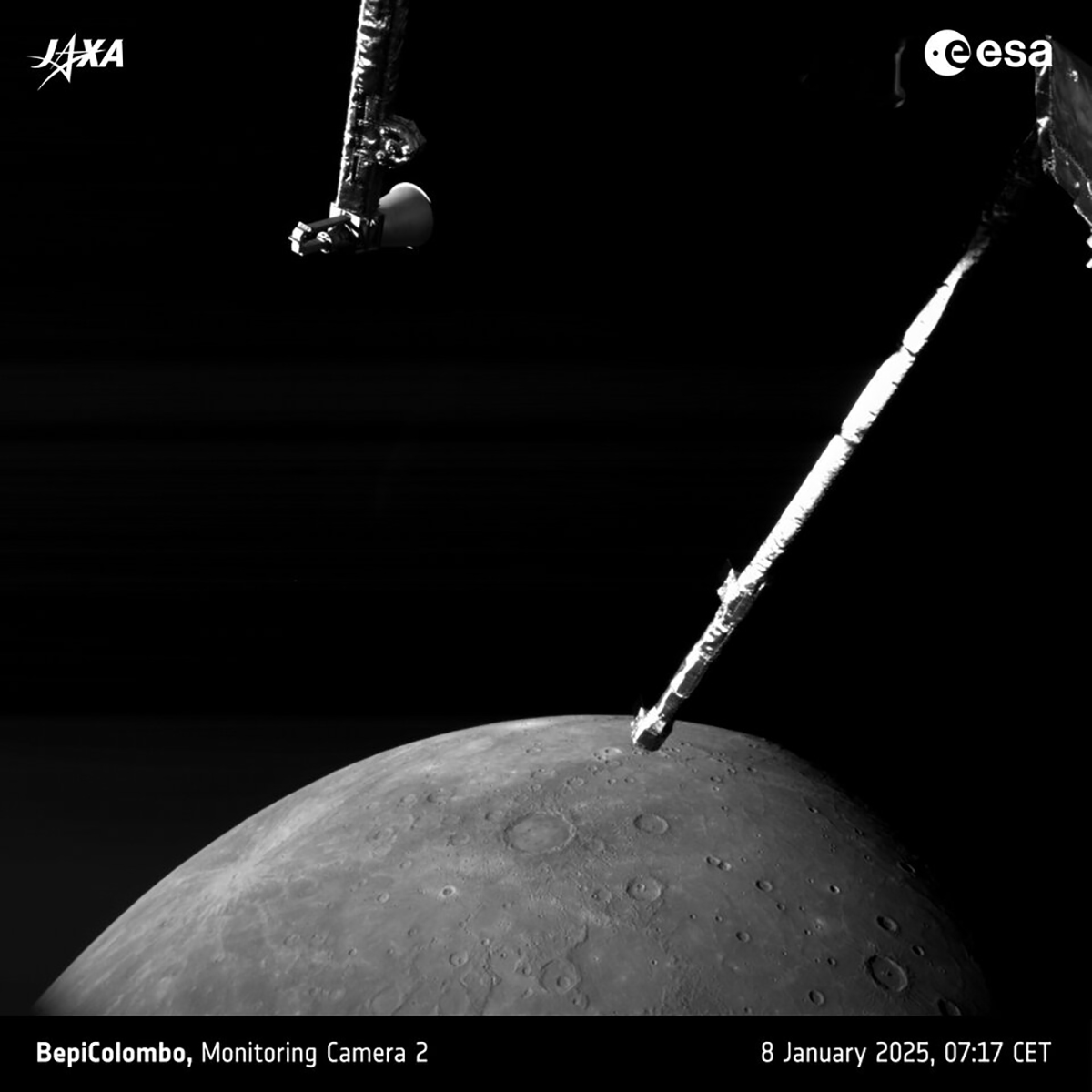
Gallery – BepiColombo's images of Mercury
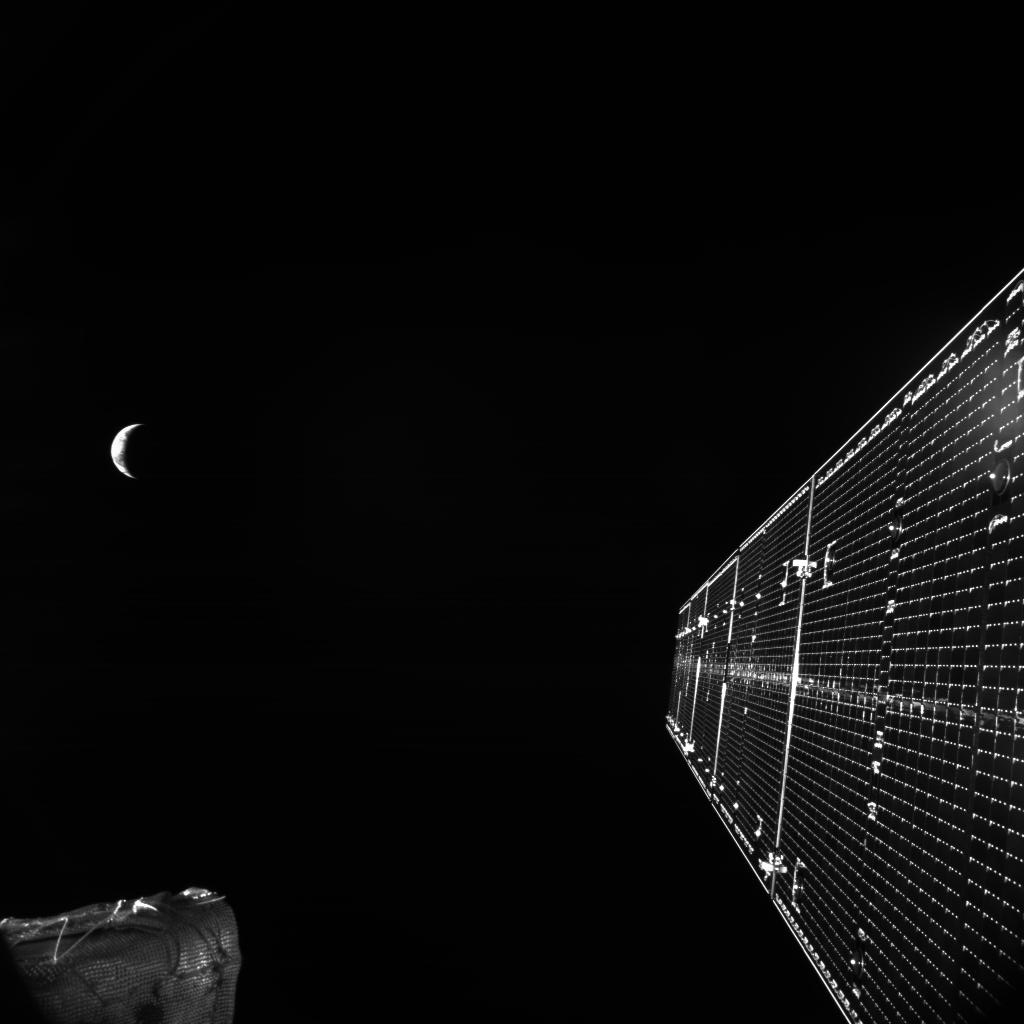
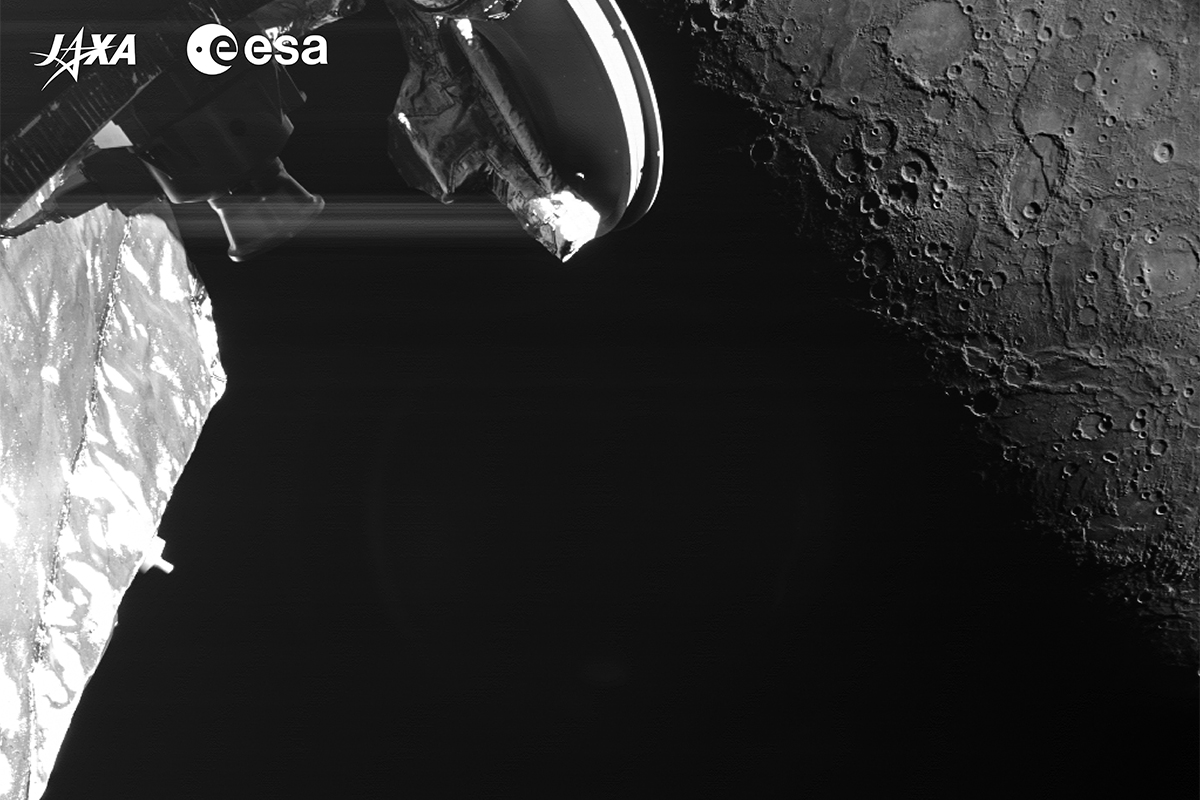
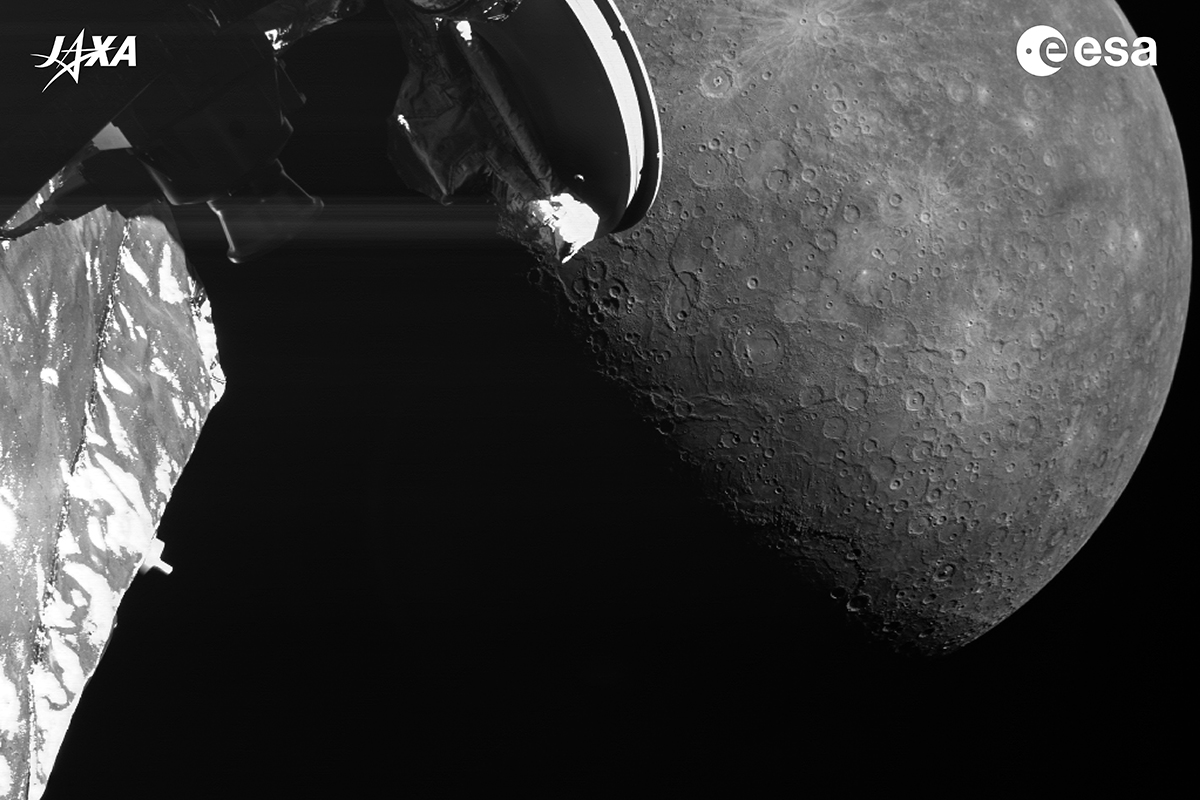
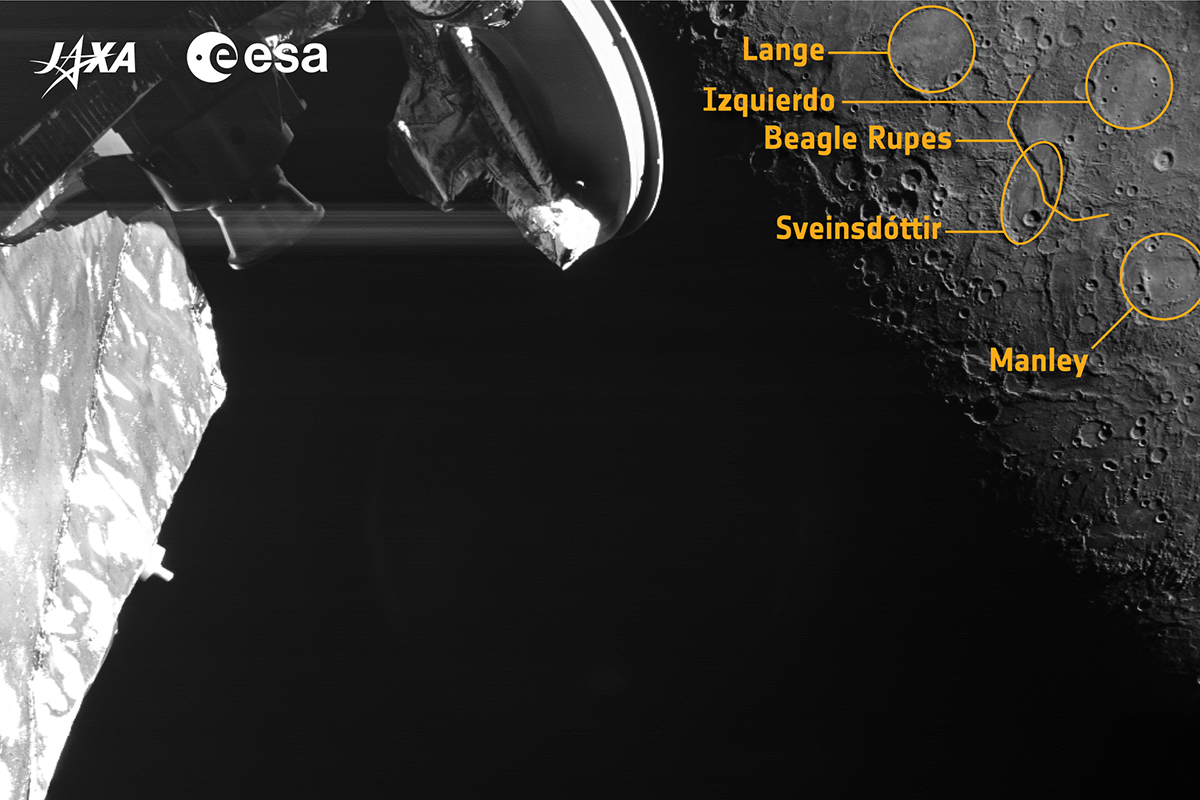
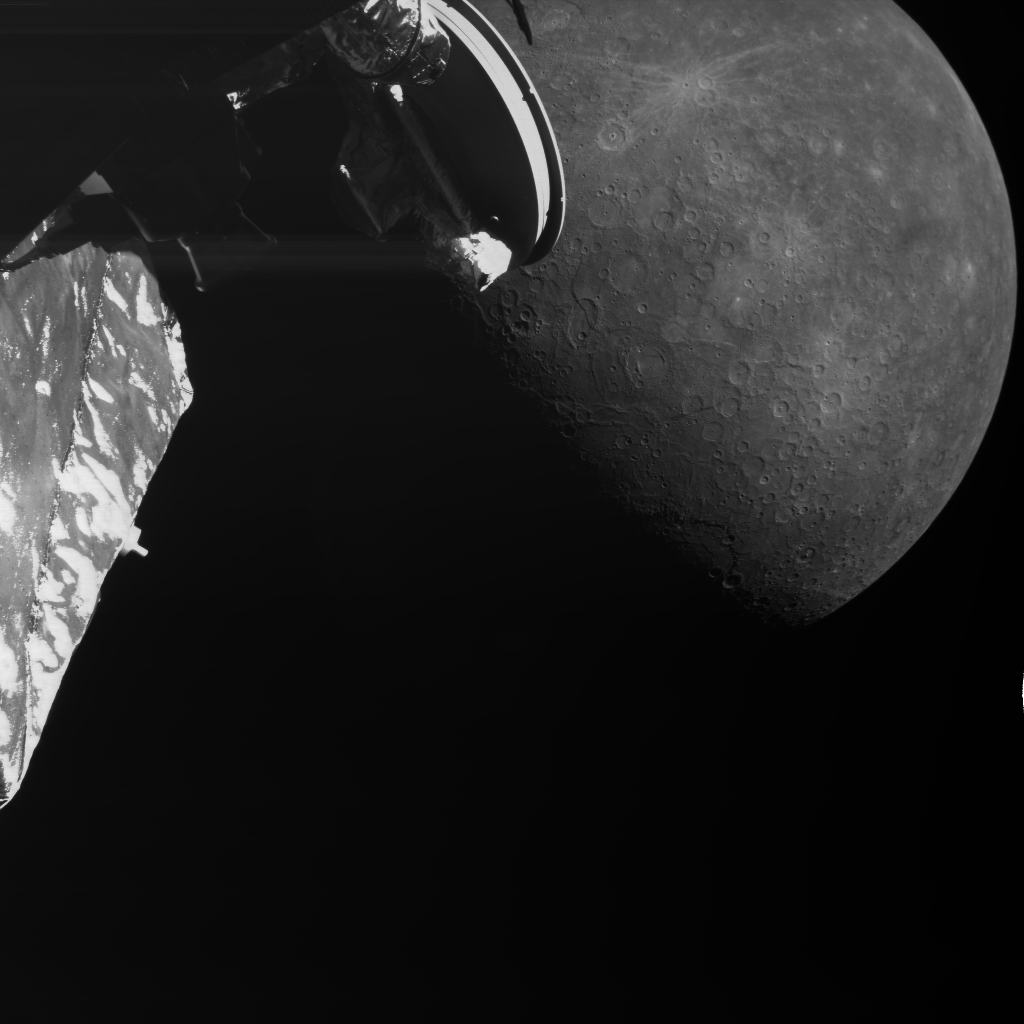
ESA/JAXA BepiColombo mission, 19 June 2023
Credit: ESA/BepiColombo/MTM, CC BY-SA 3.0 IGO