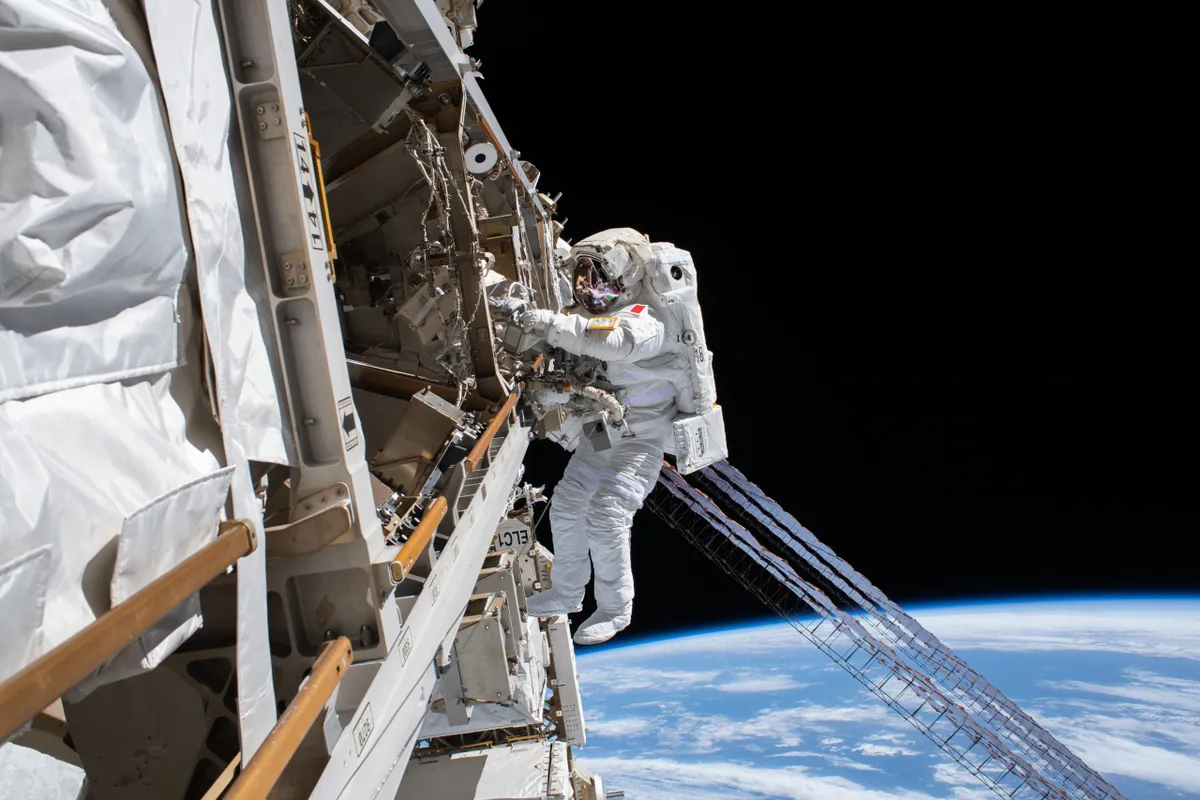
As NASA prepares to send its Artemis II astronauts around the Moon, with a longterm goal of building a for permanent settlement on the lunar surface, what are the biggest risks and challenges for the human body in space?
Dr Irene Di Giulio at the Centre for Human and Applied Physiological Sciences, King’s College London, reveals some of the biggest threats facing the Artemis II astronauts and future lunar settlers.

What health challenges will the astronauts face during Artemis II?
Because Artemis II is a short mission, many of the long-term health risks of spaceflight are significantly reduced.
However, these astronauts will still be exposed to space radiation, which will be at higher levels compared to those experienced on the International Space Station (ISS).
The effects of gravitational changes will be more related to acute adaptations rather than long term effects.
In particular, space motion sickness could be experienced as the body needs a few days to adapt. Also, acute fluid shift from the lower part of the body (e.g. the legs) to the head may cause discomfort and swelling.

Sleep disturbances due to a sudden change in the light-darkness cycle and the use of artificial lighting may be experienced.
Mental stress and isolation, especially given the mission demands and living in an enclosed environment, may affect performance.
The impact on muscles and bones seen in longer missions may be less apparent, because they typically require a longer exposure to altered gravity.
However, bone loss and muscle deconditioning can begin within just a few days, as demonstrated during NASA Space Shuttle missions, which were often 7-14 days in duration.
These effects therefore remain relevant for Artemis II and highlight the importance of performing in-flight exercise to counter the loss in bone and muscle.
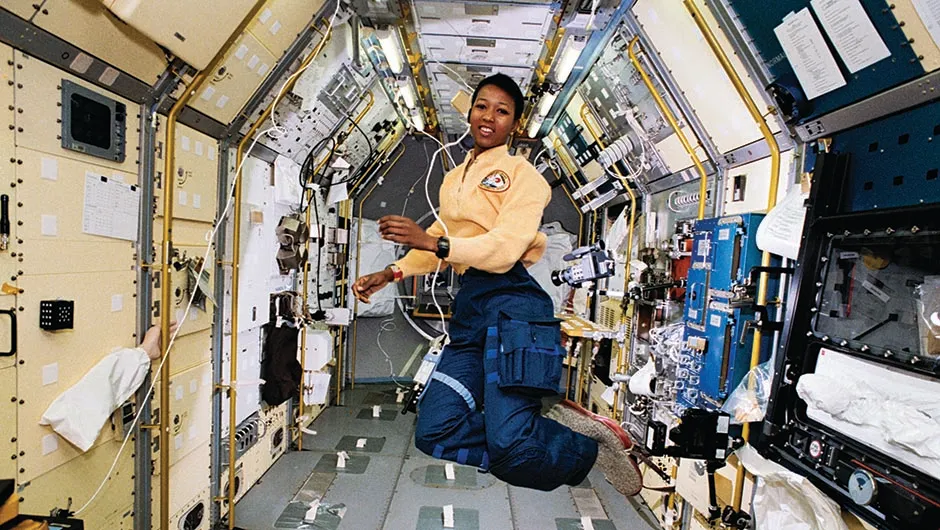
What can the Artemis II crew do to mitigate the effects of their mission?
There are several ways to mitigate these effects. Some of them are embedded in the Orion spacecraft (named Integrity for this mission), for example radiation shielding, while others include activities that the astronauts could perform before, during or after the mission.
Space motion sickness can be reduced through training and, if necessary, the use of medication.
Fluid shifts are managed through exercises and hydration monitoring throughout the mission.
Sleep disturbances can be mitigated by maintaining structured daily schedules and controlled lighting.
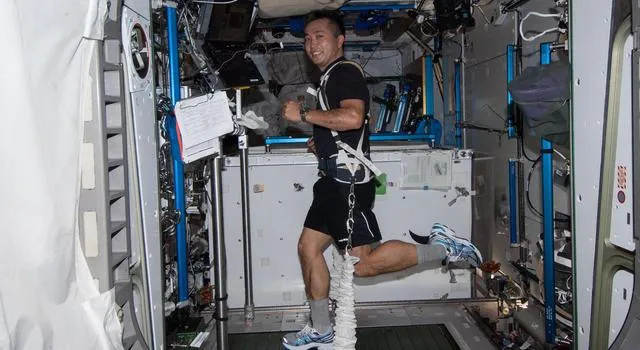
Astronauts will also follow regular exercise routines to limit early bone changes and muscle deconditioning.
More on Artemis II

However, space inside Orion is very limited, which poses challenges for both exercise and equipment. New devices have been developed to be transported and stored in the spacecraft, which is much smaller than the International Space Station.
Pre-mission training is key to address mental stress and isolation. Astronauts work as a team, and the mission is managed by a large team on the ground which includes medical professionals, engineers and mission control staff.
In fact, although four astronauts will be on the Integrity spacecraft, the team is much larger.

How do the Artemis II astronauts prepare for their spaceflight?
Many people apply to become astronauts, and to be selected, they have to pass a number of psycho-physical assessments.
When an individual becomes an astronaut, and they are assigned to a mission, specific training is designed for them.
In this particular case, much of the training focused on the new spacecraft for the mission and the new challenges that this mission poses.
As crewed lunar missions ended in 1972 with Apollo 17, training and assessment have changed to support astronauts on other missions, and more recently missions on the International Space Station in low Earth orbit.
These have different requirements and additional training and updated protocols were needed for Artemis II.
In terms of physical performance, astronauts undergo cardiovascular testing, blood work and screening for any underlying health conditions that could worsen in space.
General health is also assessed including bone density, muscle strength, and vision.
Training may also include parabolic flights and other simulated microgravity platforms to evaluate the acute responses to changes in gravity.
Flight training and emergency procedures are vital for these missions.
Astronauts work as a team for a mission and the psychological readiness is assessed under stressful conditions.
Fitness evaluations are also important to evaluate whether the crew can withstand the demand of a mission.
As an anecdote, the Artemis II crew passed the 'Bobby and Pete Challenge', performing 50 pull-ups and 100 push-ups in less than 10 minutes.
This became a viral video posted by NASA. While not an official test, it highlights the crew’s fitness and team spirit.
How do astronauts prepare for medical emergencies in space?
Extensive training, protocols and equipment familiarisation.
Astronauts receive training in relevant medical procedures, including first aid, CPR, wound care and the use of emergency medical kits.
For example, some of the research at King’s College London focused on the most effective methods to perform CPR in space.
Simulation-based exercises and medical mannequins are often used.
These approaches are particularly important for missions beyond low Earth orbit, where rapid return to Earth is no longer possible.
Sometimes astronauts have a medical background, although this is not the case for the Artemis II crew.
Astronauts train to perform these procedures in simulated microgravity environments, such as underwater training or parabolic flights.
Communication with mission control and medical teams is crucial during emergencies although this will become more challenging for lunar missions, where communication delays are longer than those currently experienced on the ISS.

What are the medical practicalities needed for long-term human presence on the Moon?
Artemis II is the first step towards Moon landing (planned for Artemis IV) and then establishing a long-term presence on the Moon.
There are a number of challenges that need to be addressed to minimise and mitigate the effect of the space environment on the human body.
While Artemis II is short, it provides critical data that feeds directly into planning for longer-duration cis-lunar missions and sustained lunar presence.
NASA identified five hazards for human spaceflight: space radiation, isolation and confinement, distance from Earth, gravity and closed or hostile environments.
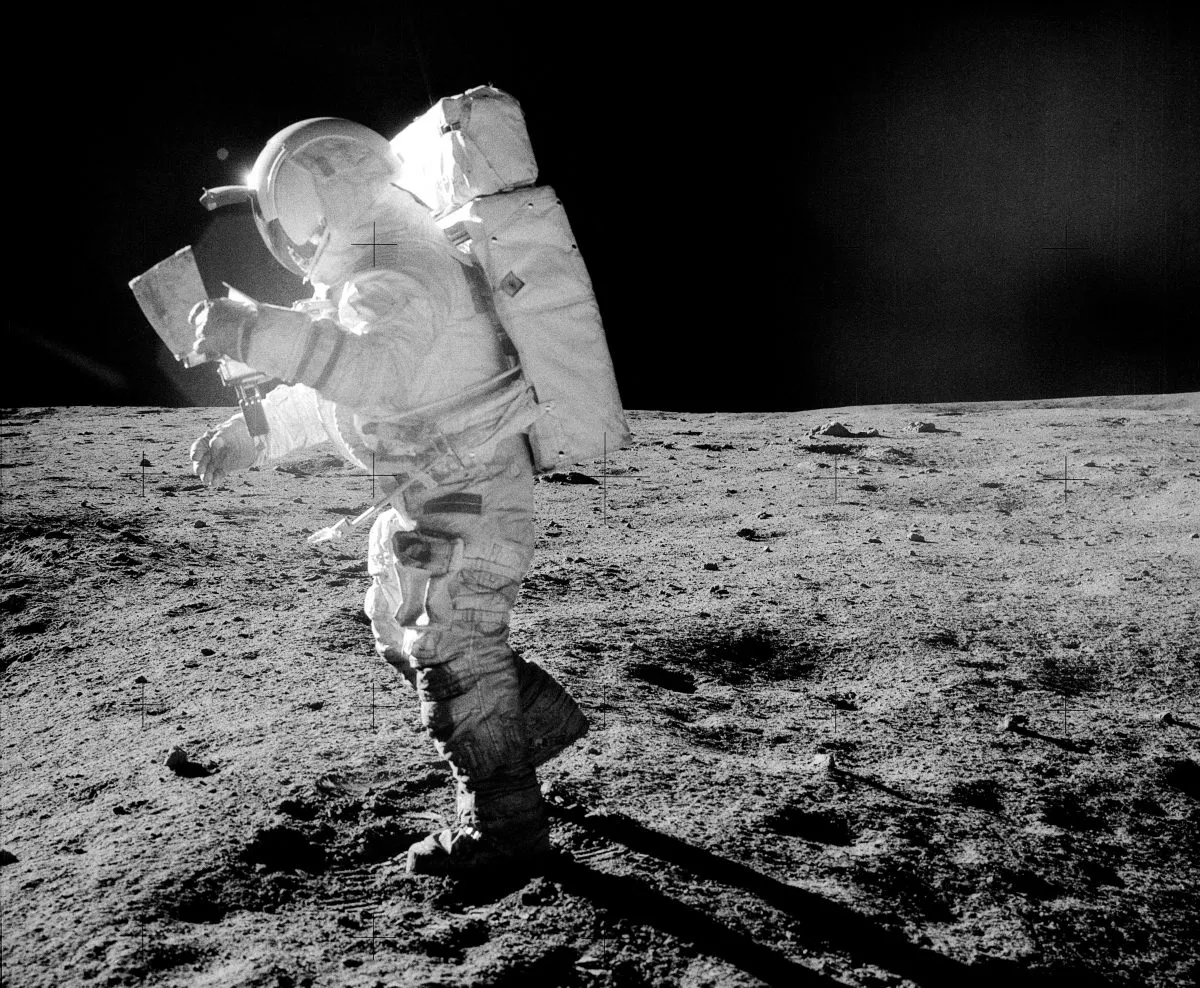
In addition, the Apollo missions have highlighted additional issues on the Moon: dust and locomotion stability.
If we look at these hazards systematically, radiation exposure is probably one of the most significant ones.
Without Earth’s magnetic field, lunar inhabitants would face constant cosmic rays and solar particle events, which increase the risk of cancer, organ damage, and nervous system effects.
Effective radiation shielding in habitats and protective suits will be essential.
There is the possibility of building lunar habitats taking advantage of the so-called lava tubes.
These are cave formations under the Moon’s surface, which could provide a natural shield for future missions.
Another physiological challenge is the impact of reduced gravity on the body. Moon gravity is much lower than Earth’s (one-sixth to be more precise).

This causes muscle deconditioning, bone loss, and changes in cardiovascular function also affecting the brain and the eye.
Regular exercise and medical monitoring can mitigate serious health effects. There are a number of plans to develop countermeasures to minimise the effect of reduced gravity on the body.
Lunar dust is sharp, fine, and abrasive, potentially causing respiratory, skin, and eye irritation, as well as damaging equipment.
Extensive work is dedicated to new technologies that could manage this problem.
For example, new spacesuits are designed to address this problem and the King’s College London Spacesuit Physiology Lab is actively working with international partners to develop solutions that could minimise these risks.
During the Apollo missions, astronauts showed unexpected movement problems.
Their walking was affected, many falls were recorded, and astronauts struggled to regain balance after a fall.
They also struggled when manipulating objects, possibly because of the pressurised gloves.
At King’s College London, we are studying movement in simulated microgravity in our Biomechanics laboratory, to understand how movement control is affected by, and can be assisted in altered gravity.
Although it is likely that humans living on the Moon may adapt their movement control to the changing conditions, it is important to understand the time-course of these adaptations and potentially the long-term effects on movement control.
Psychological and social factors in terms of isolation, the environments and distance from Earth must also be addressed.
Crews will be living in isolated, confined environments for extended periods.
They will need support for mental health, team cohesion, and stress management.
Although communication delays with Earth will be minimal compared to Mars missions, they will still be longer than those currently experienced on the ISS.
This could become frustrating, especially during an emergency.

To establish a long-term presence on the Moon, medical autonomy will be crucial. Habitats must include diagnostic tools, medical supplies, and crew training to treat injuries or illnesses independently.
Some of these challenges have already been explored through international work on medical planning for cis-lunar missions, including Gateway, the space station that will orbit the Moon as part of later Artemis missions.
Our team contributed to medical planning with the ESA Space Medicine Team for Gateway, where longer mission durations and delayed return options demand higher levels of onboard medical capability than those available on Orion during the short-duration Artemis II mission.

How might life on the Moon affect the human body?
Living on the Moon for long periods would expose humans to a combination of environmental and physiological stressors that could significantly impact the body.
The reduced gravity on the Moon would lead to muscle deconditioning, bone loss, and changes in cardiovascular function over time.
Without countermeasures like regular exercise and medical monitoring, these effects could increase the risk of injuries, decreased endurance, and overall physical deconditioning.
Radiation exposure is another major concern. The Moon has no protective magnetic field or thick atmosphere, leaving inhabitants vulnerable to cosmic rays and solar particle events, which can increase the risk of organ damage.

Habitats will require shielding, and protective suits will be essential during outdoor activities.
Lunar dust presents a unique hazard. Its fine, abrasive particles can irritate the respiratory system, skin, and eyes, and may even damage equipment, increasing the risk of accidents.
Long-term exposure to this dust must be mitigated through suit design, habitat filtration, and careful handling procedures.
Locomotion and movement control would also be affected.
For future missions on the Moon surface, this will involve ‘spacewalks’, also known as extravehicular activity (EVA), which require pressurised spacesuits that function as individual life-support systems to protect astronauts outside their spacecraft.

Reduced gravity on the Moon combined with pressurised spacesuits make walking, balance, and object manipulation more difficult, and increases the risk of musculoskeletal strain and injury.
In addition, longer duration exposure to reduced gravity can affect the visual and perceptual functions that guide movement and spatial orientation.
Astronauts may adapt over time, but long-term studies are needed to understand these adaptations and the potential consequences for movement and coordination.
Psychological and social impacts are also important. Isolation, confinement, and distance from Earth can lead to stress, fatigue, and interpersonal challenges.
Even with communication systems, delays and the inability to access immediate help could affect mental well-being and decision-making.