Comet 24P/Schaumasse reaches perihelion on 8 January 2026, when it should reach an integrated magnitude of +9.9.
At this time, the comet will be traversing the region to the south of Arcturus, when an early morning session with a small telescope or smart telescope is recommended if you want to grab a view.
Arcturus reaches an altitude of around 55° under dark-sky conditions mid-month.
24P/Schaumasse begins the month just to the north of mag. +5.7 29 Comae Berenices, remaining in Coma Berenices until midday on 2 January 2026, after which it slips into Virgo.
Get weekly stargazing advice by signing up to our e-newsletter and subscribing to our YouTube channel

It remains in Virgo, passing to the north of Vindemiatrix (Epsilon (ε) Virginis) until 12 January, when it crosses into Boötes for the rest of the month.
Beginning its track at an estimated mag. +10.0, it brightens only slightly at perihelion to +9.9 before dropping back to mag. +10.5 by the end of the month.
Throughout this period, it will be within range of a small telescope but too faint for binoculars.
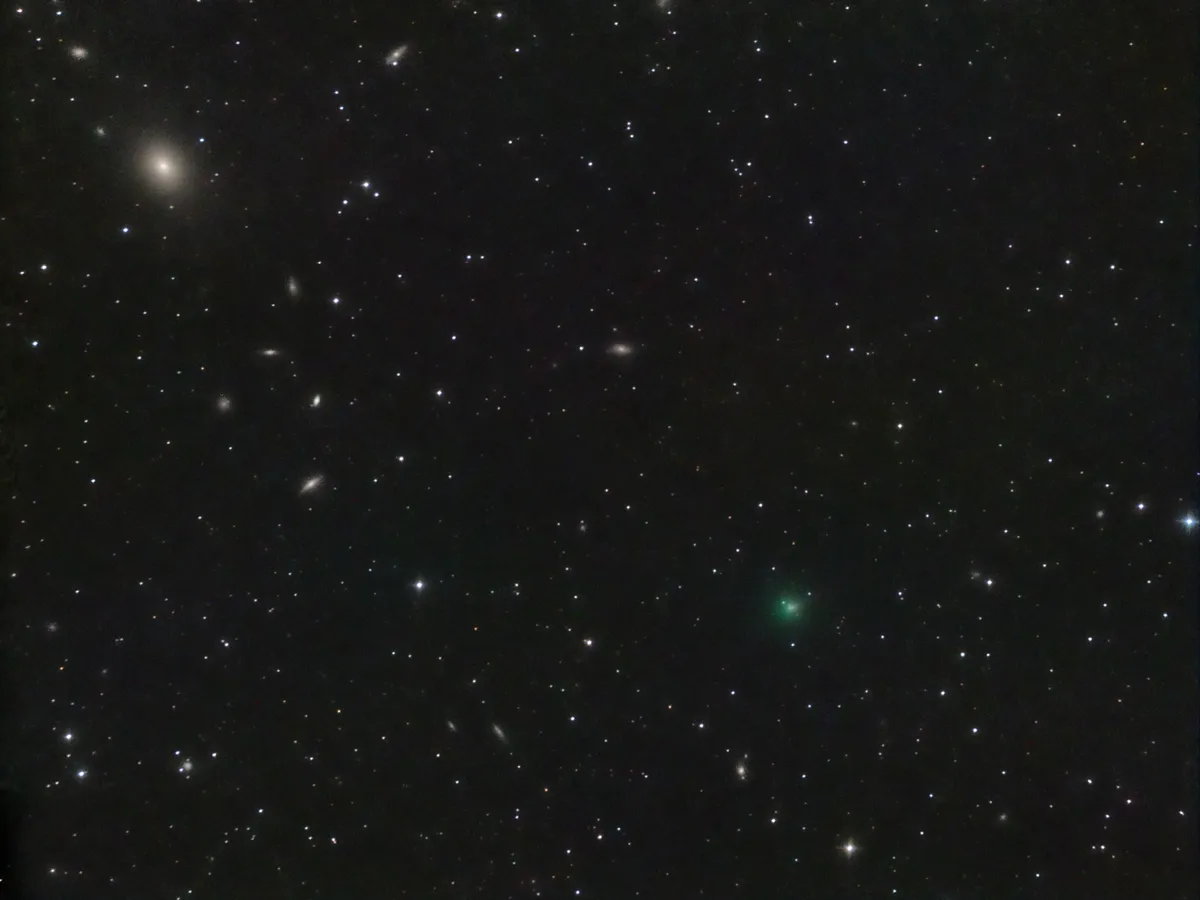
Ignoring the weather, the biggest enemy of comets is the Moon; this will interfere on 1–11 and 30–31 January, so your best strategy will be to observe between 12 and 29 January.
However, if the Moon is about, try to observe before it rises. After 31 January, 24P/Schaumasse remains visible but continues to dim.
It then travels east, passing into Serpens Caput by late February. Its apparent motion against the background stars then slows noticeably.
By late February 2026, 24P will dim to mag. +12.4 and be located 6° west of Unukalhai (Alpha (α) Serpentis).
Share your comet 24P/Schaumasse observations and images with us by emailing contactus@skyatnightmagazine.com