On 1 July 2025, the NASA-funded Asteroid Terrestrial-impact Last Alert System (ATLAS) survey telescope, located in Río Hurtado, Chile discovered a comet.
There was nothing remarkable about that – it’s found lots of them – but this one turned out to be different.
More about 3I/ATLAS

Follow-up observations from other observatories around the world revealed it was the third confirmed interstellar object to visit our Solar System, after the famous 1I Oumuamua in 2017 and the less well-known comet 2I Borisov in 2019.
That means that, unlike every other comet we know about, 3I/ATLAS is one of only three comets we've ever discovered that formed beyond our Solar System.

Inevitably, that caused a lot of excitement, and comet 3I/ATLAS quickly became the focus of attention for amateur and professional astronomers alike, who were delighted to have a rare opportunity to observe and study an object from the deepest depths of space.
The comet was soon everywhere on social media too, with some 'scientists' even claiming it it was an alien spaceship.
Of course, 3I/ATLAS isn't aliens. It’s just a comet, a big chunk of dark, dusty, dirty rock that’s passing through our Solar System after travelling through space for who knows how many millions of years.

Observing comet 3I/ATLAS so far
From autumn and into winter 2025, comet 3I/ATLAS has been a morning object for northern hemisphere observers, moving up slowly through the constellation of Virgo.
While long exposure photos taken through powerful telescopes showed it had a wispy, contorted tail, in smaller telescopes and through the cameras of most amateurs it was little more than an out-of-focus star, like a new tiny galaxy or globular cluster that had somehow appeared in the sky and was drifting across it.
Because its appearance hasn’t really changed much over the past few weeks, 3I/ATLAS has been out of the headlines.
But that’s about to change…

What the close approach means
I'm sure there's going to be a social media feeding frenzy over comet 3I/ATLAS on Friday 19 December 2025, because that’s when the interstellar comet will make its long-awaited closest approach to Earth.
Believing 'closest approach' will mean the comet is going to ruffle our hair as it whooshes past us like a train thundering through a station, I’m anticipating a lot of people will be expecting – nay, demanding! – high resolution images of the comet to be captured by astronomers, by NASA or other space agencies on Friday.
They’re going to be sorely disappointed.
At its very closest to us on Friday, 3I/ATLAS will be about 1.8 astronomical units (AU) away, where 1AU is the average distance between Earth and the Sun.
That's right, it will still be almost twice as far away as the Sun, well beyond the orbit of Mars. About 270 million km or 170 million miles, according to NASA.

Contrary to what many people believe, we currently have no cameras or telescopes, on the ground or in space, capable of taking high resolution images of an asphalt-dark chunk of filthy ice only a few miles across, hurtling through space 270 million km away.
So while I’m sure many images will be taken, to be honest they’re not going to look much better than the ones we’ve already seen.
But, observatories around the world will be aiming their instruments at the comet and taking as many images and measurements of it as they can, before it heads back out into the darkness, never to return.
We’ll see those images and hear about those measurements in good time, but if you want to see this incredible interstellar visitor for yourself as it makes its historic closest approach, what do you need to do?

How to see comet 3I/ATLAS yourself
I've been lucky enough to track down and image comet 3I/ATLAS myself, and here's how to do it.
Firstly, and most obviously, you will need to find it in the morning sky.
If you have a GoTo telescope that can find objects on its own, using its own computer and database, that’s no problem.
All you’ll need to do is select the comet from the telescope’s own database of objects and after a bit of whirring it will slew around towards the constellation of Leo and present it to you in its eyepiece.

If you’re the owner of a smart telescope (my own personal one being a Seestar), exactly the same applies: just select the comet from the observing database and it will go right to it, and start taking photos for you.
If you’re a more traditional observer, you’ll have to find the comet the old-fashioned way, by zeroing in on its location by looking for it relative to nearby stars.
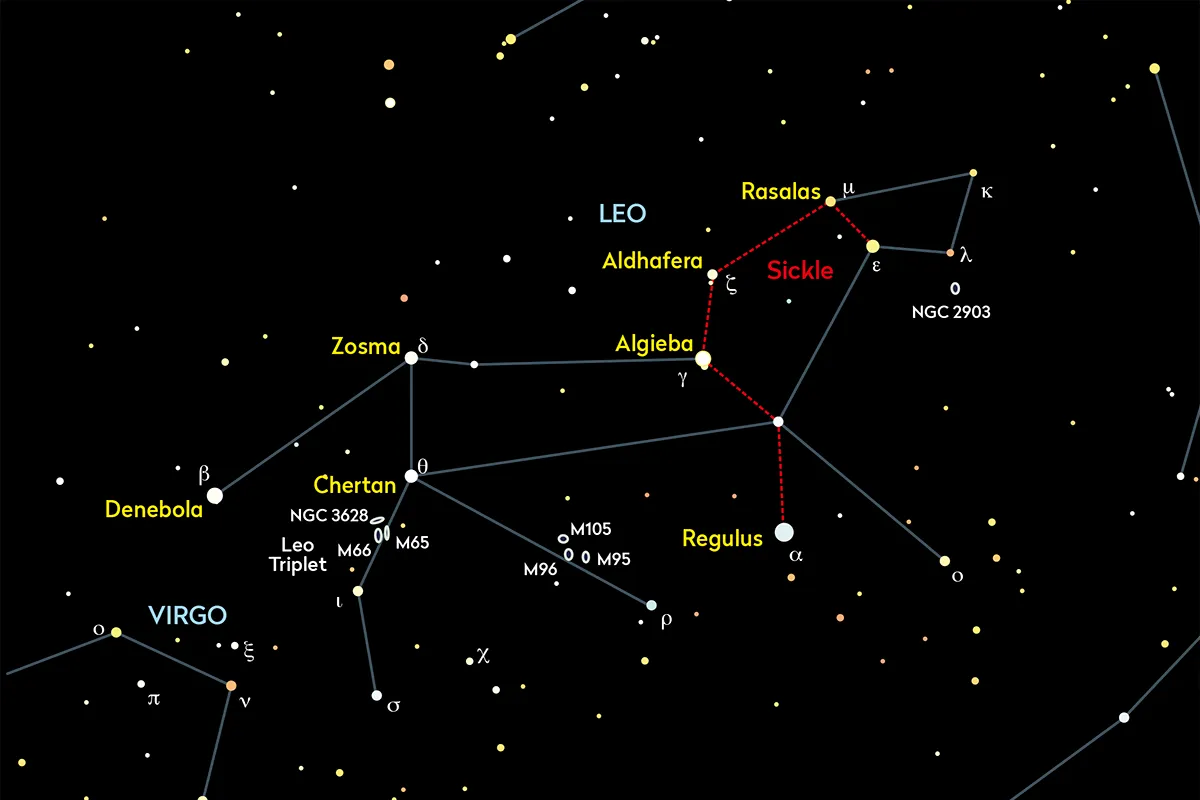
Luckily the comet has moved out of vague Virgo and into Leo, and on Friday morning it will be found to the lower left of that constellation’s brightest star, Regulus, and the famous Sickle asterism.
What it will look like
The comet is far too faint to see with the naked eye, despite how it appears on the outrageous artwork accompanying social media coverage of it.
If you want to photograph it, the camera on your phone won’t do.
You’ll either need to attach a DSLR camera to a telescope, or use a DSLR on a sky-tracking mount and fitted with a powerful, long lens to pick it out from the background stars.
While comet 3I/ATLAS might just be visible in a powerful pair of binoculars, looking like a tiny, slightly out-of-focus star, to get a good view of it you’ll definitely need a telescope.

To find the comet visually you will have to star-hop with your telescope from Regulus to the mag +3.8 star Rho Leonis, then continue half as far again in the same direction until you see a small, misty smudge. That will be the comet.
Just be careful not to mistake one of the many faint galaxies scattered across southern Leo for the comet.
Checking your favourite astronomy app on your phone will help you confirm your sighting.

What next for 3I/ATLAS?
It's been fascinating watching comet 3I/ATLAS scoot through our Solar System, but it will be with us a while longer yet.
In March 2026 it will pass Jupiter, at a much closer distance than it will be to us during our closest approach, and by the end of July 2026 it will have crossed Saturn’s orbit.
In June 2027 the comet will cross Uranus’ orbit, without passing close to the planet itself.
A year later, 3I/ATLAS will cross Neptune’s orbit, and then it will leave our Solar System’s planets behind.
3I won’t cross Pluto’s orbit until April 2029, and after that will strike out for interstellar space, with the Sun just a star getting fainter and fainter behind it.
And who knows, by then we might have detected another interstellar object passing through our neck of the celestial woods, one which will pass much closer to Earth.
But that’s all for the future. Before then, we have Friday 19 December 2025's close approach to look forward to.
I’m sure the images taken during its long distance fly-by will be fascinating, and the data collected by astronomers will keep them busy for many years to come.
If you manage to capture an image of comet 3I/ATLAS, we'd love to see it! Share your images with us by emailing contactus@skyatnightmagazine.com