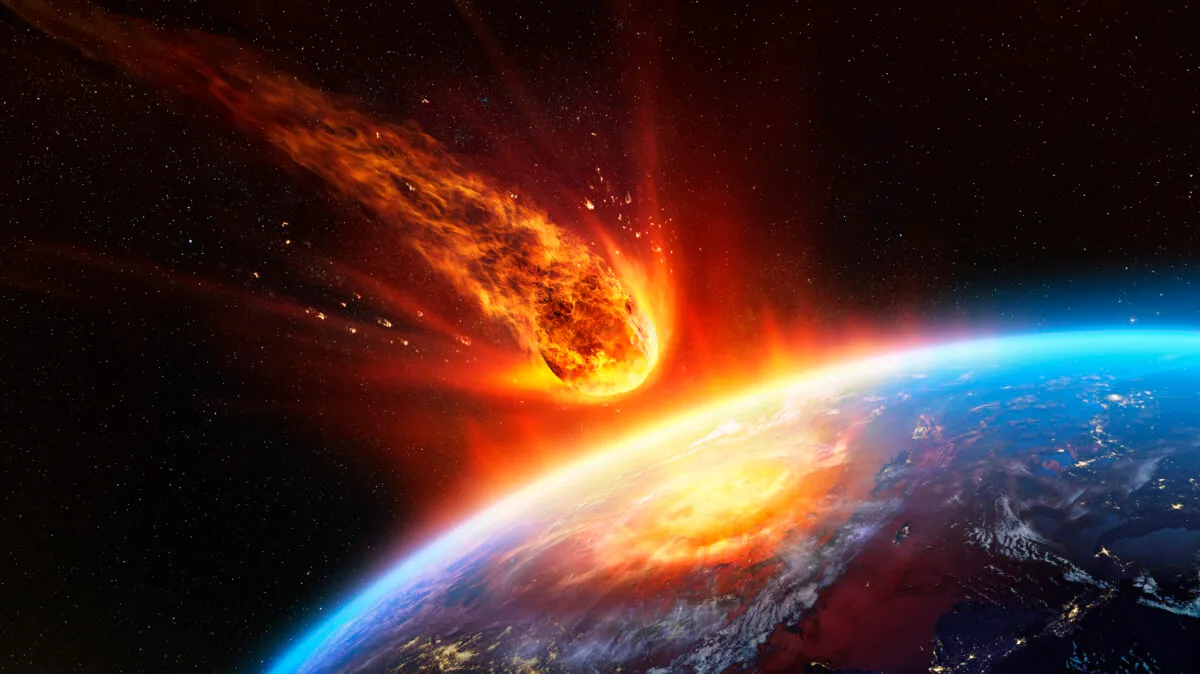
The threat of asteroids and other space rocks to planet Earth seems to crop up fairly regularly in space science news.
From the recent – but short-lived – alarm around potentially-hazardous asteroid 2024 YR4 to the distant-future and potentially-hazardous Valentine's Day 2046 asteroid (which scientists say won't hit Earth after all), it seems we're discovering more and more large space rocks that could pose a threat to our planet.
More on comet 3I/ATLAS

And as the NASA DART mission showed, humanity does have the means to send spacecraft to successfully deflect hazardous asteroids, provided we spot them in time.
But many asteroids are too far away to be immediately seen from Earth.
So how can scientists get a better grip on what's lurking out there in deep space, and which distant bodies are a threat to our planet?
Enter Juice
The European Space Agency's Planetary Defence team say recent observations of comet 3I/ATLAS by a spacecraft on its way to Jupiter show how deep-space missions could be vital in providing early warning signs of potential threats.
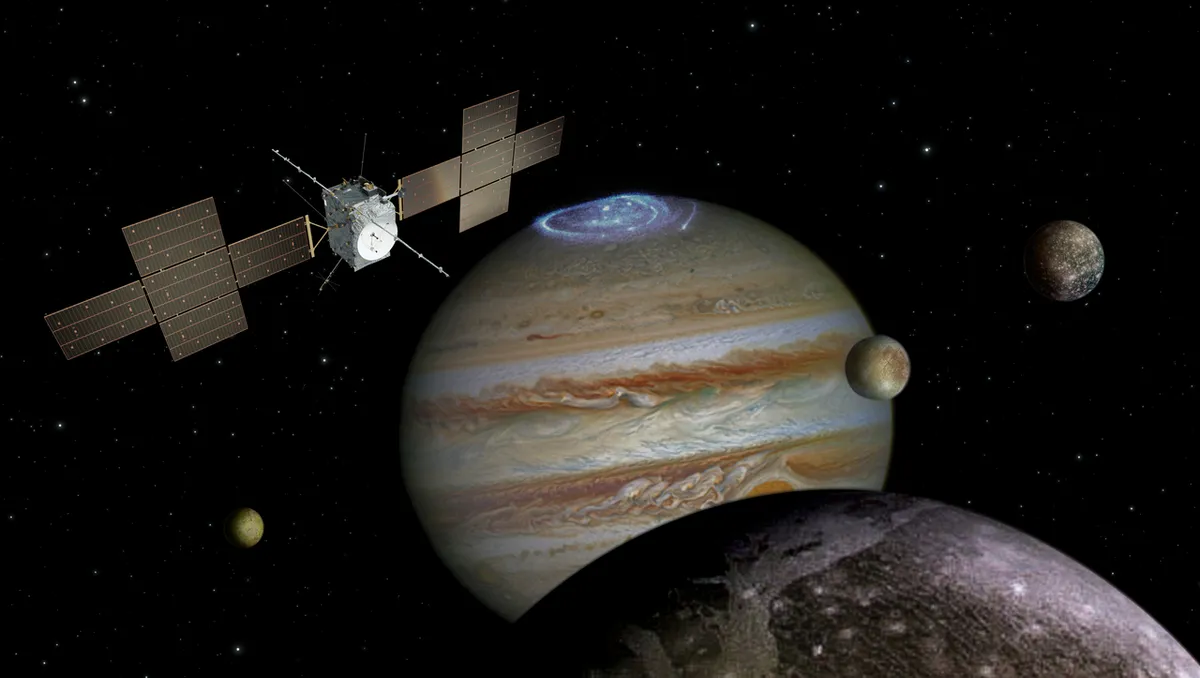
Juice – the Jupiter Icy Moons Explorer – is a space probe currently trekking across our Solar System that's expected to arrive at Jupiter in July 2031.
Once at the Jovian system, Juice will study Jupiter's large icy moons Europa, Ganymede and Callisto.
These moons are thought to have liquid oceans beneath their frozen surfaces and are among the most promising places in our Solar System to look for signs of life.
In November 2025, the Juice science team turned on the spacecraft's cameras to take a look at comet 3I/ATLAS as it skimmed past our Sun.

A Sun-skimming interstellar comet
Comet 3I/ATLAS was discovered on 1 July 2025 and was found to be an interstellar comet, meaning it originated far beyond our Solar System, in a distant corner of our Galaxy.
This interstellar visitor is passing through our Solar System and will soon be lost from view forever.
3I/ATLAS is estimated to be at least 7 billion years old, but could be at least 10 billion years old, making it the oldest comet ever discovered.

In late October 2025, 3I/ATLAS made its closest approach to the Sun, heating up as it received a powerful burst of solar radiation.
When Juice scientists turned the spacecraft's camera on in early November 2025, the spacecraft was able to track 3I/ATLAS just after the comet's close approach to the Sun.
It saw ice from the comet's nucleus turn into water vapour, which gushed out at a rate equivalent to 70 Olympic swimming pools a day.

But as well as giving scientists an insight into the comet's chemical makeup, planetary defence experts say Juice's observations of 3I/ATLAS are telling them how it could be possible to track dangerous asteroids that would be too far to see from Earth.
Juice's NavCam had a closer view of 3I/ATLAS, and from a different angle, than Earth-based telescopes, even at a time when the comet was not visible from Earth.
That enabled ESA’s Planetary Defence team to line up NavCam images throughout November 2025 and learn more about the comet’s changing position and trajectory.

The team say this shows that observations from deep-space missions can help precisely calculate the orbits of comets or asteroids that aren't immediately visible from Earth.
So while much of the science around comet 3I/ATLAS has been about learning what the comet is made of, and what that tells us about chemistry of the region of our Galaxy in which it formed, it seems the interstellar visitor is also teaching us new ways to save planet Earth from distant threats.


