There’s a new comet in town – and it’s the first discovered by the Euclid space telescope.
As of 8 October 2026, a new comet has been added to the astronomical record books.
It's comet C/2026 S1 (Euclid), to be precise, the name denoting that it is the first comet to have been discovered by the European Space Agency’s Euclid space telescope.
Around 40 to 50 new comets are identified each year, mostly because astronomers today have much higher-resolution imaging equipment at their disposal than they did 100, 50 or even 20 years ago.
As a result, small bodies that we haven’t previously seen are popping up in space images all the time.
What’s interesting in this case, though, is the source, because Euclid wasn’t designed to spot comets at all.
Launched in 2023, Euclid’s primary mission is all about dark matter and dark energy.
More about Euclid
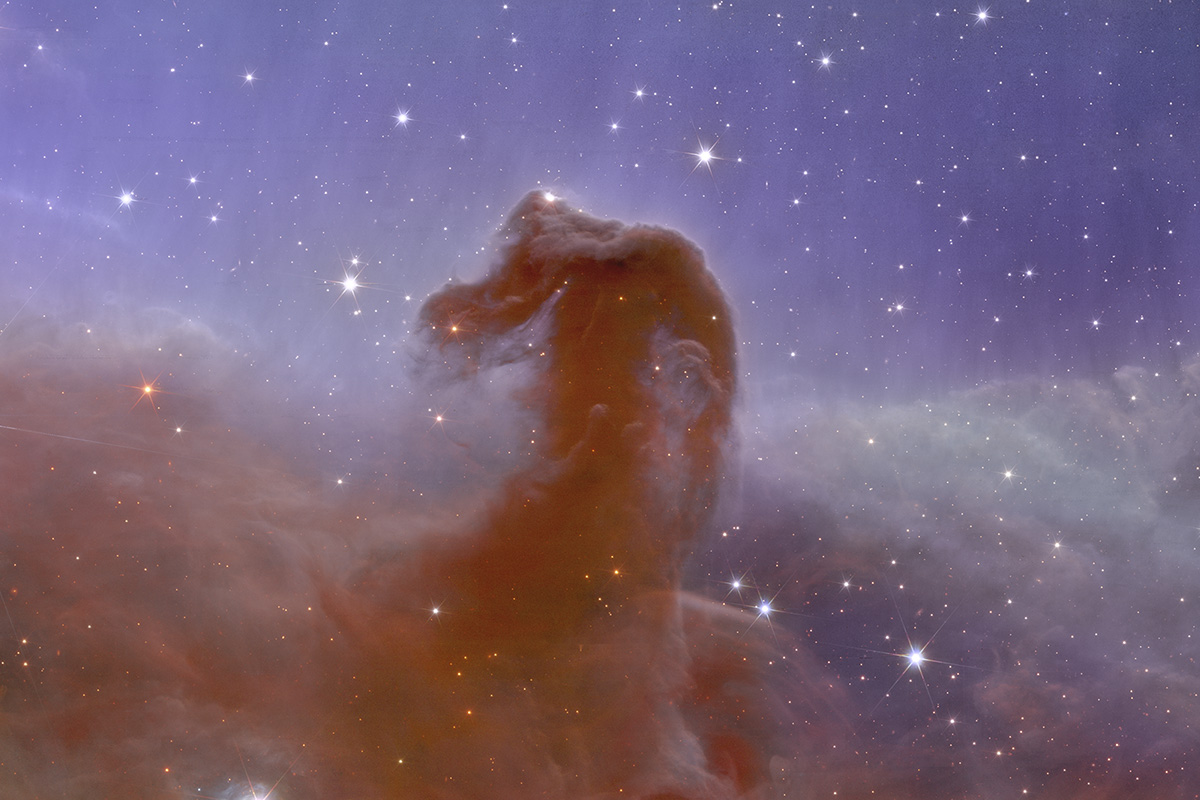
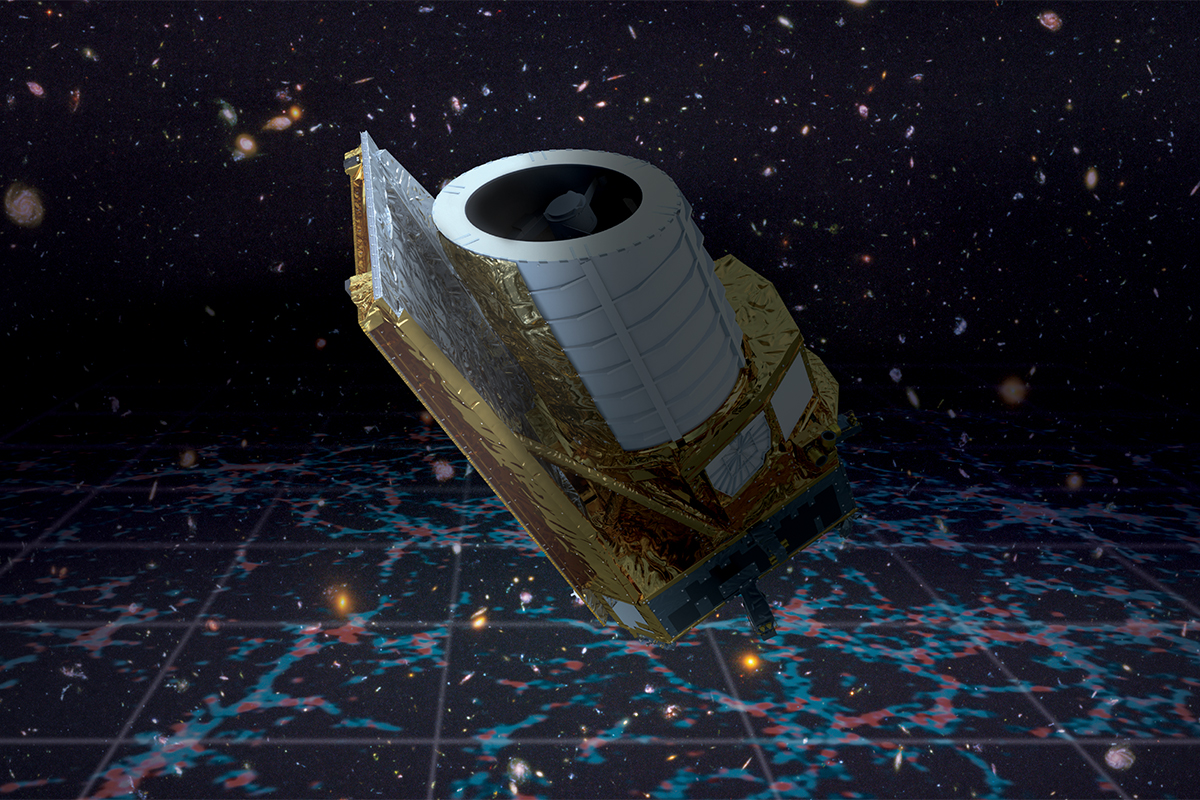
Why the Euclid space telescope is such a game changer
In ESA’s own words: "The space telescope will create a great map of the large-scale structure of the Universe across space and time by observing billions of galaxies out to 10 billion lightyears, across more than a third of the sky.
"Euclid will explore how the Universe has expanded and how structure has formed over cosmic history, revealing more about the role of gravity and the nature of dark energy and dark matter."
Got that? Billions of lightyears. A third of the sky. Billions of galaxies. Cosmic history.
Big stuff, in other words. Not small lumps of rock and ice meandering around our own Solar System… and yet Euclid has found one all the same.
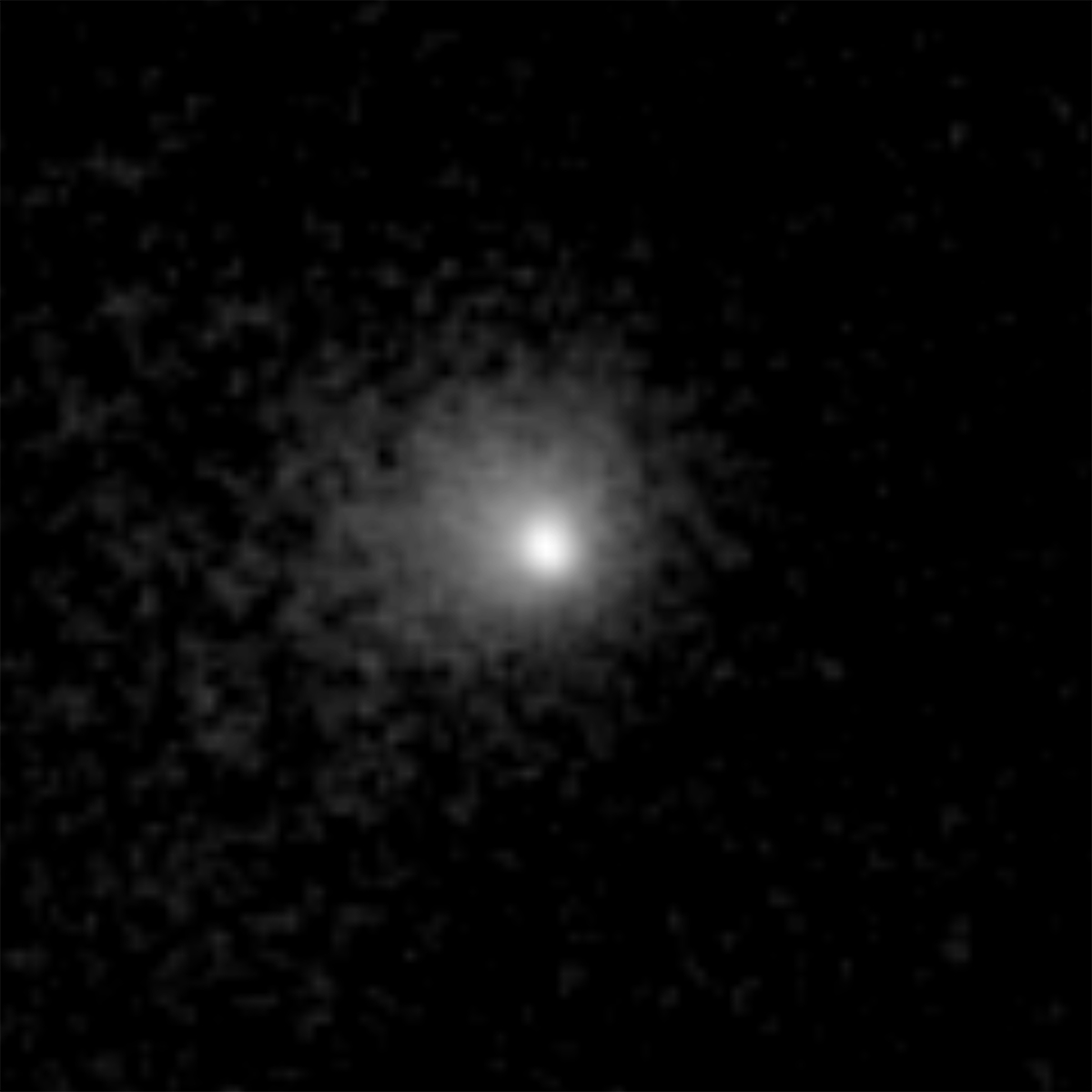
How the new comet was found
The discovery was made by University of Helsinki PhD candidate Mikko Pöntinen, who together with the Solar System Objects Science Working Group of the Euclid Consortium has been developing motion-detection software to find and monitor Solar System objects in Euclid’s images.
Not so that these objects can be studied, but rather so that the ‘noise’ they generate can be discounted when processing and studying Euclid imagery.
It reminds us of the famous 18th century comet hunter Charles Messier, who compiled a list of all the brightest deep-sky objects (known as the Messier Catalogue).
Not because he loved observing galaxies, nebulae and star clusters, but because those objects aren't comets.
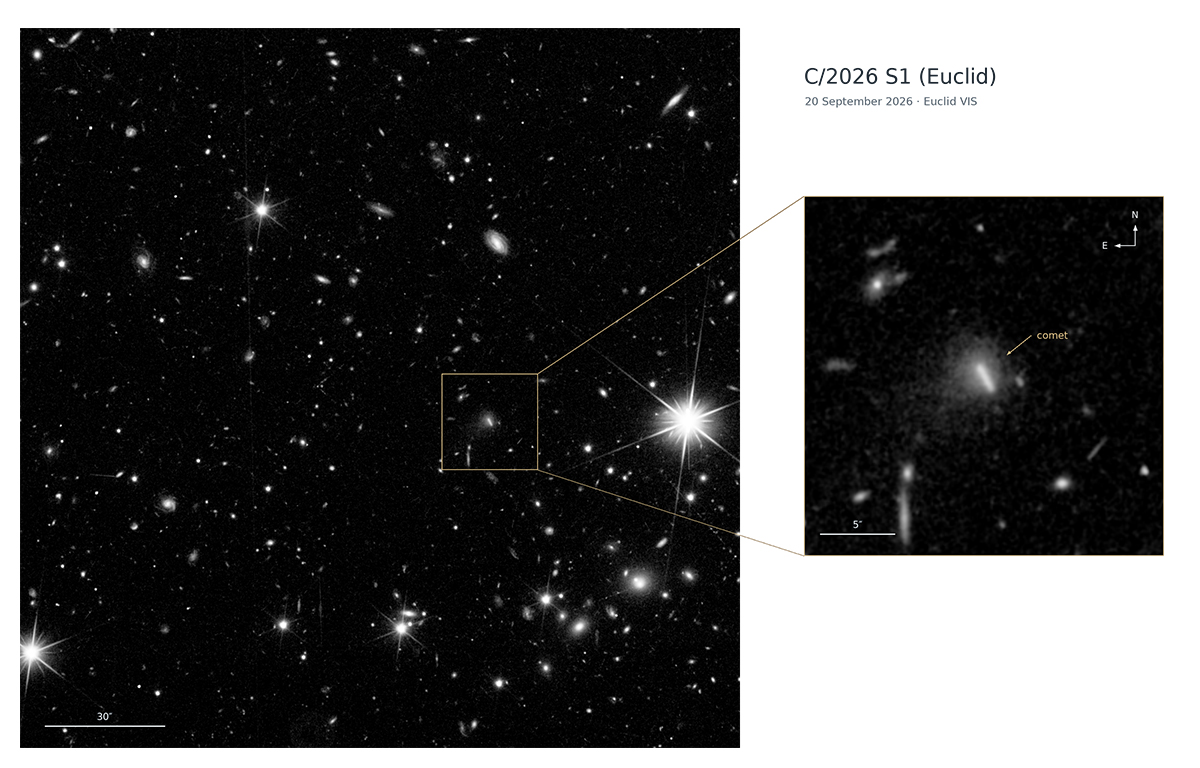
"I was excited to see my software flag a ‘streak’ smeared across several images – the result of a fast-moving object," Pöntinen says of his discovery.
“By predicting its position I could identify it in other images, in total finding it in five image sets. Further inspection revealed that it had a fuzzy cloud around it, indicative of an active object like a comet that is shedding dust and gas.”
After checking that the moving object he’d stumbled upon wasn’t listed in any catalogues of known comets and asteroids, Pöntinen reported his discovery to the International Astronomical Union’s Minor Planet Center, who instigated a programme of follow-up observations by ground-based astronomers.
These observations confirmed Pöntinen’s findings, and as a result, comet C/2026 S1 (Euclid) was officially recognised on 8 October 2026.
As of October 2026, it's located in the constellation Draco, but much too dim to be seen through amateur telescopes.
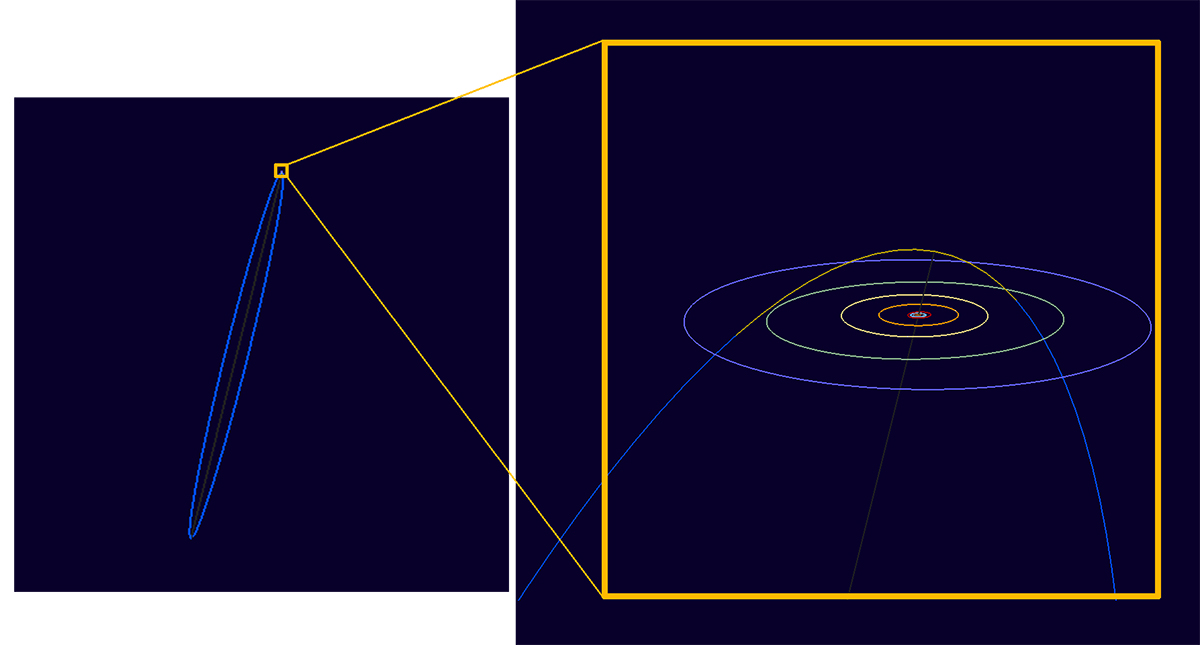
This comet has an unusual orbit
The comet orbits the Sun at a distance of around 1.3 billion kilometres (808 million miles), which would put it somewhere between Jupiter and Saturn if it orbited in the same plane as the planets. But it doesn’t.
Instead, comet C/2026 S1 (Euclid) has an orbit that’s almost perpendicular to the orbits of the Solar System’s major bodies, which is one reason we’ve never seen it before.
The other reason is that its orbital period is measured in thousands of years, making this probably the first time it’s come into view since telescopes were invented.
While the remarkable discovery is interesting itself, it also points to a potential secondary role for Euclid.
ESA is currently readying its Comet Interceptor mission, which will involve sending a robotic probe into space to approach and study a long period comet – or even an interstellar comet – in our Solar System.
A target for this mission has yet to be chosen – but now we know that Euclid can detect comets a long way from the Sun, and that the world astronomical community can confirm them in a matter of days, we might have just stumbled on a new way of identifying one.