
Did you enjoy last week's close encounter between Venus and Jupiter? Perhaps you managed to see Mercury too.
This week, the Moon joins the planet parade, and some observers will even be able to see a rare daylight lunar occultation of Venus on 17 June, when Venus will temporarily disappear behind the Moon.
Venus and Jupiter were at their closest point together this year on 9 June, and now the bodies are moving away from one another.
More stargazing
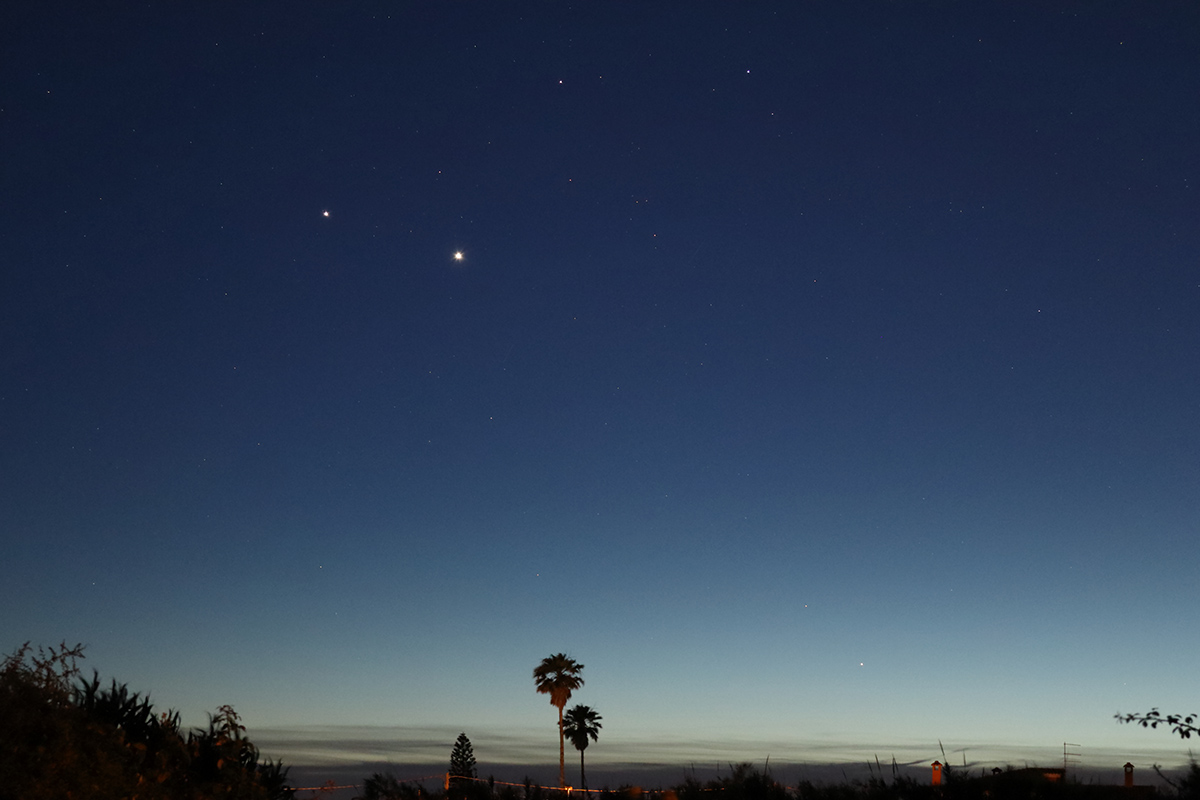
But while Venus's position is improving, Jupiter's visibility is getting worse over time.
Jupiter is slowly approaching the same patch of sky as the Sun, meaning by the end of June 2026 it will be difficult to see.
However, before that happens, this week there's a great chance to catch Mercury, Venus, Jupiter and a thin crescent Moon in the early evening sky.
Here we'll reveal where you need to look – and when.
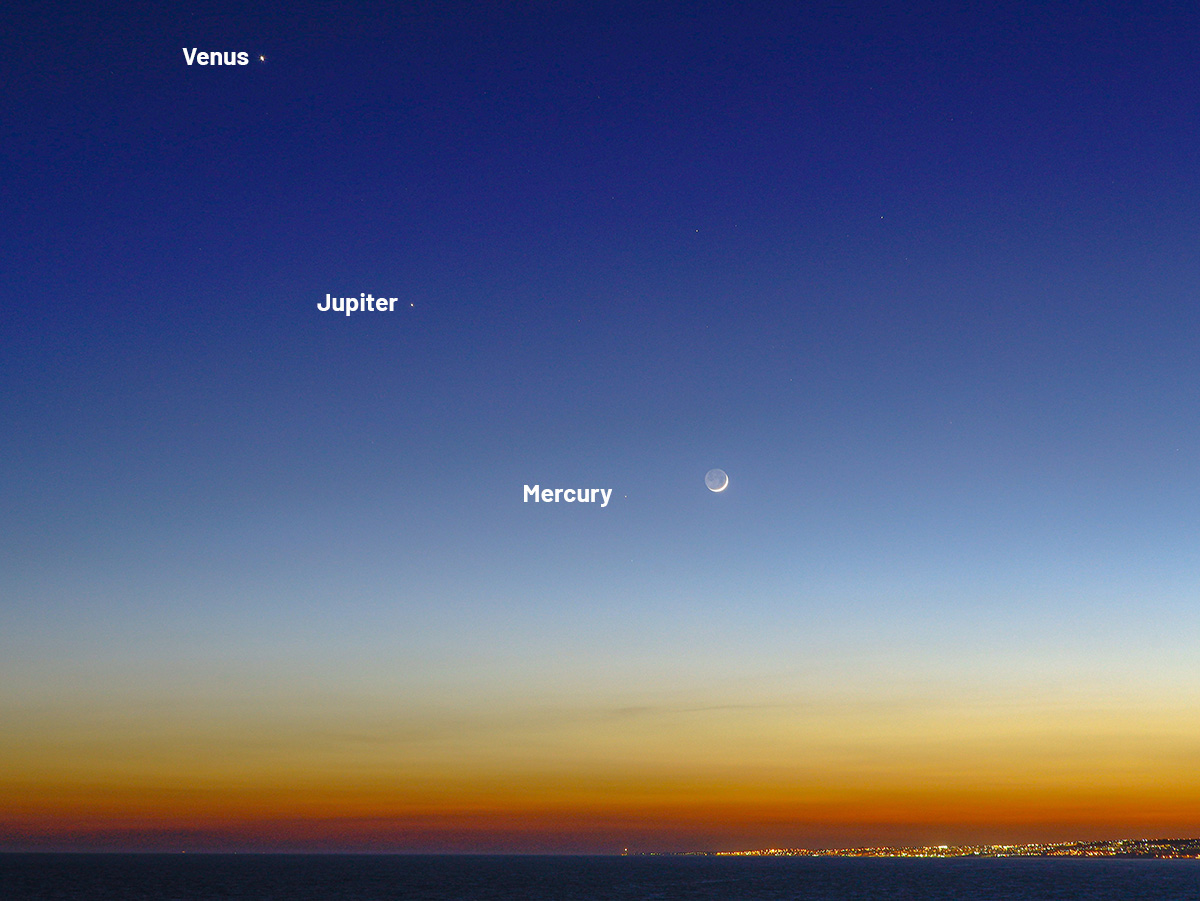
Monday 15 June
The three planets are visible in an almost-straight line, low in the northwest immediately after sunset.
Mercury is closest to the horizon, with Jupiter above and to its left, then Venus above and to Jupiter's left.
You'll need a clear, flat horizon to see them and you should only look once the Sun has properly set, to avoid accidentally catching a glimpse of the Sun with your naked eye.
Tuesday 16 June
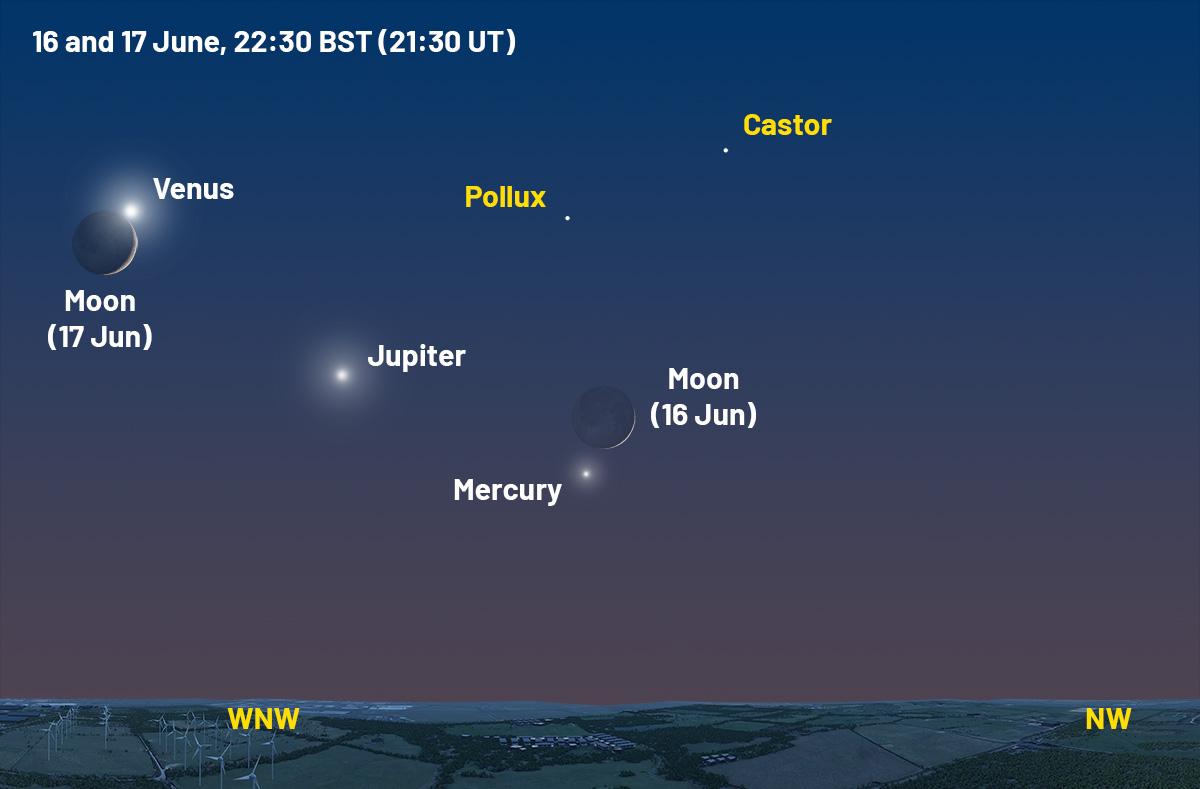
On Tuesday 16 June, look to the northwest again and you'll see a meeting between a very thin crescent Moon and the planet Mercury.
Both are visible low in the northwest and you'll need a clear, flat horizon to see them.
Because the Moon is so thin and Mercury is so dim, you may need to use Venus and Jupiter to help you find them.
You can do this by using our chart below as a guide.
Wednesday 17 June
On the evening of Wednesday 17 June, Venus and the crescent Moon are close together in the early evening sky.
As darkness falls, look out for the slightly thicker lunar crescent just south of Venus. From Europe, this will be a close meeting of Venus and the crescent Moon.
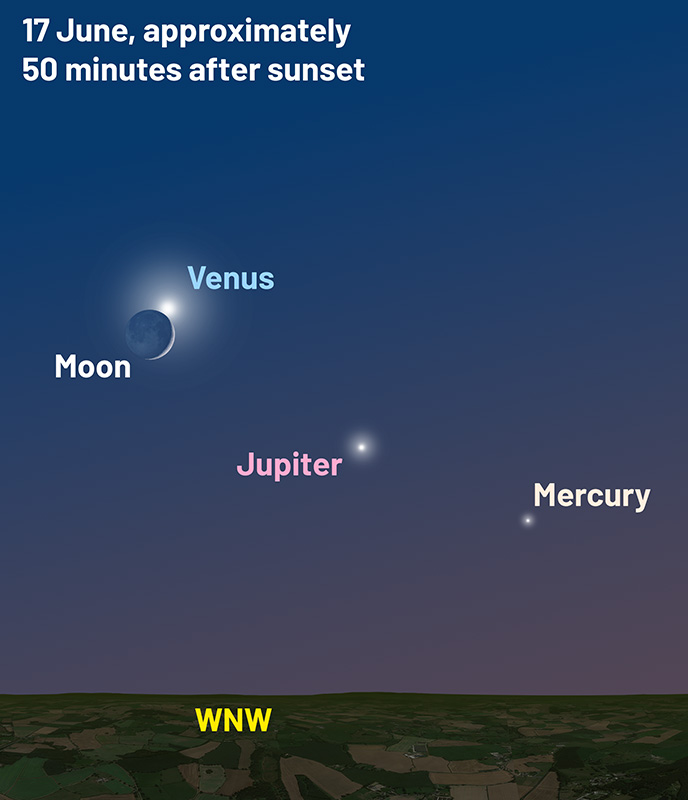
From much of North America, Brazil and Venezuela – among other countries – this meeting between Venus and the Moon on 17 June will be a lunar occultation, when the Moon will pass in front of Venus, temporarily blocking the planet from view.
However, the lunar occultation will occur during daytime for those observers, meaning extra care should be taken, as the Sun will still be above the horizon.
If you observe Venus, Jupiter and the Moon this week, send us your observations and images!

