When is a door not a door? “When it’s ajar,” is the traditional answer… but another answer would be, “When it’s an optical illusion on Mars triggered by a perceptual phenomenon called pareidolia.”
The 'door' in question is one that was discovered on Mars a few years ago.
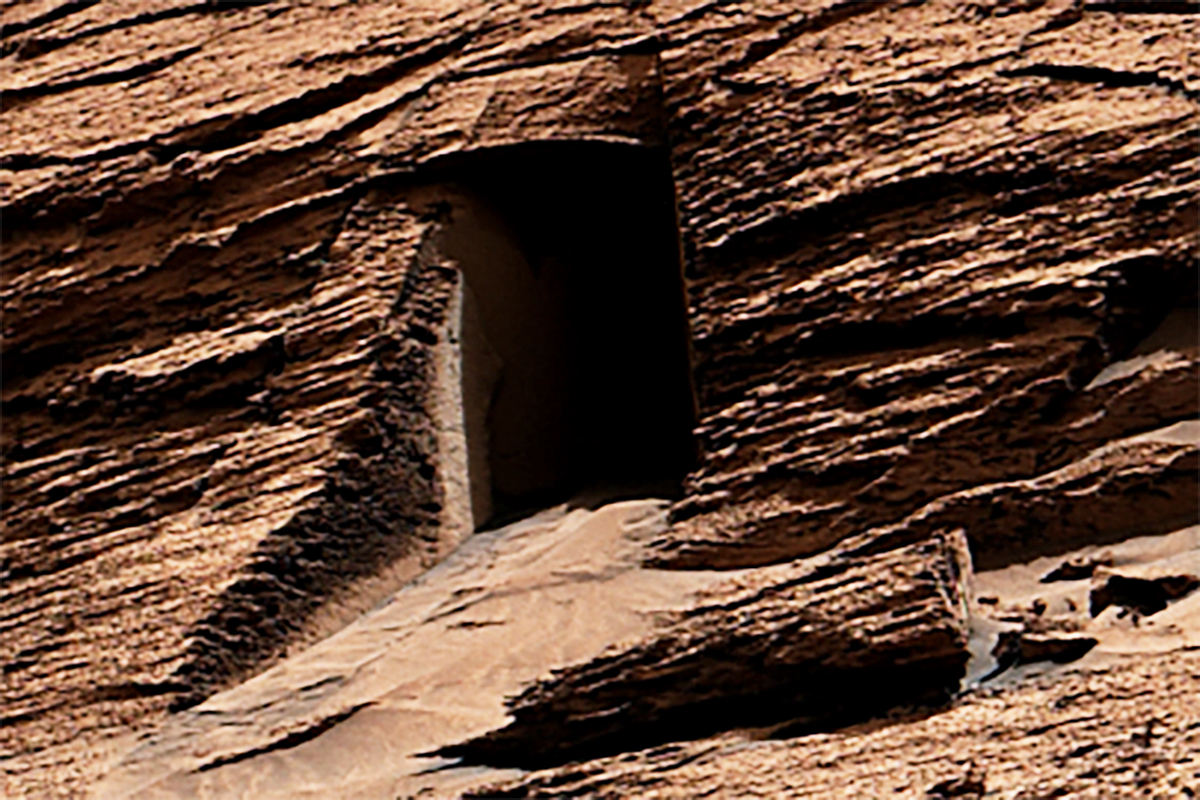
Not that there are actually any doors on Mars to discover, you understand: there’s just a fissure in the rocks that looks a bit like one.
But that didn’t stop the discovery causing something of a media storm at the time.
Let’s start at the beginning.
More weird stuff on Mars
How the Mars doorway image was captured – and what it really shows
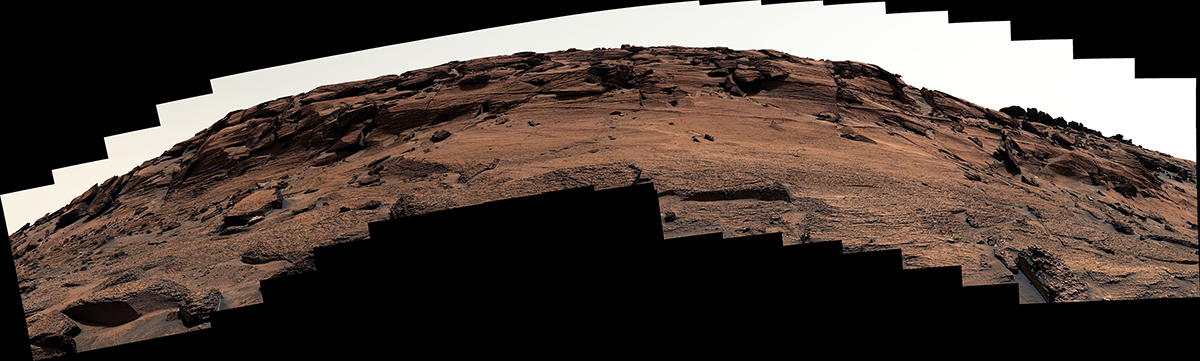
On 7 May 2022, NASA’s Curiosity rover sent back an image of the Martian landscape that was captured as it explored the region around Mount Sharp.
Mount Sharp, otherwise known as Aeolis Mons, is the central peak of Mars’s Gale Crater.
The crater itself was formed by an asteroid or comet impact, probably about 3.5-3.8 billion years ago.
Mount Sharp would then have formed later, as water – we know there was once liquid water on Mars – deposited sediment in the centre of the crater.
Mount Sharp stands 5.5km (3.4 miles) high, but at the time of the doorway’s ‘discovery’, Curiosity was studying an area of its lower slopes called the Greenheugh Pediment.
Which was where it captured a fissure in the sandstone that looked remarkably like a human-made doorway.
Naturally, this apparent evidence of some kind of civilisation on Mars – whether that be an extant civilisation, or an ancient, extinct one – stirred up a great deal of excitement in certain quarters of the internet.
For some ardent believers in intelligent life on other planets, the doorway seemed like the smoking gun they’d been in search of for decades.
The trouble with that idea, however, is that the doorway wasn’t really a doorway at all – and it certainly wasn’t one built by/for humans because the feature in question, in real life, stands just 30cm (1 ft) tall!
Instead, it's simply a fissure in the rock that just happens to have formed a doorway-like shape.
The fact that so many people looked at the Curiosity image and thought ‘doorway’ is a classic example of pareidolia – a tendency that we all have to detect patterns in things.
Why we see strange objects on Mars
Pareidolia, it must be stressed, is neither a form of hallucination nor delusion. There is a good evolutionary reason for this tendency to have evolved.
For at least 300,000 years – and some scientists now believe for as long as a million years – we humans were essentially on our own in a vast, unforgiving world, and frequently in the dark to boot.
In such conditions, the ability to quickly spot a predator’s partly-hidden face in a bush or behind a tree offered a distinct advantage in the not-getting-eaten stakes – and so human brains evolved to be very good at detecting patterns and familiar shapes.
But the human brain isn’t infallible – so that ability naturally generates a certain proportion of false positives.
Such as seeing a doorway on Mars when there isn’t really a doorway there.
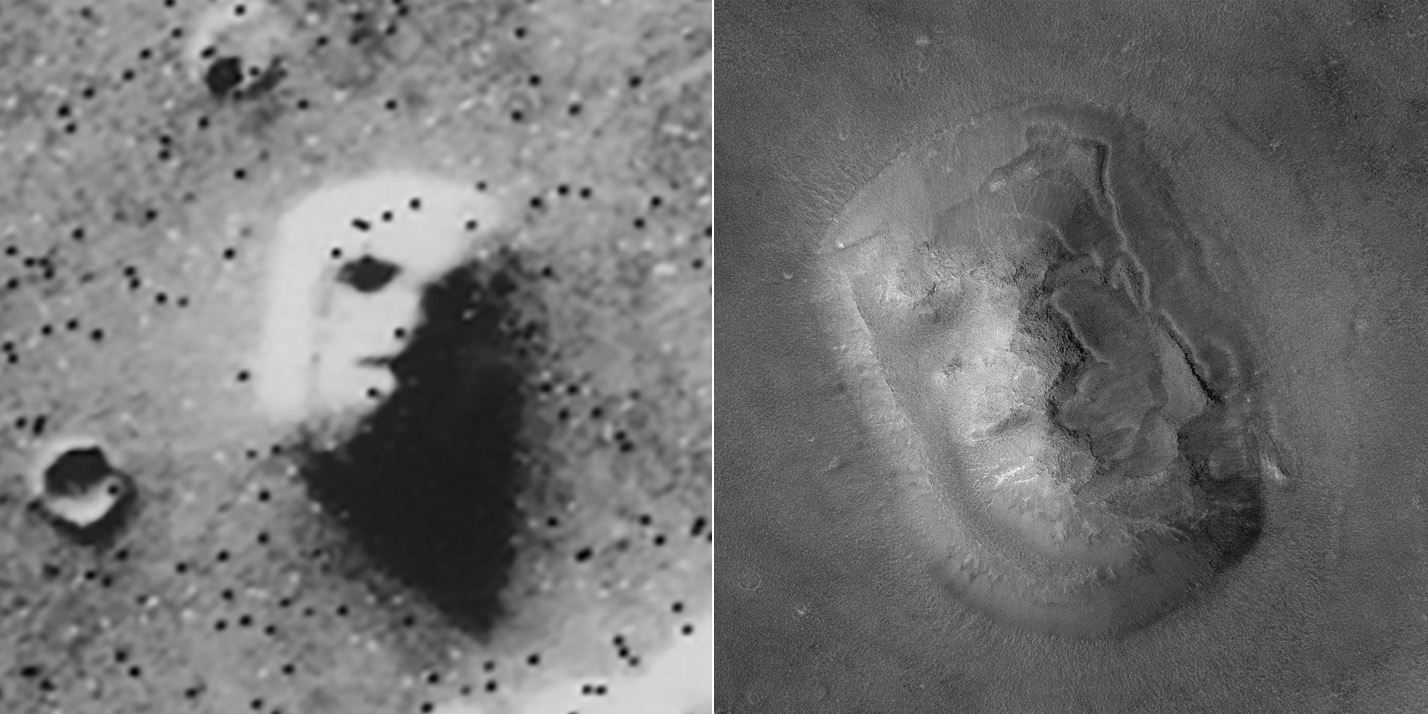
The same explanation applied to the ‘face on Mars’ that was detected in images sent back by Viking 1 in 1976 – that one turned out to be an eroded mesa (plateau) on the Martian surface.
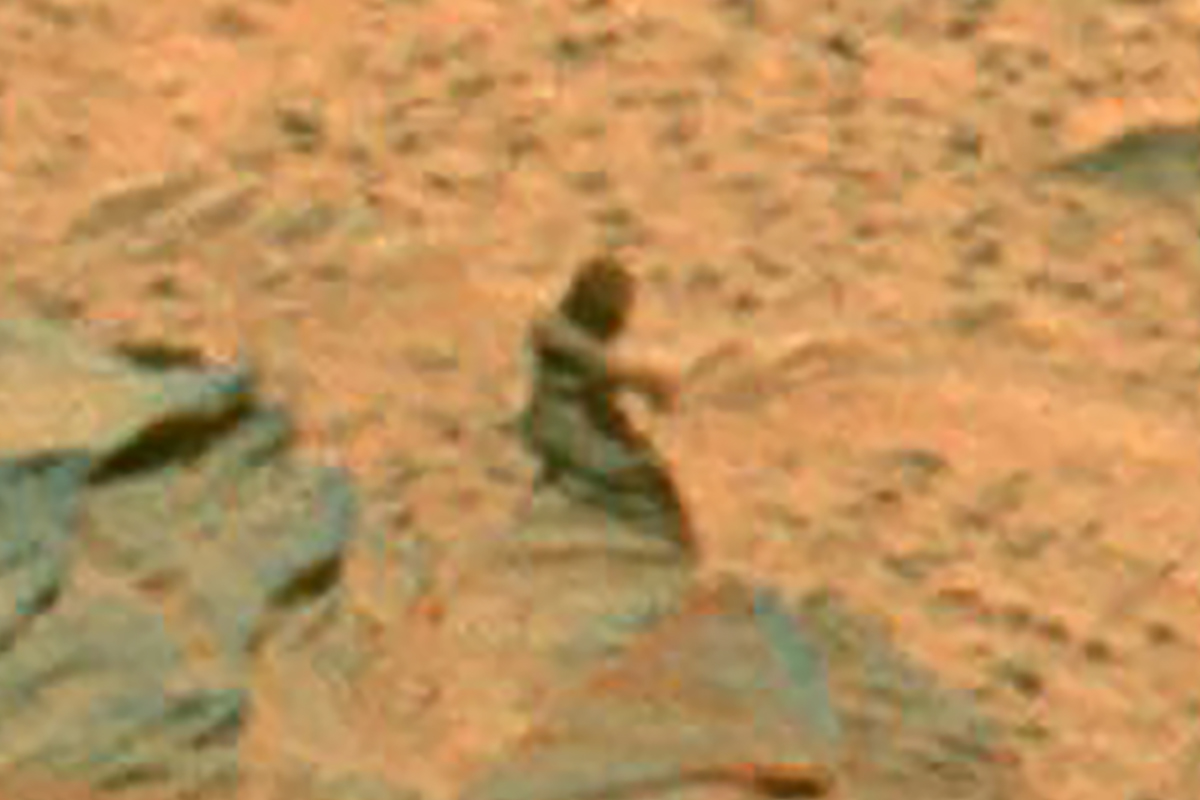
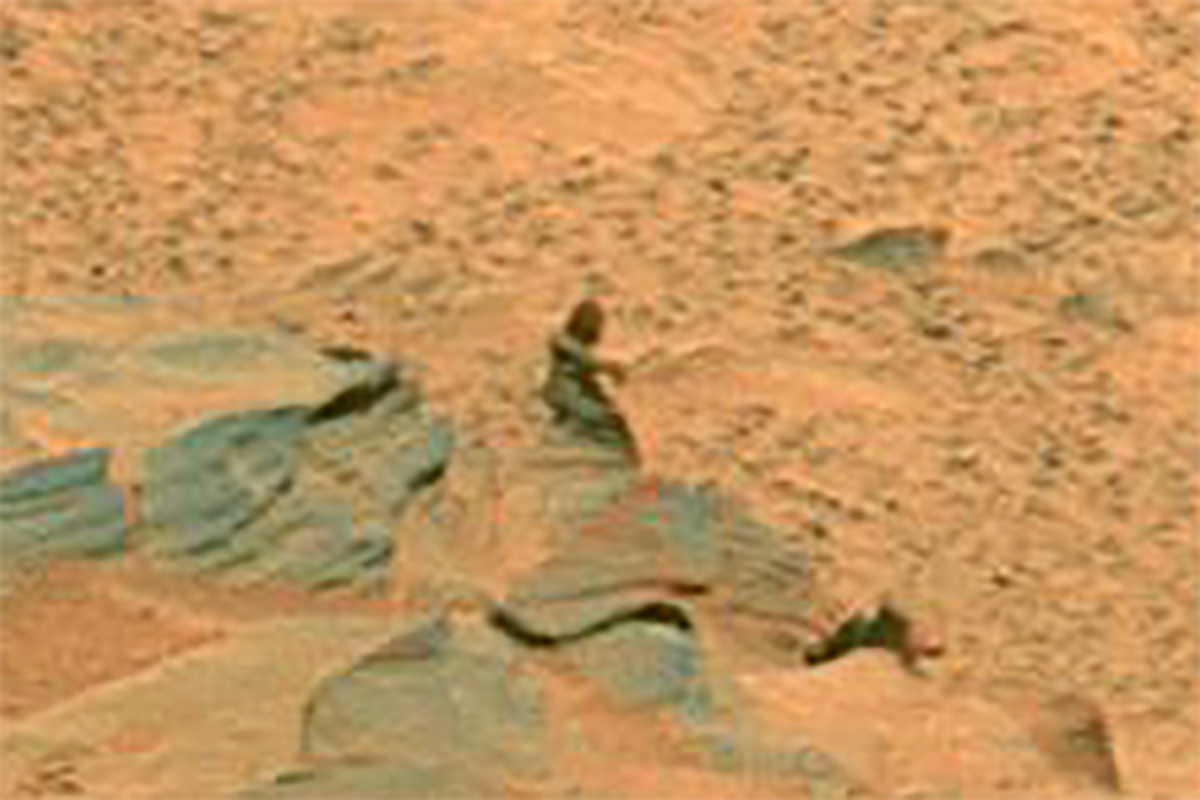
Ditto the ‘creepy woman’ captured in an image from the Spirit rover in 2007, the ‘floating spoon’ apparently spotted by Curiosity in 2015, and various other Martian objects that turned out not to be what they looked like after all.
The reason we seem to see so much strange stuff on Mars is likely because a) it's a rocky planet with plenty of cliff faces, canyons and craters, so plenty of geological features that have the potential to form a familiar shape.
And b) because it is easily the most-studied and most-explored planet in our Solar System (apart from Earth, of course), meaning we have a vast wealth of images available for anyone to analyse and study.
But these formations are worthy of study all the same.
Because one day we might stumble upon something that really does constitute proof of the existence of an alien civilisation – it would be a terrible shame if we then simply dismissed it as “almost certainly an optical illusion” and neglected to look into it properly!