Organic matter, the basis of life as we know it, is made of carbon-based compounds.
Uncovering its presence in space can tell scientists how life originally formed and whether it might exist elsewhere.
One off-world environment where scientists are hunting for organic matter is Mars.
Through the active NASA rover missions, Curiosity and Perseverance, scientists are examining the Martian surface for clues of ancient life.
Dr Amy Williams and her team recently discovered the largest collection of organic compounds on Mars in a sample of rock collected by the Curiosity rover.
She tells us more about her discovery.
More on alien life
What does your research involve?
I work both on Earth and with missions on Mars, including the active NASA Mars rover missions Curiosity and Perseverance – and hopefully eventually missions to other worlds.
I’m interested in the questions and instruments that help us identify what we would call biosignatures.
These signatures are our evidence for life, the things that make us confident that life exists on other worlds.
In the case of Mars, what constitutes a potential biosignature?
Potential biosignatures are signals that, if you saw them on Earth, you might say, “Huh, life normally has something to do with the production of that kind of signal.”
With a potential biosignature, the evidence that they are produced by life is not strong enough to stand on its own; there might be non-biological or ‘abiotic’ processes that could lead to them instead.
So you need to perform additional tests and find further evidence that supports this claim.
On the other hand, definitive biosignatures are when you find signatures that can only be produced by life – a pattern, a substance.
What we have detected on Mars are potential biosignatures, and it’s important to say that they don’t mean we’ve found life on Mars.
That’s an extraordinary claim that requires extraordinary evidence!
What are Curiosity and Perseverance doing on Mars?
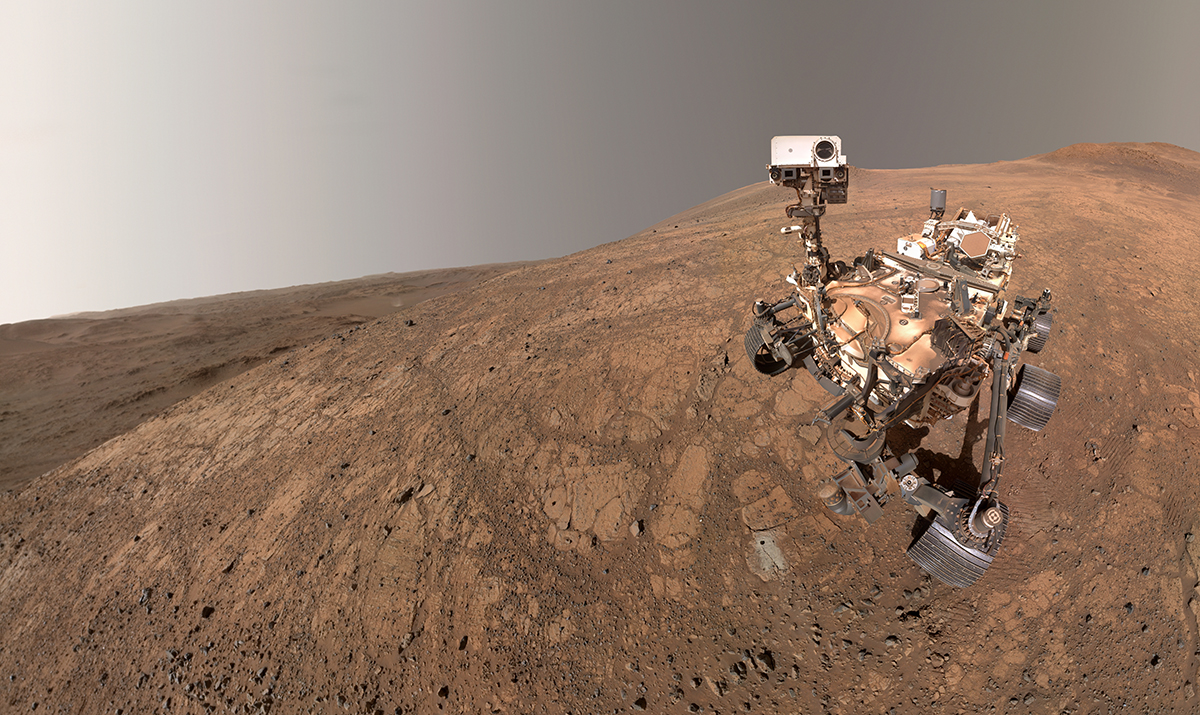
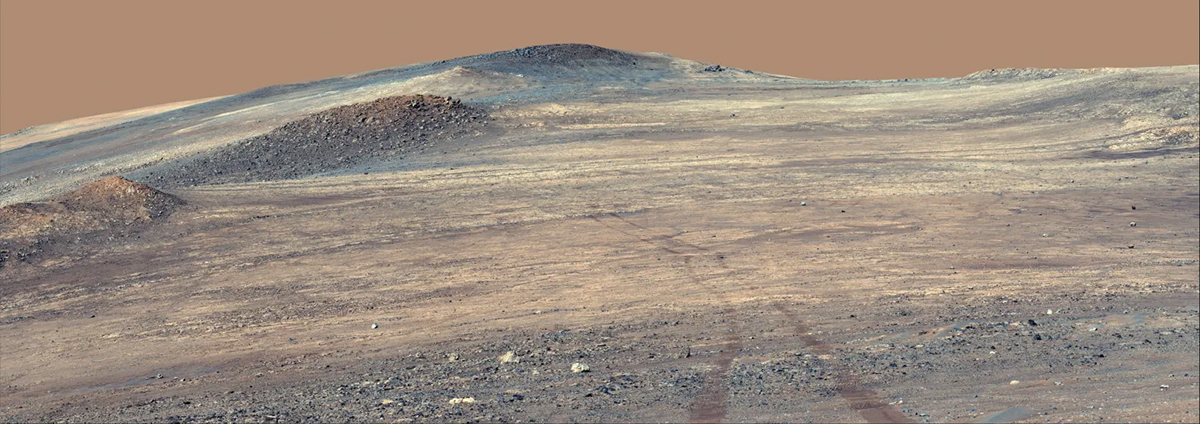
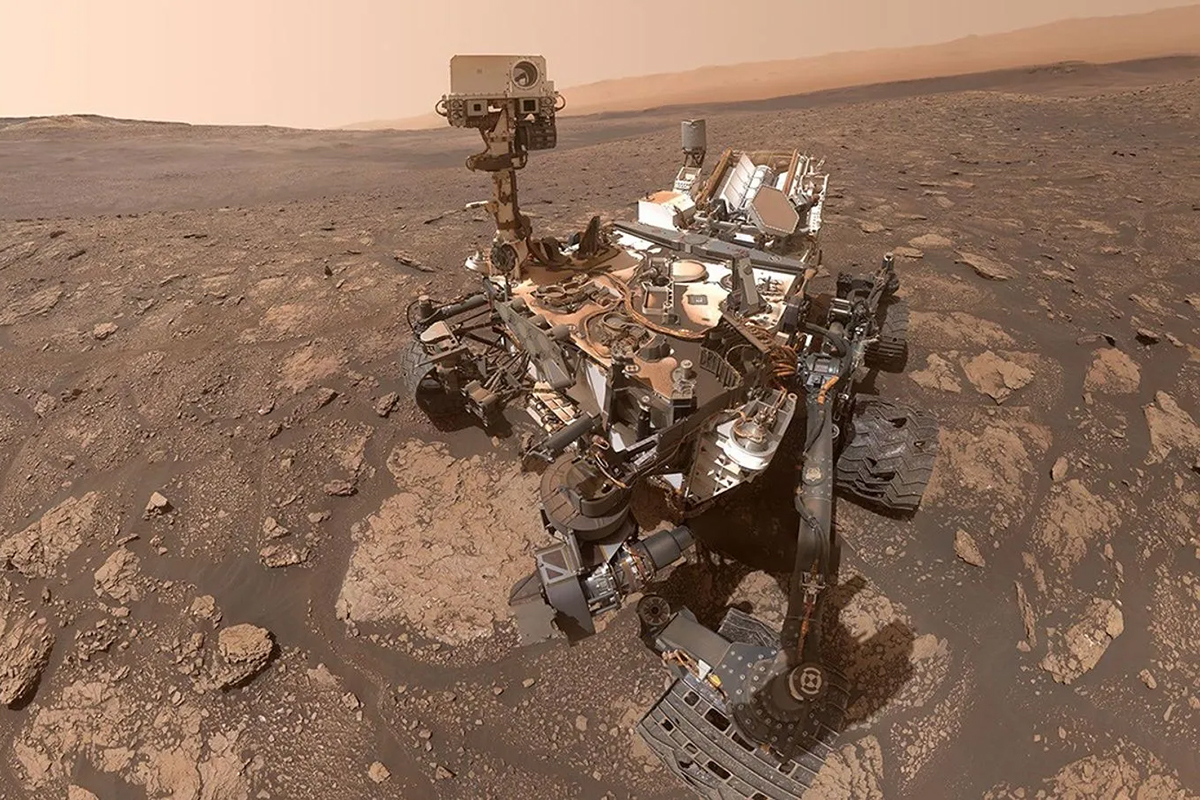
These are Mars rover missions, both controlling a car-sized rover packed with on-board science instruments on the Martian surface.
Curiosity landed on Mars in 2012 and its mission was not to look for life, but instead to look for places where life might have wanted to live in the past, if life ever existed on Mars.
These are places we think that organisms like our modern bacteria on Earth might have wanted to live in the past.
For that, life needs water, a source of organic carbon and a source of energy.
So when we look for these environments on Mars, we're looking for places that had all three of these in the ancient past, not necessarily today.
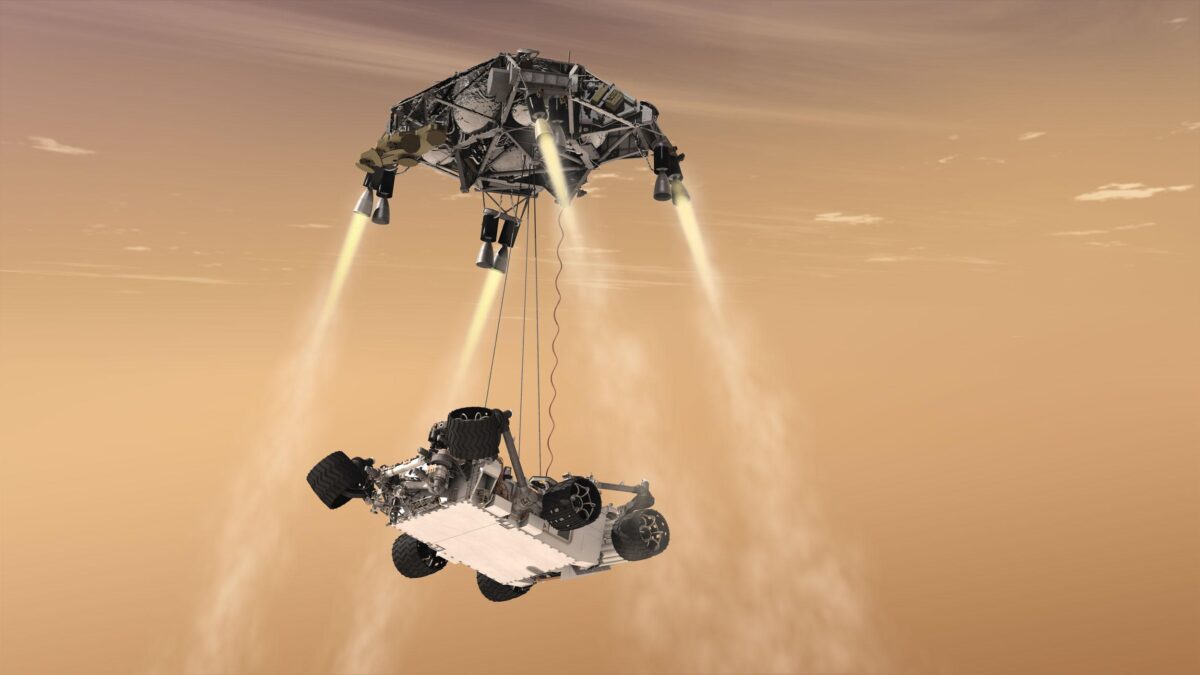
Perseverance is an ancient life detection mission, looking for evidence of ancient life as opposed to life on Mars now.
It’s interested in whether you could have things like modern bacteria found on Earth, preserved in the rocks of Mars’s Jezero crater.
What have the rovers found?
We found a huge diversity of organic molecules, some of which had never been seen on Mars before.
There were some complex molecules of particular interest.
The first is benzothiophene. If you imagine six carbon atoms binding together to form a ring structure, then benzothiophene is two of these rings bound together with sulphur present in one of the rings.
We know this molecule formed early on in the Solar System, so this points to the idea that these compounds came from meteorites falling to Mars’s surface billions of years ago and being preserved in the rocks.
The other interesting thing we found was what is called a nitrogen heterocycle.
It’s also made of two rings of carbon, but this time, one of the rings contains nitrogen instead of sulphur.
This is an interesting molecule because it looks like one of the precursor compounds that can eventually form DNA.
What can this tell us about life on Earth?
We can’t say whether this suite of organic molecules comes from geology, biology or from infalling meteorites.
What we can say is that some of these molecules are consistent with what we expect to see on a meteorite, and that these might have fallen to Mars’s surface three and a half billion years ago.
It’s likely that infalling meteorites are where we got some of these building blocks for life as we know it on Earth.
This is a big question: how do all these components for life get onto Earth? Of course, we can’t say this definitively, yet, but this is an important building block for that picture on Mars.
How did you make this discovery?
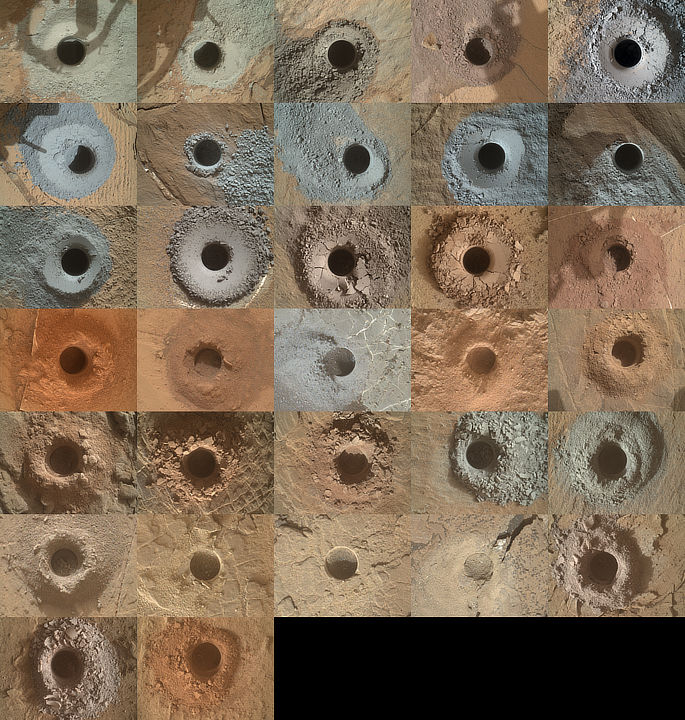
We were looking at a rock sample collected on Mars from the Curiosity rover in 2020, specifically one that was rich in clay.
One of the experiments that Curiosity can do is break organic carbon compounds into their constituent atoms and we can use the results of that experiment to work out what molecules were in the rock.
The instrument itself is called SAM or Sample Analysis at Mars, which is actually several instruments in one.
Onboard is a carousel of 74 sample cups which contain different chemicals that are used for analysis.
Only two contain the specific chemical necessary for this type of analysis, one of which helped us to make this discovery.
Mars is a hostile environment. Is it surprising that these molecules persisted?
I might say I was pleasantly surprised, but we were hopeful we’d be able to see molecules like this.
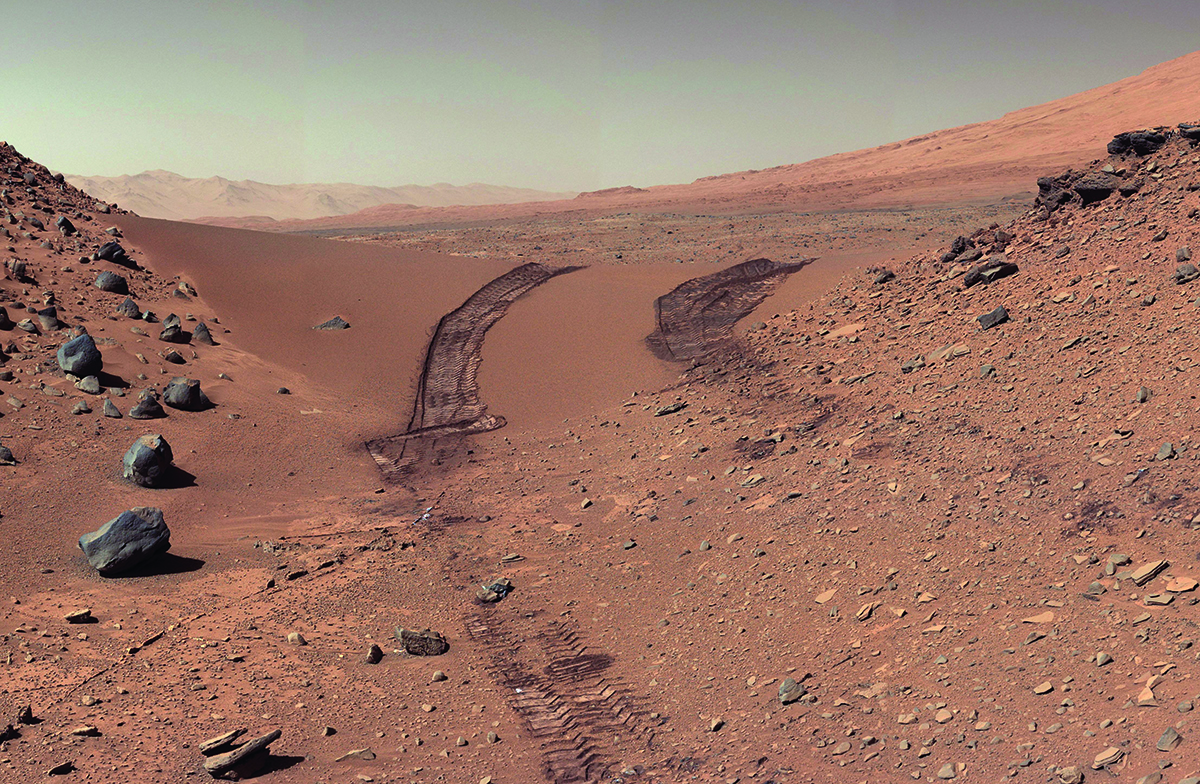
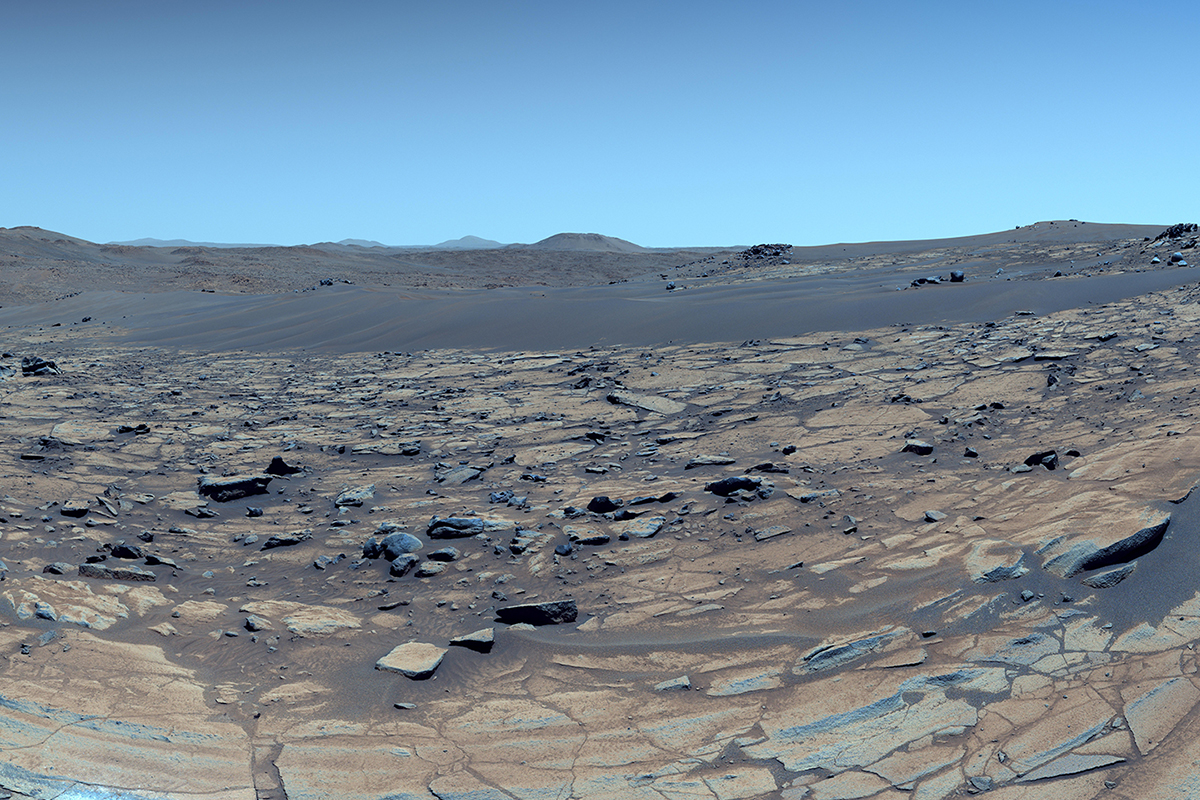
We think that the Gale Crater on Mars, which is where these samples were taken, was at one point full of sediments.
These have now been eroded away to expose the current surface. Because of this, there was probably some protection there from the radiation environment.
However, the sample was found within 6cm (2 inches) of the Martian subsurface, which gives me hope that there is much more abundant organic matter in the near-surface of Mars that has not been destroyed yet.
The story evolves with every discovery. Mars is a dynamic world – it’s constantly evolving geologically.
What evidence would we need to say whether there was once life on Mars?
Because it’s such an important discovery, we want to be very confident in it. What you need is lots of lines of complementary evidence coming together to support that interpretation.
One of those lines might be geochemical. We know that certain minerals form in specific ratios or ‘disequilibria’ on Earth, so we could look for that disequilibria.
Then with other evidence, the picture would start to build. You’d need corresponding lines of evidence from other instruments.
To be able to have a ‘slam dunk’ detection, we might need to use the kind of cutting-edge instruments that we have on Earth.
One way to do that is how we approached the asteroid Bennu. In that case, we collected a sample and brought it back to Earth.
Of course, this is a huge scientific undertaking with its own difficulties, but a really important challenge for us in the search for life.
What's next for your team?
We have a second cup of the relevant chemicals on the SAM instrument and we have recently run that experiment.
Interpretation of these results takes time; our first experiment on this sample was in 2020 and it took six years from collection to publication.
This work is particularly exciting for missions on Mars and Titan, one of Saturn’s moons.
Our current mission to Titan – NASA’s Dragonfly – utilises the same chemical as we used here on Mars.
Titan is a very different world, with rivers of methane and ethane, organic molecules themselves, and it’s likely to give us insights into prebiotic chemistry that we’ve never had before.