NASA’s twin ESCAPADE spacecraft are now officially on their way to Mars, more than a year after they launched from Cape Canaveral in Florida, USA.
The two probes are due to reach the Red Planet in September 2027.
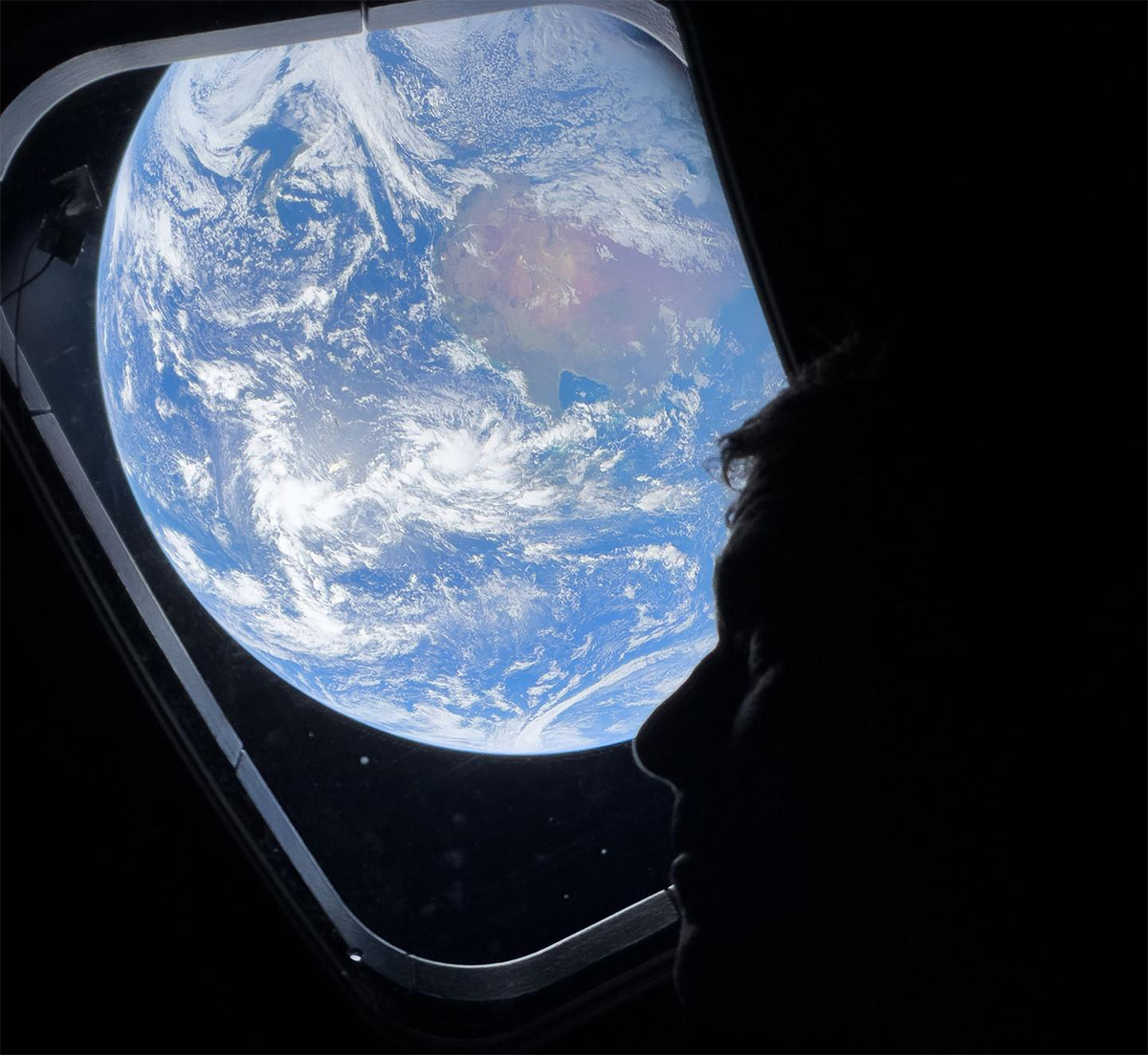
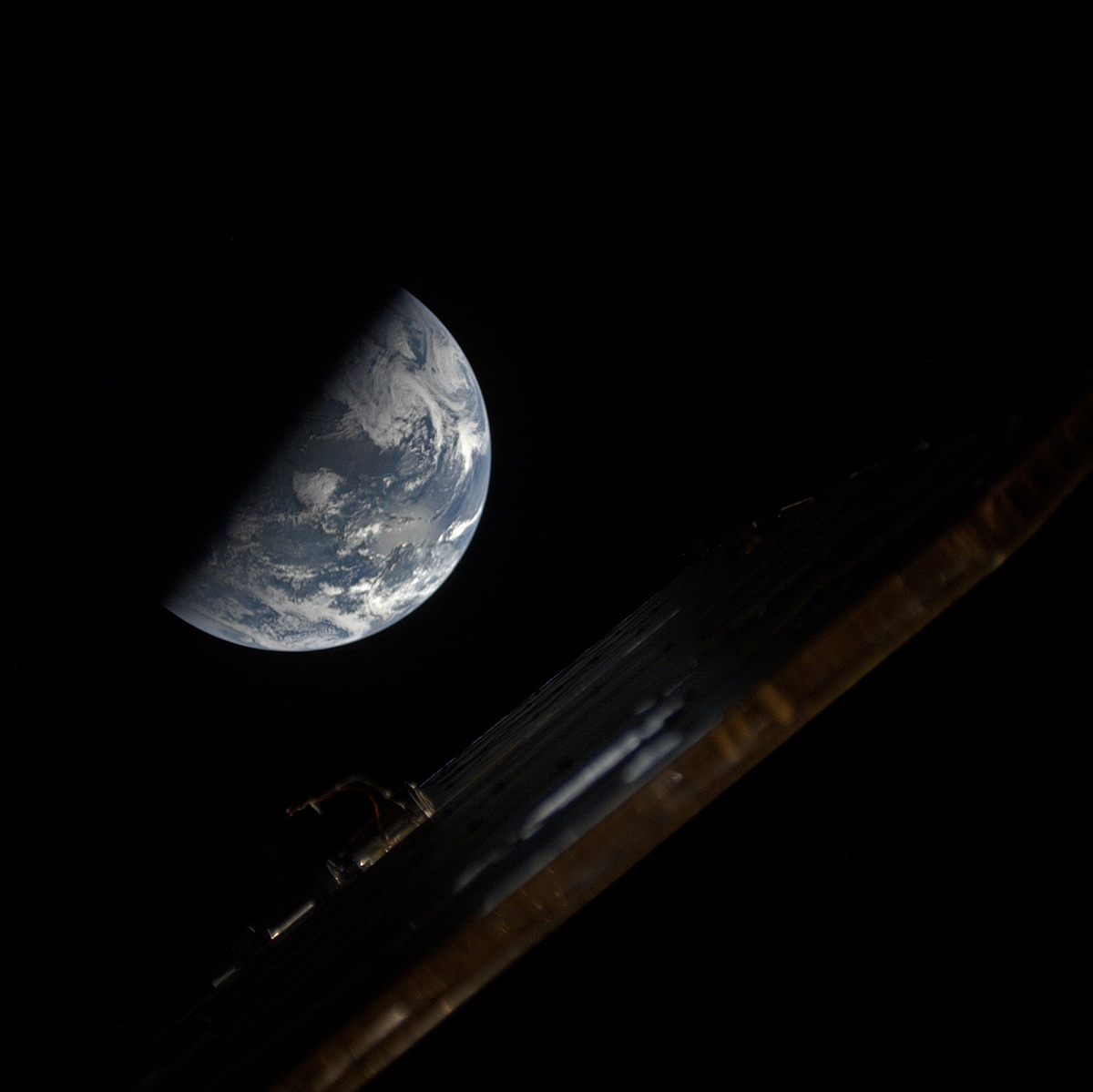
But in the meantime, we can enjoy their parting shots of Earth, which were captured as the second of the two craft carried out a pioneering Earth fly-by on 9 November.
More Earth images
ESCAPADE explained
The ESCAPADE mission consists of two identical craft, Blue and Gold, each of which is around the size of a household refrigerator.
Launched and flying in tandem, once they arrive at Mars the two craft will initially orbit the planet on the same trajectory for six months, before shifting onto two different orbits for a further five months.
They’re there to study the Martian magnetosphere, how it interacts with the solar wind and, in particular, how the latter has been able to strip away Mars’s atmosphere over the course of many millennia.
Due to their wide orbits, they will also be able to image the whole of Mars in a single frame, something that other probes on tighter orbits are unable to do.
But they have to get there first!
ESCAPADE and the Earth flyby
Since launching on 13 November 2025, at a time when Mars and Earth were on opposite sides of the Sun, the two craft have been in a holding pattern at Earth-Sun Lagrange point L2, awaiting a favourable Sun-Earth-Mars alignment.
The ‘Mars transfer window’ they were waiting for finally opened a few weeks ago, at which point the two craft came hurtling back towards Earth in order to perform a gravity assist fly-by.
This was no ordinary gravity assist fly-by, however, but rather an Oberth manoeuvre.
In an Oberth manoeuvre, a spacecraft fires its engines to boost velocity at the same time as it avails itself of the standard ‘gravity slingshot’ effect.
It’s a fairly common technique used in spaceflight, but ESCAPADE’s two craft are the first Martian probes to have carried out such a manoeuvre around Earth.

The first of the two craft, Blue, completed its Oberth manoeuvre successfully on 7 November 2026.
Gold followed suit on 9 November, and in the process captured this shot of Earth, as seen from a distance of 61,950 km (38,500 miles) above the surface.
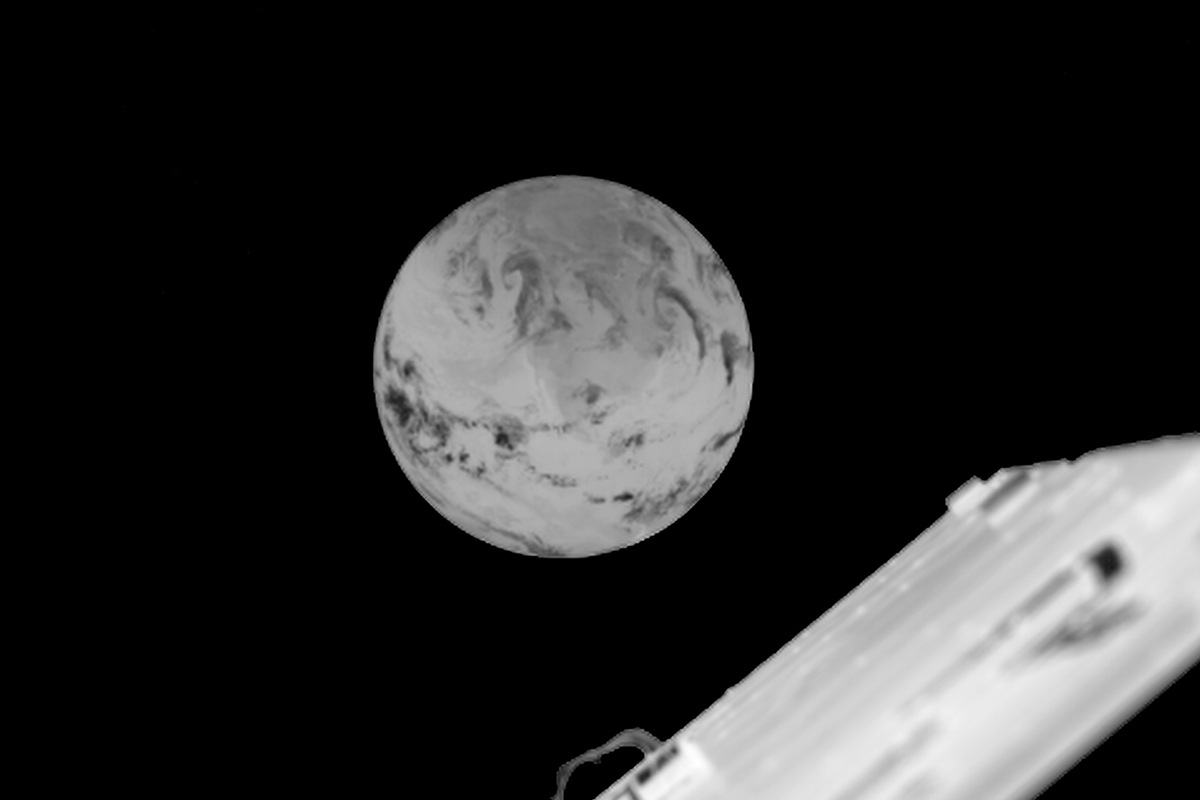
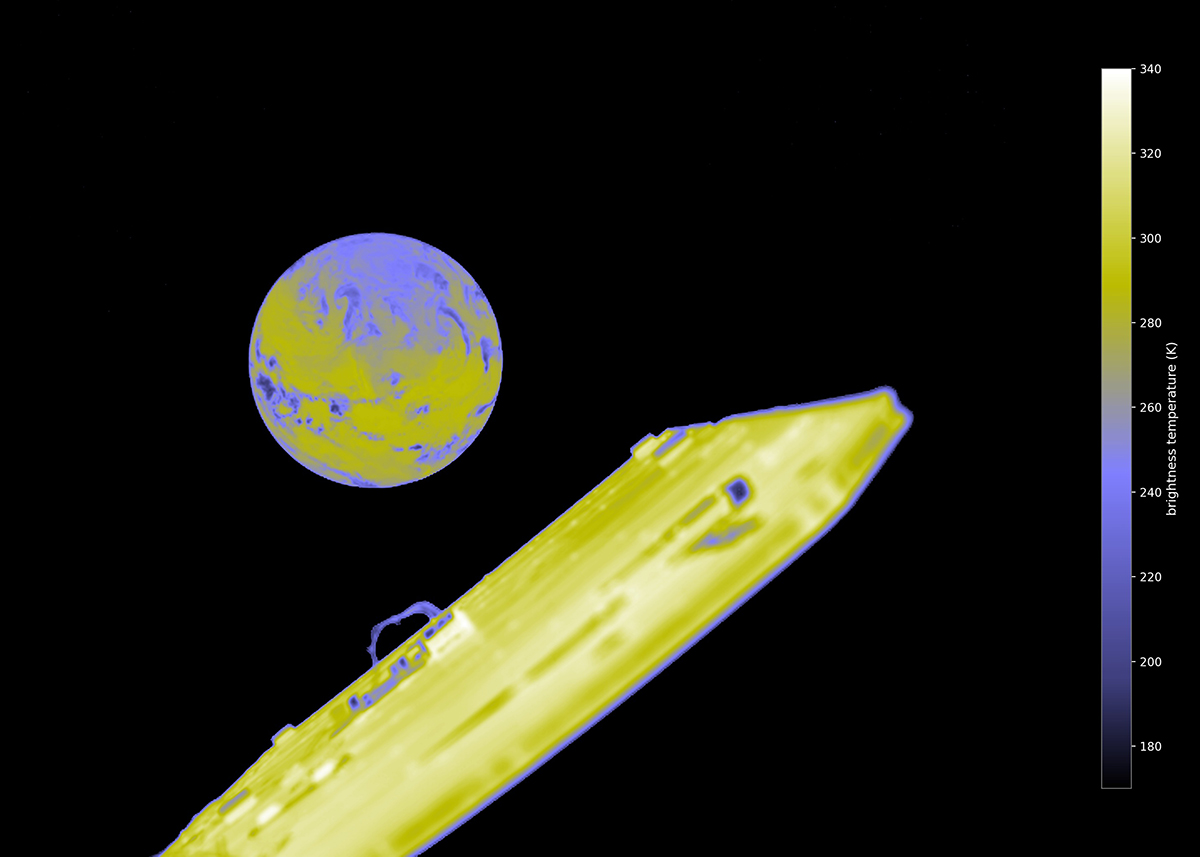
The craft also captured Earth in the infrared a short while later. There are two versions of this image: the first is the unprocessed image, with warmer areas showing up brighter and cooler areas appearing darker.
The second has been colourised, so that warmer areas show up in white, orange and yellow while cooler areas appear in blue and purple.
Those are the only images of Earth from ESCAPADE that we have, but NASA has also published some further ESCAPADE imagery, including these shots of the two craft captured by the commercial Vantor Worldview Legion satellite.
Finally, although the two craft were only briefly (and barely!) visible from Earth while carrying out their fly-by, mission scientist Christophe Mandy did manage to capture them in flight over Los Angeles.
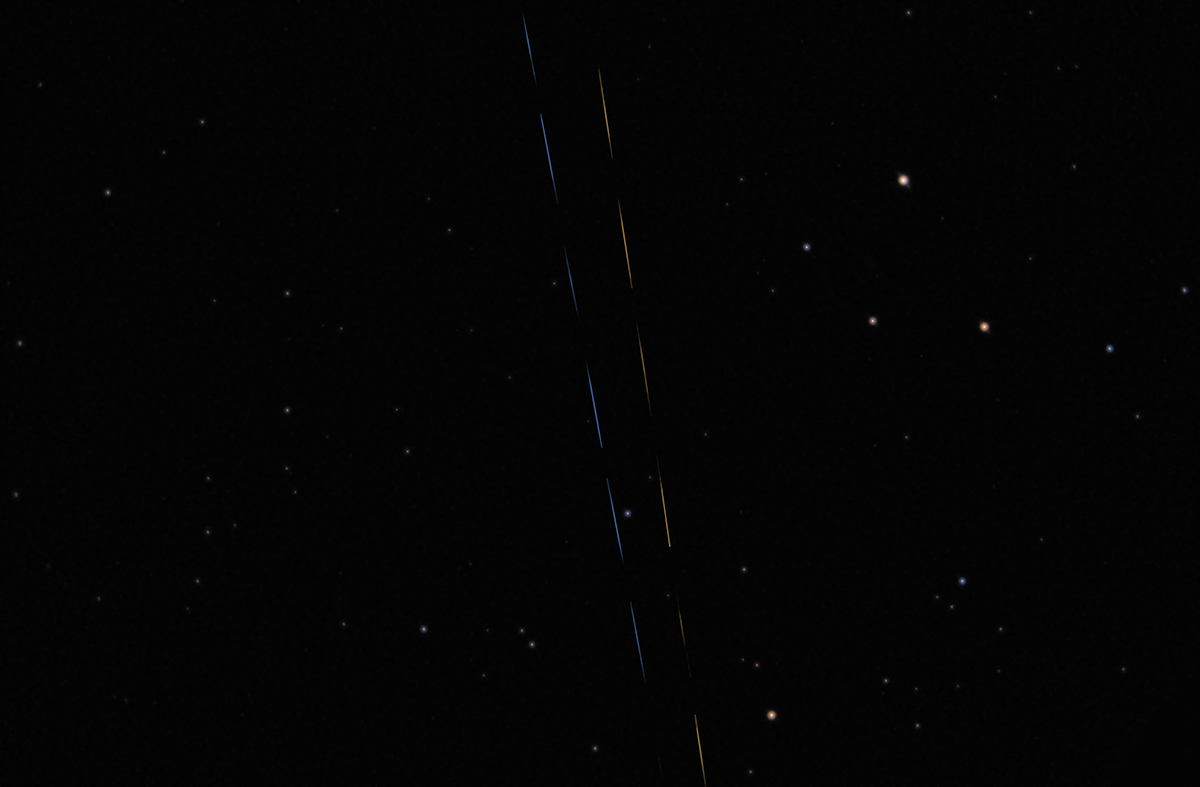
This is a composite image created from a series of five-second exposures captured over two days.
The trajectories of the two craft appear as faint streaks or trails, which have been enhanced and colourised in processing.
The blue streak on the left is ESCAPADE Blue and the gold streak on the right is ESCAPADE Gold.
ESCAPADE will now continue its journey to the Red Planet, and should enter Mars orbit in September 2027.