Giant impacts played an important role in the later stages of our Solar System’s formation.
The Moon is thought to have been created when a Mars-sized body collided into the proto-Earth.
Giant impacts also explain Mercury’s large iron core (the rocky mantle having been blasted away by a collision), the formation of Pluto and its large moon Charon, and the roughly 90° axial tilt of Uranus.
More from the chaotic cosmos
Spotting collisions beyond the Solar System
It seems likely, then, that giant impacts are common in young systems throughout the Galaxy.
In fact, astronomers believe they have already spotted them around two stars.
One of them, ASASSN-21qj, a Sun-like star in the southern constellation of Puppis, was observed to brighten in the infrared and then undergo irregular dimming.
This has been interpreted as hot emission from the molten remnant planet, combined with transits by impact debris.
Pavan Tanna, a PhD student in the Institute of Astronomy, University of Cambridge, and his colleagues argue that we are on the brink of detecting a whole lot more of these cosmic billiard-ball collisions.
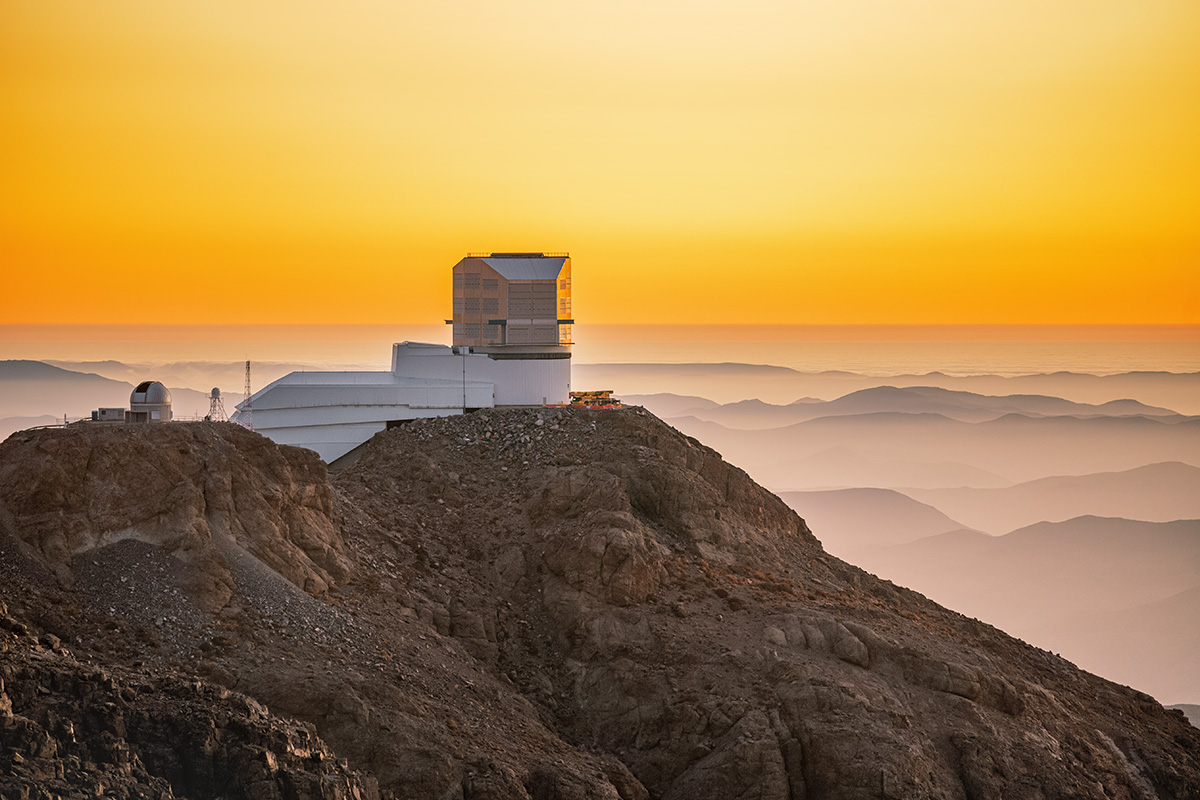
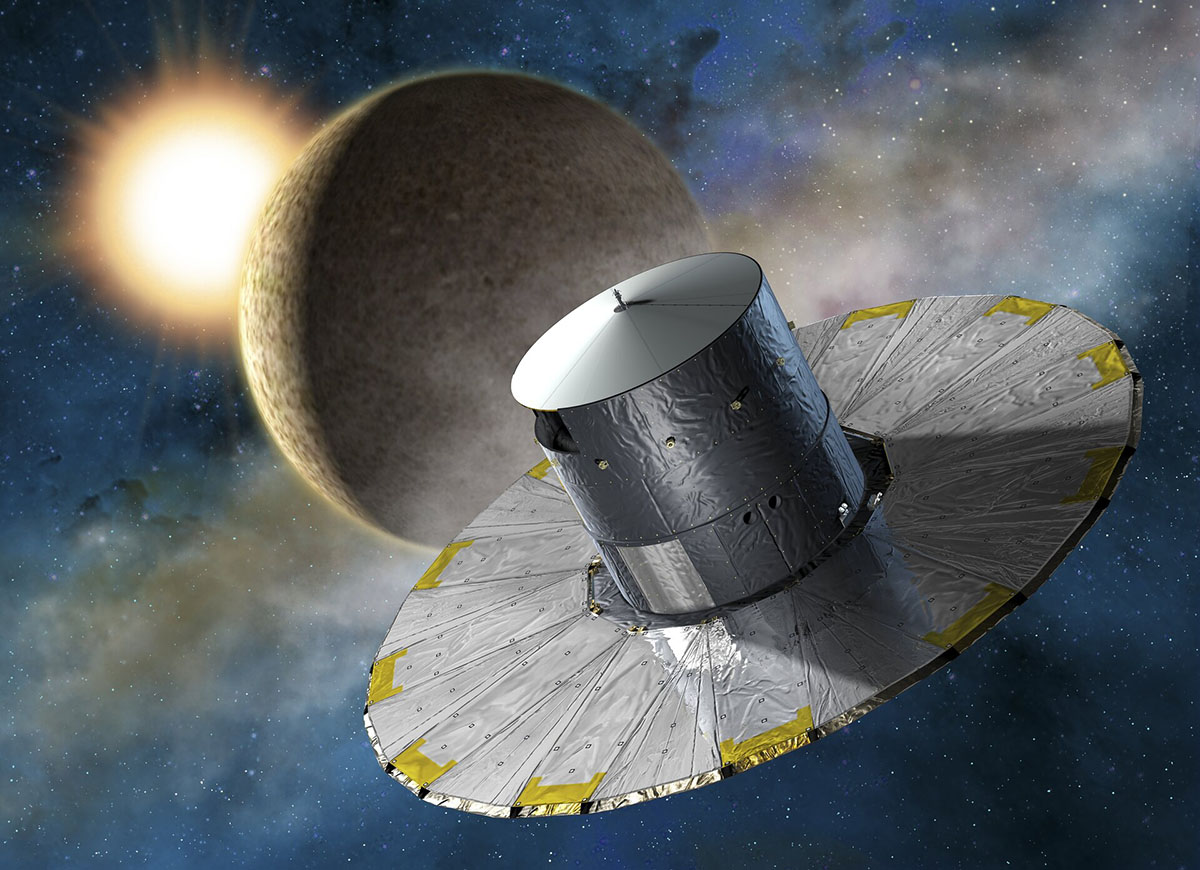
The DR4 release from the Gaia space telescope in December 2026 and the Legacy Survey of Space and Time (LSST) at the Vera C Rubin Observatory in Chile, which began summer 2026 and will run for 10 years, ought to allow us to directly observe dozens more.
What planet collisions look like
In general terms, Tanna says what we would see is an instantaneous bright flash from the collision itself, followed by declining optical and infrared emission as the cloud of vapourised rock expands and cools.
A final stage follows when the emission is dominated by the afterglow heat from the molten remnant planet.
To put more precise numbers on these events and how many could be detected in the Gaia DR4 and LSST observations, Tanna and his team ran computer models.
They simulated impacts between planets with Earth-like compositions (similar to our own Moon-forming impact), with total colliding masses ranging from 0.2 to 4 Earth masses.
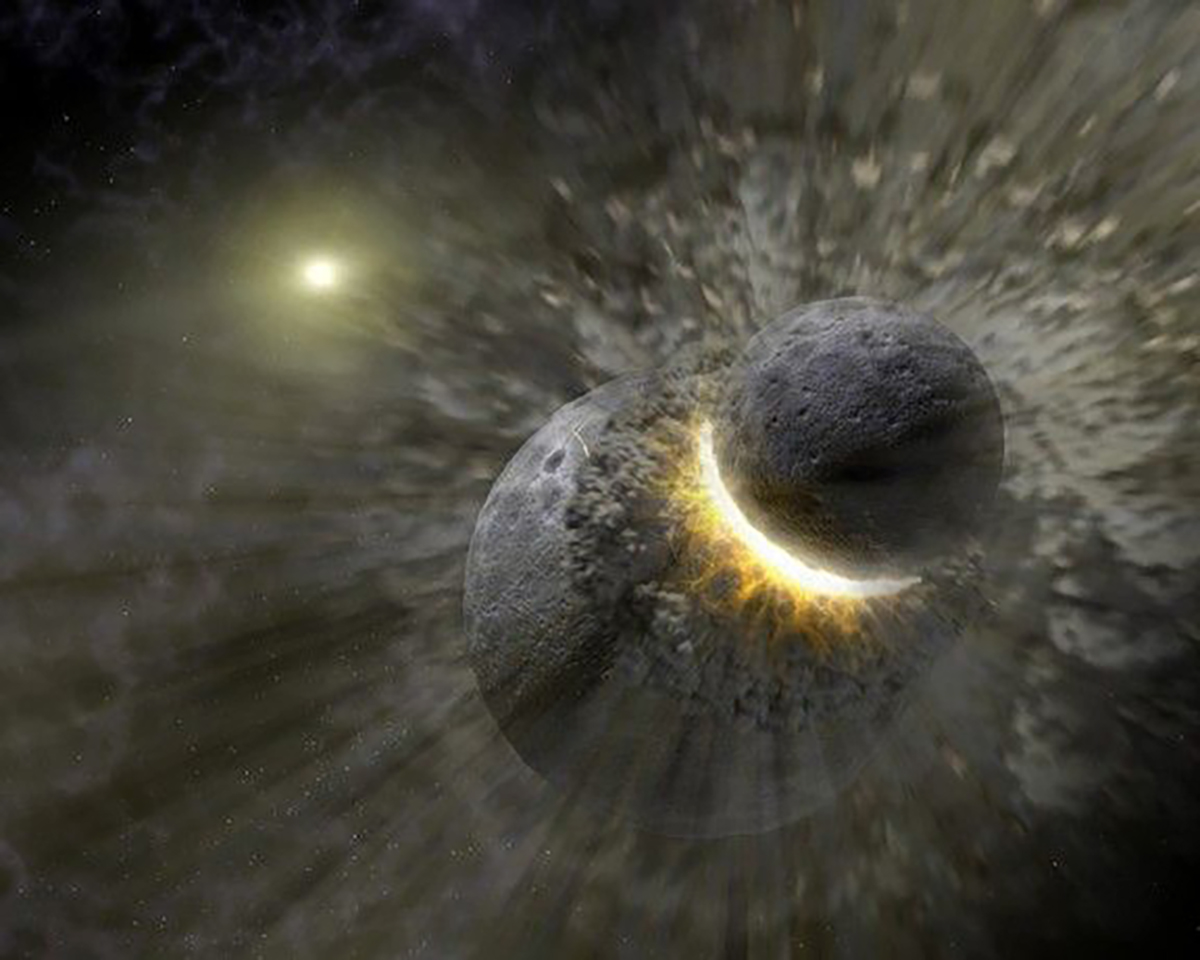
They also varied the relative sizes of the two bodies involved.
Tanna’s team found that the most massive collisions flash as intensely as one solar luminosity, but these brightest impacts also cool very quickly.
Most planetary collisions were much dimmer, but still as luminous as an M-class red dwarf, meaning they should be detectable around this very common type of star.
Most produce post-impact dimming that lasts from months to years, and so ought to be easily detectable in Gaia DR4, with its observations every 30 days, and LSST every three days.
Many more to discover
The researchers predict that we should find up to 13 planetary collisions in the five years of observations due to be released in Gaia DR4.
They conservatively estimate that LSST will discover about the same number again.
However, since LSST is surveying five times as many stars as Gaia – around 10 billion in the southern sky in total – and is also more sensitive, it could potentially detect dozens of planetary collisions.
Amateur astronomers occasionally catch the impact flash from a meteorite striking the Moon.
It blows my mind to think that we’re about to enter a new phase of astronomy, one in which we’ll be able to observe numerous giant impacts between entire protoplanets in young solar systems.
That should provide a remarkable new window into how planetary systems form and evolve.
Lewis Dartnell was reading Can Giant Impacts be Directly Detected in Other Star Systems? by Pavan Tanna et al. Read it online at: arxiv.org/abs/2606.26026