
On 5 August 2026, a SpaceX Falcon 9 upper stage rocket smashed into the Moon – and NASA has just released images of the aftermath.
The images were captured between 11 and 12 August 2026 by NASA's Lunar Reconnaissance Orbiter, which has been orbiting the Moon since 2009.
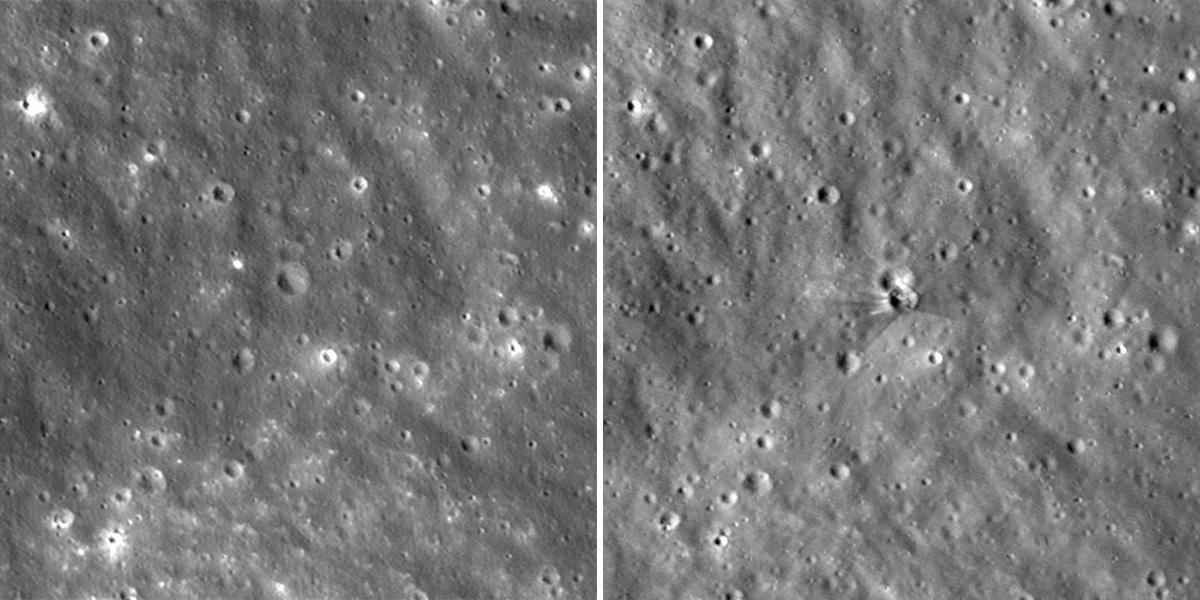
They show before and after views of the lunar surface, indicating the location and size of the crater caused by the Falcon 9 impacting the Moon.
Read more
Why did the Falcon 9 hit the Moon?
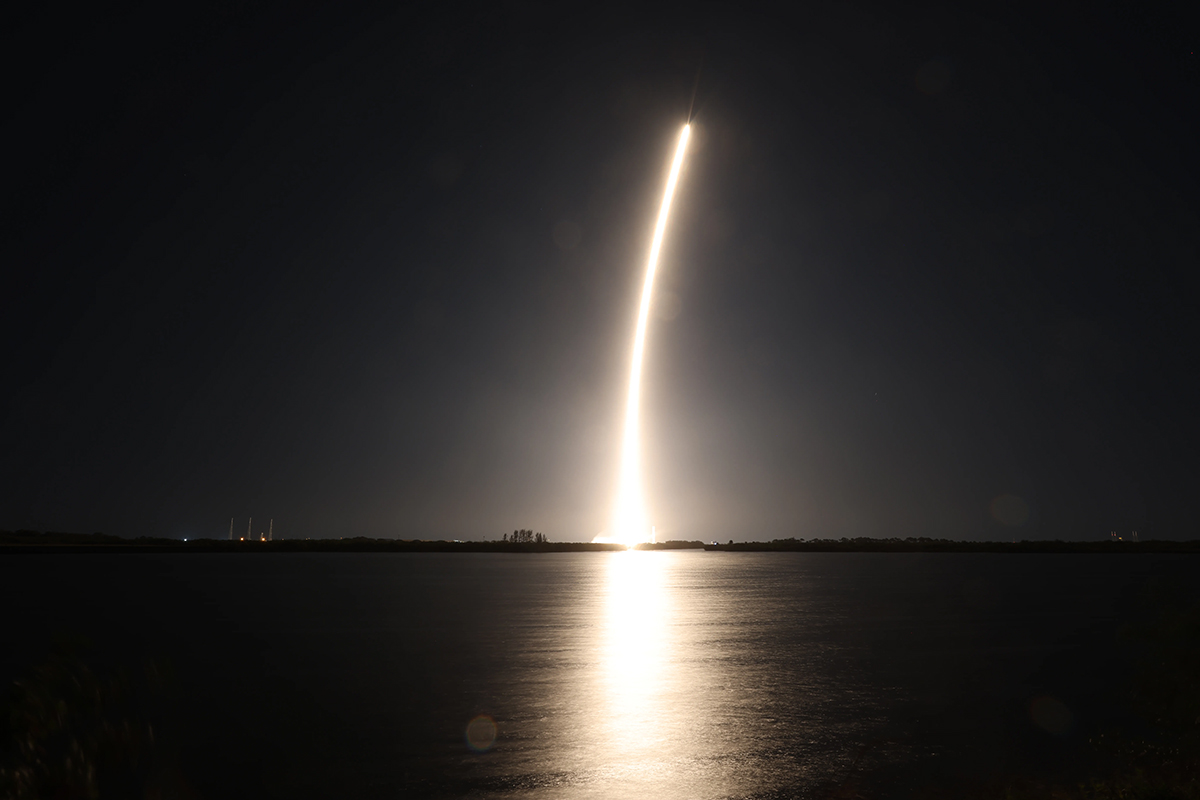
The Falcon 9 rocket launched in January 2025 on a mission to take two commercial lunar landers – Firefly’s Blue Ghost 1 and ispace's RESILIENCE – to the Moon.
Both landers were successfully delivered to the Moon by the Falcon 9 upper stage, but while the Blue Ghost 1 lander made a successful soft landing, RESILIENCE instead crashed into the lunar surface.
In the course of delivering the landers to the Moon, the Falcon 9's fuel reserves were used up.
Normally, SpaceX attempts to guide empty rocket stages back into Earth's atmosphere so they can burn up on re-entry.
But in this case, pre-planned stabilisation manoeuvres failed, leaving the Falcon 9 upper stage abandonded in a high-Earth orbit.
Over time, the Falcon 9's orbit was destabilised and was unintentionally nudged on a collision course with the Moon.
LRO captures the aftermath
NASA engineers tilted the Lunar Reconnaissance spacecraft so its cameras would point to where the predicted impact site would be.
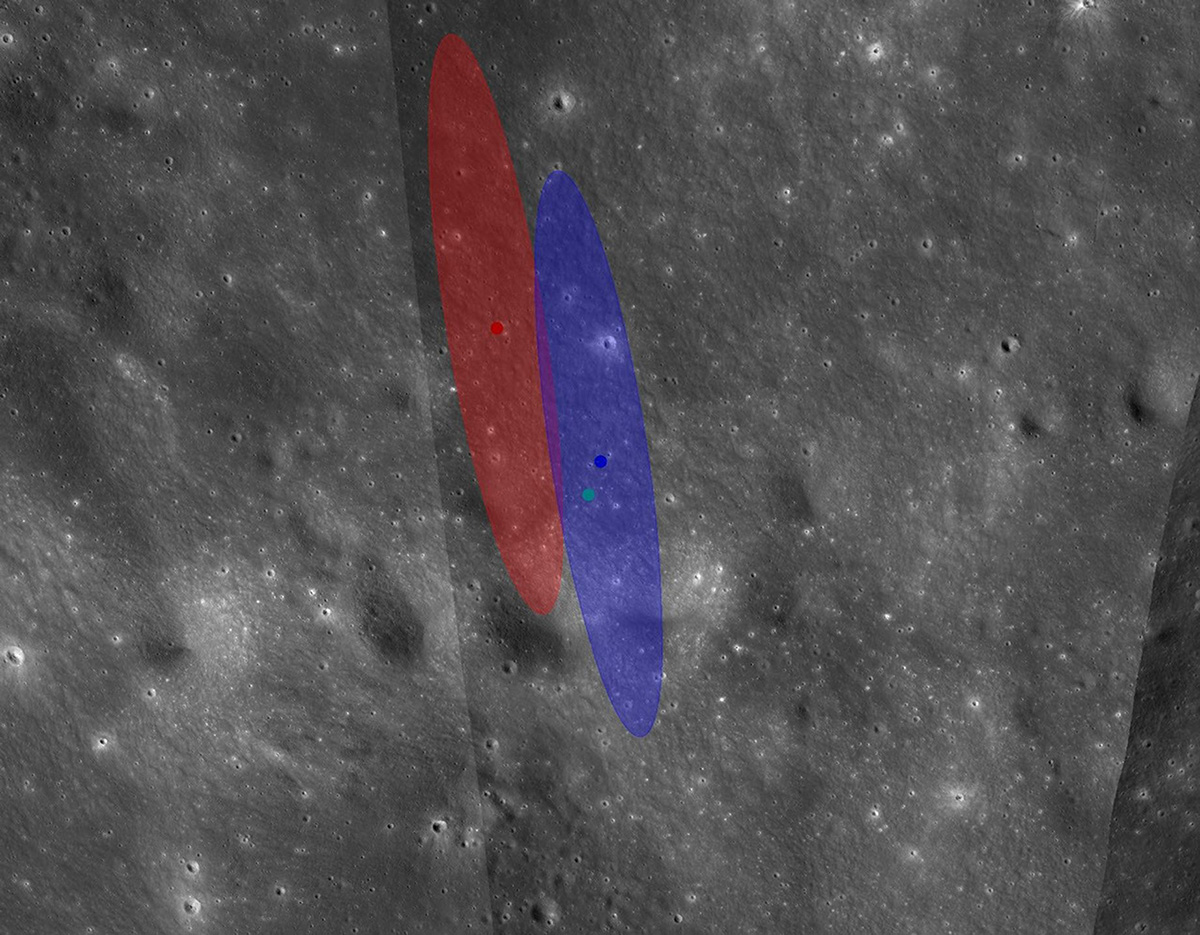
An image showing the predicted impact site with the actual impact site (see below) shows just how accurately scientists are able to pinpoint the trajectory even of destabilised rocket stages like this Falcon 9.
The Lunar Reconnaissance Orbiter's camera captured images of the site as it passed by 100km (60 miles) above the surface, at a speed of 1.6 km per second (1 mile per second).
The LRO spacecraft orbits the Moon from pole to pole every two hours. All the while, the Moon is rotating underneath it.
That meant the orbiter had to wait until the desired location rotated into view. In this case, it took six days, according to NASA.
NASA says if the Lunar Reconnaissance Orbiter's camera had been even 10 seconds too early or too late, the target could have been off-centre by 16km (10 miles).
Crater captured
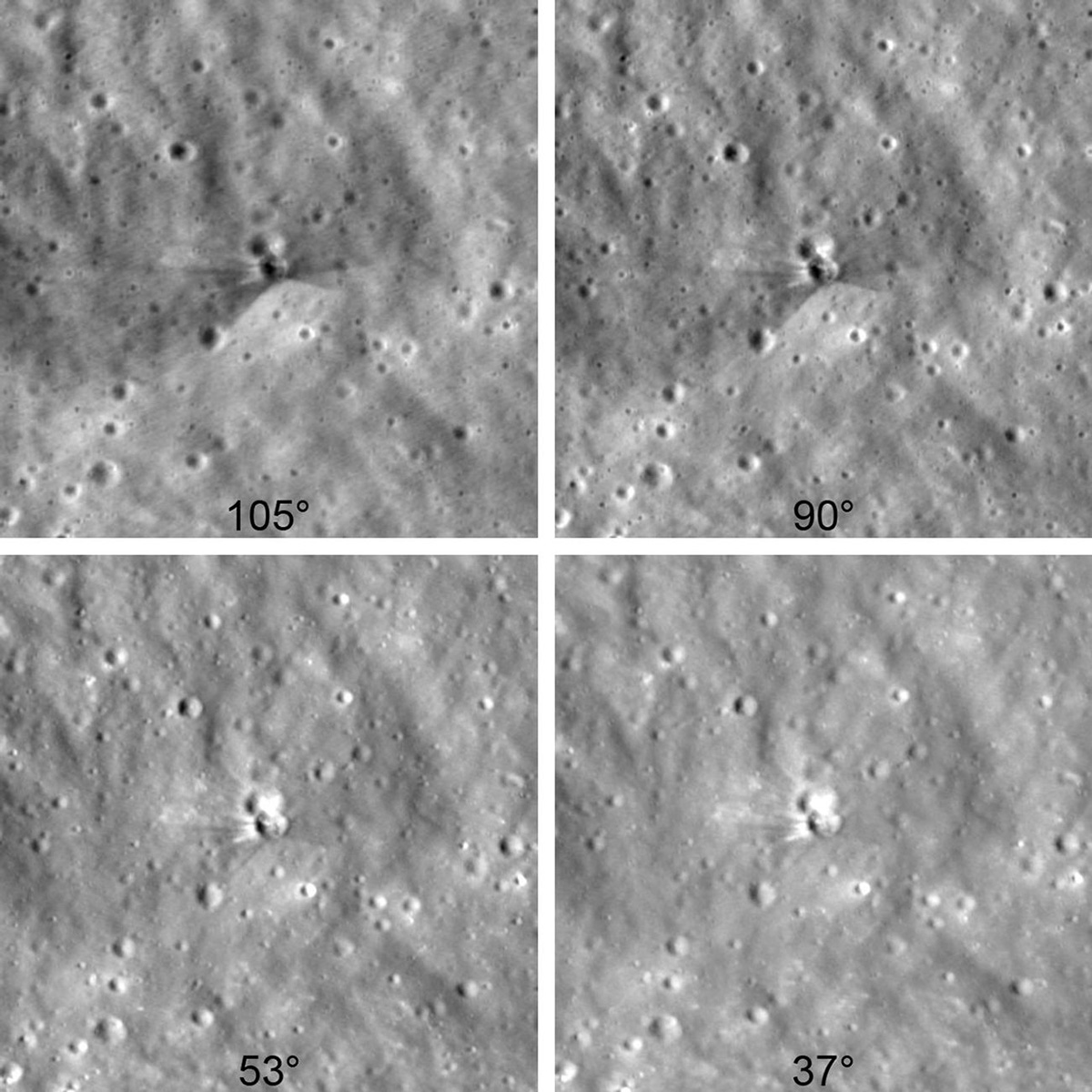
The Lunar Reconnaissance Orbiter has provided scientists back on Earth with views of the Falcon 9 lunar crater from a variety of viewing angles, meaning they have been able to see it under multiple lighting conditions, revealing various features.
This has enabled scientists to measure its width as 18 metres (60 ft) and its depth to be less than 3 metres (10 ft), the latter based on the length of its shadow.
Images also reveal bright and dark rays stretching outwards from the crater.
Such lunar rays can be seen all over the Moon, as a result of ancient impacts that have occurred throughout the Moon's history.
NASA says darker streaks are made of surface dust and rocks that have been altered over time by radiation from the Sun, as well as cosmic rays from deep space.
This ancient material was excavated by the collision of the Falcon 9 into the lunar surdace.
Brighter streaks near the crater rim are fresh material excavated from deeper underground.
How they did it
NASA says locating and imaging the Falcon 9 crater on the Moon was a coordinated effort between experts and amateur hobbyists.
Independent astronomers had identified the rocket’s trajectory using open data.
Then NASA’s Center for Near Earth Object Studies used the project to test tools and techniques it uses to predict impacts.
The Center calculated the trajectory of the Falcon 9 and eventually identified the location of impact, then provided that data to the Korea Pathfinder Lunar Orbiter (Danuri) team.
The Korea Pathfinder Lunar Orbiter, or Danuri, launched in 2022 and is still orbiting the Moon and gathering data.
Once the trajectory of the Falcon 9 had been calculated, the Danuri spacecraft's camera was used to capture an image of the crater.
NASA says the predicted crash site was accurate to about 1km (0.6 miles).

