
We've all seen the dainty, dotted footprints left behind by dogs running across damp sand on a beach.
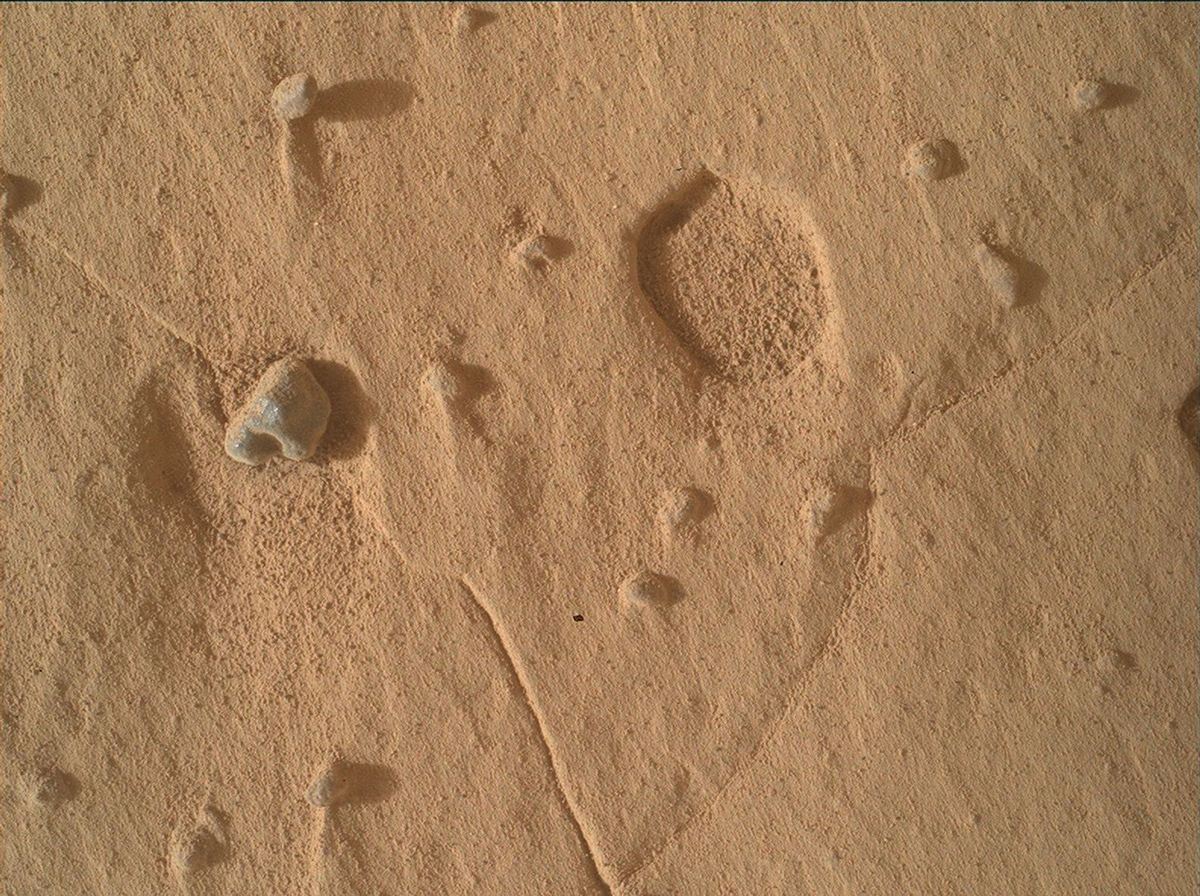
NASA's Curiosity rover on Mars has captured an image that seems to show a footprint imprinted on a portion of the surface of the Red Planet.
We came across this story after reading a few headlines online talking about 'footprints' seen on Mars.
Of course, this 1cm-wide pit is not really a footprint.
But the blog on these formations written by Michelle Minitti, Deputy Principal Investigator on the Curiosity rover's Mars Hand Lens Imager camera, makes for interesting reading and reveals what these tiny pockets really are.
More on Mars
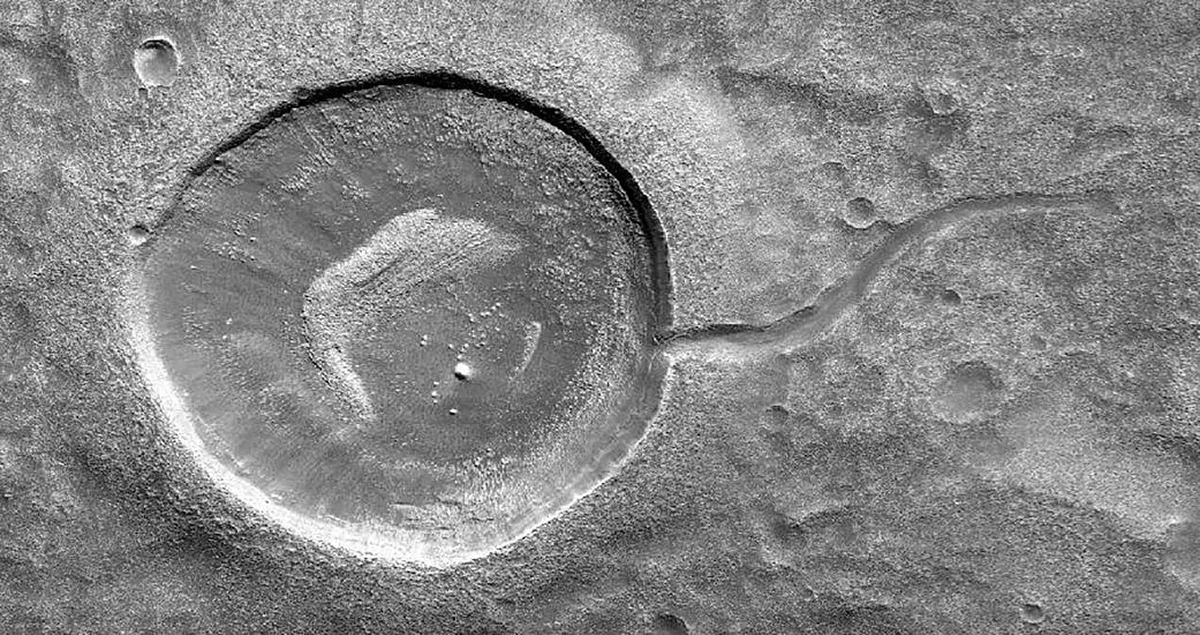
Minitti says the formations are "unlike anything we have seen in the past"
They're shallow pits in Martian bedrock, caused when pebbles weather out of their host rock and leave behind a void in the dust.
But the pit seen here is broader and shallower than ones previously seen, says Minitti, and crucially not accompanied by an object that was obviously once in the pits.
"They were a welcome new puzzle into the processes that have affected this particular section of rocks in the stratigraphy of Mount Sharp," she writes.
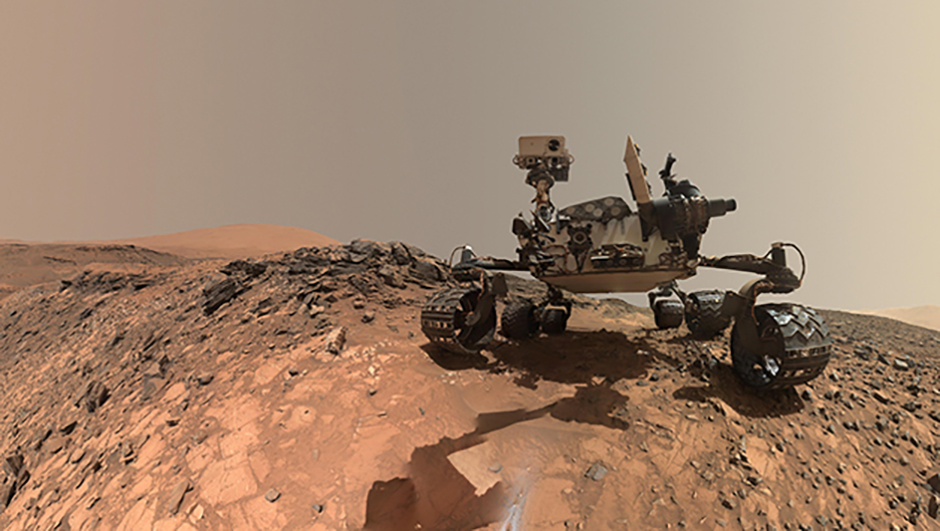
Curiosity's science instruments were able to image and detected complex layers of Martian regolith with differing textures and structures.
These resistant layers differed from the host bedrock and are likely a result of a different chemistry than previously seen.
While planetary scientists can safely rule out the presence of dog footprints on Mars (!), the image and accompanying science shows that NASA is constantly at work photographing, analysing and deciphering the secrets of the Red Planet.

