
The Hunter's Moon rises on 25 and 26 October 2026, meaning this weekend, from Friday 23 to Monday 26 October, is the perfect chance to see a big, beautiful Moon in the sky.
And if you're out moongazing late at night or early in the morning before sunrise, you'll have a chance to catch some of the planets of the Solar System, too.
The best part is that some of the brightest planets of the Solar System are visible right now with the naked eye, meaning no binoculars or telescopes are required.
Here we'll go through how to see the Hunter's Moon and how to see the planets at the same time.
More advice
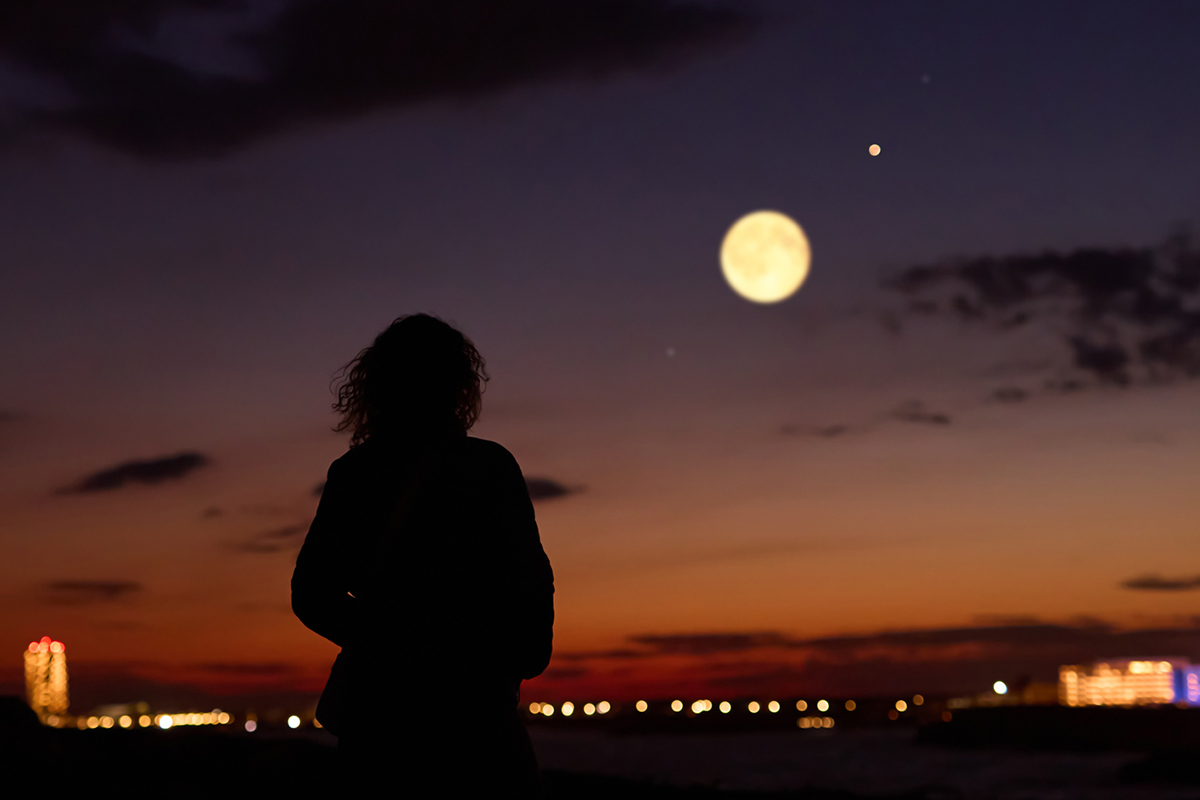
Hunter's Moon 2026 – top observing tips
The Hunter's Moon rises in a southeasterly direction, then moves across the southern portion of the sky, setting in the west before dawn.
- Evening view: a clear, flat southeastern horizon will be needed to see the Hunter's Moon rise just after sunset.
- Peak view: look high up in the south as midnight approaches and you'll see the full Moon shining proudly in the late-October sky.
- Morning view: an early rise and a flat, clear western view will be needed to see the Hunter's Moon set below the horizon in the west, just before sunrise.
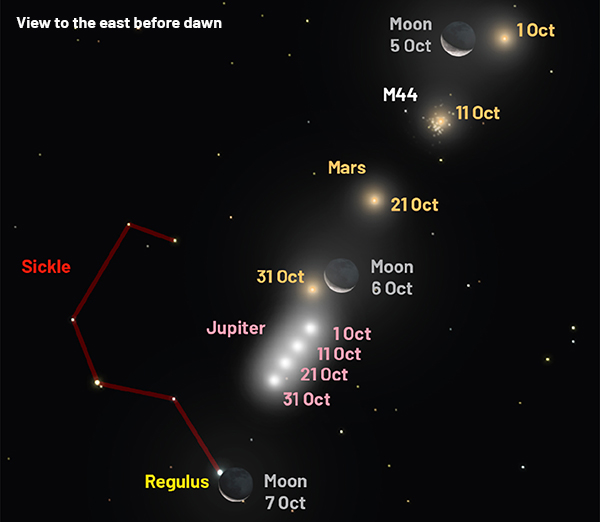
Planets on view at the same time as the 2026 Hunter's Moon
For more advice, read our complete guide to observing the planets in October.
Venus
By 25 October, Venus has begun to emerge into the morning sky, but it will be very tricky to see because it rises in the east/southeastern sky so close to sunrise.
If attempting to see Venus, you'll need a completely clear, flat southeastern horizon. Take care when viewing the eastern horizon this close to sunrise. As soon as the Sun begins to rise, stop looking.
Mars
The Red Planet is one of the best planets to see in the sky at the moment, but it's only visible in the very early hours, rising in the east an hour or two after midnight.
Your best bet is to catch Mars an hour or so before sunrise. If you can see the Hunter's Moon setting in the west, look high up to the southeast and you'll see a slightly reddish star. That's Mars.
Jupiter
The good news is that Jupiter's brighter than Mars at the moment. The bad news is it's lower down in the sky. If you've found Mars, Jupiter is the much brighter 'star' below it.
Again, your best bet is to see it in the early hours. As the Hunter's Moon is setting in the west, Jupiter is rising in the southeast.
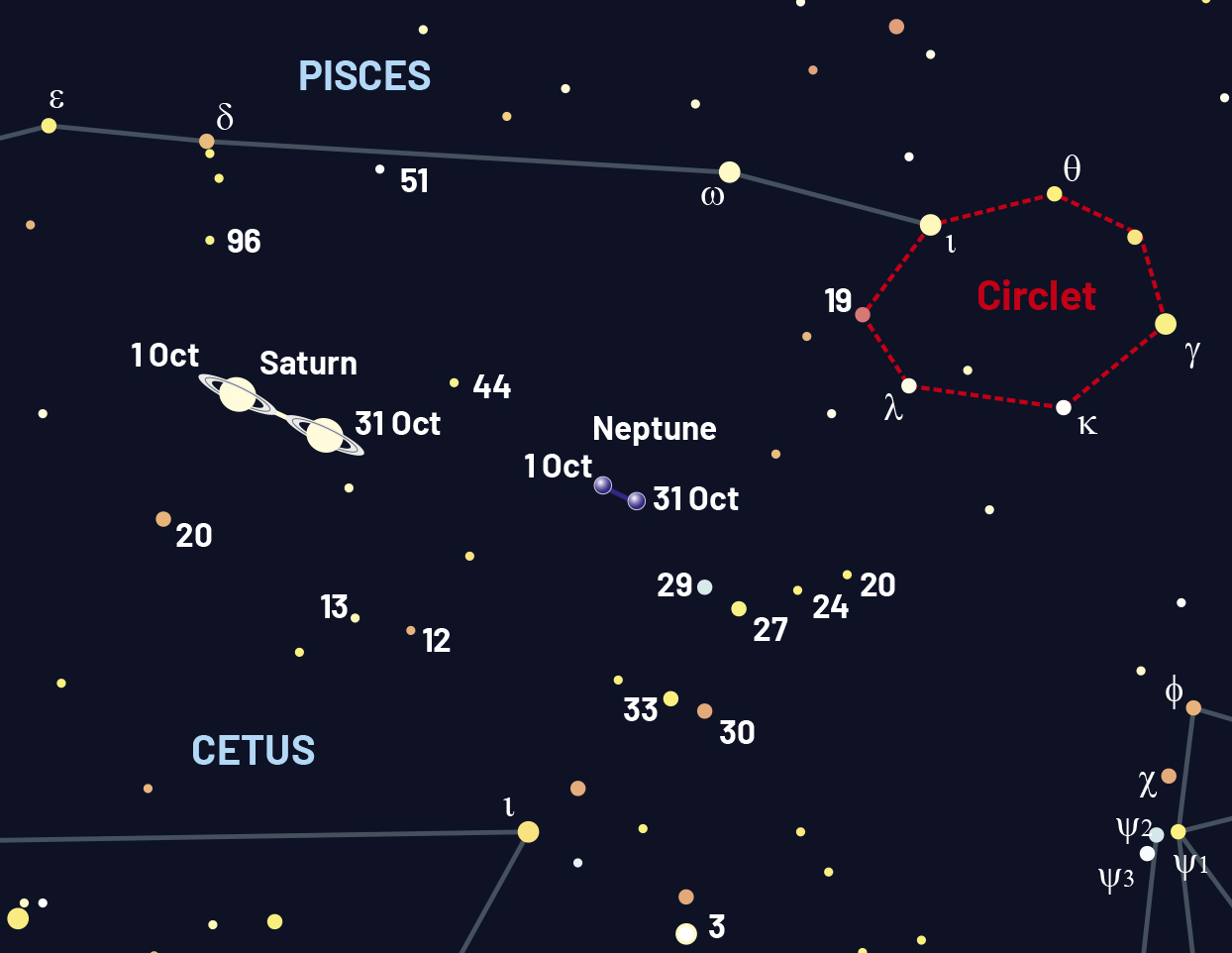
Saturn
The ringed planet has just passed opposition, which is the point at which it's positioned opposite the Sun in the sky. The full Moon is also opposite the Sun in the sky, which gives you a good idea where to look to see the planet.
Saturn shares the same patch of sky as the Hunter's Moon, meaning it's visible in the southeast around sunset. It will rise higher into the southern sky as the night rolls on and be visible in the west before dawn.
Uranus
The ice giant reaches opposition on 25 November 2026, meaning Uranus is improving week after week. It's technically visible with the naked eye, but you need good eyesight and dark skies to see it. As a result, that bright full Moon could make spotting it with the naked eye very tricky.
You'll likely have better luck using binoculars or a small telescope to see Uranus. Here's a hint: it's almost exactly between bright star Aldebaran in Taurus and the beautiful blue star cluster known as the Pleiades.
Neptune
The farthest planet from the Sun reached opposition on 26 September 2026, meaning now's a good time to see it. Neptune is the only planet of the Solar System that's never visible with the naked eye, so you will need a telescope.
Around midnight, it's visible to the right of Saturn in the south. Again, that full-Moon glare could make observing Neptune a bit tricky. But now you know where it is, wait for new Moon, grab your telescope and get a better view.
If you manage to observe or photograph the Hunter's Moon or the planets this weekend, get in touch and let us know by emailing contactus@skyatnightmagazine.com

