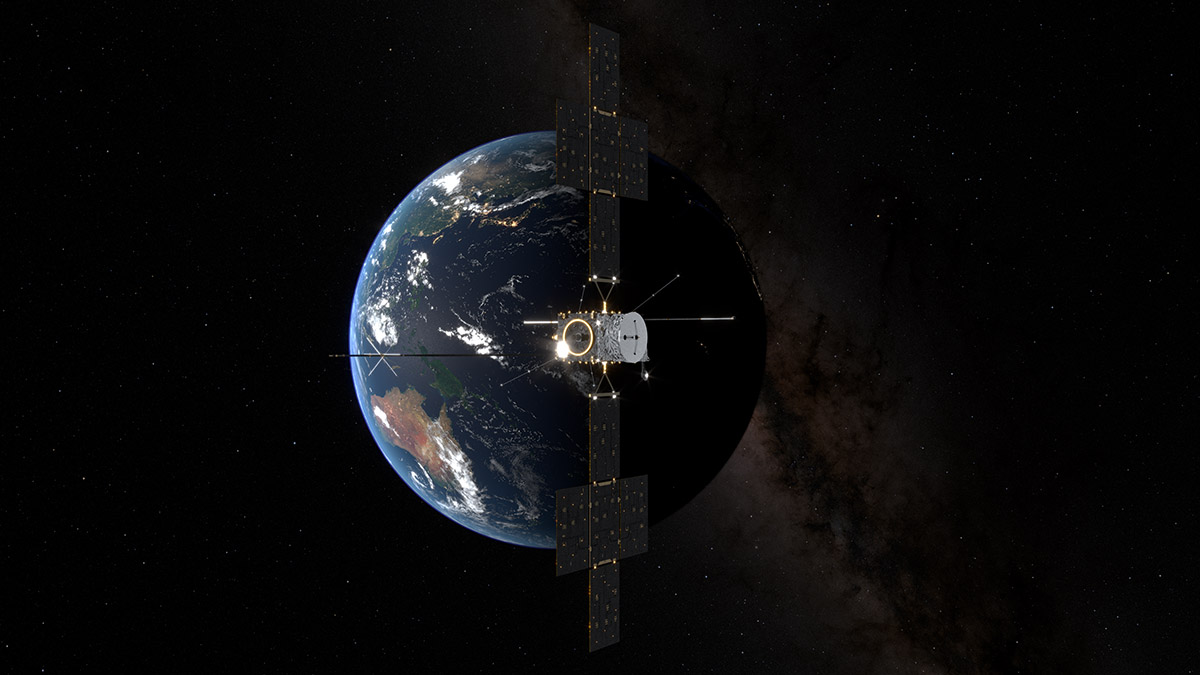
The European Space Agency’s Juice (Jupiter Icy Moons Explorer) mission took one step closer to its final destination on 28 September 2026 by successfully completing a gravity-assist flyby of Earth.
The manoeuvre was designed both to put the spacecraft on the right course to Jupiter and to speed it up.
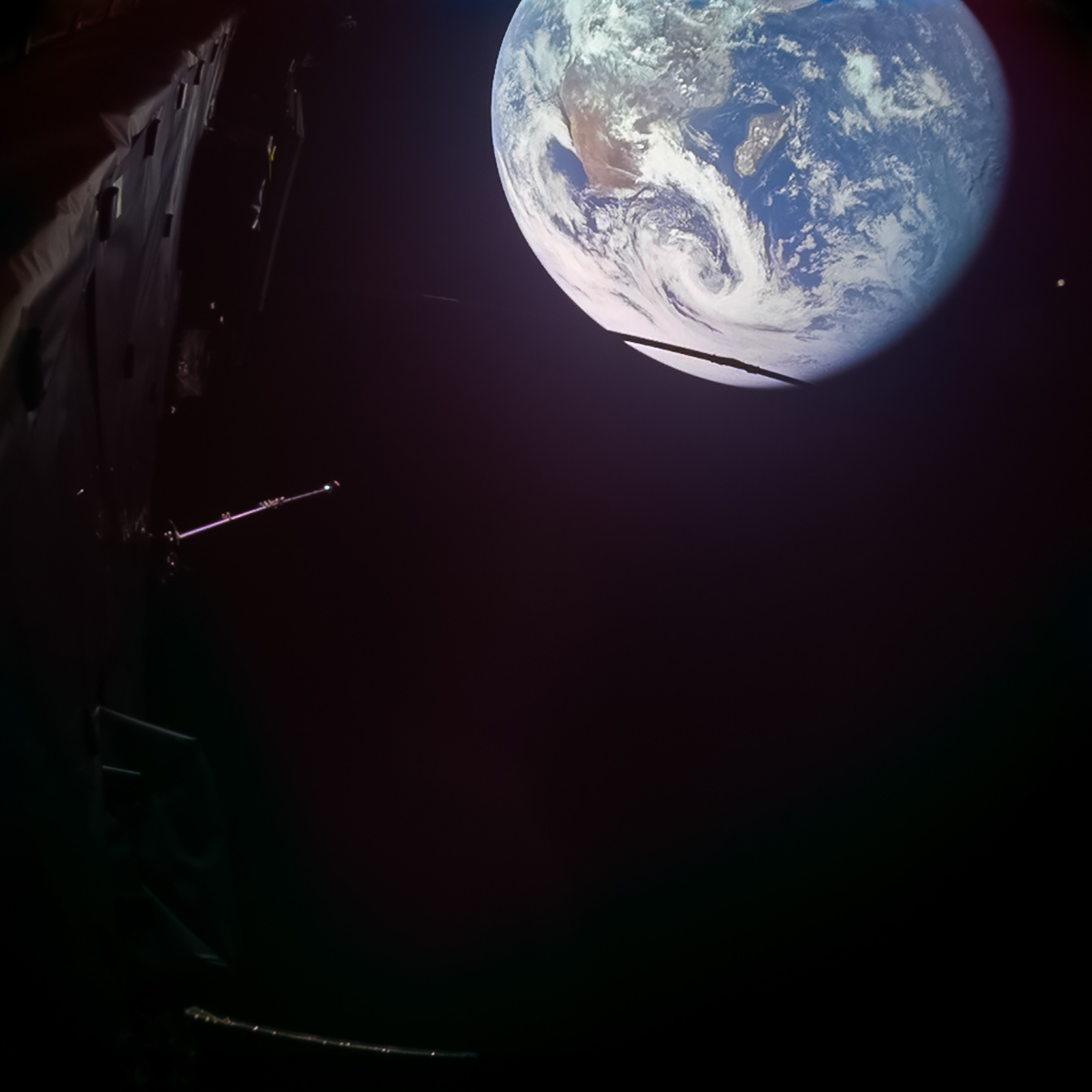
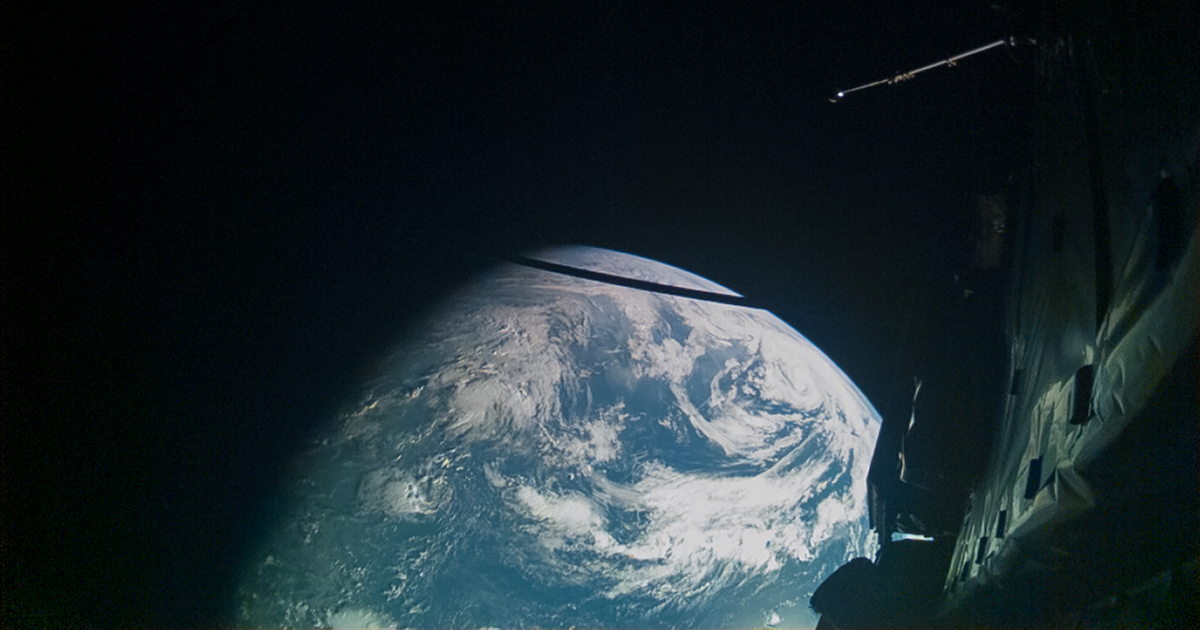
And while it was skimming past Earth, Juice captured this beautiful view of our planet.
More on Juice
What Juice saw as it flew past Earth
The image of Earth seen below was captured by Juice's monitoring camera 1 (JMC1) at 11:56 UTC as the spacecraft had just finished its flyby and was zooming away from our planet.
The flyby of Earth successfully redirected Juice’s path across our Solar System and has put it on course for another flyby of Earth in 2029.
Its image of Earth shows a lot of the continent of Africa. To its right is the island of Madagascar.
And did you spot a tiny grey dot to the right of Earth? That's our Moon.
Juice is expected to reach Jupiter in 2031, when it will begin its mission proper, studying the planet and its icy moons for signs of potential life.
Why Juice's Earth flyby was so important
Gravity-assist flybys are commonplace in space navigation.
The first was carried out back in 1959 by the Soviet Luna 3 probe, which photographed the Moon then used the Moon's gravity to slingshot itself back to Earth.
And the Voyager missions, for example, would never have been able to undertake their epic journeys beyond the Solar System without the benefit of several flybys along the way.
These flybys allow a spaceship to briefly come under the gravitational influence of a nearby planet or other large body, such as a moon.
When a spaceship goes briefly into orbit around a body, its trajectory, velocity and momentum change.
Depending on various factors, including the direction of travel and the craft’s angle of approach, this can slow a craft down or speed it up.
It can also change the spacecraft’s direction of travel.
Speeding up, slowing down or changing a spacecraft's direction using fuel alone would be heavily fuel-intensive, so gravity-assists are a clever way of using gravity instead.
What all that means is that if you crunch a LOT of numbers, do a lot of planning and time everything with incredible precision… and then nothing goes wrong… you COULD, for instance, get a probe that’s intended to explore Jupiter’s natural satellites heading in the right direction, while simultaneously boosting its velocity by 3.5 km/s.
Which, of course, is what happened on 28 September 2026.
3.5 km/s might not sound like a lot, but it equates to a speed boost of 12,000 km/h (7,830 mph), so that’s by no means an insignificant improvement!
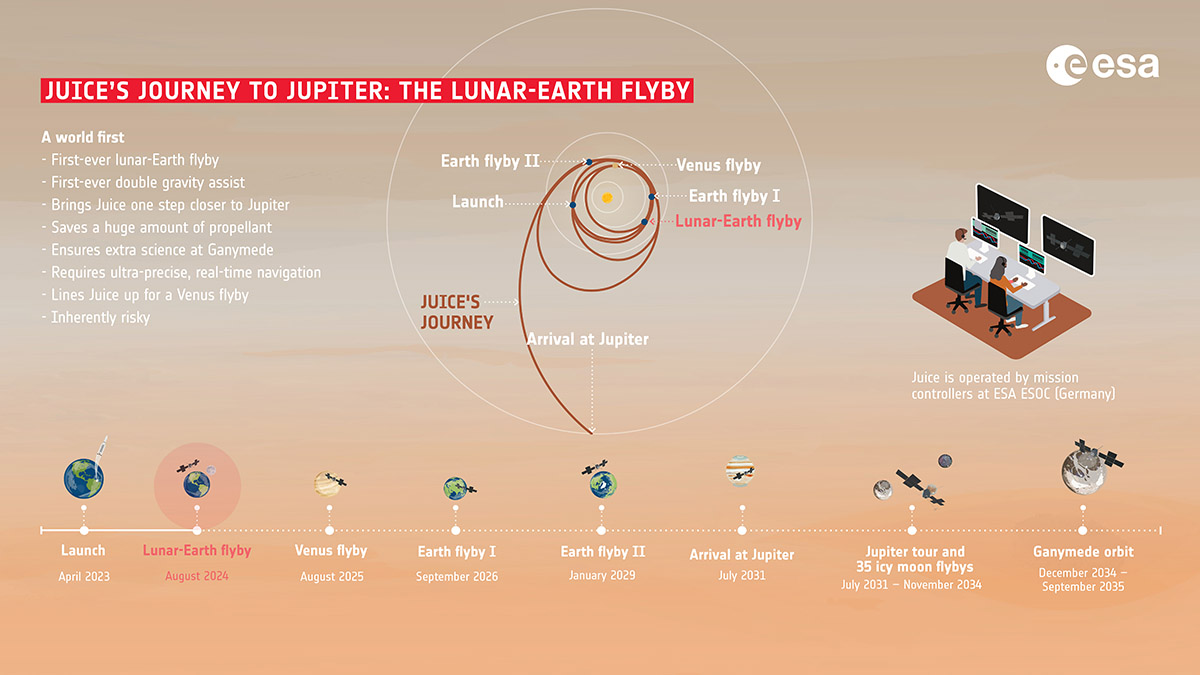
This isn’t the first gravity-assist flyby that Juice has conducted – previously, there was a flyby of Venus in August 2025, while back in August 2024, just a year after launch, it conducted a twin Earth-Moon flyby that was the first such manoeuvre ever conducted.
Nor will it be the last – there’s another Earth flyby scheduled for January 2029, after which the ESA craft will finally begin its voyage to Jupiter proper.
All the same, every gravity-assist flyby is an incredibly complicated undertaking – the series of flybys of Jovian satellites that will enable Juice to do its job once it arrives at Jupiter have been under discussion for over a decade already.
Even now, nothing’s been 100 per cent finalised – so the ESA scientists and technicians responsible for these flybys are to be applauded.
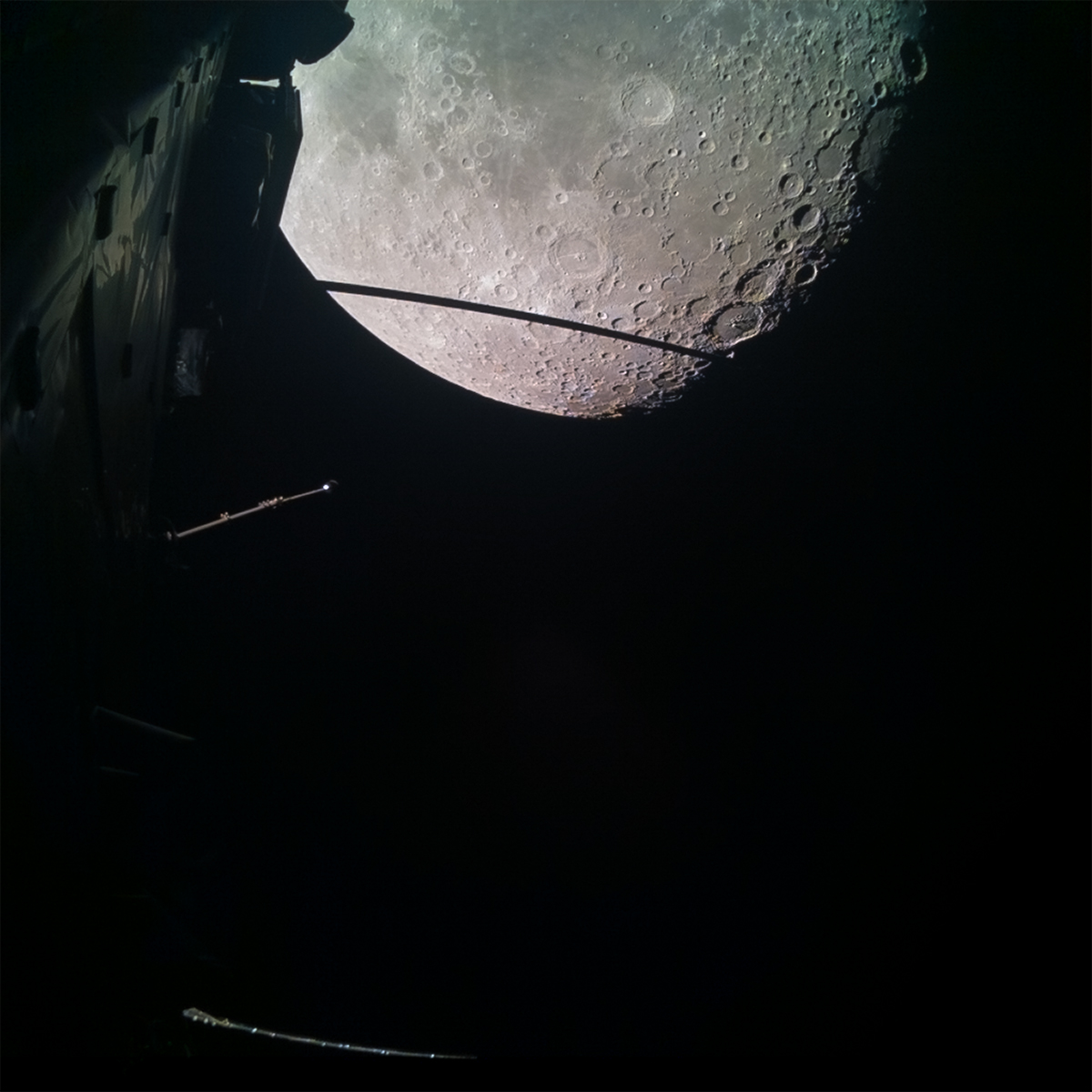
Not only was the flyby successful, thereby allowing Juice to continue on its mission, it was also conducted, the ESA scientists report, using the minimum amount of fuel.
That means there is more in reserve, which could extend the useful lifetime of the mission once it’s at Jupiter.
Flybys like this also give scientists a chance to make sure the spacecraft’s instruments are working.
After all, if you’ve designed an instrument to, say, take topographical readings or temperature measurements from an object it’s in orbit around, then it definitely can’t hurt to test the instrument out in a real-life situation (i.e. when it’s in orbit around Earth) before sending it on its way.
All told, then, Juice's Earth flyby was good news for the Juice mission – and a good day for space exploration and planetary science all round.