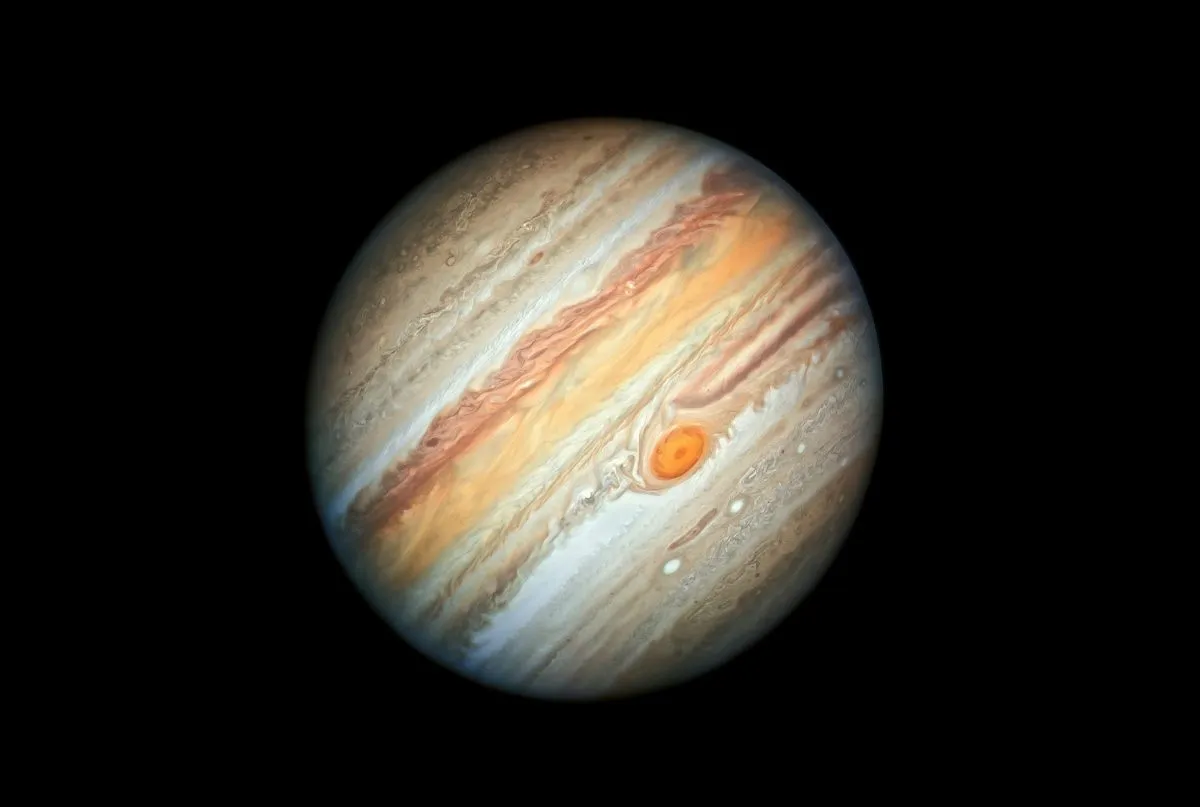
Jupiter is looking amazing in December 2025, a bright mag. –2.4 planet rising to a peak altitude approaching 60° when due south.
It’s currently located in Gemini, not far from the twin stars Castor and Pollux (Alpha (α) and Beta (β) Geminorum).
Reaching such a good height when due south allows Jupiter to lift itself well above Earth’s turbulent atmosphere, a welcome situation as it provides for steadier views of the planet.
Get weekly stargazing advice by signing up to the BBC Sky at Night Magazine e-newsletter and subscribing to our YouTube channel

Observing Jupiter – top tips
Jupiter’s atmosphere is very turbulent in its own right, appearing banded when viewed through amateur telescopes.
In the southern hemisphere’s south equatorial belt (SEB) sits a persistent storm known as the Great Red Spot.
The Great Red Spot has been observed for at least 195 years, and over recent years has been shown to be shrinking in longitude span.

Getting a view of the Great Red Spot is down to luck with timing and the weather, but free software such as WinJUPOS will show the Great Red Spot's position for any selected date, allowing you to plan your observing session.
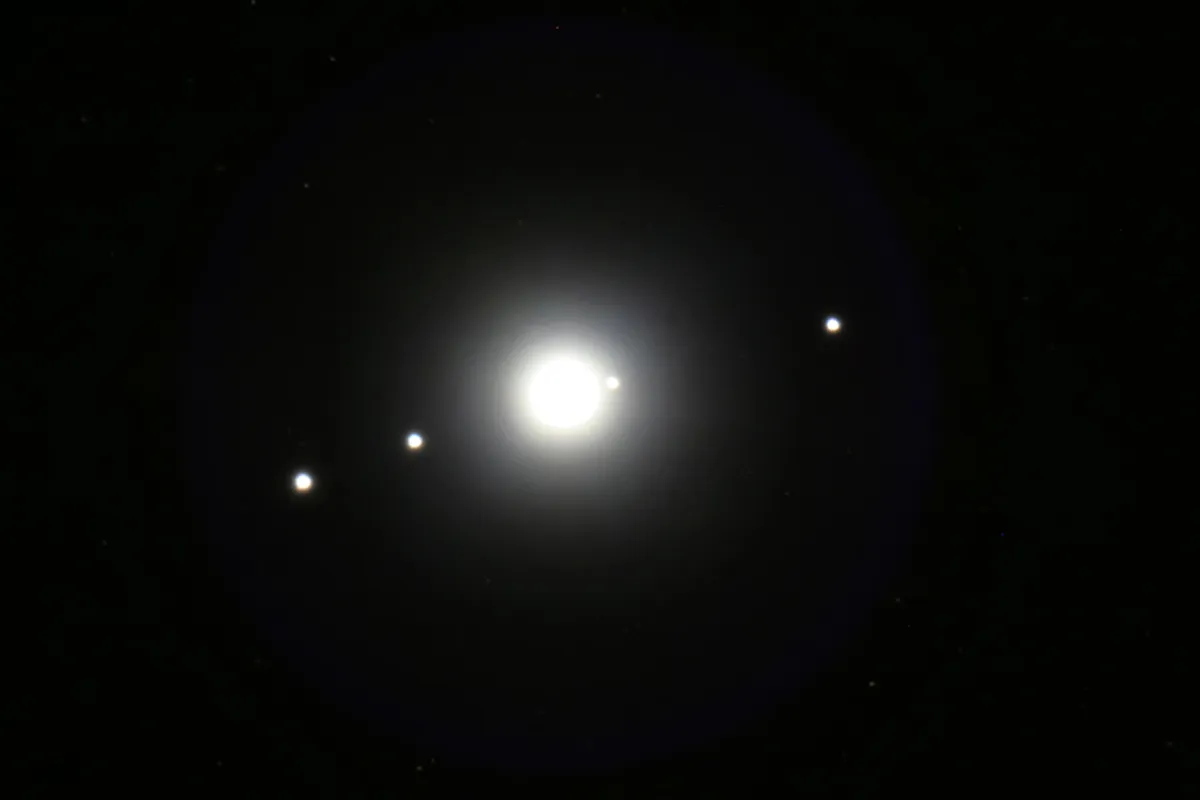
Jupiter’s main cloud belts can be seen through a small telescope, along with its four brightest moons: Io, Europa, Ganymede and Callisto.
In December 2025, their apparent interactions with Jupiter’s globe are being affected by exciting changes in the planet’s orientation.
The period between Jupiter’s oppositions – when the planet is opposite the Sun in the sky and presented at its best as seen from Earth – is slightly longer than one Earth year.
That means that, if the timing is right, it’s possible to have a year without Jupiter reaching opposition. 2025 was one such year: the last opposition occurred on 7 December 2024, and the next won’t happen until 10 January 2026.
For more info on observing Jupiter in December 2025, read our guides on how to observe Jupiter and how to observe Jupiter's moons.

Jupiter in December 2025 – key facts
- Best time to see: 31 December, 01:05 UT
- Altitude: 59°
- Location: Gemini
- Direction: South
- Features: Complex atmosphere, moons
- Recommended equipment: 100mm or larger
If you observe or photograph Jupiter in December 2025, share your observations and images with us by emailing contactus@skyatnightmagazine.com