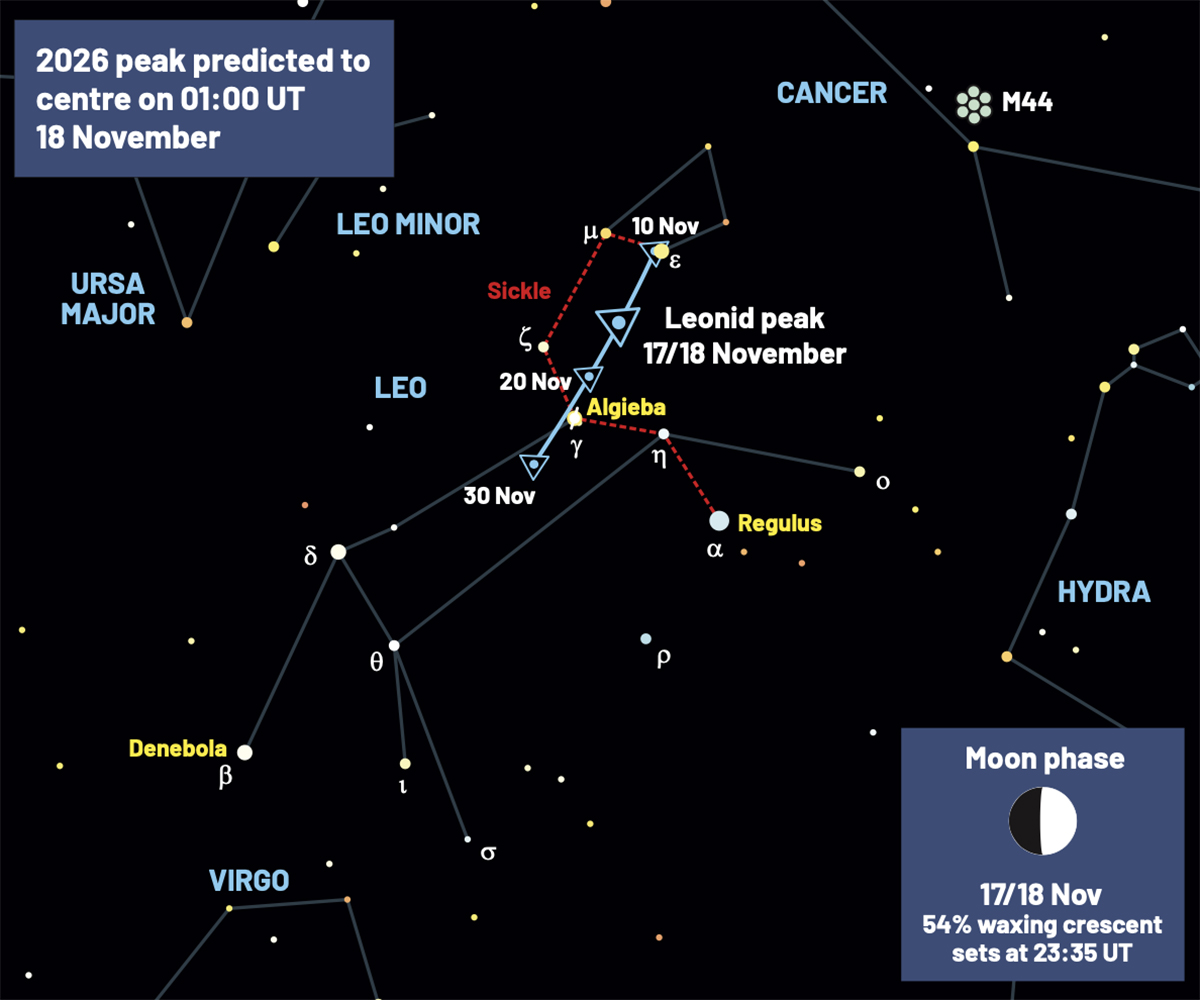
The Leonid meteor shower returns every November, with peak activity centring on the nights of 17/18 and 18/19 November.
Composed of tiny debris particles from comet 55P/Tempel–Tuttle, the shower produces the swiftest meteors in the sky, travelling at speeds of up to 44 miles (71 km) per second.
More on meteor showers
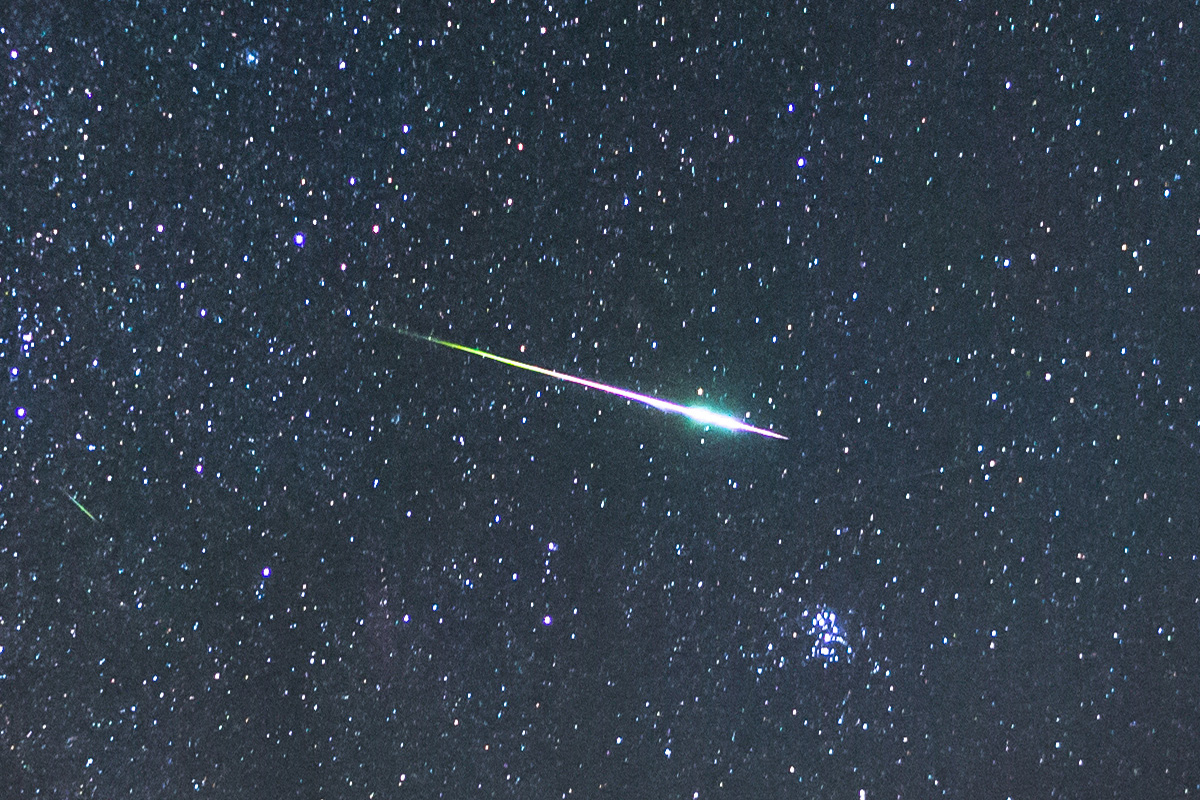
Fortunately, 2026 viewing conditions are especially favourable because the Moon will be below the horizon around midnight, eliminating lunar glare during the peak hours of the Leonid meteor shower.
And with a weekend occurring just before peak activity, that could be an ideal time for a late-night meteor-watching session.
Here are eight top tips for seeing a Leonid meteor this November.
For more detailed advice, read our complete guide to the Leonid meteor shower.
Find a place away from light pollution
Get to a dark location to ensure the best possible conditions for viewing. If this isn't possible, avoid artificial light as best you can. This could involve, for example, turning off all lights when observing from your back garden.
Give your eyes time to dark-adapt
Give your eyes about 30 minutes to dark-adapt and you'll see more meteors. That means not looking at artificial sources of light, including your phone! If you have to use your phone, you should make sure its screen is turned red first.
Observe with friends and family
Working in a group increases your collective chances of spotting the meteors as they streak across the sky. One person can take a break from observing, noting the date and times Leonids are spotted by the rest of the group.
Use a reclining chair
A reclining chair will help prevent neckache from looking up for extended periods. You could also use a sun-lounger or a mattress on the ground.

Wrap up warm
It's November and Leonid meteor observing involves standing still in open spaces on cold late-autumn nights. Warm clothing is essential. Pay particular attention to your feet, hands and head. If they feel warm, you'll feel warm.
Locate the radiant
A meteor shower's radiant is the region in the sky from which the meteors appear to originate. It's also what gives the meteor shower its name. The Leonids' radiant is located within the head of Leo, marked by the Sickle star pattern. Find it in the night sky using a star chart or astronomy app.
Use your naked eye
You don't need a telescope or binoculars; in fact, these will narrow your vision. Meteor-watching is about having a clear, wide view of the sky, as meteors can appear anywhere. Naked-eye observing is best.
Look two-thirds up in the sky
This final tip may dictate your meteor-watching location. If you're planning on observing somewhere where you're surrounded by tall trees for example, you should probably move to a spot with a clearer view.
A watch from midnight until the start of dawn yields the best results. If you see a meteor and can trace it back to Leo, chances are you've seen a Leonid.
Share your Leonid meteor shower observations and photos with us by emailing contactus@skyatnightmagazine.com