
We’ve known about the first light to shine through the Universe for some time.
First detected in 1964, successive space missions have increased the level of detail visible in this cosmic microwave background: COBE in the 1990s, WMAP in the 2000s and Planck in the 2010s.
Now astronomers have produced the clearest image yet of the earliest light it’s possible to see.
Travelling for more than 13 billion years, from a time when the cosmos was a mere 380,000 years old, the light captured by the image reveals a time before matter formed into stars and galaxies, when space was filled with clouds of hydrogen and helium.
We got the chance to speak to Dr Hidde Jense, an astronomer at the Cardiff University in the UK and part of the international science team that produced the image, about how it was created.
Tell us about the image you helped produce. What is it showing and what does it mean to a cosmologist?
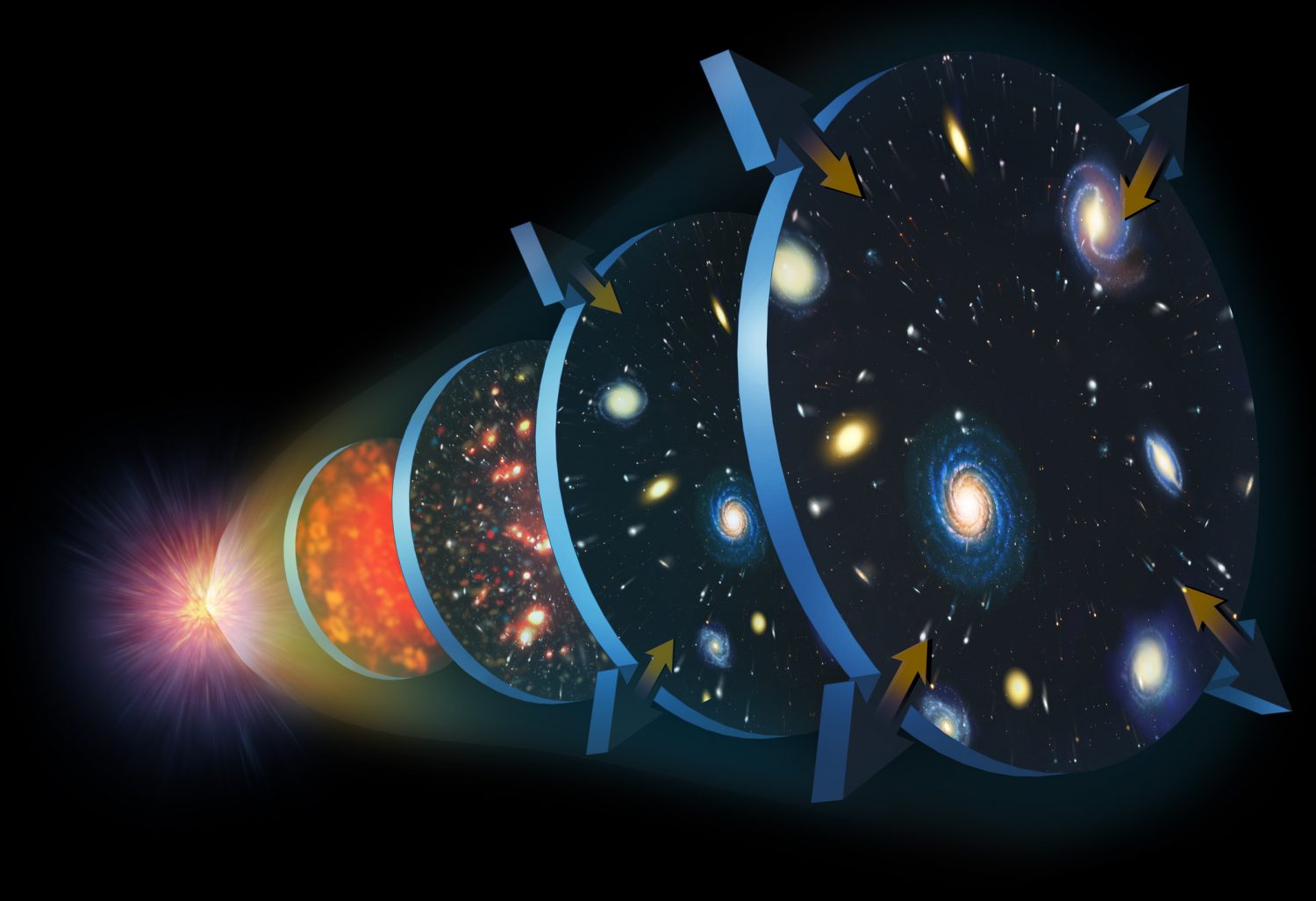
In cosmology, we know that over time the Universe expands. That’s a property of space itself.
If it expands now, it must have been smaller in the past. At one point, it was so small and dense that light couldn’t escape from the plasma filling it.
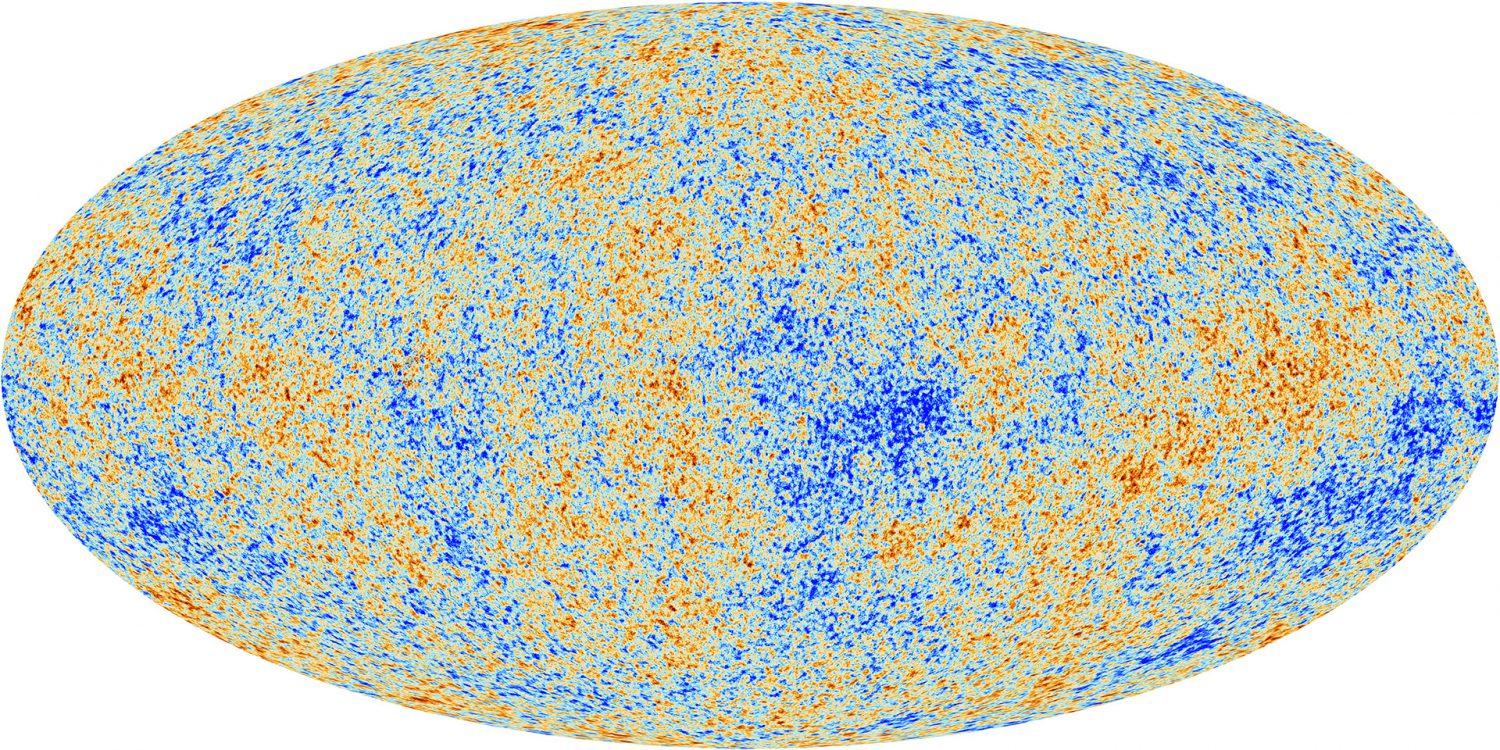
What we’ve done is capture an image of the first light that could escape – we call this the cosmic microwave background. We’re literally looking at the very hot early Universe radiating away its heat.
Today, that appears as faint microwave background radiation.
More mind-bending science
The Universe wasn’t perfectly smooth back then – it wasn’t the same temperature everywhere.
On average, it’s about three degrees above absolute zero, but there are tiny fluctuations – about a tenth of a degree.
By mapping the distribution and size of these fluctuations, we can learn a lot: what’s in the Universe, how old it is, how fast it’s expanding, and even properties of fundamental forces and particles.
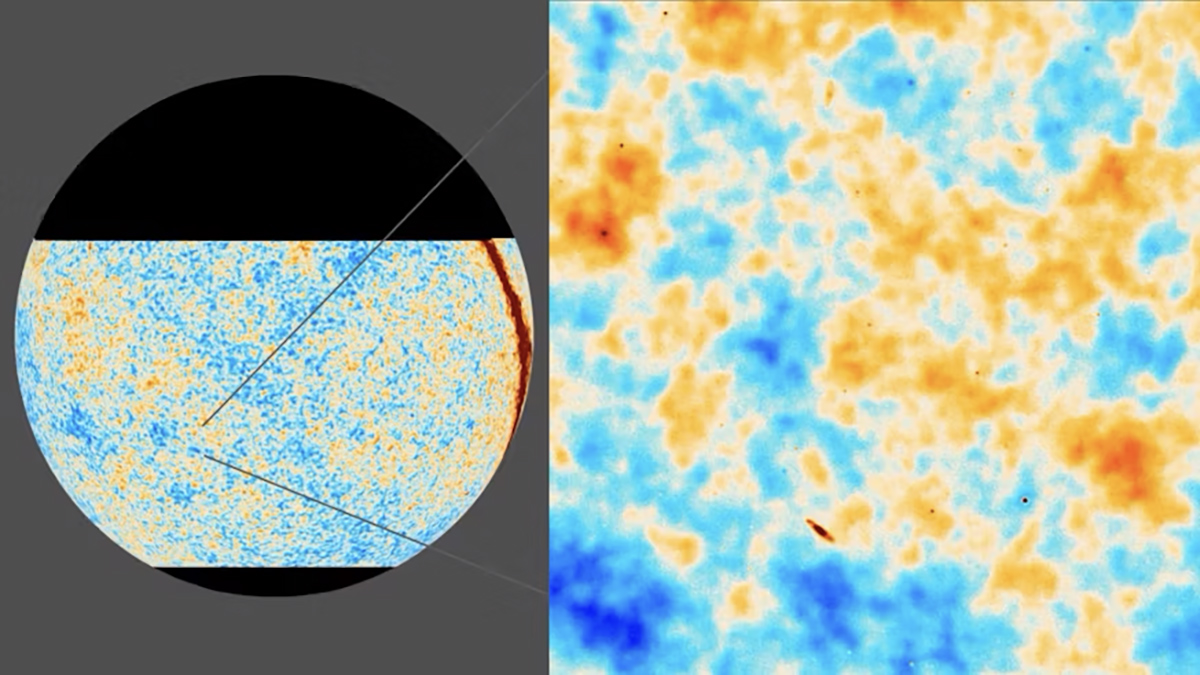
With the Atacama Cosmology Telescope we surveyed the sky for years and created a detailed map of this heat signature from the early Universe.
I was involved in analysing that data and fitting physical models to it to learn more about gravity, particle physics and the deeper laws of nature.
The Universe is 13.8 billion years old and that light existed 380,000 years after the Big Bang. How is it possible to see something from so long ago?
Light takes time to travel. So when we look at distant things, we’re seeing them as they were in the past.
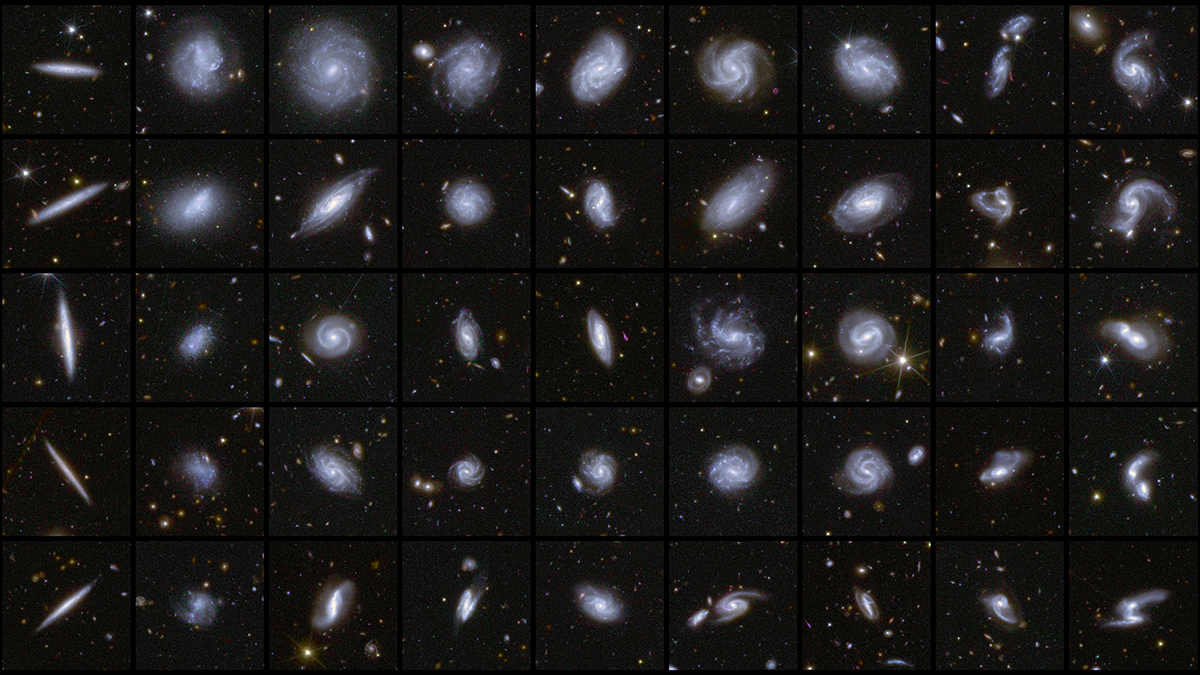
Nearby galaxies look like our own, but the more distant the galaxy, the younger it appears because the light left it a long time ago.
When we look as far back as we can, we see a Universe without galaxies – just clumpy gas.
Eventually, we reach a point just 300,000 years after the Big Bang where the Universe became transparent.
Before that, it was so dense that light was trapped. We can’t see any earlier than that with light.
There are lots of blue and yellow shapes in the image. What are they?
Those colours represent temperature variations. We measure the temperature of space itself by detecting faint radiation.
If a point in space is slightly hotter than average, we colour it orange; slightly colder, it’s blue. So all the coloured blotches are tiny temperature fluctuations across the sky.
There are two bands across the image – that’s our own Milky Way, which gets in the way and obscures our view.
Some small points are other galaxies or galaxy clusters, also in the foreground. But most of what we see is the blobby, cloud-like structure of primordial plasma – the temperature fluctuations of the early Universe.
What has happened to these temperature fluctuations in the tens of billions of years since?
Right after the Big Bang, the Universe was incredibly smooth, but quantum mechanics introduced tiny fluctuations.
A region with slightly more matter has more gravity, so it pulls in more matter and grows. Areas that aren’t so dense, with less gravity, lose matter.
So these temperature fluctuations also correspond to density fluctuations – it’s the beginning of the Universe forming a structure.
Over cosmic time, these fluctuations led to the formation of galaxies, galaxy clusters and the large-scale cosmic web we see today.
What were the key discoveries of your study?
The cosmic microwave background is a great tool for testing our cosmological model.
It reflects the conditions of the Universe depending on things like how much dark matter or regular matter there is, or how fast the Universe is expanding.
By comparing measurements to predictions, we can determine the Universe’s age, its contents, and even the properties of certain particles.
This kind of analysis has been done before, but what we’ve done is build a bigger telescope – which allows more detailed measurements.
With that, we’ve tightened the constraints on several parameters. For instance, we looked at neutrinos – very light particles that barely interact with anything.
Particle physics can only give us a lower limit on their mass, but cosmology provides an upper limit.
With improved data, we can pin down their mass without building new accelerators. It’s a way of learning about physics that's otherwise hard to access.
How does it feel when you see predictions match observations.
It’s definitely satisfying. You can start with early-Universe data, the temperature fluctuations in the cosmic microwave background for example, and predict how galaxies should have formed and clustered over time.
Then you compare that to what we see in the nearby Universe. If it all lines up – and it often does – it confirms that our understanding of gravity, star formation and other processes is on the right track. That’s very rewarding.
What about the future – can this research tell us how the Universe might end?
Physics is about observing past events and predicting what comes next. But in astronomy we can’t do lab experiments – we can only observe.
So to know what will happen in a billion years, we’d have to wait a billion years, which isn’t very practical.
That said, we know the Universe’s expansion is accelerating. Over time, distant galaxies will move away from us so fast that we won’t be able to see them any more.
Eventually, we could lose sight of the cosmic microwave background entirely. We’re at a special moment in cosmic history where we can still observe it.
Depending on how dark energy behaves, models suggest the Universe will keep expanding, and while galaxy clusters may stay gravitationally bound, the rest of the Universe will fade away.
This scenario is called the 'big chill' – the Universe ends up cold, dark and diffuse. But that’s trillions of years away. It’s definitely less dramatic than the birth of the Universe, but kind of fascinating in its own way.
What’s coming next in your work with the cosmic microwave background?
The image we discussed was made with the Atacama Cosmology Telescope in Chile, which has since been decommissioned.
But I’m now involved with the Simons Observatory, which is a kind of spiritual successor.
It saw its first light in March 2025, and it’ll map a larger area of the sky with better sensitivity and less noise.
We’re particularly excited about measuring the polarisation of the cosmic microwave background. When the plasma in the early Universe moved, it polarised the light slightly.
By mapping that, we can learn even more about conditions at that time – and possibly even closer to the Big Bang.
The Simons Observatory will also overlap with other projects, like the Euclid space telescope, which maps galaxy positions.
By comparing early-Universe data with later-Universe data, we can trace the physics in between. It’s a very exciting time to be working in this field.
Dr Hidde Jense is an astronomer at Cardiff University researching the cosmic microwave background

