
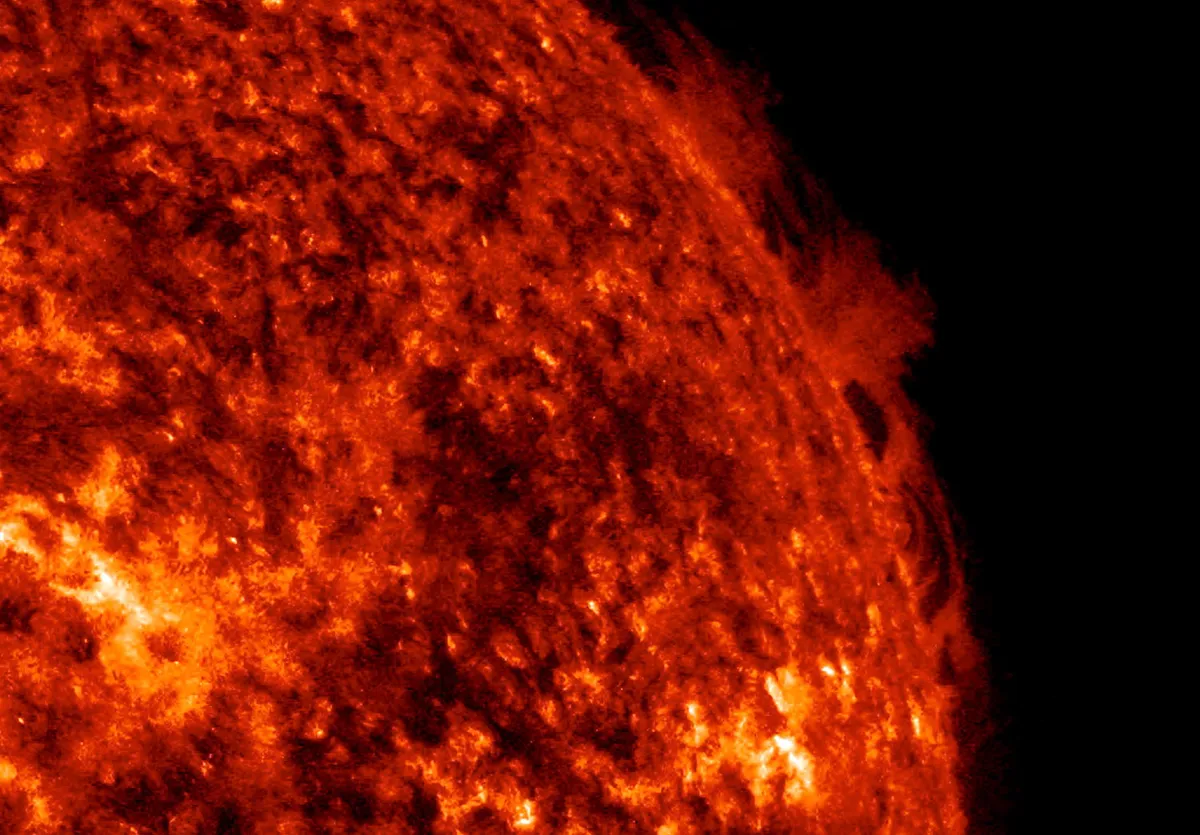
In about 5 billion years, the Sun will begin to die. As it does so, it will expand and likely swallow the inner planets of the Solar System, including Earth.
While that may not seem like an imminent problem, it does suggest that, should humanity still exist at that point, we probably don't want to be anywhere near Earth.
More on interstellar spaceflight

All of which adds a certain weight to the argument – made by some – that humanity must eventually become a space-faring species in order to survive.
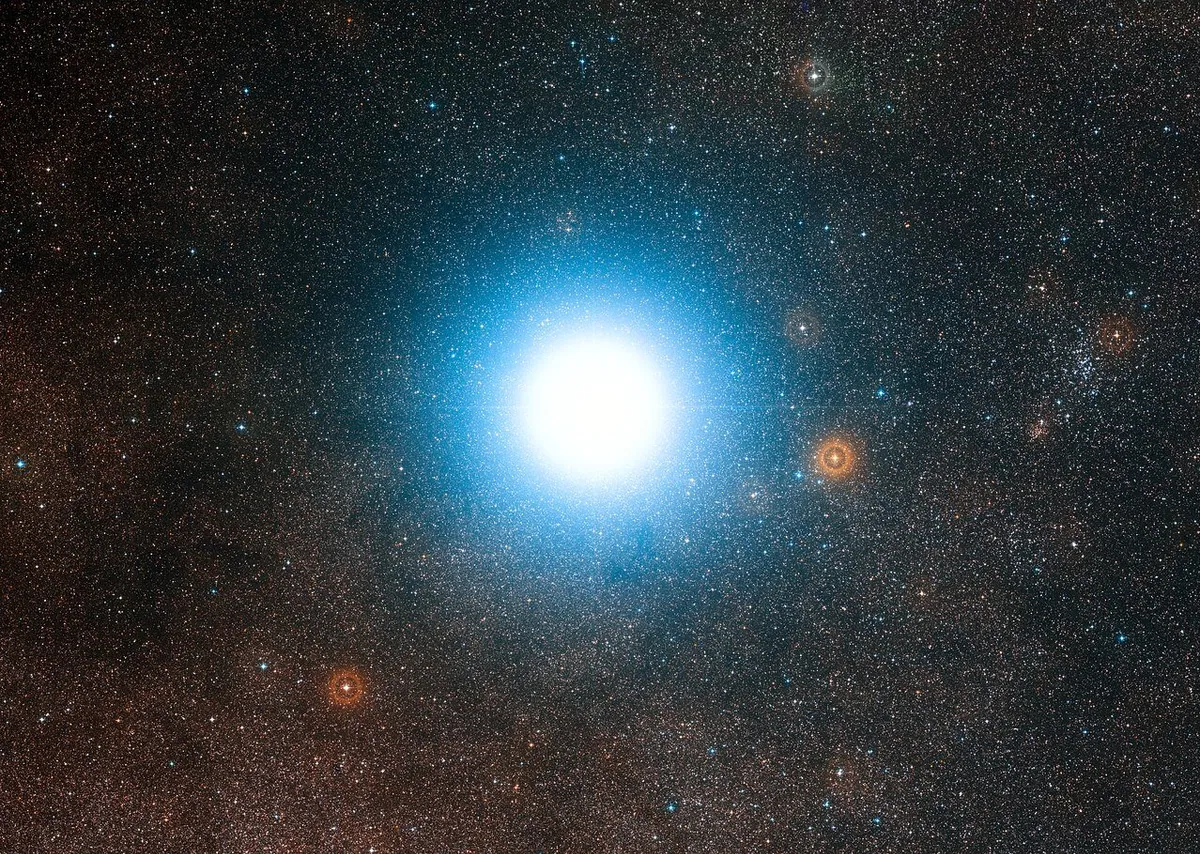
But that means leaving our Solar System behind, travelling to a nearby star system with an Earth-like planet where we would be able survive.
Our nearest Earth-like planet is Proxima b.
However, in the field of exoplanet study – exoplanets being planets beyond our Solar System – the term 'Earth-like' is a very loose definition, and does not mean it's confirmed as being suitable for humans to live on.
But even if we did want to travel at least to the Alpha Centauri star system, where Proxima b resides, the journey would take hundreds of thousands of years using current technology.
That would mean generations upon generations of human lifetimes, all lived out on board a rocket ship travelling across space, in the hope of a comfortable utopia waiting for us when we arrive.
Now, a team of researchers say they've demonstrated a form of light-driven propulsion that could one day get us to Alpha Centauri in 20 years.
Exploring light and laser travel
A team of researchers at the J. Mike Walker ’66 Department of Mechanical Engineering at Texas A&M University say they've demonstrated lasers can be used to lift and steer objects without physical contact.
Dr. Shoufeng Lan is an assistant professor and director of the Lab for Advanced Nanophotonics.
His team have published a paper called Optical propulsion and levitation of metajets, 'metajets' being micron-scale devices that generate motion when hit by laser light.
The metajets, the team say, are made of ultrathin materials that are manufactured to have small patterns and can be used by scientists to control how light behaves.
They say that, by designing these structures in a certain way, they've been able to control how light transferred momentum to the object, making it move.
In other words, when light reflects, it transfers momentum, creating a small but measurable force that can push an object.

They team say the metajets can move objects in three dimensions and, according to them, it's the first known demonstration of 3D-manoeuvring using this technique.
The study says the specific technique used here builds control directly into the material, allowing for more flexible generation of force and, according to the team, enabling the concept to eventually scale-up – potentially into a full spacecraft – more easily.
Currently the devices are smaller than the width of human hair but, say the team, the physics is sound.

The team tested the devices in a fluid environment to offset gravity and observe the motion more easily, potentially more closely mimicking how it could work beyond Earth's gravity.
Following this intial study, the team say they're attempting to acquire funding to extend testing into microgravity environments.
Looking further into the future, they say this technology could eventually lead to propulsion techniques that would use light to move and control objects as large as spacecraft, without the need for physical contact or fuel.
Read the full paper via Newton


