The Moon will occult the northern part of the Beehive Cluster, M44, in the constellation of Cancer this month .
Although perhaps rather than a lunar occultation, this should be labelled as an ‘almost occultation’.
It occurs on the morning of 8 September, when the 10%-lit waning crescent Moon approaches the open cluster under dark-sky conditions at around 04:00 BST (03:00 UT).
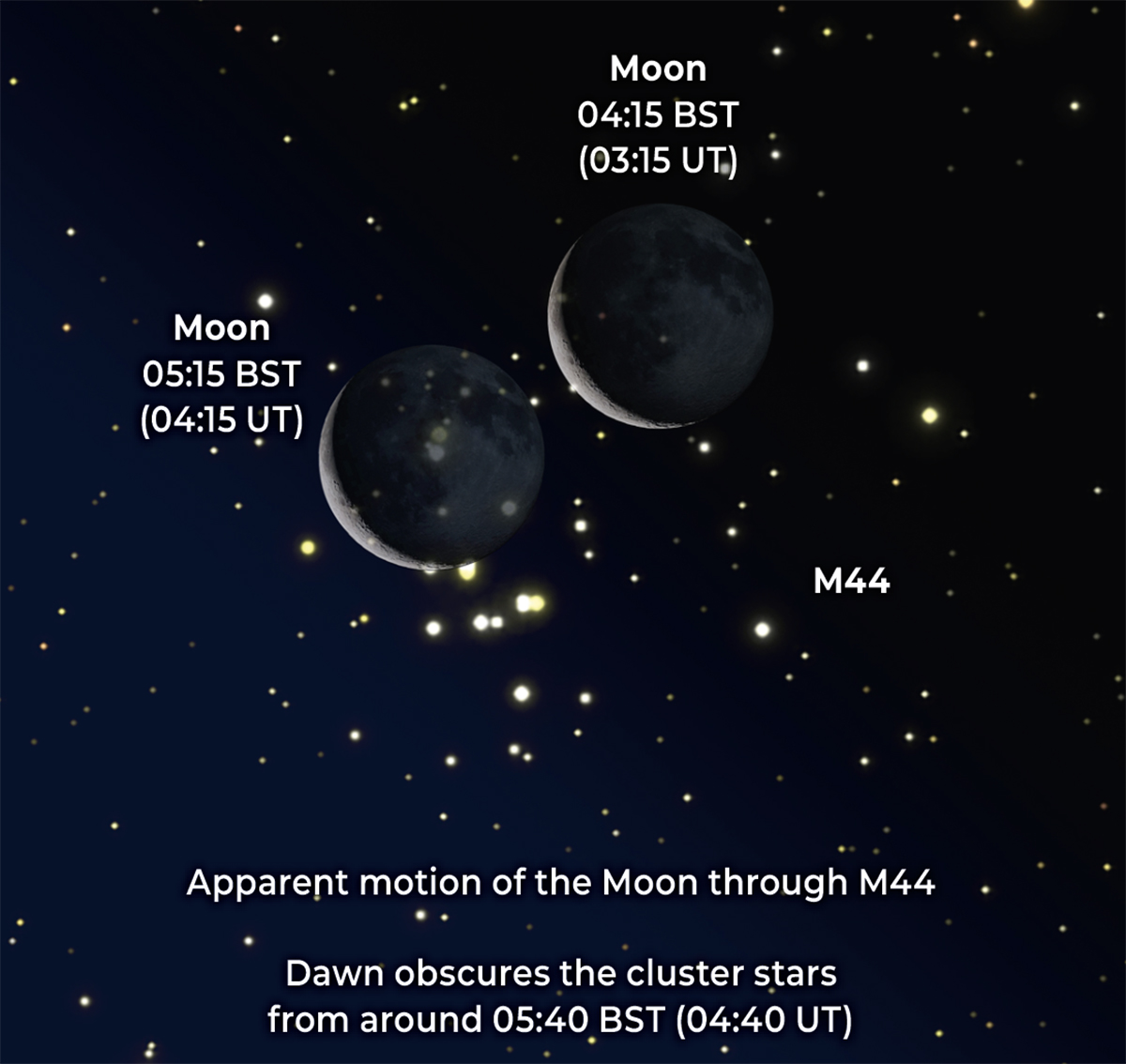
That approach will be interesting in itself, as the Moon will be slender enough to not put out too much glare.
This should allow the stars of the Beehive to be seen fairly well.
You might also pick out some earthshine on the Moon’s night side, a glowing effect that will really add to the scene.
As the minutes tick by after 04:00 BST (03:00 UT), the Moon’s passage against the cluster stars should become obvious, its crescent noticeably edging towards M44 as the morning progresses.
However, this is where the ‘almost occultation’ tag comes into play, as dawn will be approaching and by 05:00 BST (04:00 UT) the sky will be noticeably brighter.
That brightening light will progressively remove more members of the Beehive, starting with the faintest.
On the plus side, at 04:00 BST (03:00 UT) the Moon will be around 9° above the east-northeast horizon as seen from the centre of the UK, but it will be climbing in altitude, so the scene will be that much higher in the sky as dawn approaches, and potentially clearer as a result.
Certainly, from 04:30 BST (03:30 UT) onwards, the view will be appealing if you own a pair of binoculars, as both the crescent Moon and the Beehive Cluster’s stars should be visible within the same field of view.
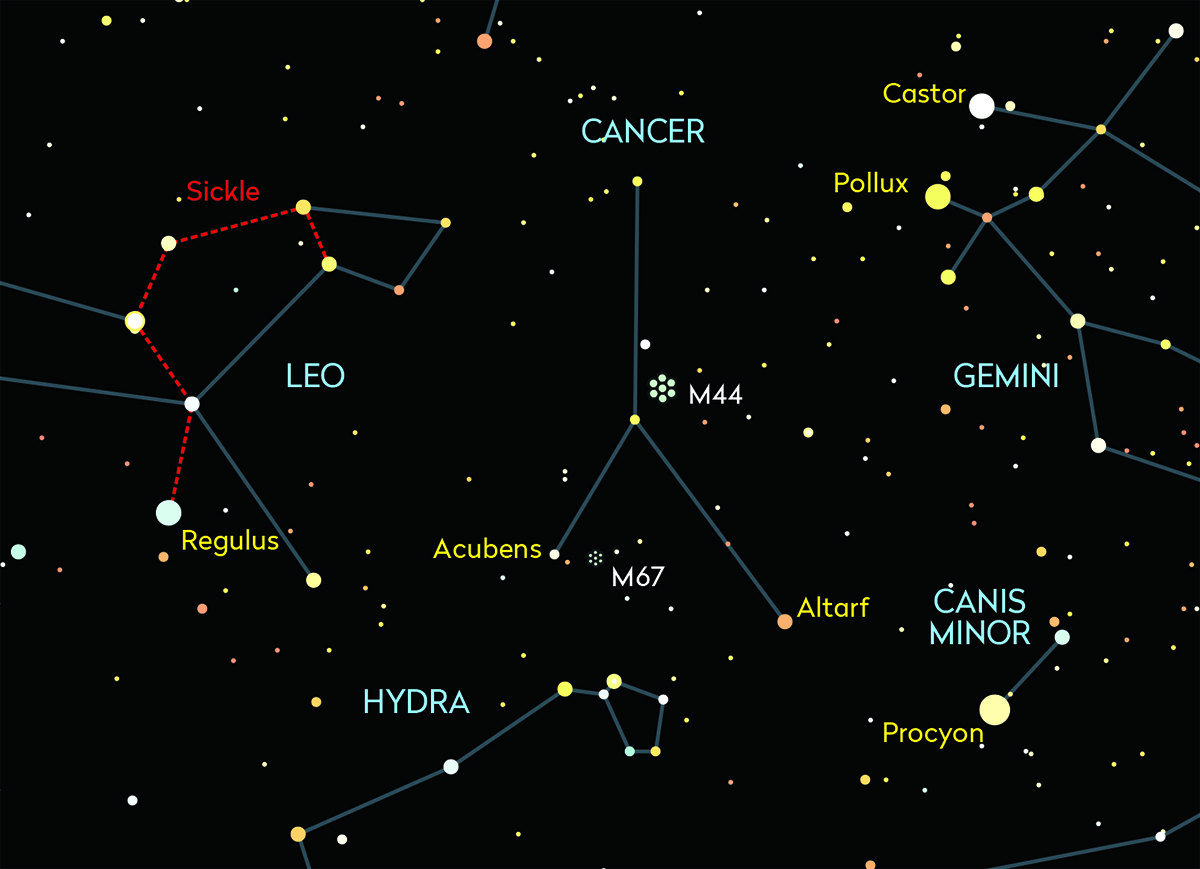
The challenge after this will be to see how many of the main cluster stars you can stay with as the sky brightens.
If you do want to see the occultation using binoculars, make sure you do not point them near or at the Sun, as this could seriously damage your eyesight.
And if you observe or photograph the lunar occultation of the Beehive Cluster on 8 September 2026, share your observations and images with us by emailing contactus@skyatnightmagazine.com