
Scientists have discovered a completely new type of rock on Mars, revealing a mineral never before detected on the Red Planet.
The team behind the discovery say it could change our understanding of Mars's history, giving planetary scientists a new perspective into the planet's ancient past and its 4.5-billion-year-old geology.
They say the discovery is effectively a 'geological timecapsule' that has perserved information about the temperatures, pressures and processes that shaped Mars billions of years ago.
More on Mars

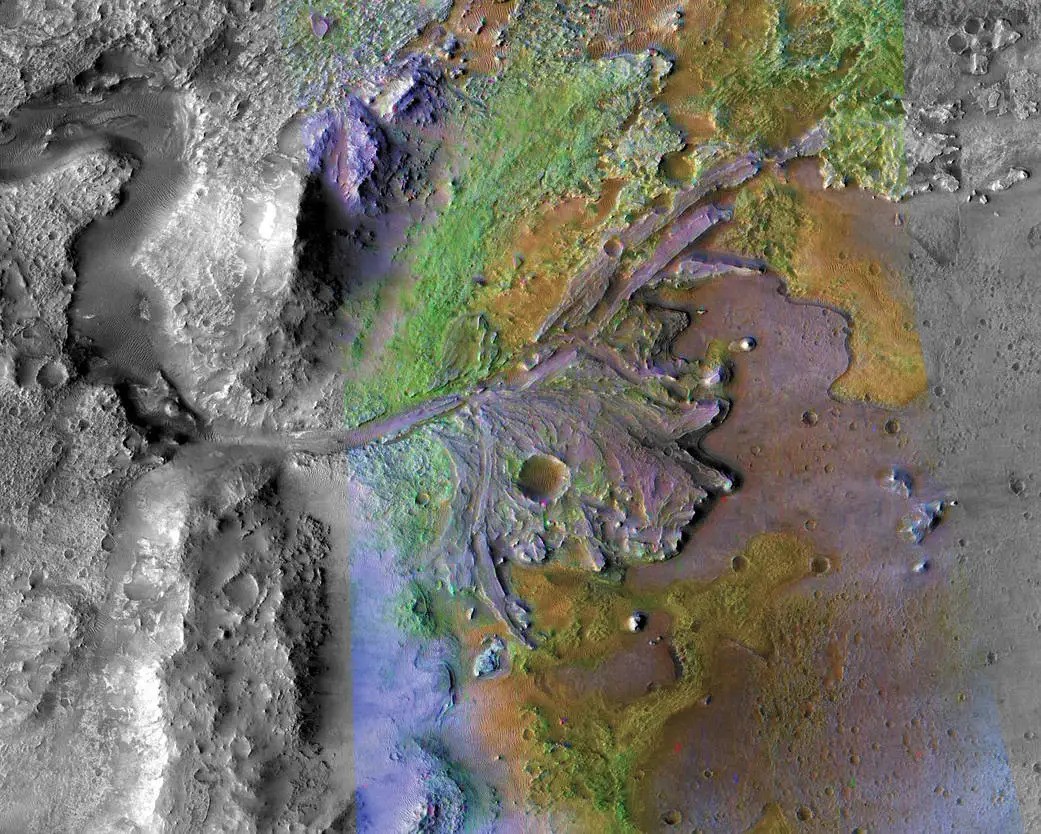
A view into Mars's past
Our Solar System is about 4.5 billion years old.
Throughout Mars's 4.5-billion-year-old history, it's undergone a lot of changes. In its ancient past, it was much warmer and wetter than it is today.
Scientists have previously discovered evidence of ancient river beds and lakes on Mars that were once filled with liquid water.
That means ancient Mars had the potential to host life – and planetary scientists are still looking for evidence of that life today.
While rovers and orbiters operating at Mars are a great way of learning more about the planet, scientists can also learn a great deal through Martian meteorites that fall to Earth.
For this study, an international team of astronomers at the Royal Ontario Museum in Toronto, Canada, were analysing a piece of a Martian meteorite – known as NWA 8171 – within the museum's collections.
They found garnet, a dark-red gem that was popular with ancient Egyptians, Romans and the Victorian elite.
The team say it's a 'cornerstone' mineral in geology.
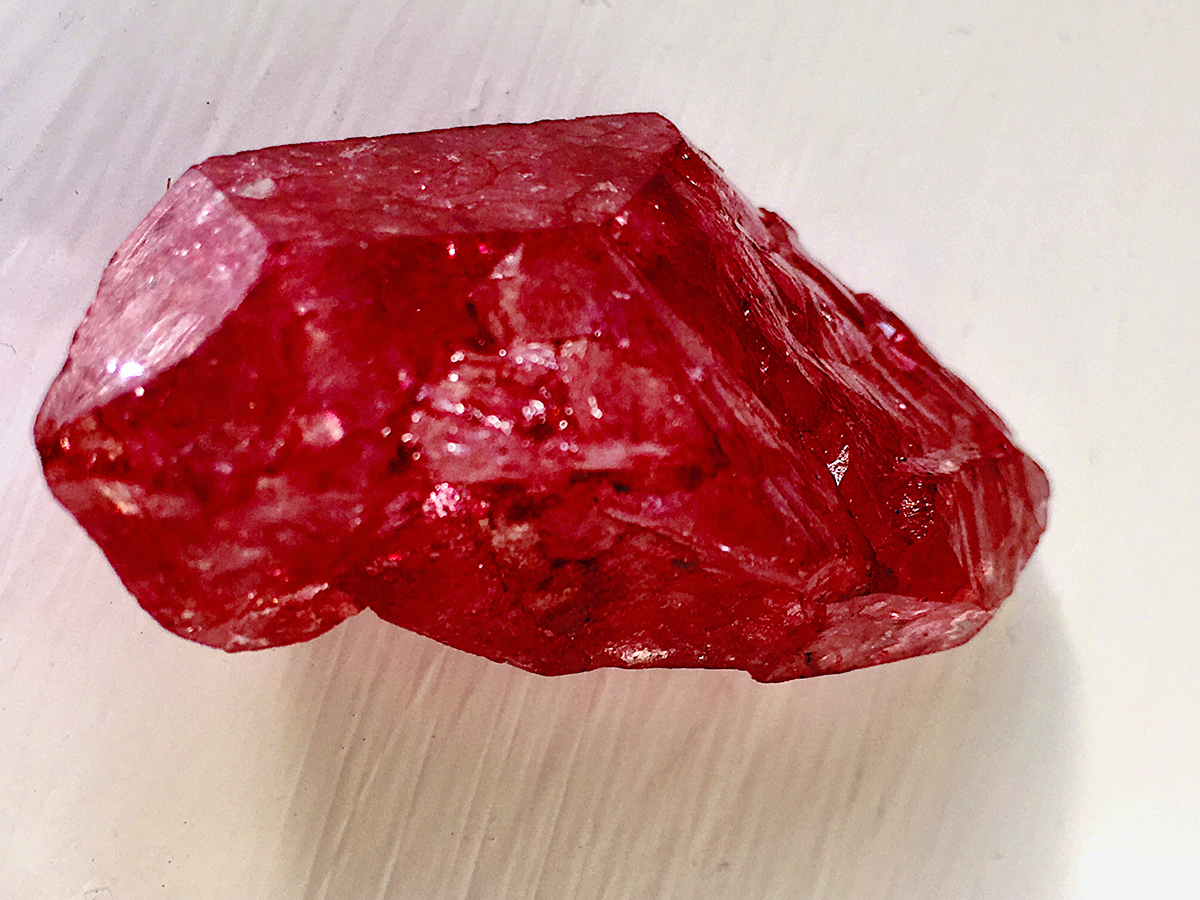
On Earth, garnet can tell scientists a lot about our planet's history, from its tectonic forces and ore-forming processes to the fluid-rock interactions that shape Earth’s crust and mantle.
The research was led by Tanya Kizovski, Assistant Professor of Earth Sciences at Brock University in Canada.
"This discovery is going to expand our knowledge of the geologic processes that are possible on this planet," says Kizovski.
"This new garnet-bearing rock type could give us clues to how Mars has changed throughout its history and new insights into the ancient environments that could have formed the garnet and related minerals."
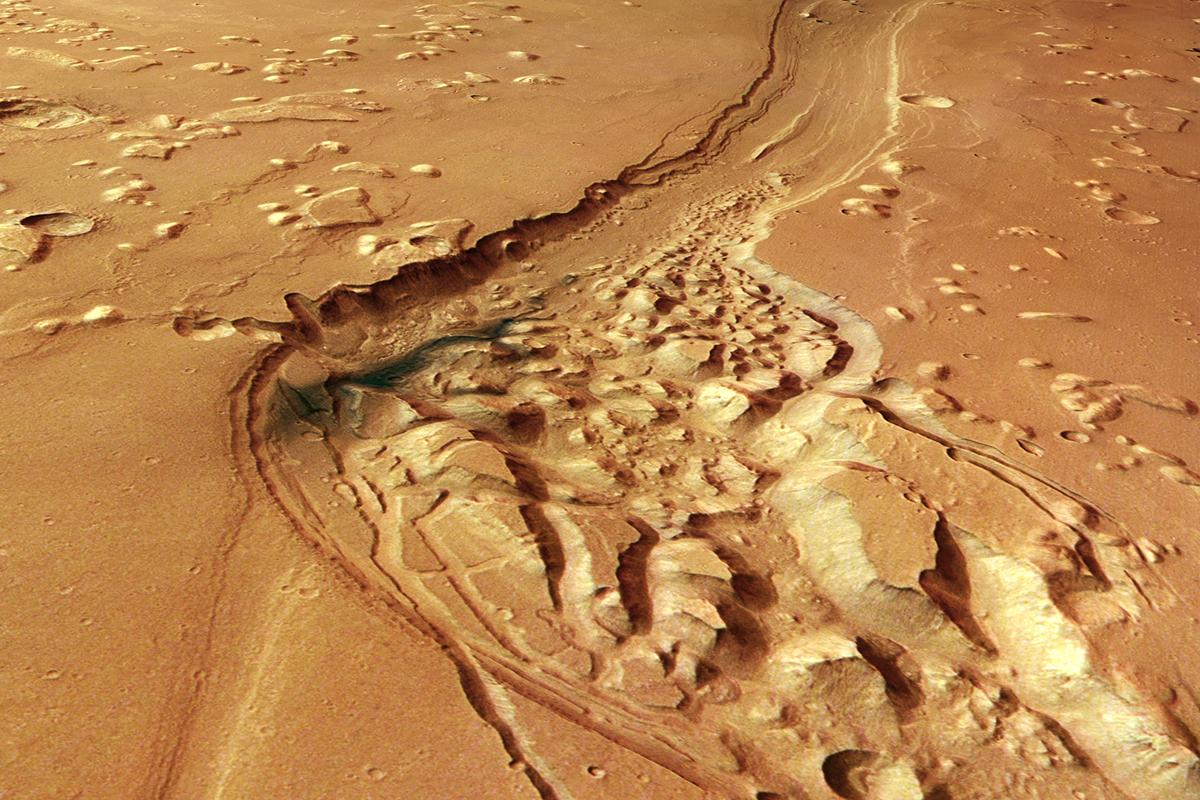
How they found the piece of the puzzle – and why it's big news
The discovery came about because of Kizovski's decision to look closer at the Martian meteorite to identify its minerals and chemical composition.
"This little section of the meteorite looked really interesting and the chemistry was a bit odd," she says.
"At first, we assumed it was a mineral called pyroxene, which is very common, but then we decided to take a second look."
To analyse the rock, they used the Electron Microscopy and Microanalysis Unit at the University of Portsmouth in the UK and the Royal Ontario Museum's specialised laser equipment
"Garnet is a classic example of a mineral often found in metamorphic rocks on Earth," says Kizovski.
"The process of metamorphism transforms igneous or sedimentary rocks into a new form through exposure to extreme heat, high pressure or hot fluids."
"On Mars, the heat and pressure needed to produce garnet through metamorphism could have come from the impact of a meteorite hitting the surface of Mars, magma rising up into the Martian crust or both."
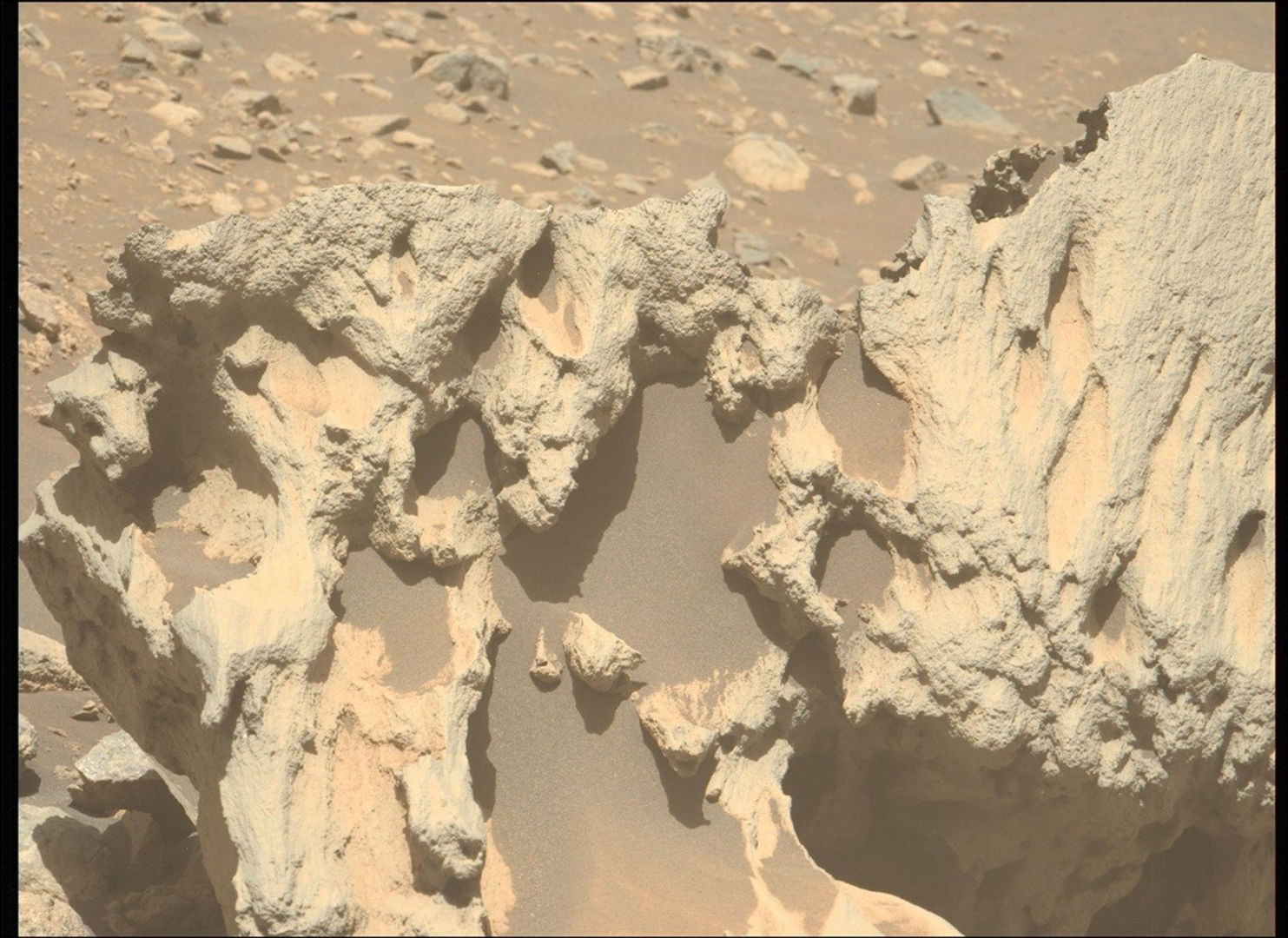
Martian or alien?
The team say they don't yet know whether whether the garnet-bearing rock formed on Mars or was delivered to the planet and integrated into its surface in a meteorite landing.
That could mean it formed beyond Mars, but then landed on the planet
The team will now study the garnet’s isotopic signatures to learn more.
"Measuring oxygen isotopes from the garnet-bearing rock type itself would help to confirm if it is Martian in origin or from an exotic meteorite impactor," says Kizovski.
"Isotopes are a collection of atoms with equal numbers of protons and electrons, but different numbers of neutrons."
The only problem is that the process would involve destroying some of the sample.
"[We've avoided that] thus far due to its rarity, as it may be the only garnet-bearing Martian rock we have for study,” Kizovski says.
"The findings add a striking new dimension to our understanding of the geology of Mars," says Professor James Darling, Professor of Earth and Planetary Science from the University of Portsmouth, "and open an exciting new window into the evolution of our planetary neighbour.”
Read the full study Expanding Mars’ lithologic diversity: discovery of a garnet-bearing clast in NWA 8171.

