
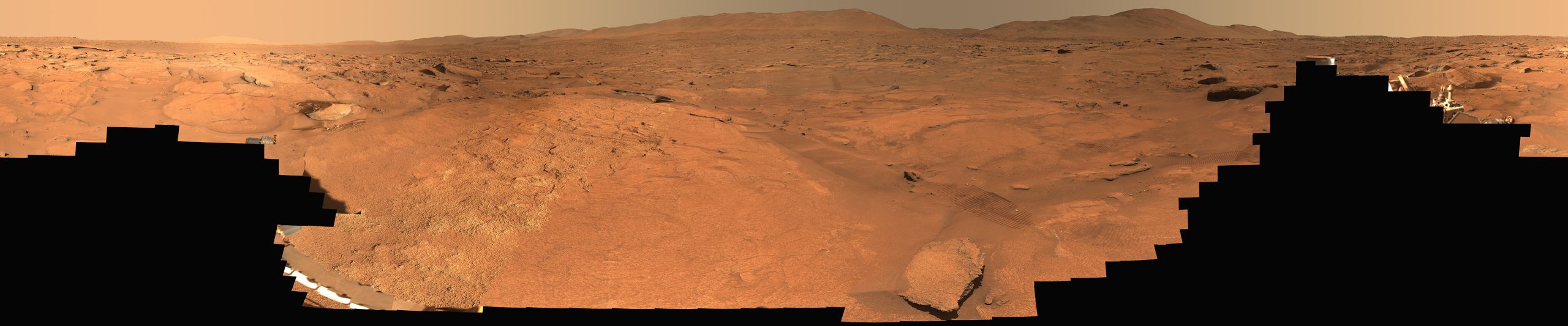
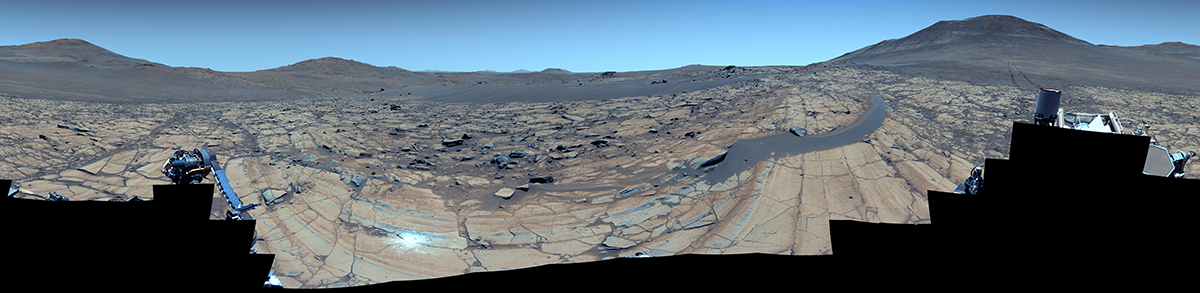
This image of Mars shows what it might be like to stand on the Red Planet and look across into the distance.
But it also shows the site of a key discovery made by scientists analysing data gathered by NASA's Perseverance rover at the site of an ancient Martian lake.
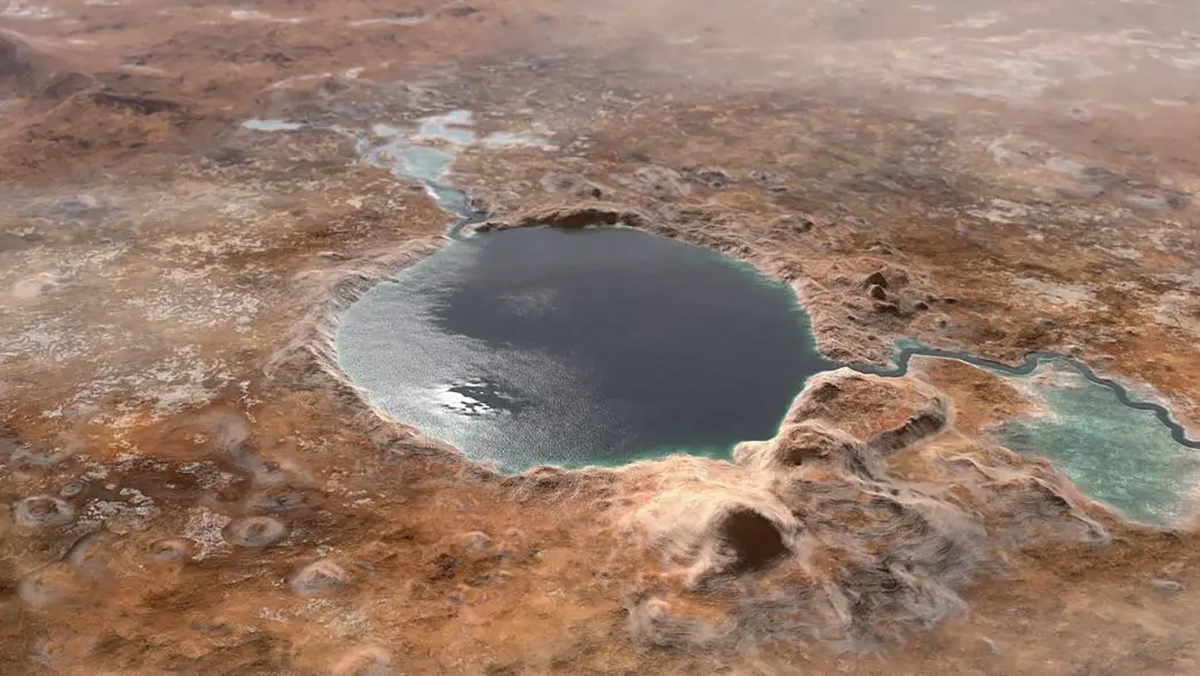
Mars today is a dry, arid planet but there was a time in its ancient history when it was much warmer and wetter.
Finding and analysing evidence of ancient Martian rivers and lakes is enabling planetary scientists to piece together the history of water on Mars and whether the planet could ever have hosted life.
More on Mars
The story behind the image goes back to September 2023, when NASA’s Perseverance rover reached the inner edge of Mars’ Jezero Crater.
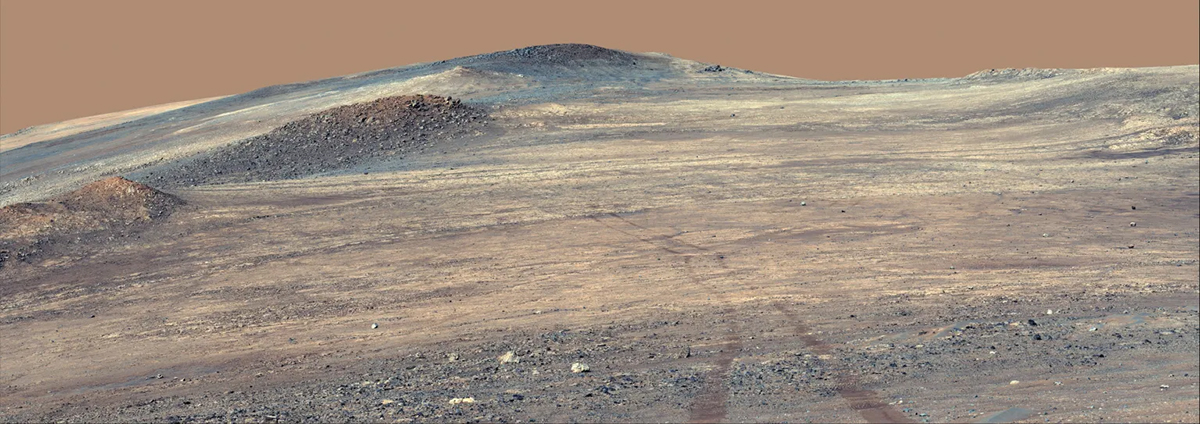
Jezero is an enormous crater on Mars that once held an ancient lake. Perseverance reached an area called the 'Margin Unit' that stretches along the ancient shoreline, so the team had expected to find sedimentary rock.
This sedimentary rock would have formed from layers of Martian sand piling up on top of each other over millennia.
Made of clay and silt, sedimentary rocks on Earth are good at preserving past microbial life, say scientists, making them a promising target for rovers on the surface of Mars.
The team noticed that Mars orbiters had detected signals of carbonate minerals, which on Earth often form in ocean and lake environments capable of supporting life.
Surprise discovery
Instead, the rover found igneous rock, which can form either deep below the surface from magma or from volcanic activity at the surface.
Igneous rocks preserve details about the moment they formed and, in the case of the rocks found here, they had left a record of water activity on early Mars.
The rocks showed evidence of having interacted with water on at least three separate occasions, say the team.
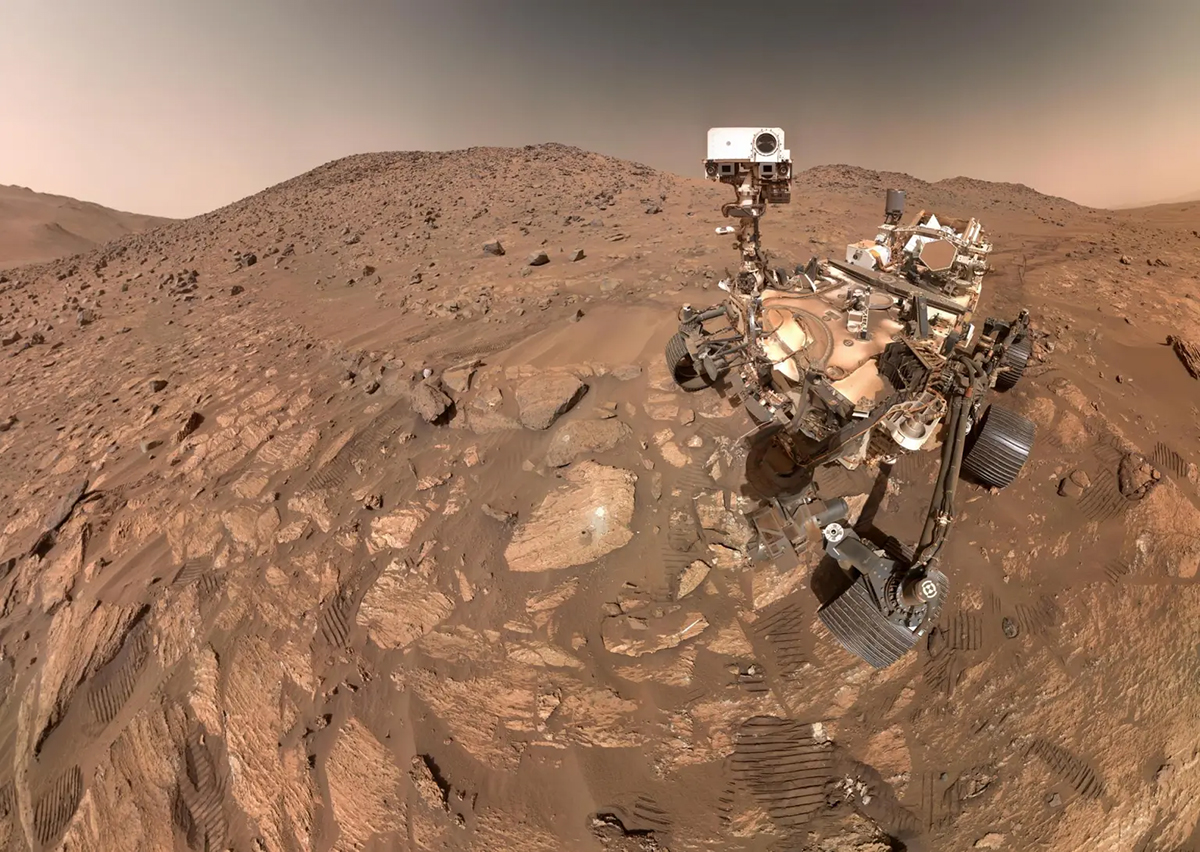
This was discovered using Perseverance's SuperCam instrument, which is able to detect the mineralogy of geologic features on Mars.
SuperCam then fires a laser at the target to reveal its chemistry.
"Before we arrived at the Margin Unit, the main hypothesis – derived from orbital observations – was that the carbonate seen from orbit formed from interaction with the lake that existed in Jezero Crater,” says Candice Bedford of Purdue University and the study’s lead author.
"But now we know that this location became a sort of crossroads for aqueous systems. The Margin Unit findings are important because Jezero Crater sits inside one of the largest exposures of carbonate on Mars, so what we learn here reaches well beyond this crater."
Delving deeper
Perseverance probed further, exploring the Margin Unit to learn more.
Higher up, the rover found coarse-grained, crystalline rock that scientists say bears the hallmarks of a mineral called olivine – and almost no sign water had ever touched it.
The team say this olivine unit formed in a body of magma deep under the surface of Mars, then slowly cooled so its grains grew large and reached the surface once the ground above it had eroded away.
Lower down on the ancient lakebed, the team say the rock looks transformed as olivine grains were found fractured with silica between them.
These carbonate and silica minerals are a key piece of the puzzle in the search for signs of ancient life on Mars.
That's because when water interacts with olivine on Earth, it releases hydrogen, which can be a nutrient source for some microbes, leaving behind the carbonate and silica as evidence of those microbes.
"Some of the Margin Unit rocks also contain silica," says Eleni Ravanis of the University of Hawaii at Manoa and a coauthor of the study.
"Turning olivine into carbonate can leave silica behind, and we see more of that silica in rocks that sat below the water line."
"If there is one thing I have learned after 10 years working with Mars rovers, it is that Mars constantly throws surprises at you," says Bedford.
"It is very rare that things are as we expect them to be from orbital data. I hope this work helps reshape how scientists view the history of water in Jezero Crater and across Mars. Ultimately, I hope it helps planetary scientists reconstruct the changing climate and habitability of early Mars."

