Our Galaxy was flipped on its side. Here's the genius trick astronomers used to work it out

Our Galaxy was flipped on its side. Here's the genius trick astronomers used to work it out

Research suggests a violent collision may have tipped the Milky Way’s disc over

Get monthly inspiration to your door with BBC Sky At Night Magazine - subscribe today


A violent collision with another galaxy billions of years ago may have tipped the Milky Way’s disc by more than 90 degrees – and the evidence could still be written into the motions of its stars.

The finding by researchers at Durham University could explain a long-standing mystery about the Milky Way: why its surrounding stellar halo rotates so slowly. 

The team used supercomputer simulations to study 25 Milky Way-like galaxies, following their evolution over billions of years.

They discovered that those with the slowest-spinning stellar haloes shared two characteristics: they were particularly likely to have experienced both a major, relatively head-on merger and a dramatic ‘disc
flip’, with their discs changing orientation by more than 90 degrees.

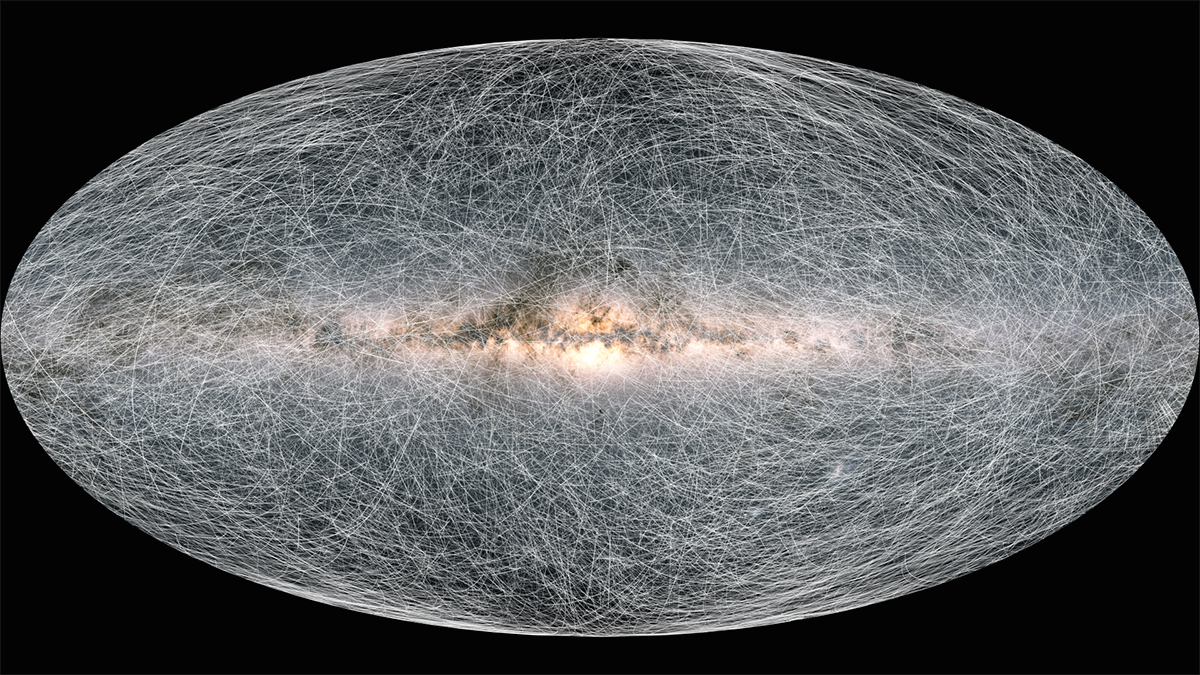
Trails on an image of the Milky Way showing how 40,000 nearby stars will move across the sky in the next 400 thousand years. Credit: ESA/Gaia/DPAC; CC BY-SA 3.0 IGO. Acknowledgement: A. Brown, S. Jordan, T. Roegiers, X. Luri, E. Masana, T. Prusti and A. Moitinho
Trails on a Gaia image of the Milky Way showing how 40,000 nearby stars will move across the sky in the next 400 thousand years. Credit: ESA/Gaia/DPAC; CC BY-SA 3.0 IGO. Acknowledgement: A. Brown, S. Jordan, T. Roegiers, X. Luri, E. Masana, T. Prusti and A. Moitinho
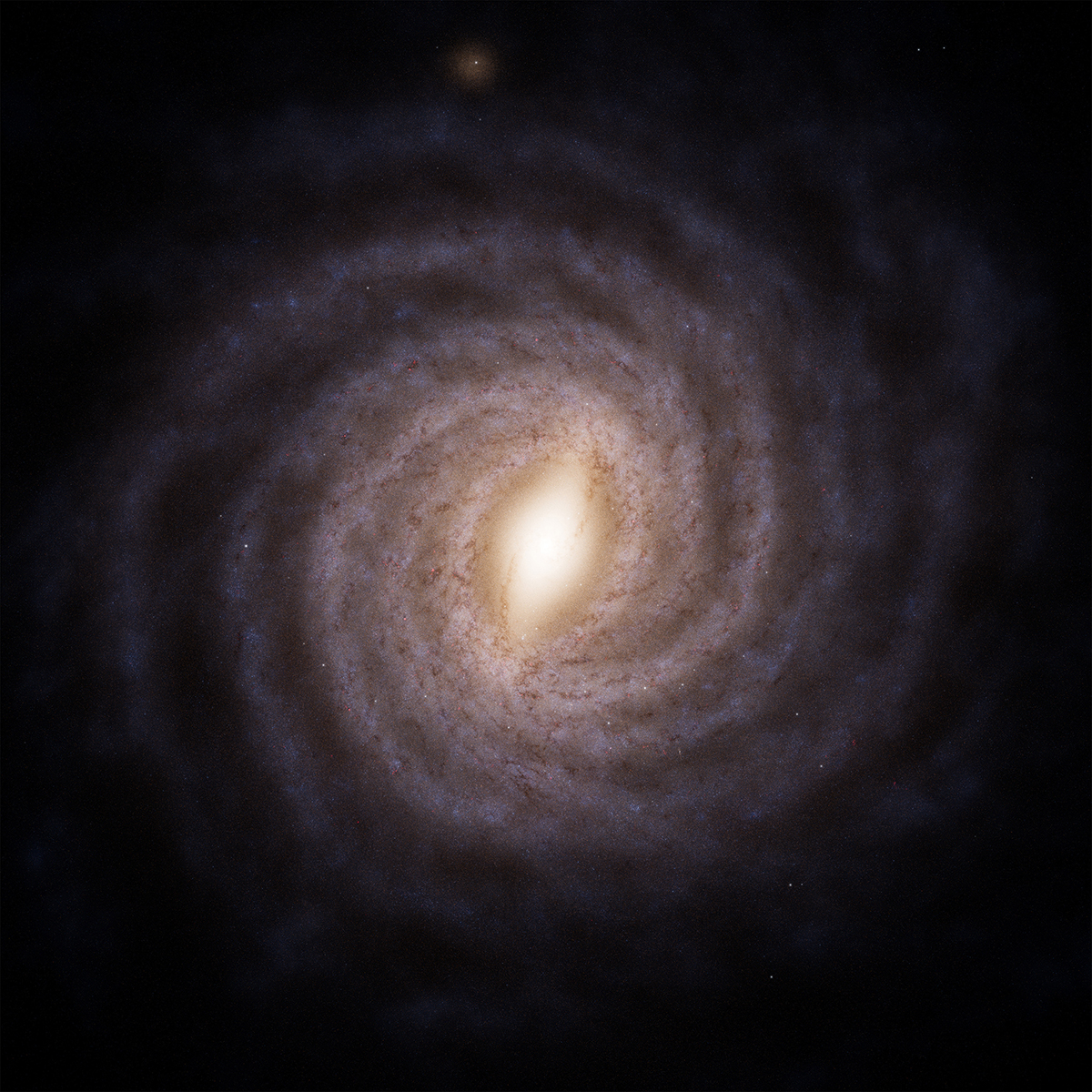
This is a new artist’s impression of our galaxy, the Milky Way, based on data from ESA’s Gaia space telescope. Credit: ESA/Gaia/DPAC, Stefan Payne-Wardenaar
Artist’s impression of our galaxy, the Milky Way, based on data from ESA’s Gaia space telescope. Credit: ESA/Gaia/DPAC, Stefan Payne-Wardenaar

Evidence from ESA’s Gaia mission, which identified stars moving on highly elongated orbits compared to others in our Galaxy, has shown that it is likely the Milky Way smashed into a dwarf galaxy around 10–11 billion years ago and then absorbed it.

"We already know that the Milky Way had a massive head-on collision in the past with a galaxy known as Gaia-Sausage-Enceladus," explains Kirill Batrakov, a PhD astrophysics student at Durham University.
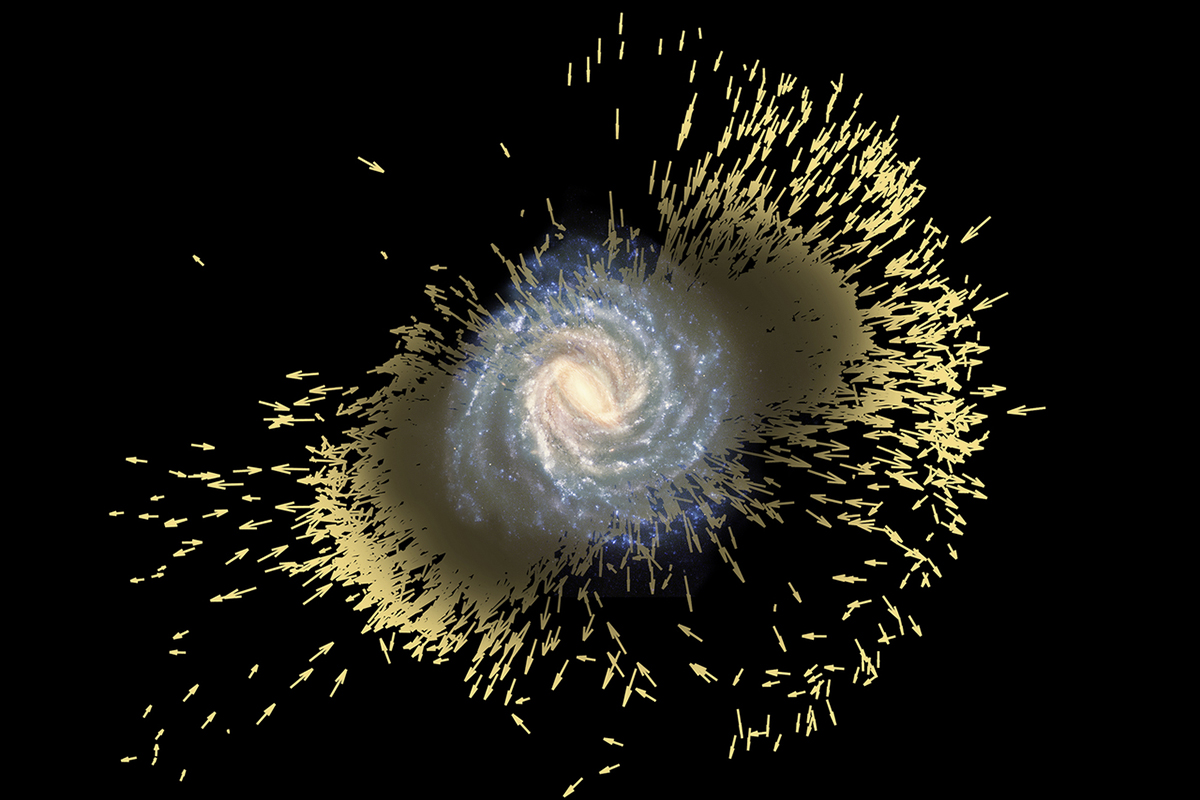
Artist's impression of debris of the Gaia-Enceladus galaxy. Credit:: ESA (artist's impression and composition); Koppelman, Villalobos and Helmi (simulation), CC BY-SA 3.0 IGO

"So we think that the Milky Way disc likely flipped in the past."

He adds: "A disc flip means most of the Milky Way’s stars once moved on very different trajectories than they do today – possibly even our own Sun, meaning our ‘stable’ spot in the Galaxy might not have been so stable for the Solar System’s whole lifetime."
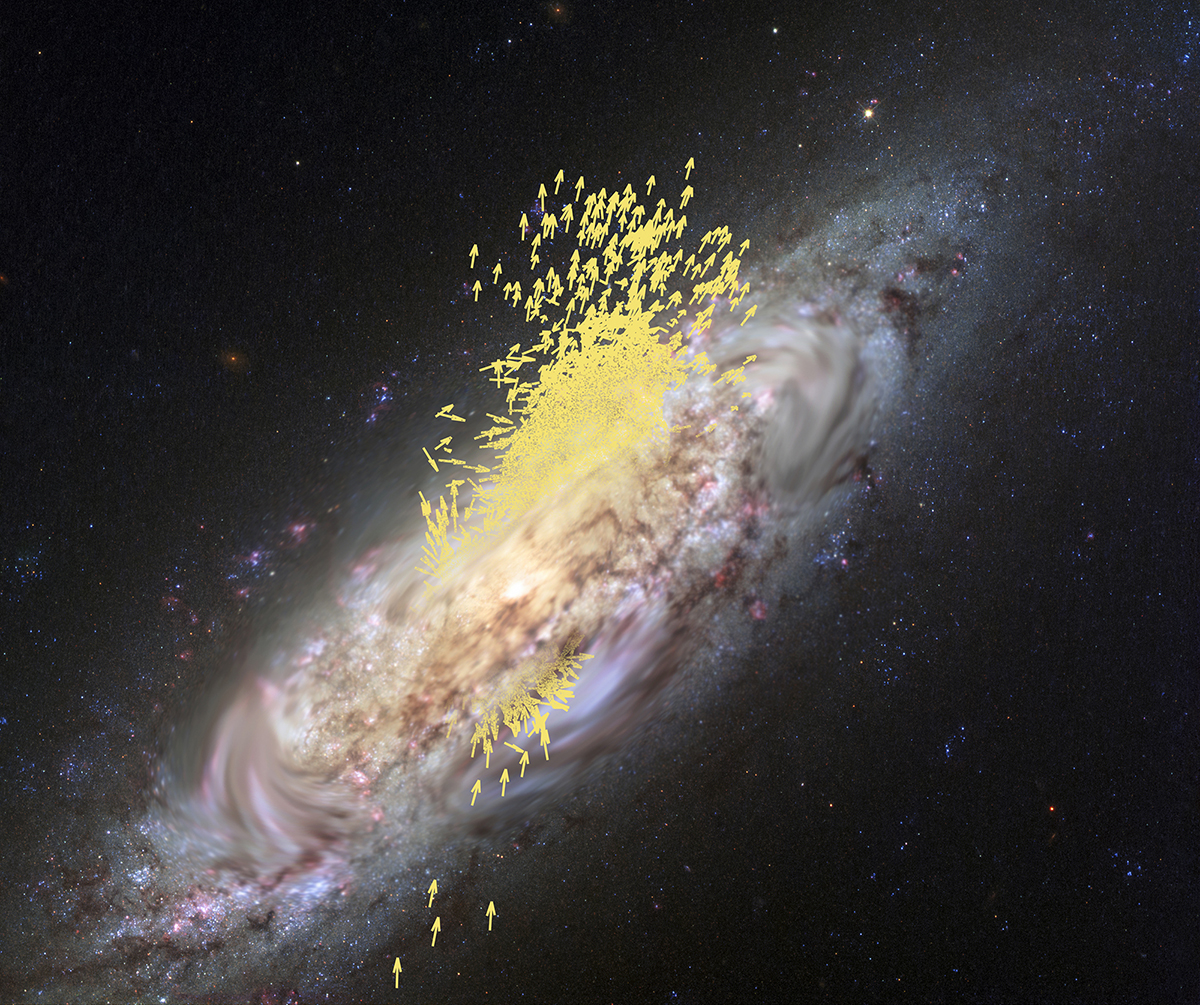
Artist’s impression of the Gaia-Enceladus merger with the Milky Way, 10 billion years ago. Positions and motions of the stars in Gaia-Enceladus are shown with yellow arrows. Credit: ESA (artist’s impression and composition); Koppelman, Villalobos and Helmi (simulation); NASA/ESA/Hubble (galaxy image)

The team stress that the evidence for the flip is an inference rather than something directly observed.

But if correct, it offers a new way to reconstruct the Milky Way’s violent early history and, because disc flips do not occur in every galaxy, understand how major mergers shaped our Galaxy and others like it. 

Gaia may soon provide an even sharper test.

Its next major data release is expected in December 2026, potentially adding further clues to the Milky Way’s turbulent past.

Footer banner
This website is owned and published by Our Media Ltd. www.ourmedia.co.uk
© Our Media 2026