
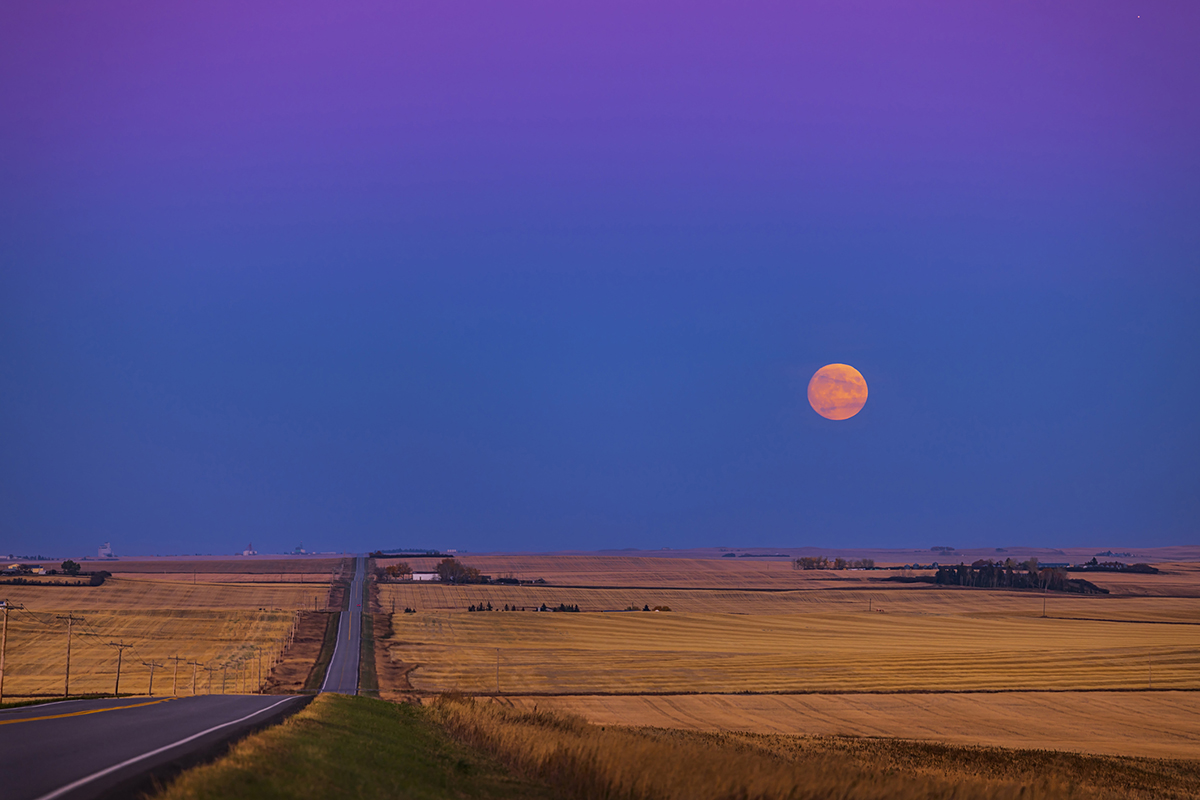
The Hunter's Moon rises on 25 October 2026, marking the return of the spectacular full Moons of autumn.
Observing the Hunter's Moon is simple: it will rise above the eastern horizon at sunset and set on the western horizon at dawn the next morning.
But you don't need to wait until 25 October to see a spectacular Moon in the sky.
If you start observing it in the nights running up to the rise of the Hunter's Moon, you'll see it chase Saturn across the sky.
Read more
Saturn meets the Moon
Saturn is one of the best planets to see in the night sky in October 2026.
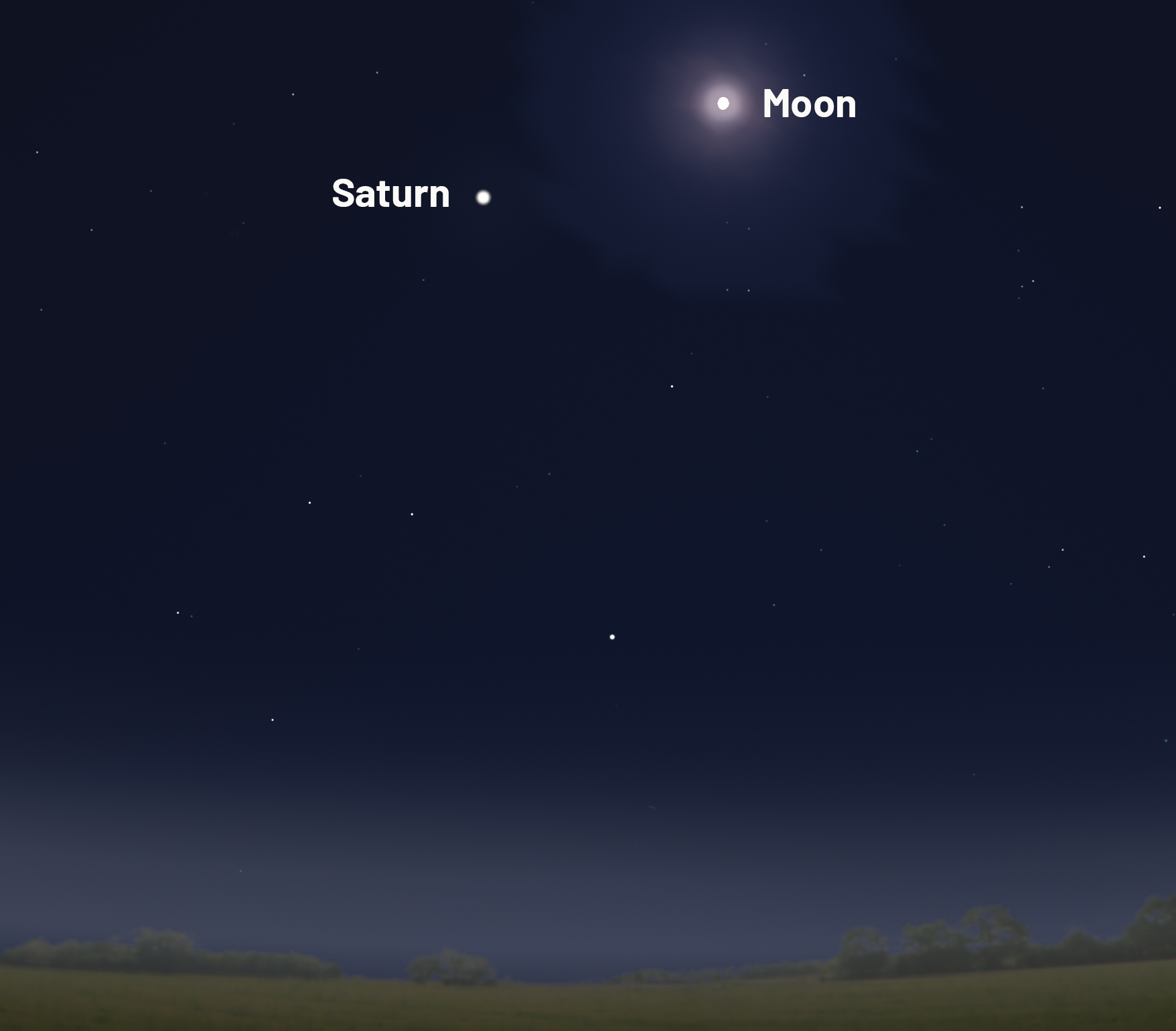
A nice quirk of celestial mechanics means it will share the same patch of sky as the full Moon this month.
That's because Saturn has just passed opposition, which is when it's positioned opposite the Sun in the sky. And when the Moon is full, it too is opposite the Sun in the sky.
As the Moon approaches full Moon in the week running up to 25 October, the Moon will track eastwards across the sky, night by night.
By 23 October, the Moon will be very nearly full and visible to the right of Saturn in the southeast after sunset.
The pair will then track across the southern sky and set in the west around dawn on 24 October.
If you're an early riser with a clear western horizon, you should be able to see Saturn and the Moon low in the western sky that morning.
On the evening of 24 October, the Moon will be to the left of Saturn, the pair again visible in the southeast after sunset and setting in the west around dawn on 25 October.
By this stage the Moon will be full, offering a beautiful view of the full Moon with Saturn below it, low in the west on the morning of 25 October.
Then on the evening of 25 October, the Hunter's Moon rises in the east, marking the return of the autumn full Moons rising high in the sky.
Share your observations and images of the Moon and Saturn with us by emailing contactus@skyatnightmagazine.com

