
Get the key facts about this story with our 1-minute summary
Lunar discovery: A NASA scientist has spotted the largest newly-formed crater ever recorded in our Solar System on the Moon's surface.
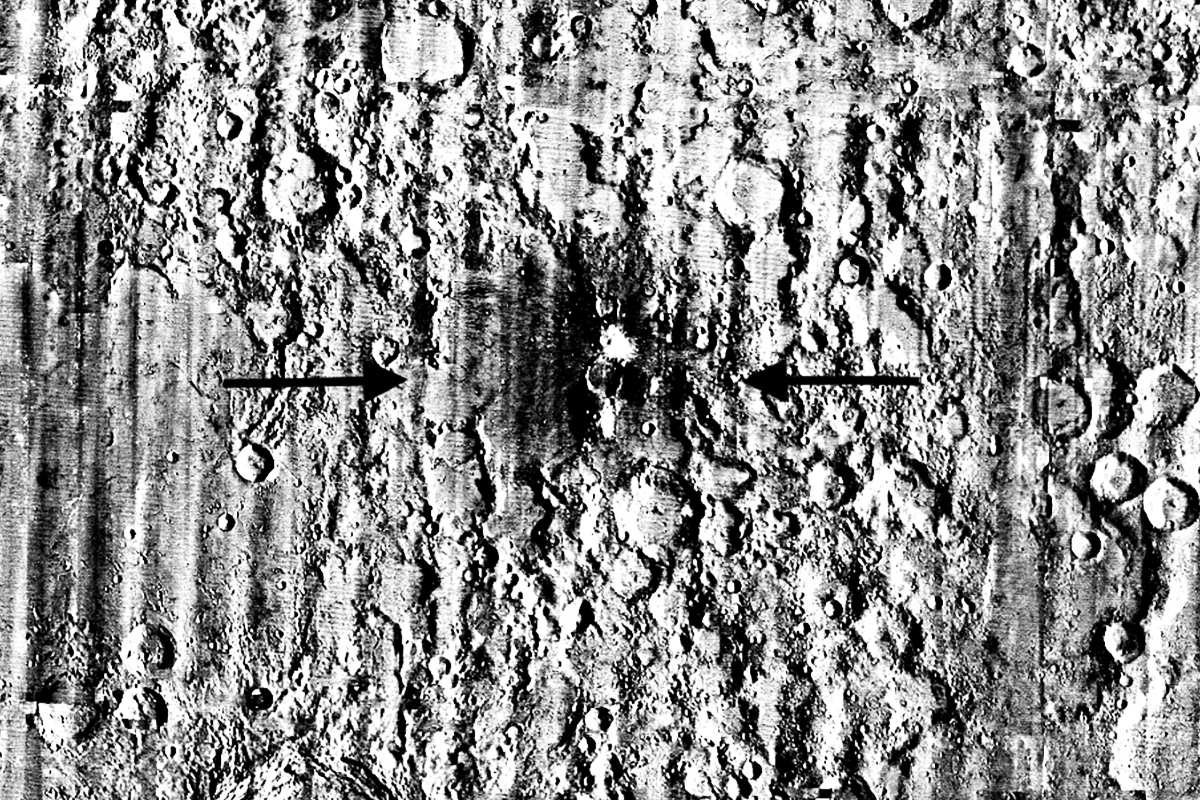
Initial detection: Robert Wagner, part of NASA's Lunar Reconnaissance Orbiter team, noticed an enormous bright spot surrounded by a dark circle while scanning a map captured by the spacecraft.
Impact timing: The huge crater formed on the Moon's eastern edge at some point between 11 April and 22 May 2024.
Crater dimensions: Named McGetchin, the newly uncovered impact site measures an 222 metres (728 ft) wide and 43 metres (141 ft) deep.
Enormous space rock: Researchers believe the crater was produced when a comet or asteroid the size of a three- to six-storey building smashed into the lunar surface.
Impact frequency: Scientists say impacts of this scale occur on the Moon only about once every century.
LRO's legacy: Since 2009, NASA's Lunar Reconnaissance Orbiter has mapped thousands of new craters and surface changes from its 50km (30-mile) vantage point above the surface of the Moon.
Earth' protection: Unlike Earth, which has a thick atmosphere that can burn up incoming space rocks, the Moon is exposed to constant debris bombardment.
Thermal effects: Follow-up observations using the orbiter's Diviner instrument revealed a 6.5-kilometre-wide cold area surrounding the crater caused by disturbed, more-diffuse patches lunar dust.
Get the full story with our news article on the discovery of McGetchin crater.

