
Earth has danced with a Martian moon and disappeared behind it – that is, at least, from the perspective of a robotic rover on the surface of the Red Planet.
In the first observation of its kind, NASA's Perseverance rover has seen Earth passing behind Mars's moon Phobos in the evening sky.
More images from Mars
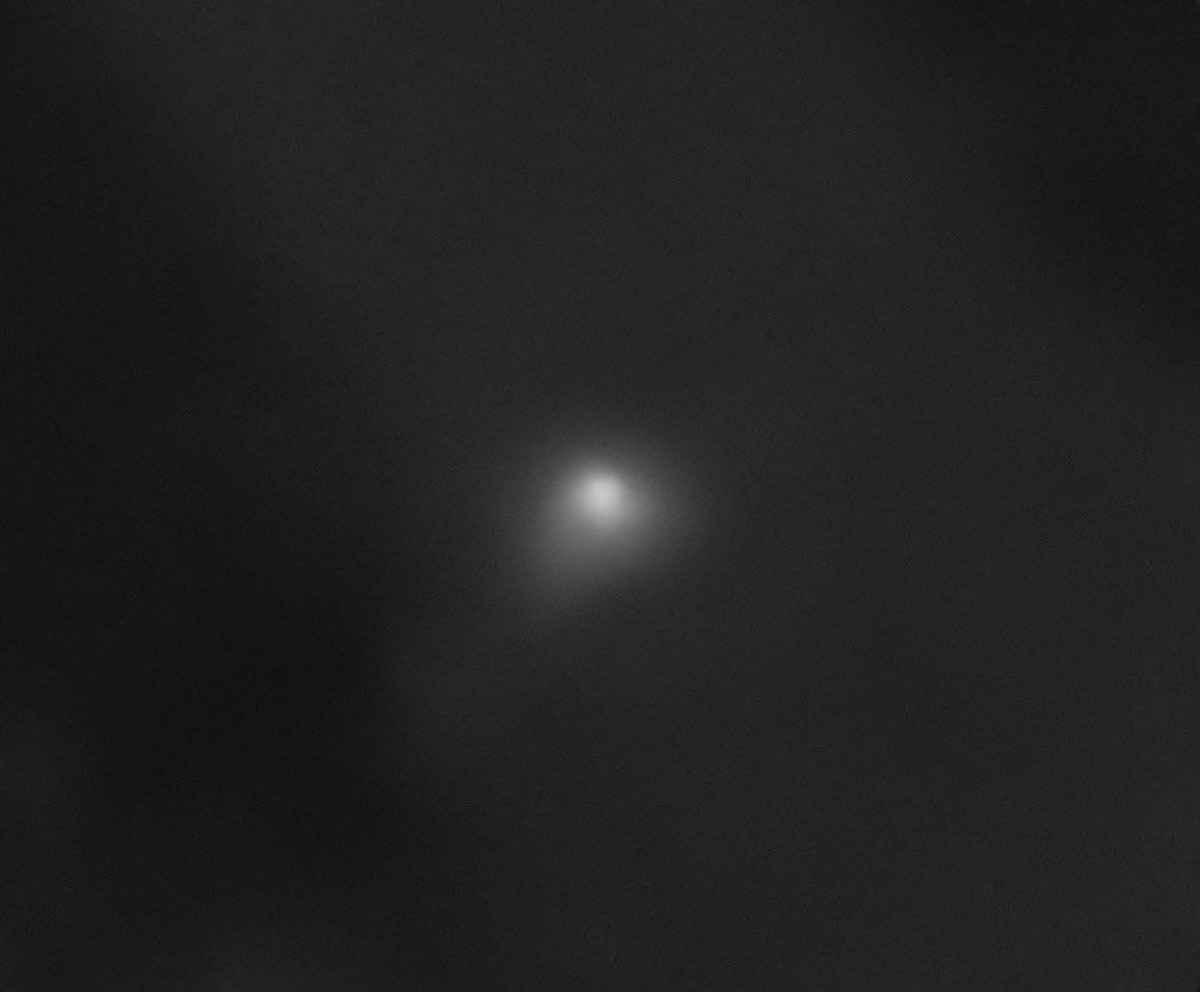
NASA has released images showing the event as it happened from the surface of Mars.
In the images, which Earth is a tiny point of light in the Martian sky, disappearing behind a crescent Phobos, which is the larger of Mars's two moons.
This is the first time we've ever seen Earth disappearing behind an object, from the surface of another planet.
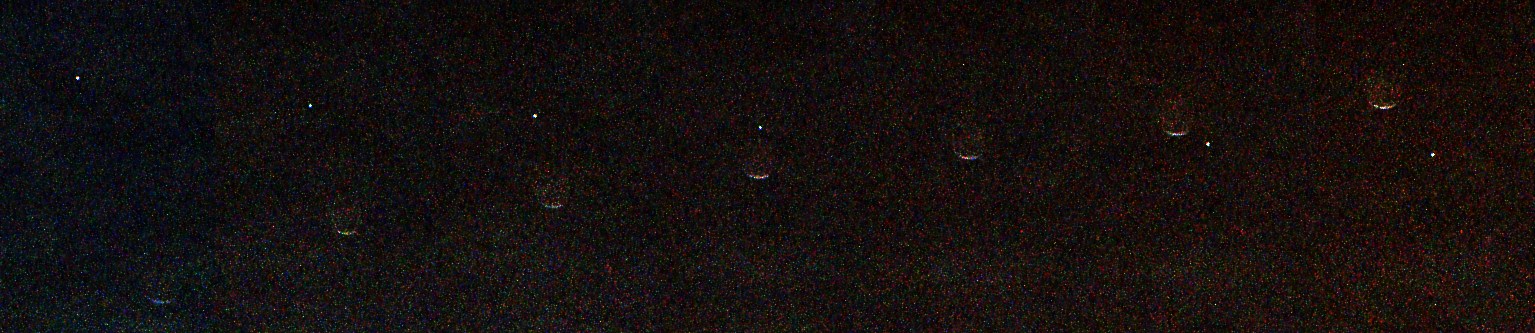
A Phobos occultation of Earth
Observing distant celestial objects disappear behind closer objects is not new.
From Earth, we often see so-called occultations; particularly 'lunar occultations', when a distant body like a planet or star seems to disappear behind the Moon.
In the case of the Perseverance observations, we might call it a 'Phobos occultation of Earth', because Earth has been occulted by the Martian moon, from the rover's perspective.
The sequence of images was captured by the rover's Mastcam-Z instrument in the early evening on Mars, on 2 July 2026.
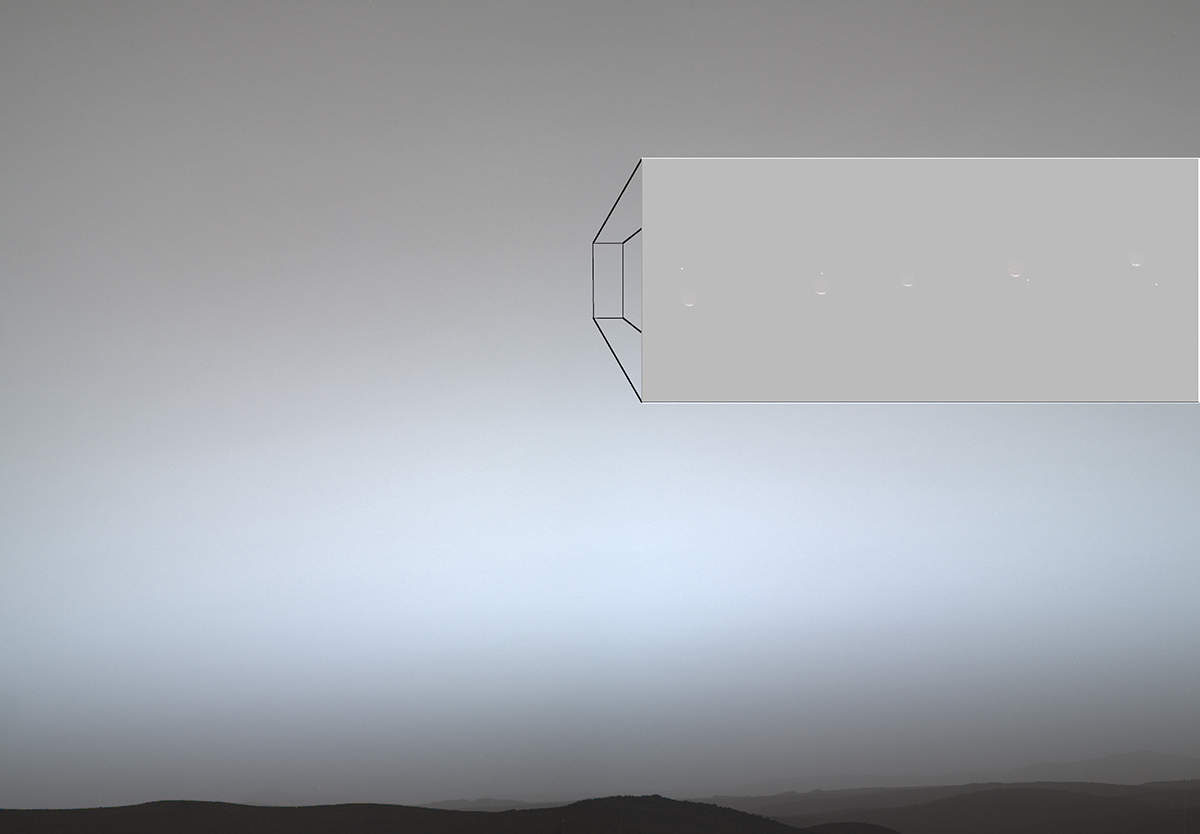
Earth passes from the upper left of the frame towards the lower right. Phobos moves from the lower left to upper right.
Then Earth and Phobos appear to meet, our home planet disappearing behind the moon's darkened edge.
"The composite image makes for a unique Earth self-portrait, taken from the surface of another planet, with a Phobos photobomb," says Justin Maki, Mastcam-Z deputy principal investigator and imaging scientist for Perseverance at NASA’s Jet Propulsion Laboratory.
Perseverance observed the occultation of Earth from the rim of Mars’ Jezero Crater, the site of an ancient lake.
Phobos is about 27km (17 miles) across at its widest and orbits Mars at a distance of just 7,800km (4,850 miles) from the planet.
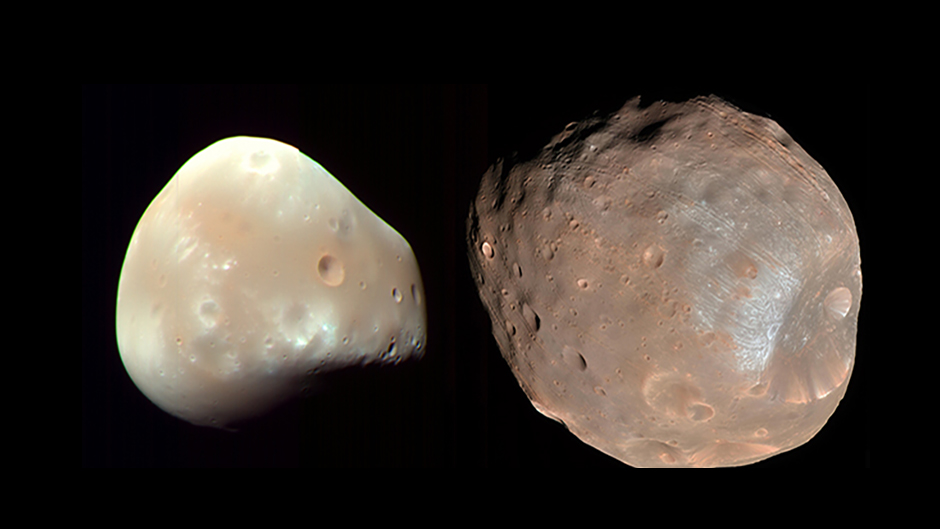
NASA says that, when the images were captured, Phobos appeared about one third the width of Earth’s Moon as seen from our planet.
At the time, Earth was about 314 million km (195 million miles) away from Mars, reducing it to a single dot of light against the inky blackness of the cosmos.
"Phobos crosses the Martian sky three times a day, and Earth is visible for months at a stretch, but catching one directly behind the other takes planning and a little luck," says Mark Lemmon, a Mastcam-Z co-investigator at the Space Science Institute in Boulder, Colorado.
Is this an Earth eclipse?
The image was released less than a week before the total solar eclipse of 12 August 2026, leading some to question whether Perseverance was enjoying an eclipse of its own – an Earth eclipse perhaps?
Adhering to astronomical nomenclature, what Perseverance saw here was a 'Phobos occultation of Earth'.
During an occultation, a distant body appears to pass behind a closer body. During an eclipse, one body passes into the shadow of another.
In the case of a solar eclipse seen from Earth, for example, the Moon passes between Earth and the Sun, casting the Moon's shadow on the surface of Earth.
Perseverance has seen a solar eclipse from Mars before, however – as have other Mars rovers – when it witnessed Phobos passing in front of the Sun, as seen in the video above.

