
Ribose and glucose have been detected in pristine dust samples from the asteroid Bennu.
NASA’s OSIRIS-REx mission successfully delivered a pristine piece of the early Solar System to Earth on 24 September 2023, following a seven-year journey to the near-Earth asteroid Bennu.
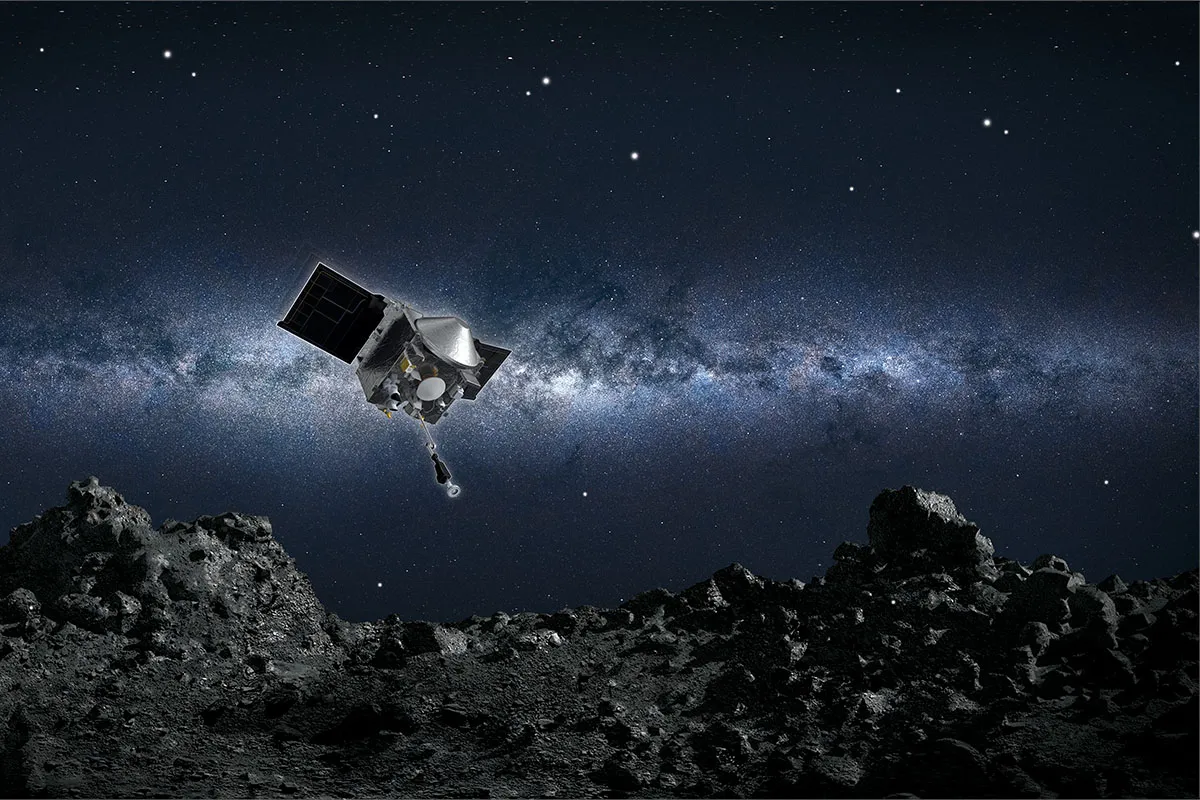
After arriving at the asteroid in late 2018, the spacecraft performed a 'touch-and-go' manoeuvre on 20 October 2020, using a burst of nitrogen gas to capture roughly 121.6 grams of ancient dust and rock.
These samples were then returned to Earth, and since then scientists around the world have been studying them in labs across the globe.
More on Bennu
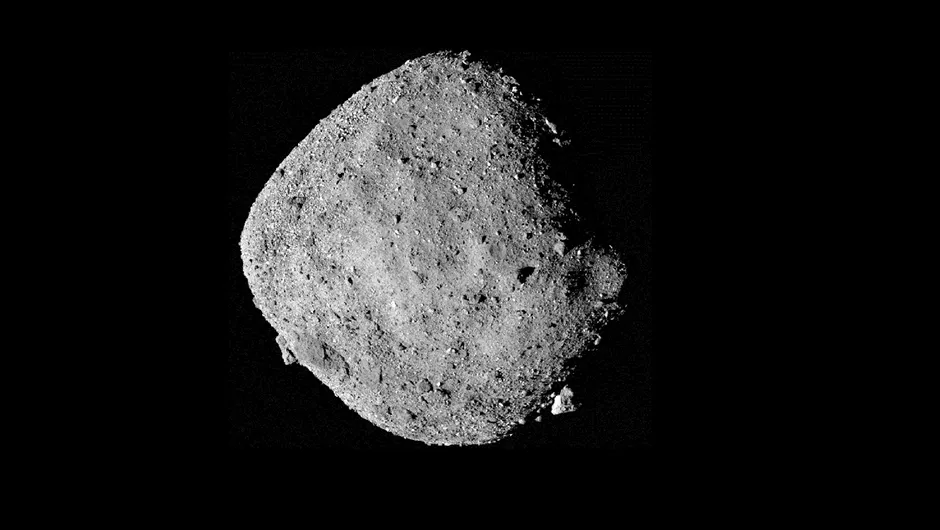
Asteroids are primordial space rocks left over from the formation of our Solar System.
While we can learn a lot about them via the meteorites that fall to Earth, meteorites' journey from space to the ground can contaminate the purity of the sample.
That's why sample return missions are so important. They offer scientists the chance to analyse pristine samples in laboratory conditions.
Bennu samples are providing scientists with critical data regarding the organic molecules and water-bearing minerals that may have seeded life on our planet.
By securing thh Bennu sample material, OSIRIS-REx has effectively delivered a scientific time capsule could reshape our understanding of how the Solar System formed over 4.5 billion years ago.
Sugars detected in Bennu samples
In a major new discovery, scientists have detected bio-essential sugars – including ribose and, for the first time in an extraterrestrial source, glucose – in pristine samples returned to Earth from asteroid Bennu by NASA’s OSIRIS-REx spacecraft.
The international team of US, Japanese and NASA researchers found ribose – the sugar backbone of RNA – and glucose, the six-carbon sugar that fuels living cells on Earth.
"This changes everything we thought we knew about where life’s raw materials could have originated," says the study’s lead researcher Yoshihiro Furukawa of Tohoku University.
"All five nucleobases used to construct both DNA and RNA, along with phosphates, have already been found in the Bennu samples.
"The new discovery of ribose means that all of the components to form the molecule RNA are present
in Bennu."
He adds: "Present-day life is based on a complex system organised primarily by three types of biopolymers: DNA, RNA and proteins. However, early life may have been simpler.

"RNA is the leading candidate for the first functional biopolymer, because it can store genetic information as well as being a catalyst for many biological reactions."
The discovery marks a striking milestone: offering strong support to the idea that Earth’s early chemistry may have had cosmic origins.
The team will now expand analyses to more Bennu fragments, searching for additional organic compounds, isotopic signatures and complex molecules – any of which could sharpen our picture of how life might arise beyond Earth.

