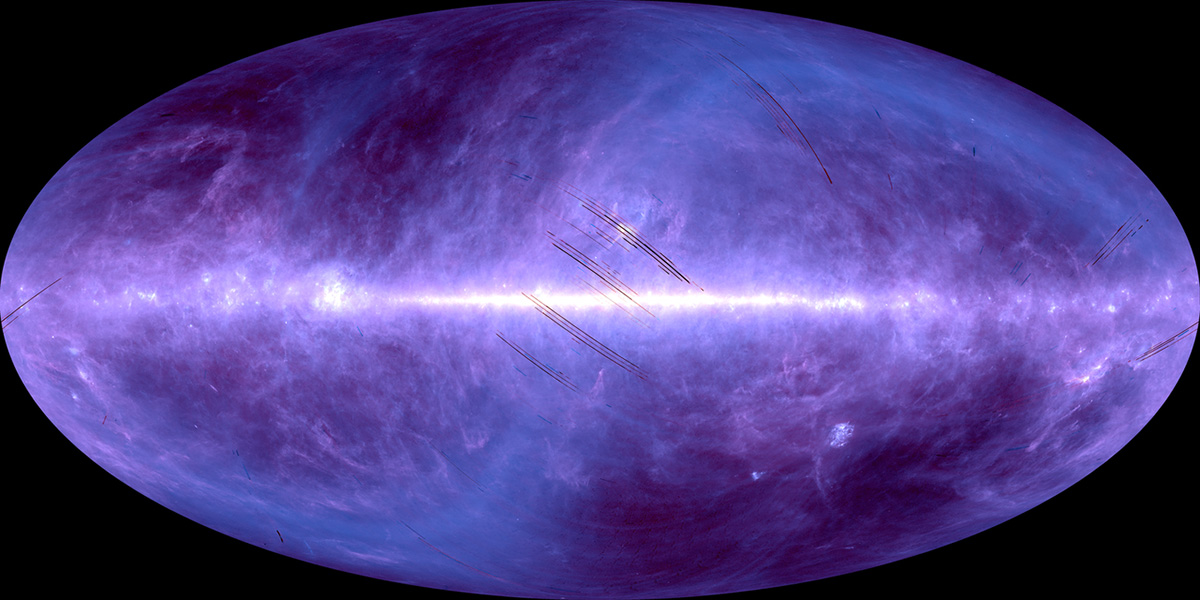
The interstellar medium is the name given to the space and matter in between stars within the same galaxy.
While many think space is a vacuum and there’s nothing in between, it’s actually ull of molecules and dust particles, which play an important role in the chemistry of the interstellar medium.
Astronomers have found the first detected sugar in interstellar space.
To find out more about why this is such a huge discovery, we spoke to Izaskun Jiménez-Serra, an astrochemist at the Centro de Astrobiología in Madrid.
Her work involves understanding prebiotic chemistry in the interstellar medium.
More amazing science

What did your team discover in the interstellar medium?
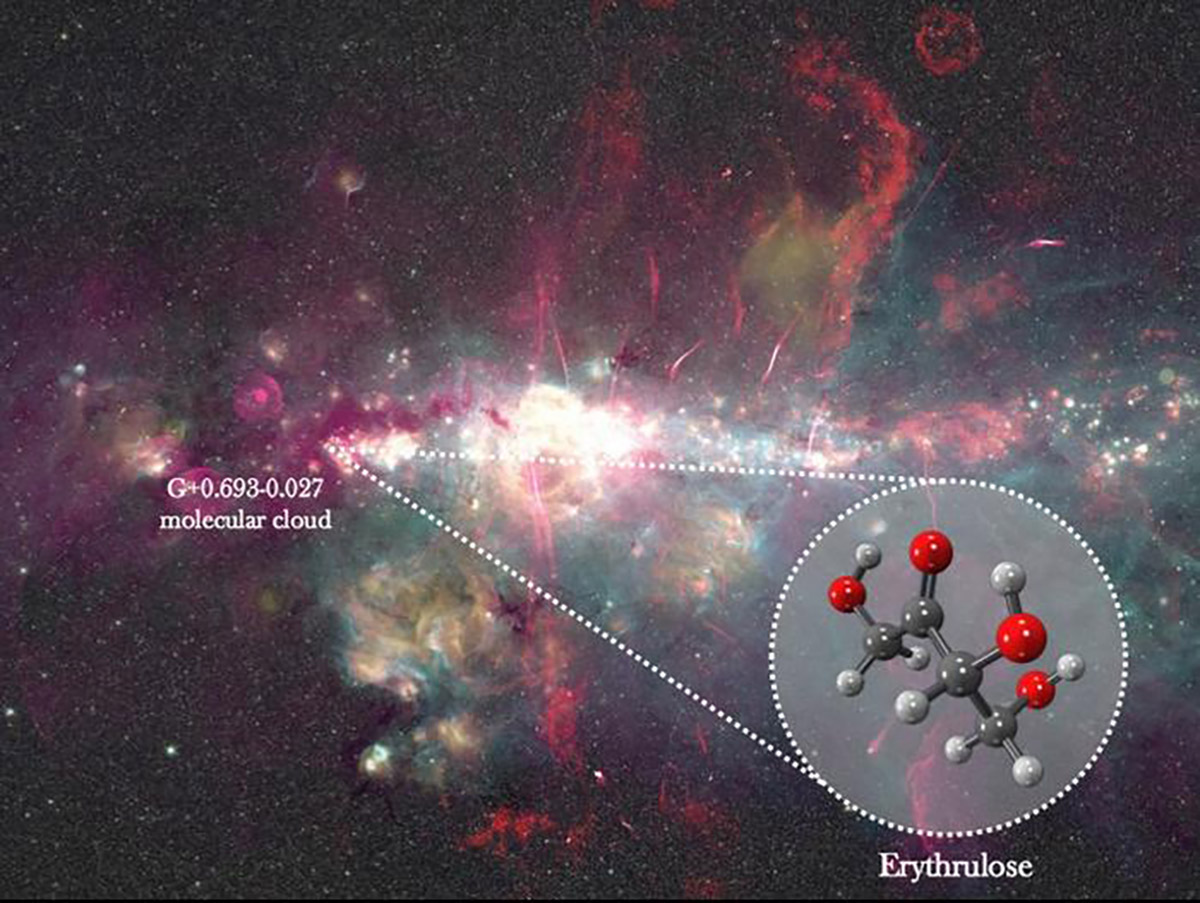
We recently discovered the first sugar in interstellar space: erythrulose.
This shows that molecular clouds can synthesise some of the key ingredients for life very early on in the process of forming a planetary system, even before stars and planets are formed.
These sugars may form in molecular clouds across the Galaxy, providing the sugar feedstock that life may have used on Earth for the synthesis of the first nucleic acids.
What qualifies as a sugar, chemically?
The smallest have three carbon atoms. Sugars need to have enough carbon atoms and functional groups to be able to produce what’s called a cyclic structure.
Erythrulose actually has a linear structure, but it can change its configuration into a cyclic structure once it’s in a water-based environment.
When it does, it forms a different type of sugar called threose.
Threose is part of one of the simplest nucleic acids, threose nucleic acids (TNAs), proposed as the first nucleic acids to have formed on Earth.
TNAs may later have led to the formation of ribose nucleic acids (RNA) and finally DNA.
How did you make this discovery?
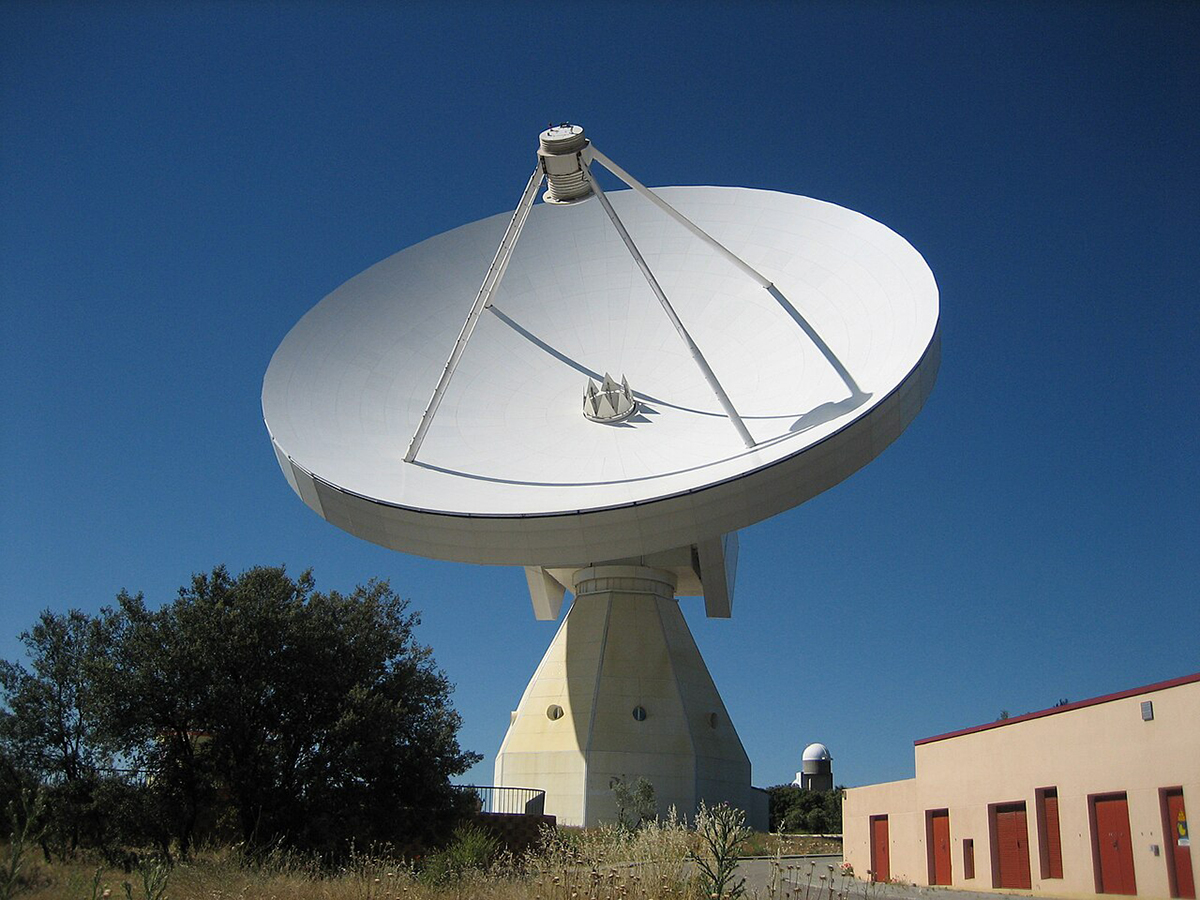
We discovered this sugar using two radio telescopes based in Spain: the Yebes 40-metre telescope and the IRAM 30-metre telescope.
Molecules in the interstellar medium are in molecular clouds and, because they have very low temperatures compared to those on Earth, the only thing they can do is rotate.
When they rotate, they emit light at certain radio frequencies.
Our radio telescopes look at those radio frequencies. We know these frequencies very well from laboratory experiments on Earth and they act as a perfect fingerprint.
It’s like every molecule has its own set of radio channels. What we do is ‘tune’ our radio telescopes to that set of radio channels, and if we ‘hear’ those signals, that’s when we know that the molecule has been detected.
How did these sugars form between stars?
Our study shows that they form on the surface of interstellar dust grains, which are covered by icy mantles composed mainly of water.
They also contain very small traces of other molecules, like glycolaldehyde and ethylene glycol, which are molecules with two carbon atoms.
When these molecules interact, they react and form erythrulose. This mechanism is efficient under the extreme conditions of the interstellar medium.
What implications does this have for how life might have formed on Earth?
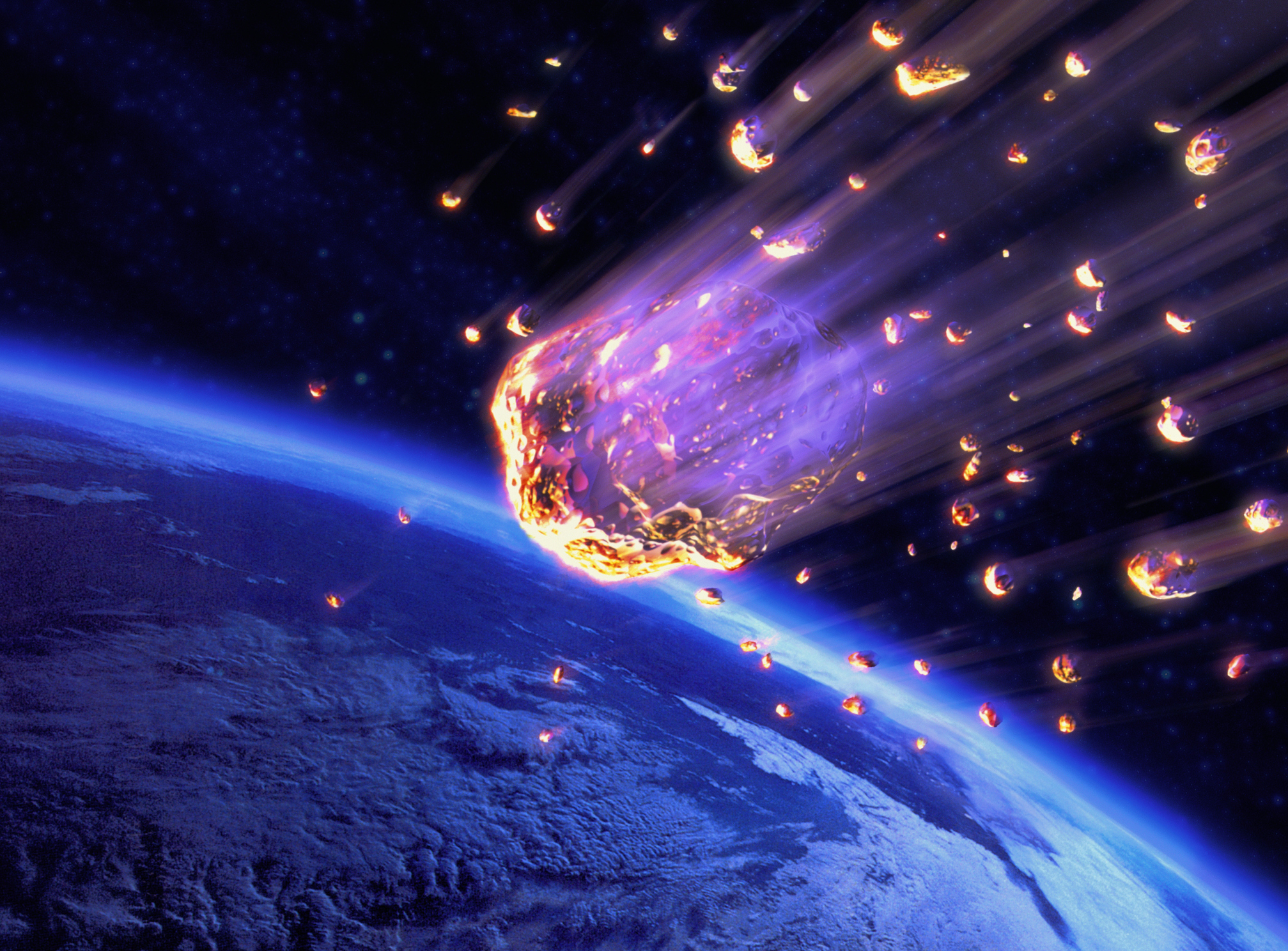
Earth experienced the late heavy bombardment, during which huge amounts of organic matter arrived on the planet’s surface.
If these sugars formed very early in molecular clouds, they could have been transferred to minor bodies of the Solar System, such as asteroids and comets.
When these asteroids and comets impacted Earth’s surface, they could have delivered this organic material, including sugars.
One of the key challenges that prebiotic chemistry faces is synthesising sugars efficiently.
The availability of sugars from space may help circumvent these problems. If you bring sugars from outer space, you don’t need to synthesise them on Earth.
What’s next for your team?
We’ll continue searching for more sugars, especially biologically important ones. We’d love to detect ribose, for instance.
That’s something of a Holy Grail in astrobiology, because it’s part of RNA.
We’d also like to explore the chemistry of all the compounds related to sugars, such as sugar alcohols or sugar acids.
These can tell us more about the chemical ingredients found in the interstellar medium and give us an idea of how complex chemistry can become there.