For astronomers, it's a source of quite some frustration that the last time we observed a supernova in our own Milky Way Galaxy – way back in 1604 – no one had a telescope to point at it.
Often, we have to result to observing and studying the remnants of previous supernovae – known as supernova remnants – and these at least do tell us how these stellar explosions influenced their surroundings.
More astronomy history
However, observations of supernova remnants are more useful, the more we know about the actual supernova explosions themselves.
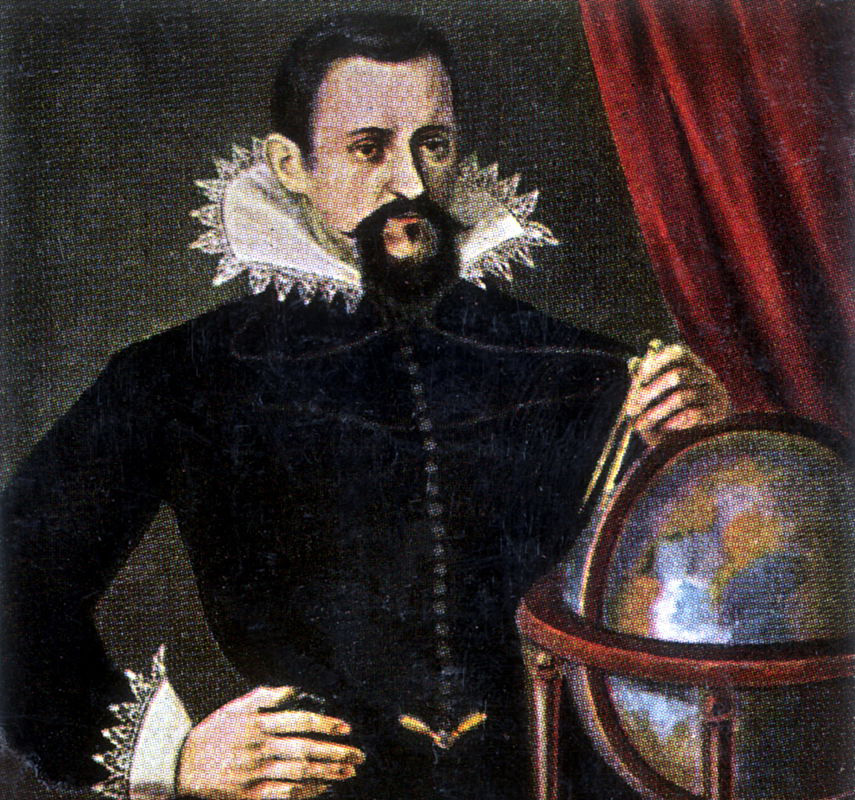
We do, thankfully have a few contemporary observations from Europe. For example, epler spotted that 1604 event.
But mostly we rely on Japanese and Chinese records.
Ancient text and the eternal poetry of the skies
I've been reading one scientific paper that makes a good case for ancient Arabic observations of two historical supernovae.
There's a bright event in 1006 that is reported to have been widely seen. There's also a less well-known one in 1181 or 1182 – which may have been hiding in plain sight.
Incredibly, the observations of that particular event are contained in a poem that the authors of the study – Arabists and an astronomer working in collaboration – reckon they can reliably date for the first time.
Historic Japanese and Chinese records suggest a northern supernova around 1181 and, for some time, astronomers believed they could pinpoint which exact pulsar it had produced.
However, this candidate remnant is now believed to be too old.
Instead, another star has been connected with the suprnova – an otherwise obscure star known as IRAS 00500+6713.
This star has a nebula – a cosmic cloud of gas and dust – surrounding it that seems about a millennium old.
But whether this system could have survived a supernova is uncertain.
Hidden in flattery
Enter Ibn Sanā' al-Mulk, sitting in 12th-century Cairo writing a poem to praise the great leader Saladin.
The poem, preserved in collections all over the world, mentions a new ‘najm’, or star – a term the authors point out would have included a supernova.
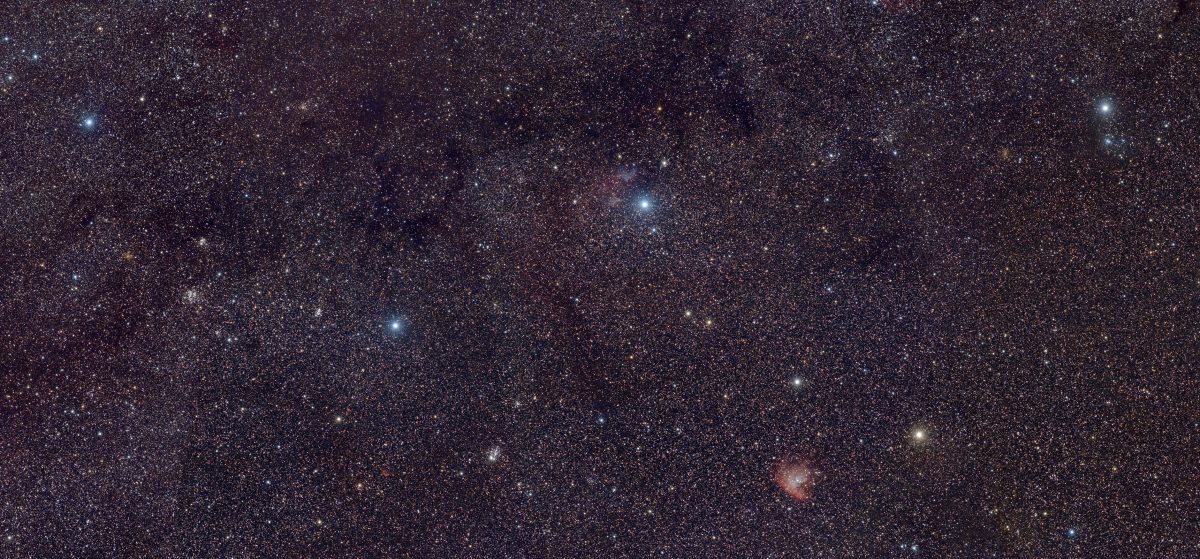
Crucially, this new star, which in the poem appears to reflect Saladin’s greatness, lies in or near the constellation of al-Kaff al-Khabīb, or the Dyed Hand – an asterism made up of the five bright stars we call Cassiopeia, which matches the supernova’s northern location.
So there’s a new star. But we need to know when the poem was written.
The authors note this is a praise poem, written to impress a powerful protector.
But there is praise not only for Saladin but for his brother, which only makes sense if both were in the same place to hear it: and they were both in Egypt in 1181/1182.
In addition, the poem praises Saladin for defending Mecca, a feat the authors match with a Crusader attack in December 1181.
The poem, then, must have been written between December 1181 and May 1182, when Saladin left Egypt.
If the new star – which we’re told is bright – is indeed our supernova, this gives us a pretty exact age.
That’s very useful science, derived from a historical analysis of a poem that was designed to flatter and charm. But there’s one more lesson to take from this story.
If the research authors are correct, and Ibn Sanā’ al-Mulk is using a recent supernova to praise his patrons, then knowledge of this bright new star must have been commonplace, at least among the court.
As well as scientific information, the poem gives us a glimpse of a society where a nearby supernova was big enough news to reach even the great and the good.
Whenever the next supernova is spotted, let’s hope we’re as lucky.
Chris Lintott was reading New Arabic Records from Cairo on Supernovae 1181 and 1006 by J G Fischer, H Halm et al. Read it online at: arxiv.org/abs/2509.04127.