Light has returned.
Sitting on the grassy bank of a limestone hilltop, I watch a golden glow spread across harvested wheat fields below and hundreds of beaming faces around me.
Everyone is trying to make sense of what they have just experienced - gazes of awe, cries of ‘qué bonito’ and a cool electricity in the air, like the moment after a lightning strike.
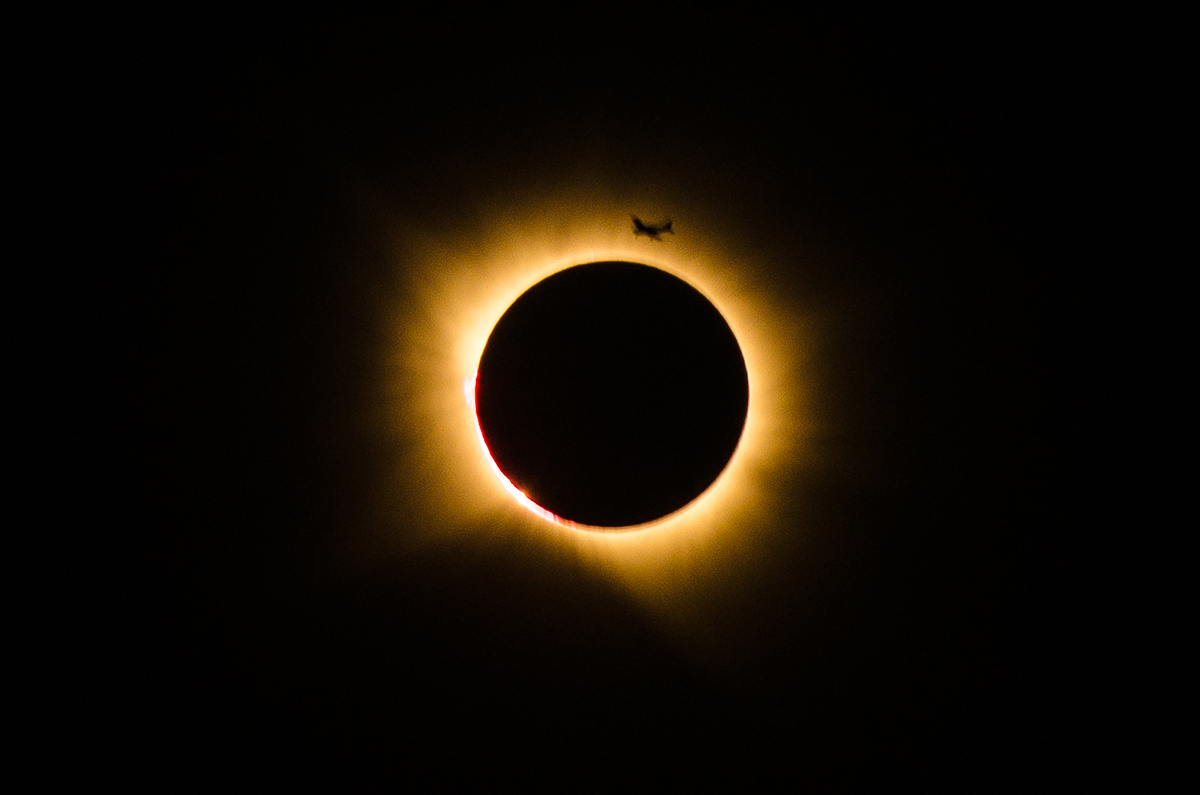
For a few extraordinary moments, something usually invisible became visible - the delicate streamers of the Sun’s corona.
They looked almost weightless, not part of a star capable of releasing unimaginable amounts of energy.
My friend Cristina is still staring upwards. "It was like a portal of physics," she says. "The perfect astronomical phenomenon."
Everyone has been looking forward to the eclipse, but nobody seemed prepared for what came afterwards.
Tears are flowing, goosebumps are rising and people are struggling to describe the moment.
"You have to experience it to understand it," Cristina’s daughter, Tania, says. "It’s just one of those things you cannot put into words."
Totality is over, but the feeling lingers, as though it has taken us somewhere beyond the ordinary.
Catching the eclipse bug
I’m an umbraphile, a solar-eclipse chaser, and what draws me is how no two eclipses are the same: the hue of darkness, the audience’s reaction and, if you’re lucky, the crystal-clear view of the Sun’s corona.
After partial cloud obscured most of my last eclipse in North America, this time I was eager to see the corona.
Iceland offered 2 minutes 18 seconds of totality, but I chose to sacrifice 37 seconds for better odds of clear skies.
My research led me to Medinaceli, a rocky hilltop village on the high plateau of Castile and León, with a western horizon unobstructed by mountains and in a designated Starlight Reserve.
There was another reason this eclipse mattered. I could share it with my daughter Charlotte and our friends from Girona.
Charlotte had seen an eclipse in Oregon, but aged six she was too young to understand what she was watching.
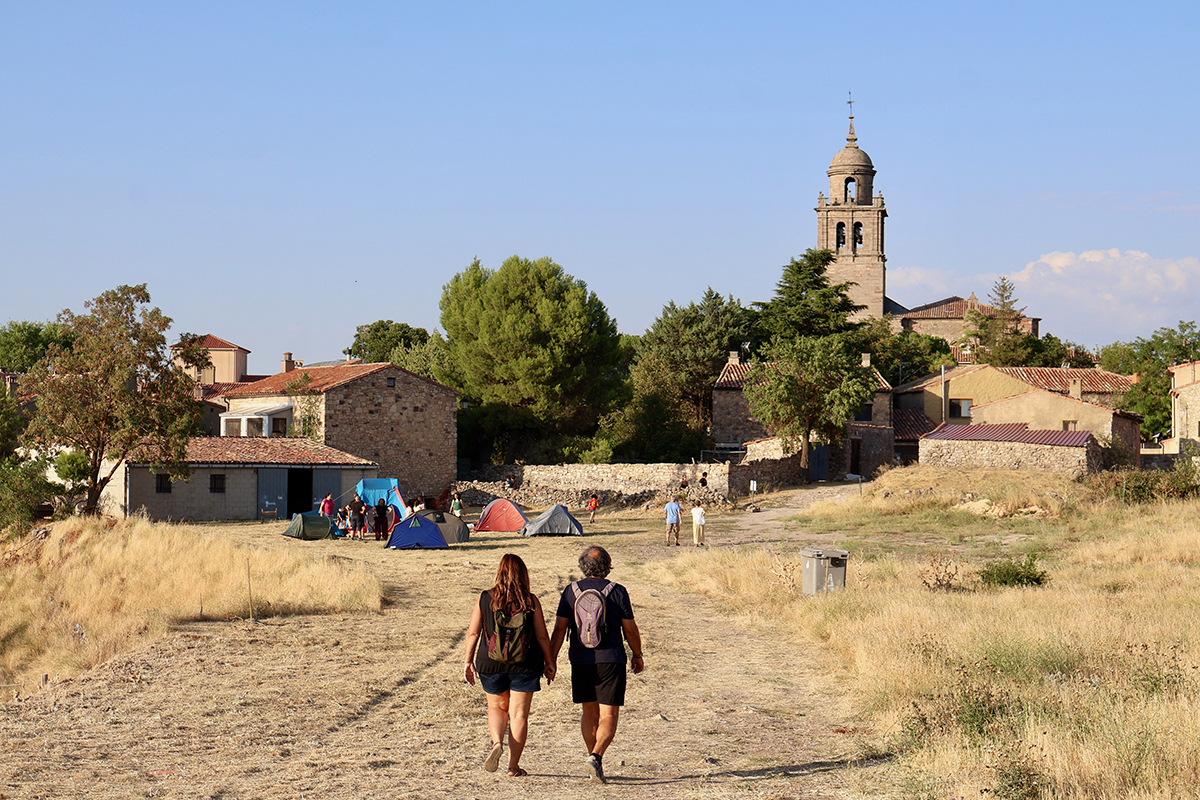
We drove two hours north-east from Madrid, arriving two days before the eclipse. The drab motorway gave way to rocky limestone hills, their summits crowned by ruins of fortified castles or rows of wind turbines.
Sunflower fields brightened the summer-scorched landscape and eagles soared overhead.
Medinaceli’s Roman arch, medieval castle and Renaissance church appeared - a testament to its long history and strategic importance. Now it was preparing for a different kind of invasion.
Accommodation had been fully booked in Medinaceli almost a year in advance.
As Charlotte and I checked into our guesthouse, we met retirees Rob and his partner Christine from the US.
"I experienced the eclipse in Oregon," Rob told me, "and I want to share that magical moment with Christine this time."
Charlotte started sharing her eclipse story and, before we’d even finished introductions, we were already swapping eclipse stories and hopes.
Exactly 48 hours before totality, we ventured to the west-facing Puente Arabe. With totality taking place 45 minutes before sunset, I needed to be sure my viewpoint would be high enough.
House martins swooped overhead, the valley glowed golden and the castle’s flags flapped in the breeze.
Most importantly, I had a clear view of the Sun. With a favourable weather forecast, all we could do now was wait.
Prepping for totality
On the eve of Eclipse Day, Medinaceli was already changing as tents appeared and photographers unpacked equipment.
Fundación DEARTE, the not-for-profit cultural organisation based in the historic Ducal Palace, had turned the eclipse into a three-day celebration.
Its programme, Eclipse en la Ciudad del Cielo, or Eclipse in the City of the Sky, brought astronomy and culture together through talks, children’s pinhole-camera workshops, meteor spotting, a concert and a time capsule.
"We have tried to organise something to help greater understanding and enjoyment of the eclipse," Óscar Tugores told the audience as he opened the event.
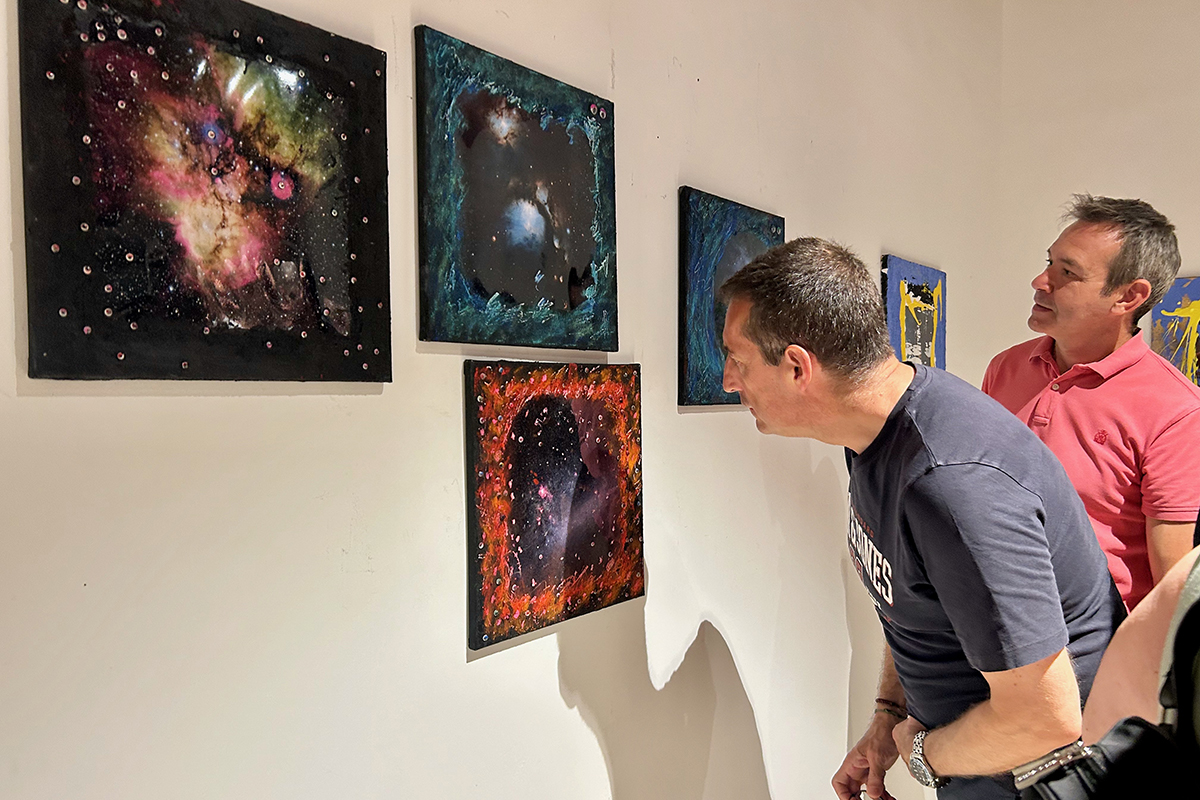
The eclipse also found an artistic expression, with an exhibition mixing astrophotography and artistic responses to the cosmos, including Hubble’s Pillars of Creation.
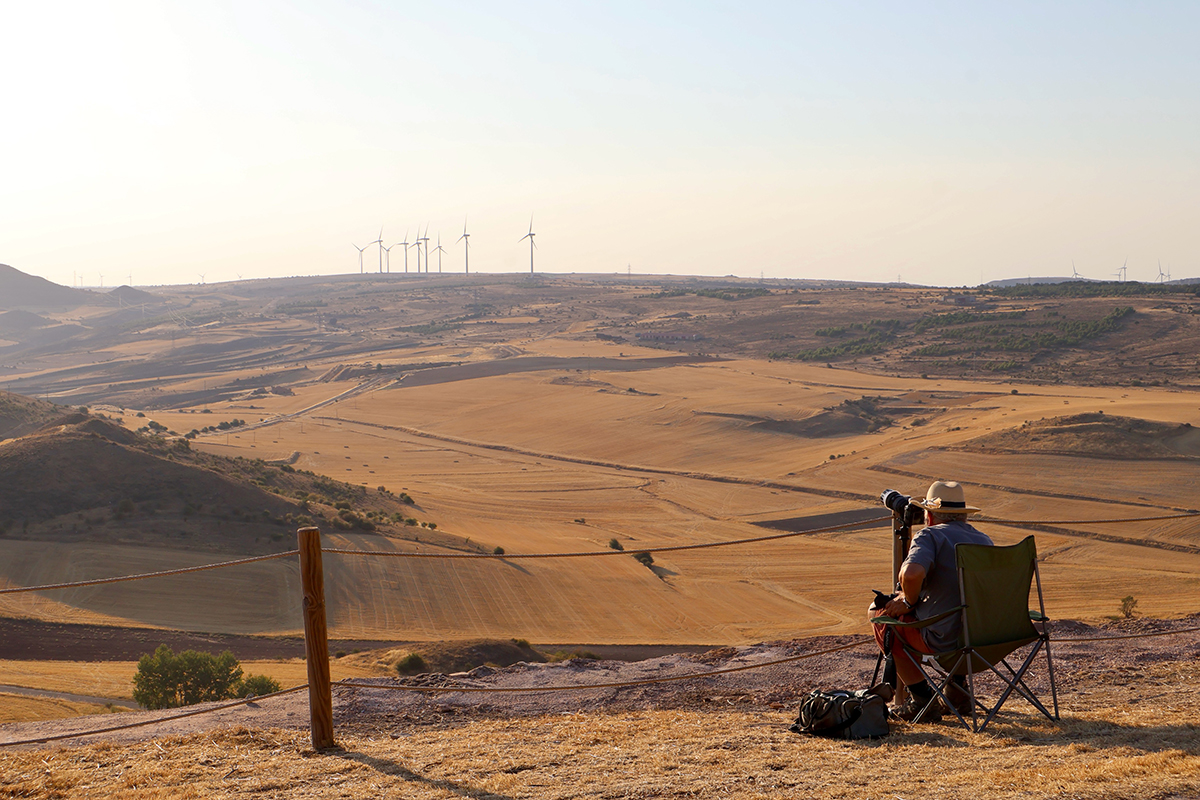
Eclipse Day in rural Spain was much calmer than I had experienced before. Medinaceli’s cobbled lanes were quiet, as Spaniards relaxed in bars or sought shade from the brutal 36°C heat.
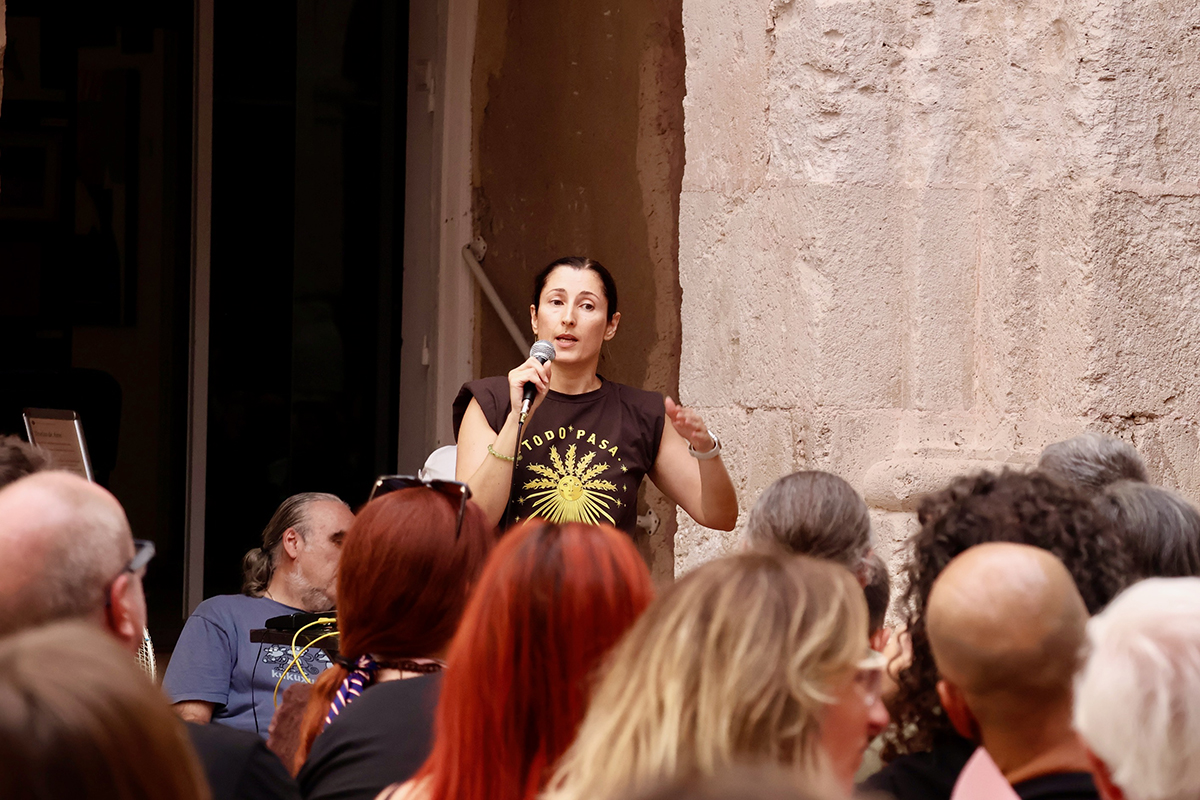
Inside the Ducal Palace, science communicator Daniel Torregrosa captivated the audience with stories of mythology, superheroes, science fiction and even The Simpsons.
He explored how humans have always used stories to make sense of the unknownand how the eclipse continues to shape our culture.
But it was Luisa Achaerandio who captured the emotional power of an eclipse. Using the Pale Blue Dot image of Earth, she reminded us of both our insignificance in the cosmos and our extraordinary capacity to understand it.
She spoke of how sudden darkness once inspired fear and uncertainty, while today gives us a reason to pause and look up together.
"The light always returns," she said. "But when the shadow arrives, it seems we are abandoned."
The moment we'd all been waiting for
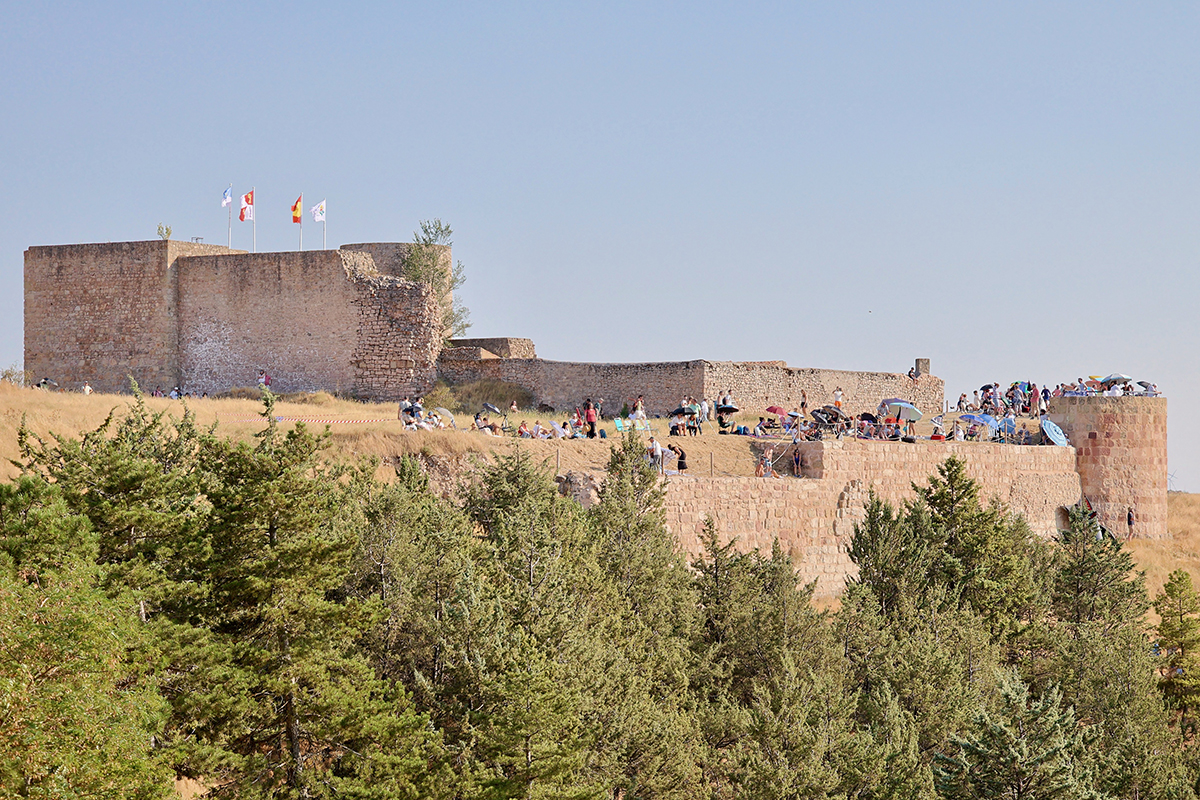
With ninety minutes to go until the partial eclipse began, colourful umbrellas dotted the hillside.
Families spread blankets and cool boxes across the grass, with someone guarding their patch while the others sought shade.
Eclipse glasses appeared, while cameramen assembled their equipment and amateur astronomers fitted cardboard solar filters to telescopes.
Fifteen minutes before first contact, hundreds of people poured out of the village. Our little patch of grass suddenly felt precious when two women positioned themselves directly in front of us on stools, blocking our view and refusing to move.
The usual sense of eclipse camaraderie evaporated as my sightline disappeared.
My mood soon shifted as I spotted first contact, and people settled into their positions, growing noticeably quiet.
"It’s nice to see everyone together and experience something that doesn’t happen very often," my friend Zara said.
This felt different from eclipses I’d experienced elsewhere. The setup was simpler and more intimate, sharing the moment rather than focusing on experiments to project the shrinking Sun.
Phones were held behind eclipse glasses trying to capture the moment. "I’ve got it!" Cristina’s son Jan shouted, proudly passing his phone around.
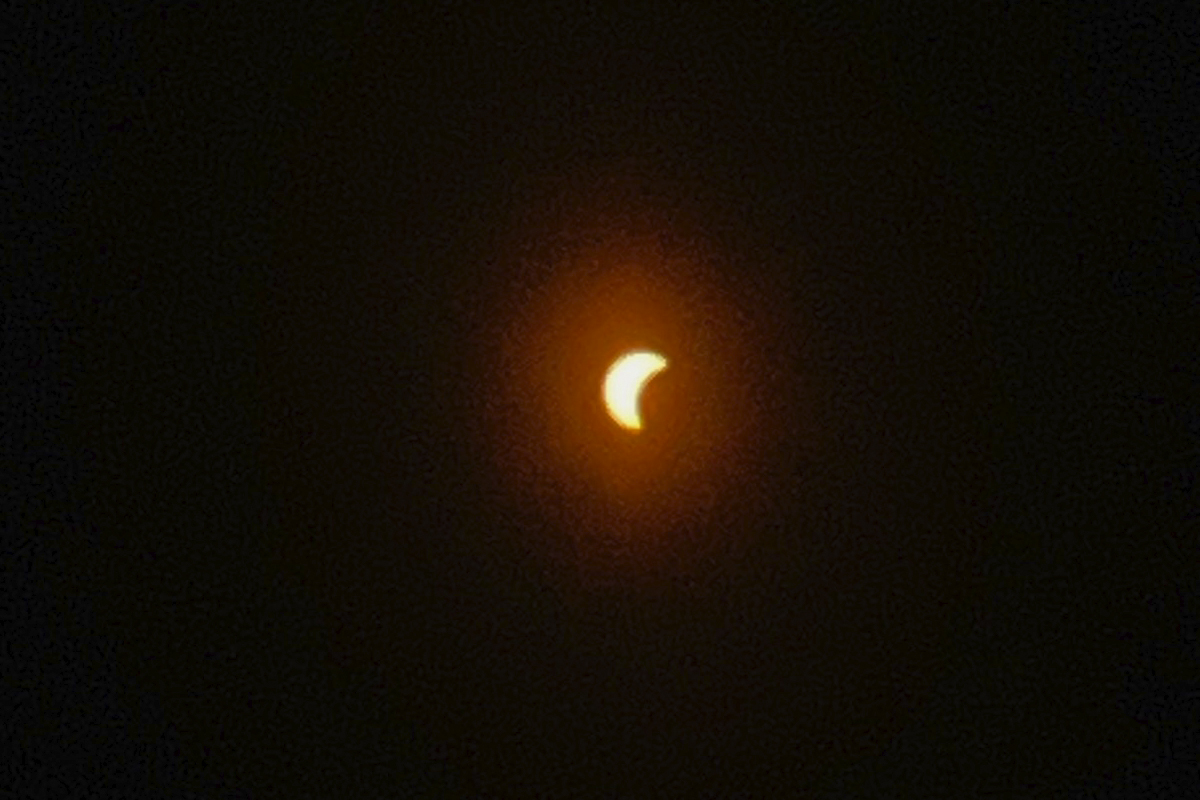
Soon, the light began to change. "It’s like a sunset, while the Sun is in mid-air," Tania said.
Beside us, Pilar, a local who experienced Spain’s 2005 annular eclipse, noticed the cooling air. "I’m feeling it’s more windy and cool."
"It’s a much-needed respite from the heat," Tania added.
The partial phase seemed to accelerate. Charlotte’s excitement was building, "I feel like I’m going to experience it properly as I actually know what is going on now," she said.
I didn't need to look at my watch to know the time had come.
Totality
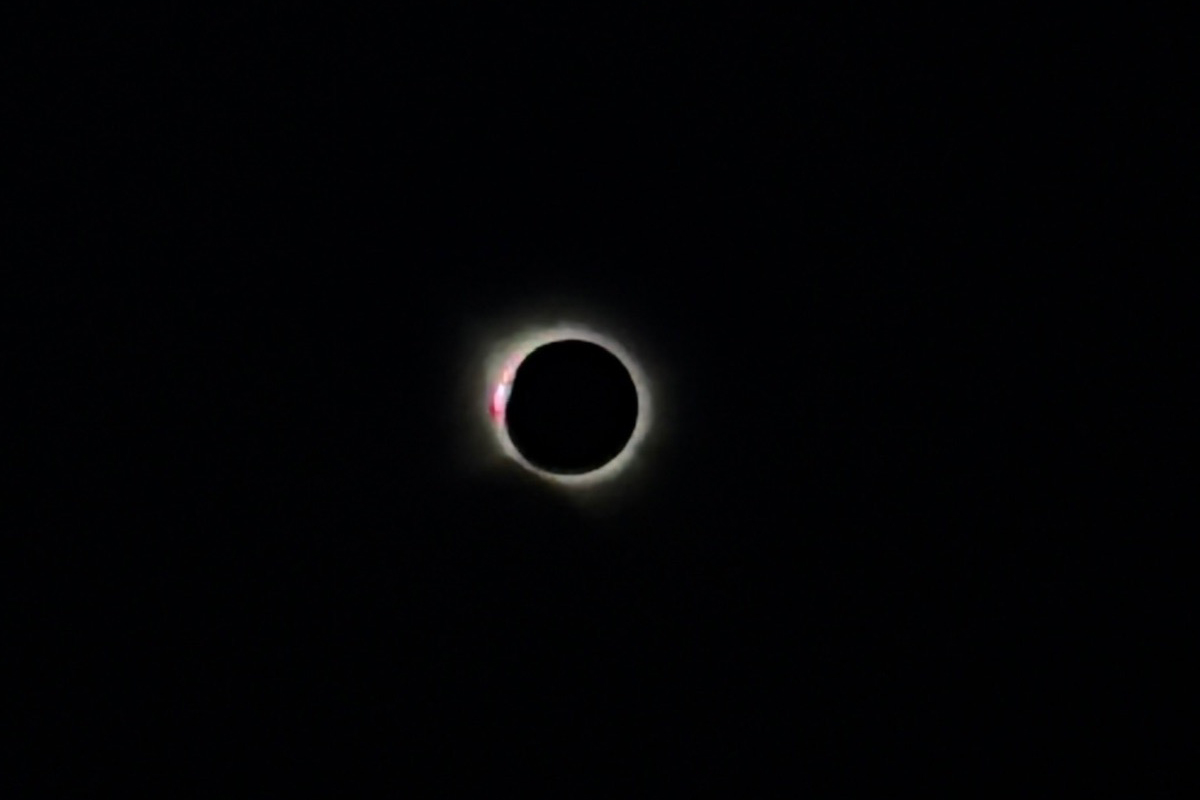
The Moon squeezed out the last sliver of sunlight. Bailey’s beads flashed. Then came the final burst of the dazzling Diamond Ring.
Darkness. The black disc of the Moon hung above us, surrounded by wisps of white light unfurling from the Sun, ghostly as cobwebs caught in a breeze.
That corona I’d travelled all this way to see was suddenly there and I was entranced.
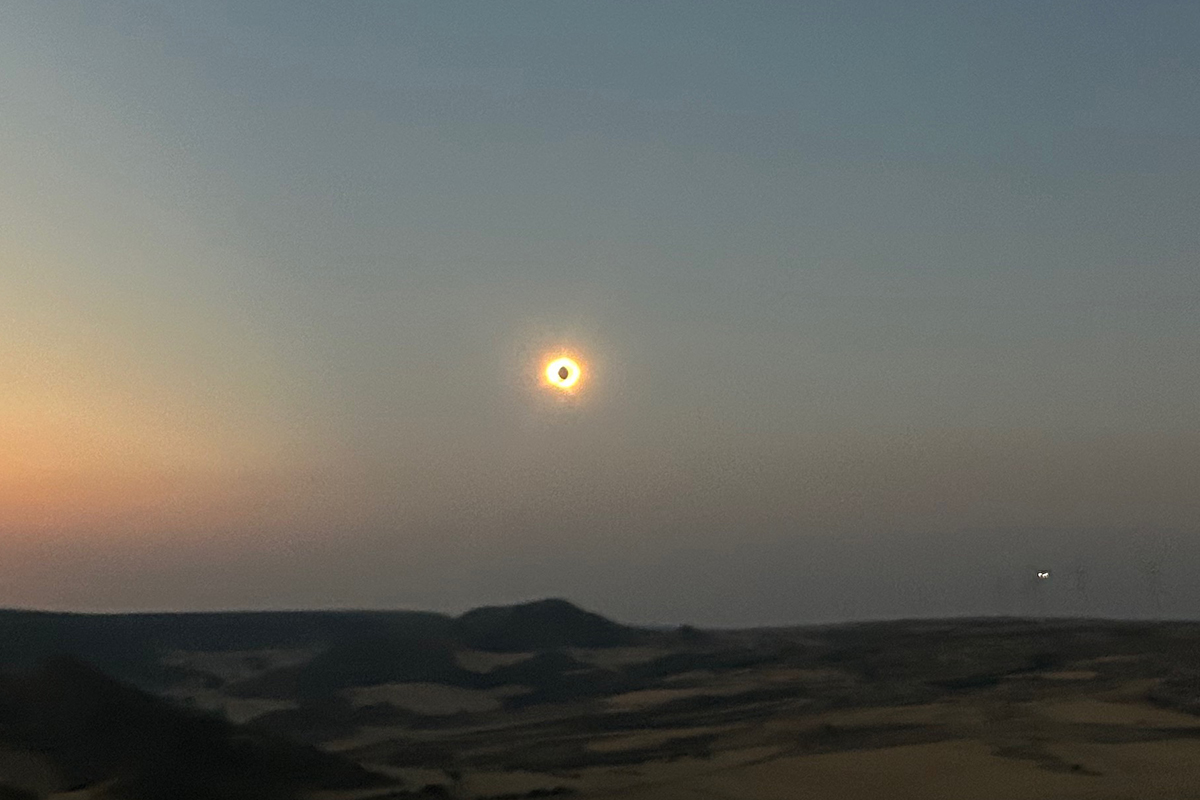
Screams of joy awoke me and I naturally joined in. Venus shone high in the sky and lights blinked from distant wind turbines.
My friends were either beaming or agog, wonder imprinted on their faces.
I scanned the 180°view – sunset, nighttime, sunrise – as though the time horizon had been compressed.
Copper and rose light glowed on either side, while above us the sky had become a deep blue-black.
It wasn’t just a view. I could feel the eclipse changing the temperature of my skin and the hairs on my arms rose.
After a few photographs, I sank back into Charlotte’s arms. She hugged me tightly, her cheek against mine, tears running down her face. "It’s so beautiful, Mum," she repeated.
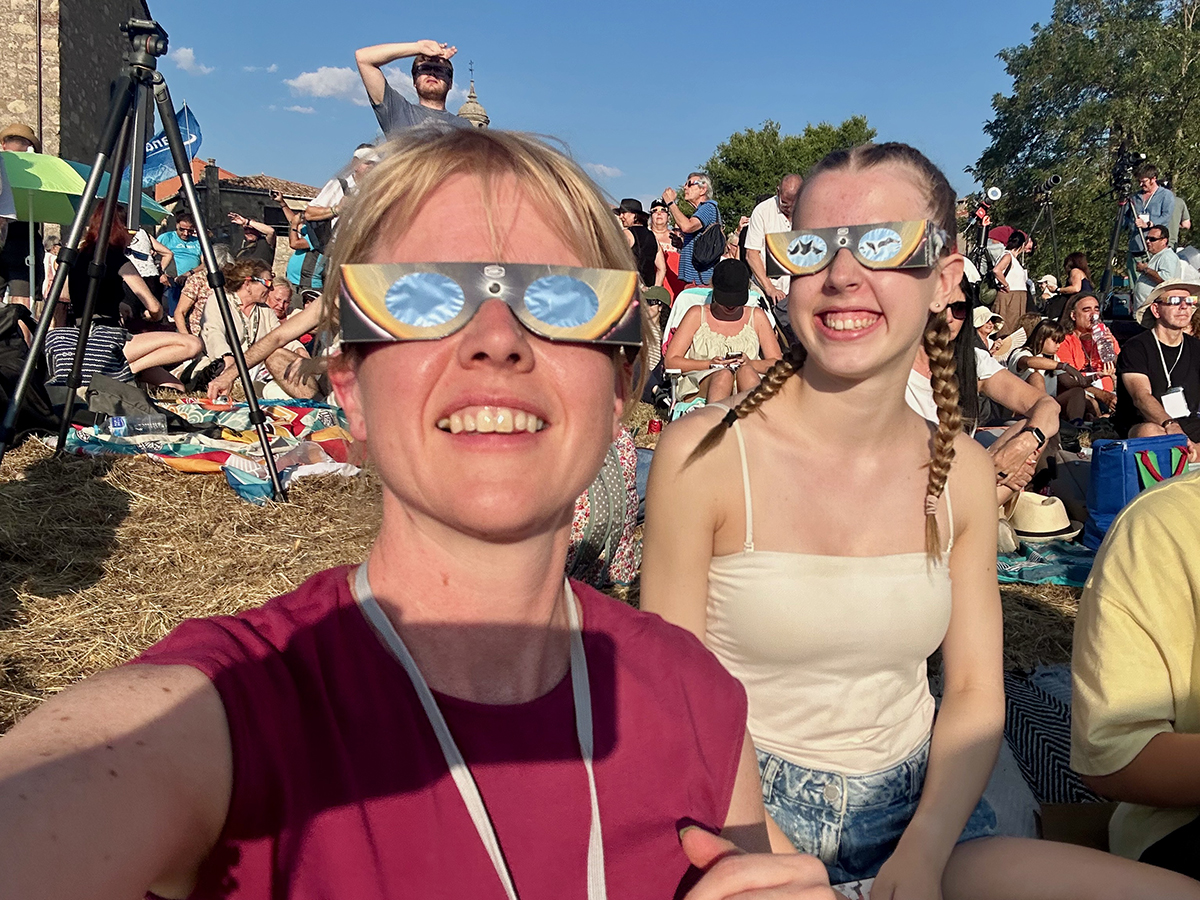
In that embrace I remembered Luisa’s words from earlier, "in that instant, we only have each other, waiting together, for the light to return."
And then it did.
The first flash of sunlight broke across the Moon’s edge and the crowd erupted into applause. Daylight flooded back over the plateau, but the eclipse hadn’t finished yet.
The partially eclipsed Sun was now sinking towards the horizon. Around us, people compared photographs and exchanged fragments of what they had seen.
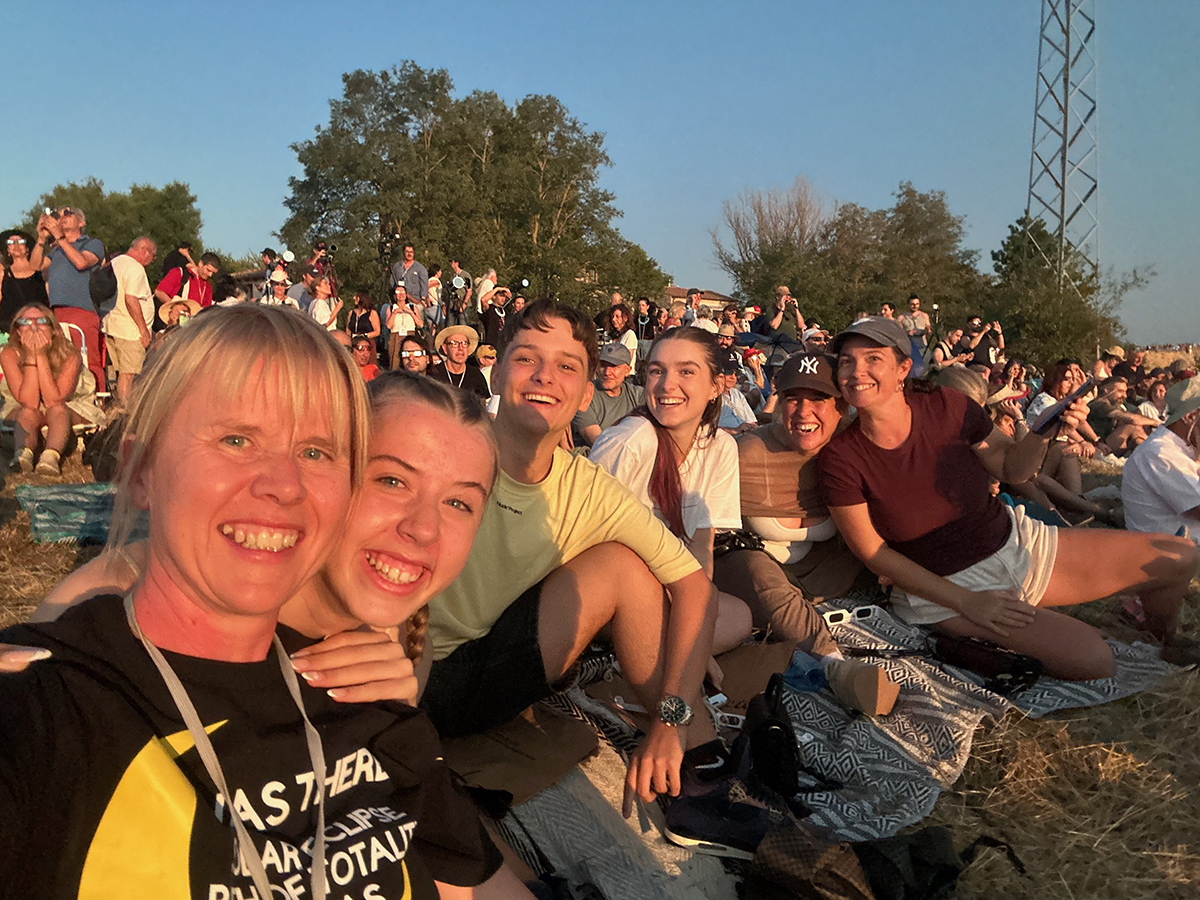
For a few hours, our viewpoint had become a gigantic natural observatory, a privileged window into the sky.
The landscape took on a dusty red colour as the tip of the Sun’s crescent descended below the hills.
Charlotte squeezed my hand. The light was leaving us again as the Sun set over the Castilian plateau, and none of us felt ready to leave with it.
Share your eclipse memories and images with us by emailing contactus@skyatnightmagazine.com