
Astronomers say they've made the first ever direct detection of turbulence in the space between stars distorting light from deep space.
What's more, the detection could help future missions capture more precise images of the supermassive black hole lurking at the heart of our Galaxy.
More mindblowing science

The space between stars
What lies between the many thousands of stars we see in the night sky on a clear night?
It might look like all that exists between stars is the inky blackness of space – isn't space, after all, a vacuum?
The region between stars is known as the interstellar medium and, far from being completely empty, the interstellar medium is filled with clouds of ionised gas and electrons.
As waves of radio light from distant objects like far-off galaxies pass through the interstellar medium, that light is bent and distorted by the turbulent material lying within.
Scientists describe the effect being similar to how, on Earth, heat rising off a hot surface can create a distorted view of distant objects.
The distortion of light through space has long been inferred, but understanding the exact structure of the turbulence has eluded astronomers, until now.

Measuring the interstellar turbulence
To capture the structure of this interstellar turbulence, astronomers observed quasar TXS 2005+403, a bright source of radio light generated by material circling round a supermassive black hole visible in the constellation Cygnus.
The supermassive black hole is about 10 billion lightyears from Earth.
Given the Universe is 13.8 billion years old, that means the light we see coming from the supermassive black hole has been travelling across the Galaxy for almost the entirety of cosmic history since the Big Bang.
And as that radio light travels toward Earth, it passes through the Cygnus region of the Galaxy.
This, say astronomers, is one of the most turbulent and 'strongly scattering' environments in our Galaxy, and causes the radio waves from the quasar to be bent and distorted.
"Most of what we see in the radio data isn’t coming from the quasar itself, it’s coming from the scattering caused by the turbulence in this region of the Milky Way," says Alexander Plavin, astronomer at the Center for Astrophysics, Harvard & Smithsonian's Black Hole Initiative and lead author of the study.
"That scattering and the distortions that come with it are what allows us to study the turbulence and better understand and infer its structure."
Taking a closer look
The team turned to archive data captured by the Very Long Baseline Array, which is a network of radio telescopes spread across the United States.
They expected that radio light from TXS 2005+403 would spread out into a smooth blur as it passed through the Milky Way and fade away.
That's not what happened.

The team saw "persistent, distinct patterns, producing structured, patchy distortions" in the light. They say that could only have come from turbulence within the interstellar medium.
"The most distant pairs of telescopes should not have seen the quasar image, but to our surprise, they clearly detected its signal, or faint glow," Plavin says.
"It can’t be explained by simple blurring or by the quasar itself, and it behaves the way turbulence is expected to, which is how we know we’re seeing the effects of interstellar turbulence."

Here's the science
As well as being a landmark observation, the team say their findings have huge implications for our understanding of the Universe.
The turbulence seen occurs at scales about the size of our entire Solar System, and understanding how it works helps explain how energy moves through the Galaxy.
It even tells the team how gas behaves before collapsing to form new stars.
And, the team say, it could help future efforts to capture even clearer images of black holes.
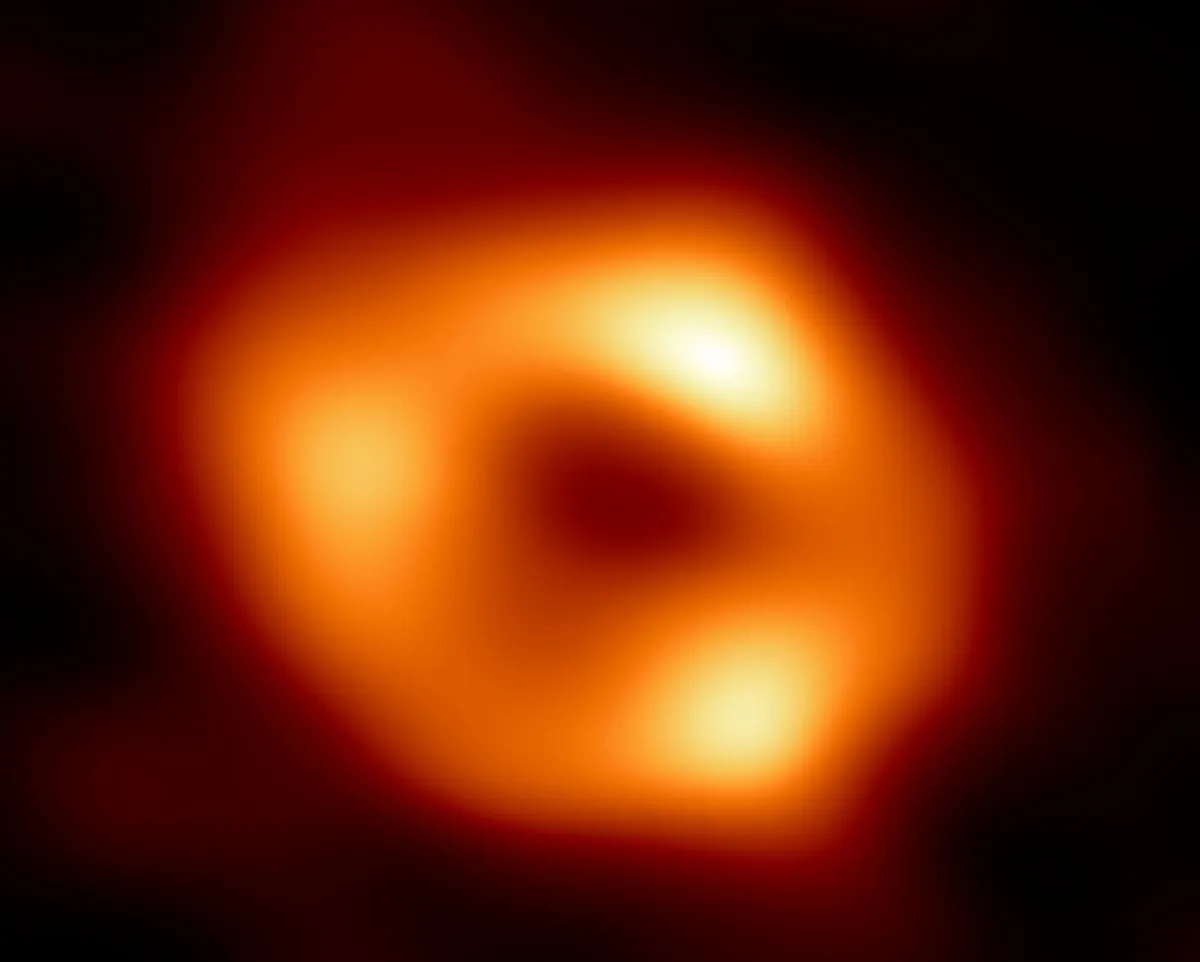
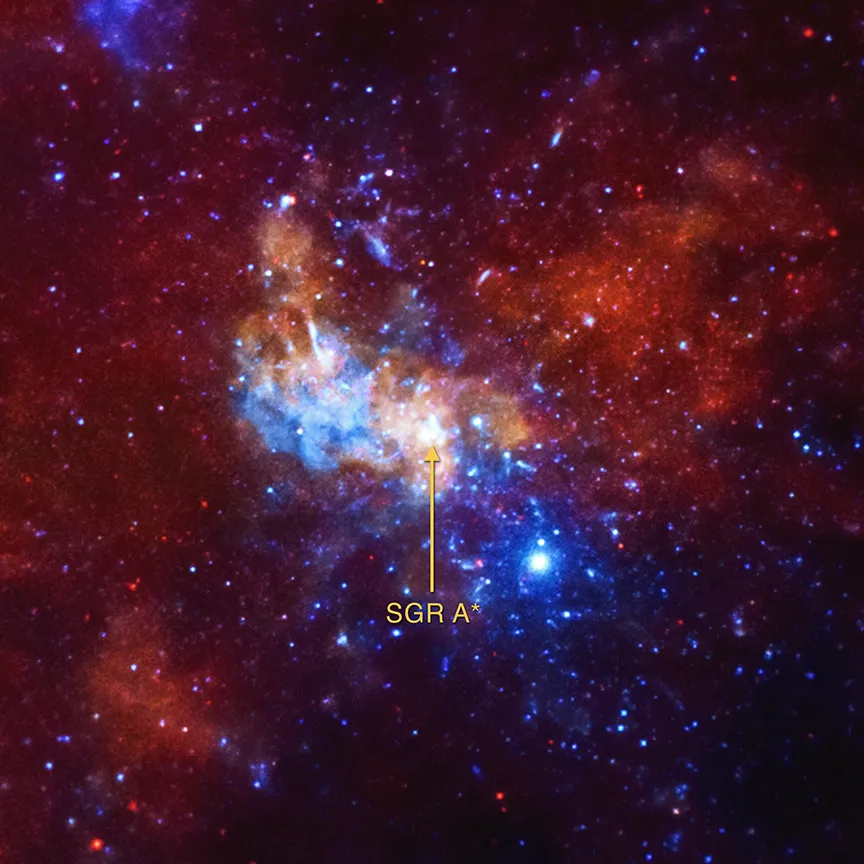
The Event Horizon Telescope famously captured images of Sagittarius A*, at the centre of our Galaxy, but also of the supermassive black hole at the centre of galaxy M87.
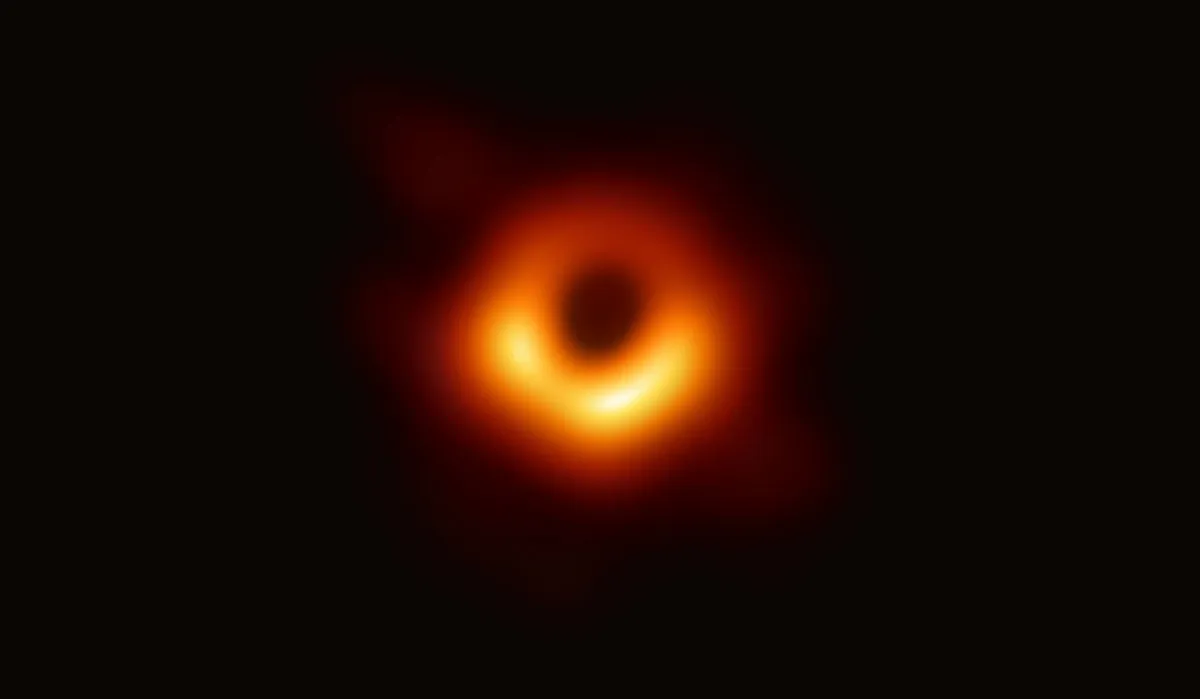
Images like these, the team say, are degraded by interstellar scattering.
So understanding how turbulence scatters radio light could help future missions counteract the effects and produce sharper images.
The team say they've now begun a follow-up observing campaign to measure the specific properties of the turbulence and track how it changes as the gas moves across space.

