We assume the Universe looks broadly the same no matter where you are or which way you look.
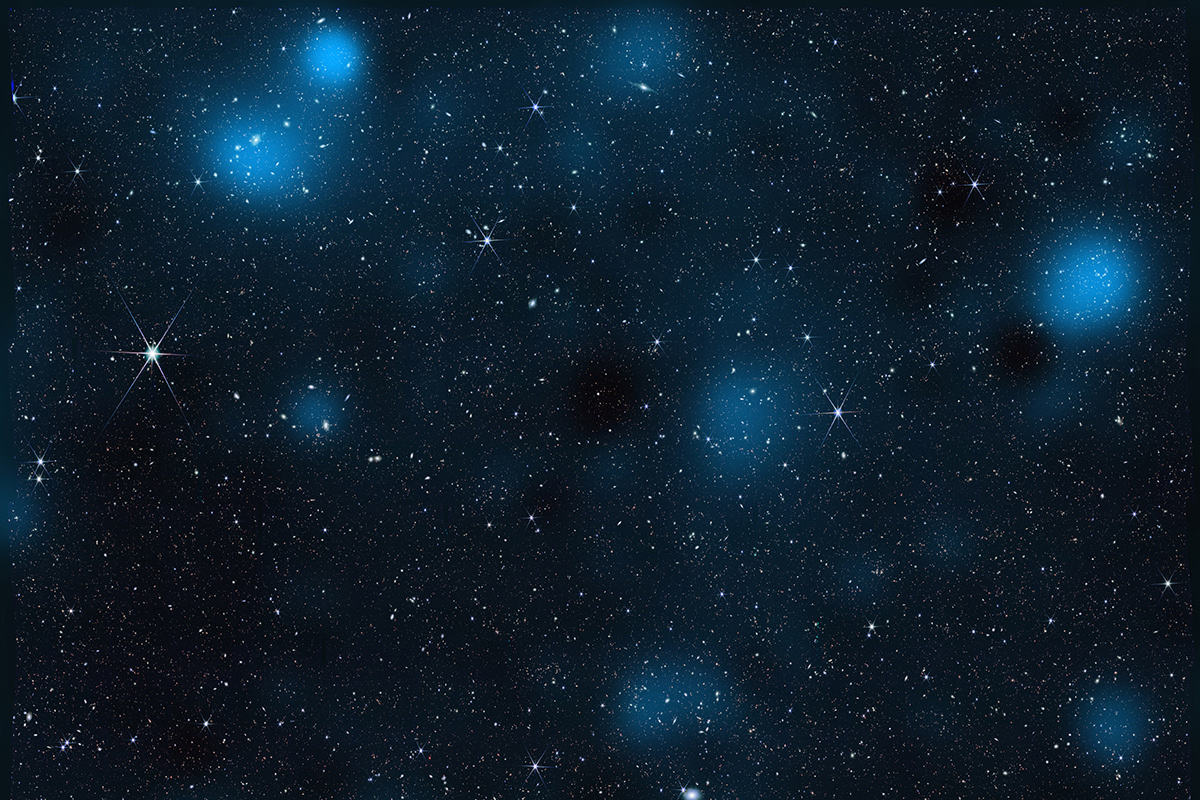
When scientists say that the Universe is isotropic, it means that on the largest scales, the Universe looks largely the same in every direction.
In other words, if you took a photo of the Universe, blurred it enough and put it far enough away and squinted, you wouldn’t make out any structure or single direction that is special.
More mind-bending science
However, there's a scientific study that throws this into doubt.
Marco Galoppo is a doctoral candidate at the University of Canterbury, New Zealand, working
on inhomogeneous cosmology.
We spoke to him about the study and what it means for our understanding of the Universe.

on inhomogeneous cosmology
What are the scientific implications of assuming the Universe is isotropic?
It’s a very important assumption if you want to write down equations for the behaviour of the large-scale Universe.
There is also a philosophical implication. Since Copernicus, science has removed the ‘special place’ that Earth had at the centre of our cosmology.
In an isotropic and homogeneous Universe, every possible observer sees roughly the same thing.
Does what you found challenge this assumption?
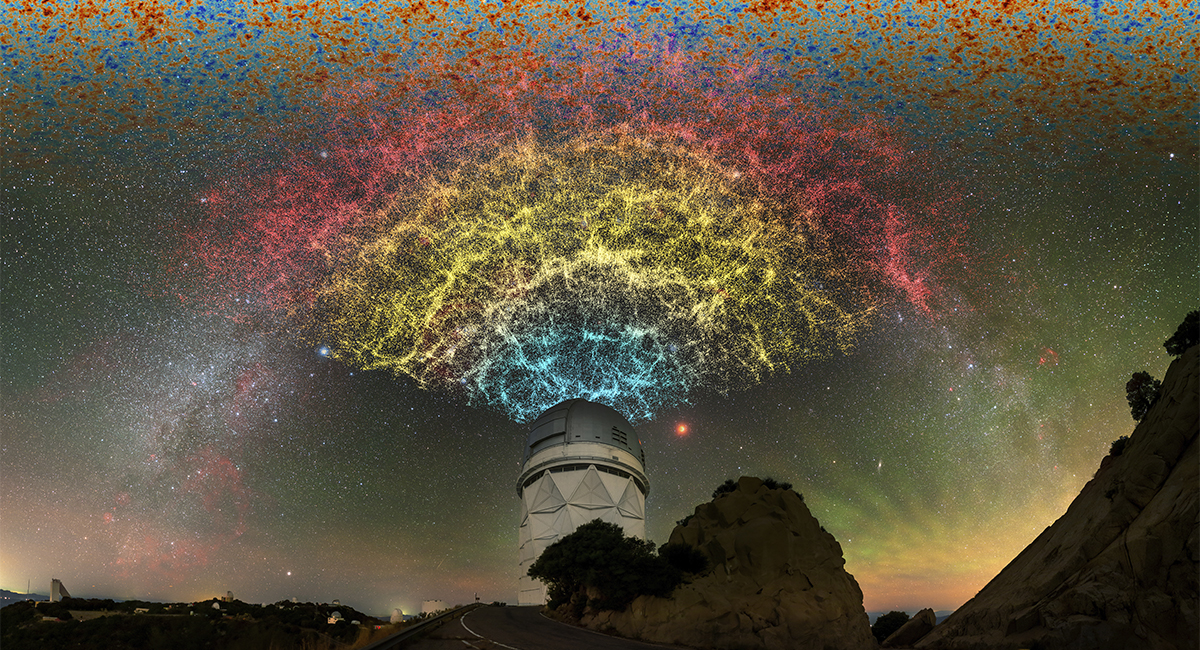
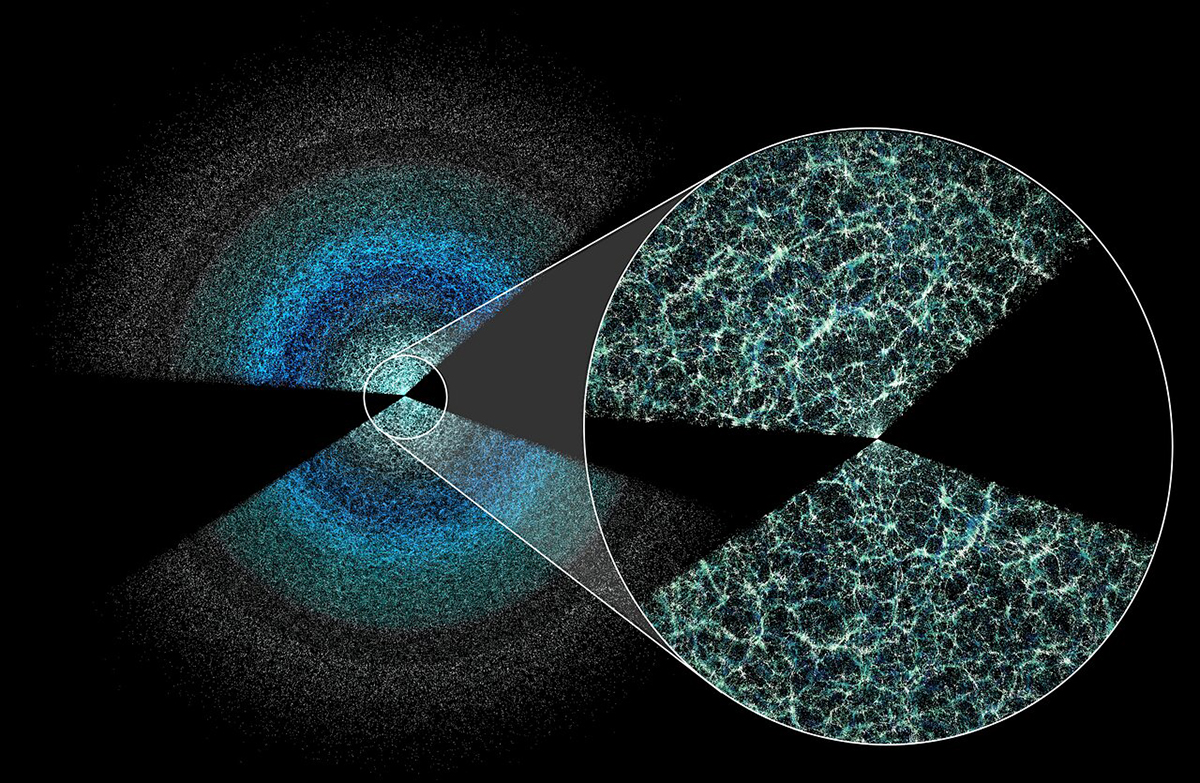
We took data from the Dark Energy Spectroscopic Instrument (DESI), an incredible 3D map of the Universe.
DESI surveys the skies and can look quite far back in time and at very faint sources. It also has a very wide-angle field of view.
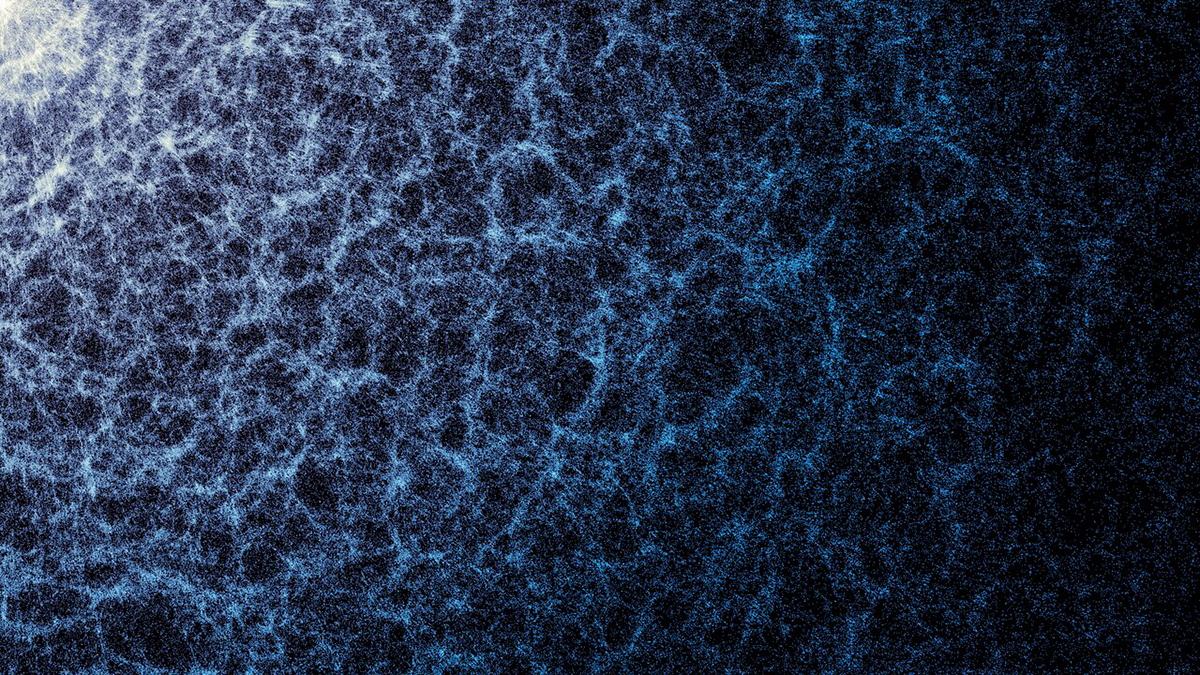
We looked at discs – circular cross sections of the cones of information found in the DESI sample.
We asked: if you take each galaxy, what is the probability of finding another galaxy at a certain distance within this disc and at a certain angle with respect to this galaxy?
We did this for each galaxy, then averaged the result. The statistics give you a measure of how anisotropic your system is (different in different directions).
We saw that the level of anisotropy in the Universe seems to be higher than what one can infer from previous simulations involving only dark matter.
Does this imply that the Universe has a centre?
That isn’t the picture one should run with.
What we propose is a statistical measure of anisotropy, but it’s not saying there’s a single preferred axis in the Universe.
One could have a Universe that’s anisotropic but has no fundamental centre. A more anisotropic Universe would also not be against the Copernican principle.
You will have a lot of observers seeing different things, but none of them is special. I don’t think any of us is the centre of the Universe.
What kind of conversations do you expect your study to spark?
Since our study, other papers have been published that flag possible inconsistencies that we are currently addressing.
For example, our study exclusively looked at dark matter. The idea is that galaxies should trace the dark matter distribution, so one expects a study that considers galaxies to be a bit different, but not wildly so.
New studies have taken galaxies into account and have used different estimation methods too.
Since these responses, we’ve been re-running all the tests, which are encouraging for now.
My hope is that our prediction survives these stress tests. And I hope the conversation keeps going. That’s the only way that science progresses.
What are some of the implications of an anisotropic Universe?
This is still a big ‘if’. But, if confirmed and stress-tested against new data catalogues and consistency checks, then it would mean that we need some mechanism to explain how these structures grew so fast.
If we see more anisotropy in the Universe, it means that this structure had to develop before the standard model of cosmology says it should.
Last year, DESI proposed that dark energy may not be constant and instead varies with time.
One could also modify our picture of dark matter. There’s also the possibility of modifications to the picture of general relativity.
There are many questions; anything that’s confirmed would be quite significant.
What do you need to demonstrate this anisotropy is real?
If this anisotropy survives the move from dark-matter-only simulations to galaxy simulations, and is also confirmed by the second DESI data release, DR2, and the first data release from Euclid, then I think that would be convincing.