Venus is one of Earth’s nearest neighbours, and is believed to have once looked very like Earth.
Today it’s an inhospitable hell-hole, but a new technique developed at NASA’s Glenn Research Center in Ohio, USA may help us to learn more about the planet’s distant past.
The research was led by Sara Taeko Port, a post-doctoral researcher at the University of Texas San Antonio, who was working alongside fellow scientists from NASA and Arizona State University (ASU).
The question Port wanted to answer was: can minerals on the Venusian surface today reveal what conditions were like there millions and billions of years ago?
To find out, she headed to the Glenn Research Center, which is home to the Glenn Extreme Environment Rig (GEER) – an 811-litre chamber that can simulate the intense heat and pressure experienced on the Venusian surface, as well as the exotic chemistry of the Venusian environment.
More on Venus
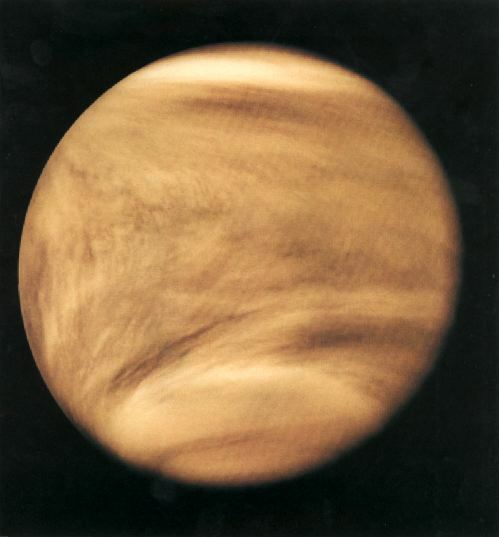
Venus – an Earth-like planet with water?
Six rock-forming minerals were placed inside this chamber for 60 days and then sent to ASU for analysis, to see how exposure to the Venusian atmosphere might affect them.
What Port’s team discovered was that, while exposure to Venusian conditions did affect water-bearing minerals, they didn’t lose all traces of their water content entirely.
Reactions with hydrogen fluoride in the atmosphere led to the formation of fluorine-bearing micas (silicate minerals that can be easily broken down into thin plates, like the layers in puff pastry).
Similarly, reactions between CO2 in the atmosphere and the water-bearing mineral brucite led to the formation of a type of magnesium carbonate called magnesite.
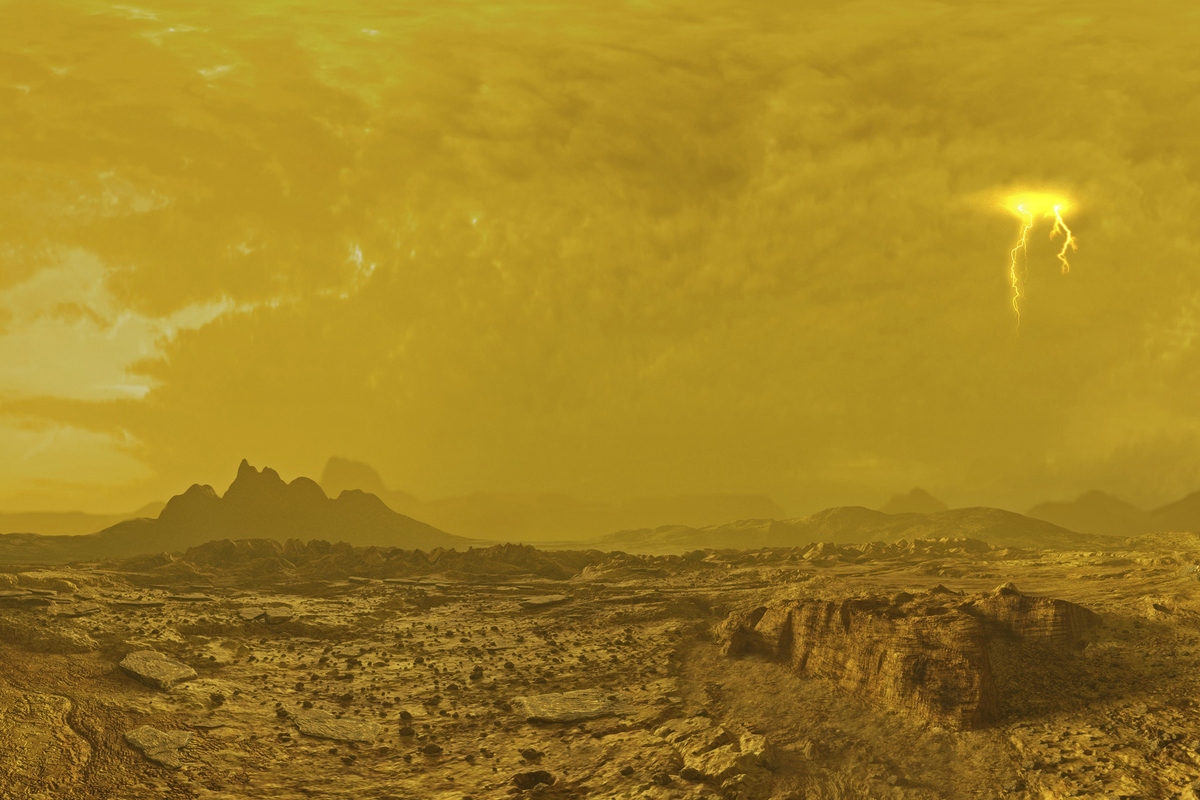
This could prove helpful for studying the Venusian surface further down the line, because if fluorine-bearing micas and/or magnesite show up there, it’s fair to assume that they may have formed in the same way – and hence that liquid water may once have flowed in that region.
“Fluorine in the atmosphere can help stabilize minerals that may have originally formed when water was more abundant,” said Port. “If we find these fluorine-bearing minerals on Venus, they could give us clues about Venus’ past surficial water.”
With several missions to Venus currently in development – NASA’s DAVINCI and VERITAS missions, and ESA’s EnVision – tools like this can only be a useful addition to planetary scientists’ arsenal.
Active volcanoes on Venus?
What’s more, the study also revealed that once the 60 days were up, sulphur-bearing minerals had encrusted on the surface of nearly all the samples.
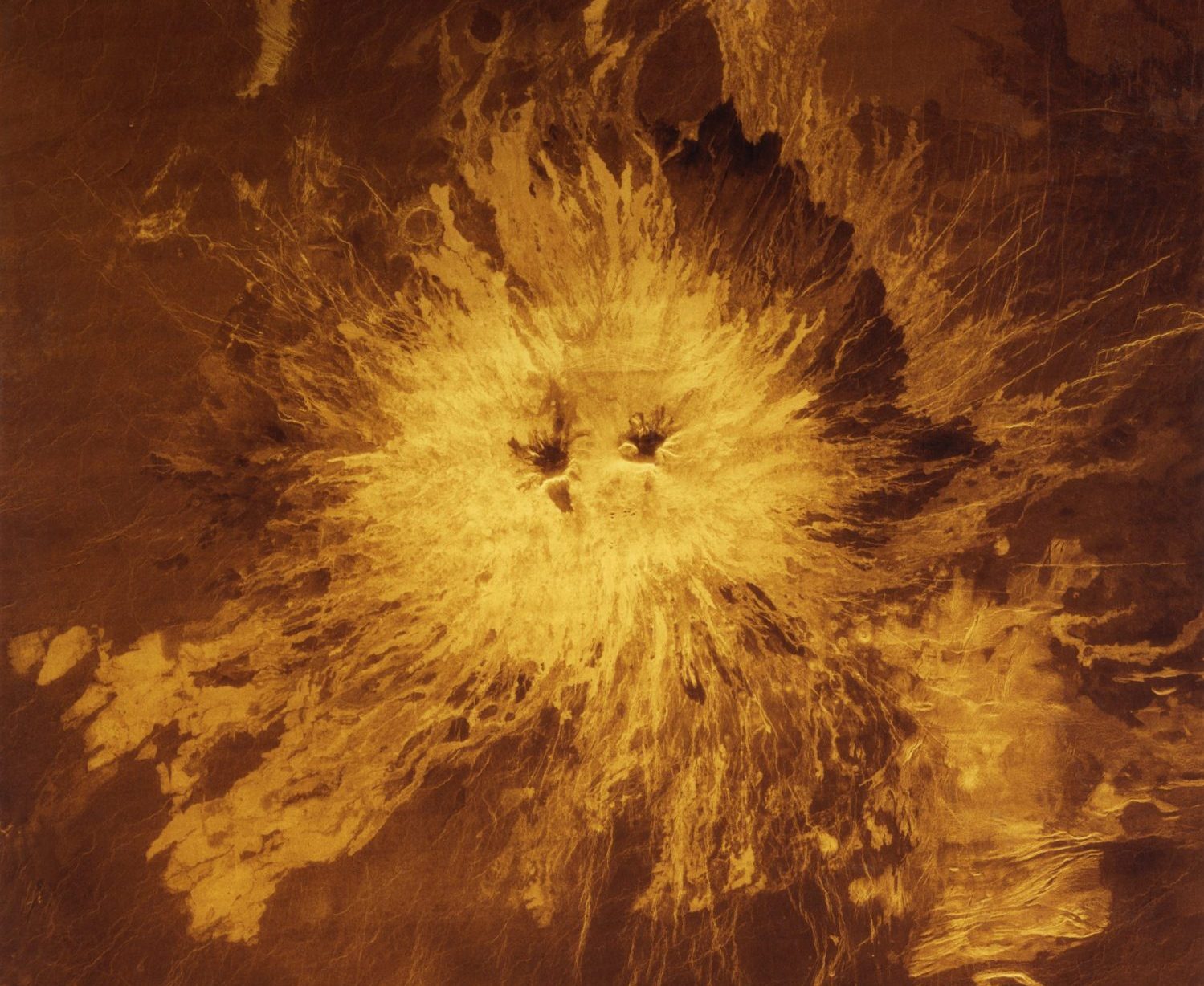
This implies that the sulphur dioxide (SO2) in Venus’s atmosphere reacts readily with surface minerals – and as such reactions involve “using up” the planet’s sulphur dioxide, this reactivity, combined with the observed high atmospheric levels of SO2, further suggests the presence of surface volcanoes, which would replenish atmospheric SO2 through a process known as “volcanic outgassing”.
Maitrayee Bose, an associate professor at ASU’s School of Earth and Space Exploration who worked with Port on the study, said the research could also help improve our understanding of how rocky planets form and evolve – both here in the Solar System and beyond.
“Venus and Earth likely started with many of the same basic ingredients, yet today they are dramatically different planets,” Bose says.
“Understanding how Venus’s surface and atmosphere have interacted over geologic time can help us reconstruct how Venus evolved, why it became so different from Earth, and what that tells us about the evolution of rocky planets beyond our Solar System.”