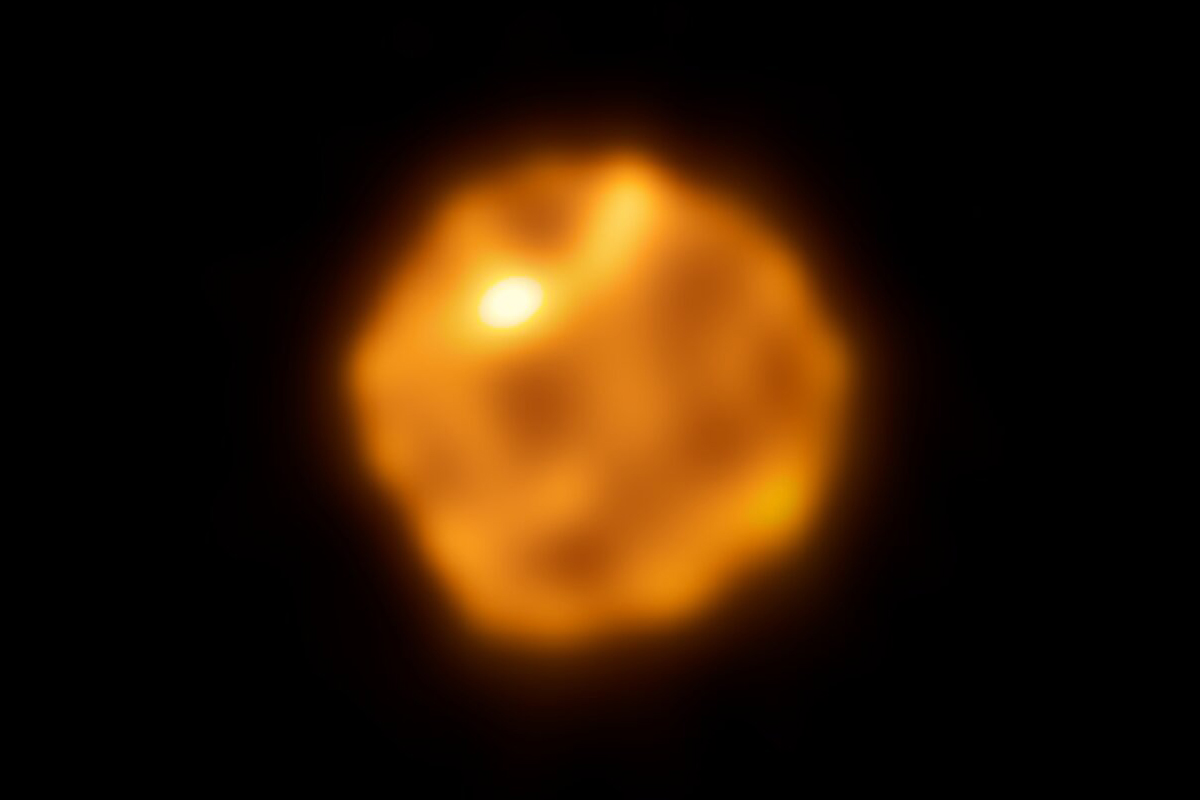
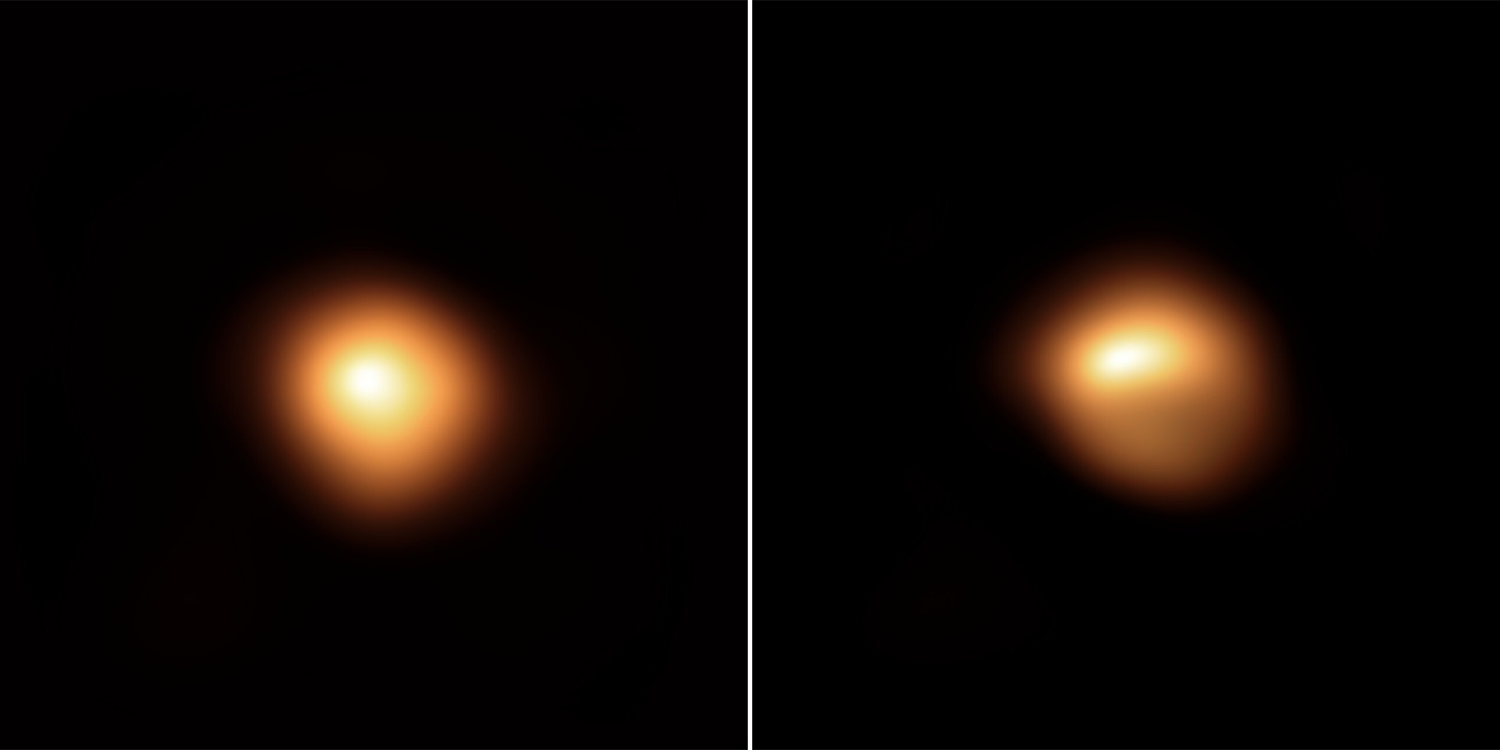
Since the ‘great dimming’ that took place in 2019, Betelgeuse – Orion’s ‘shoulder’ and one of the best-known stars in the sky – has presented us with new mysteries.
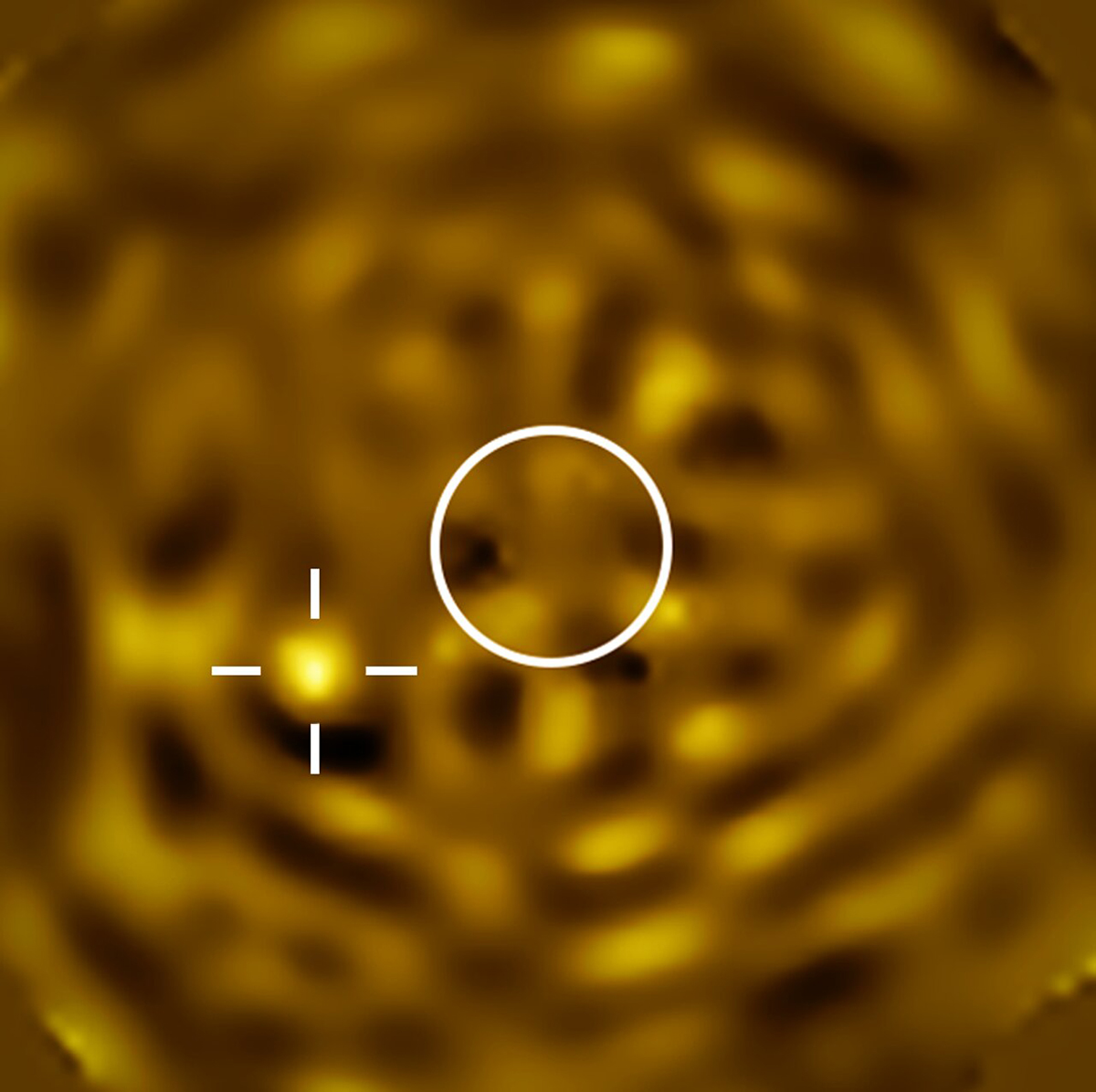
As astronomers turned telescopes to this enormous red giant, evidence that it is, in fact, a double star has been building.
Imaging from ground-based facilities, in particular the European Very Large Telescope, suggests a companion weighing in at a few times the mass of the Sun.
More on Betelgeuse
Such a star should shine brightly in the ultraviolet, which means that the failure of the Hubble Space Telescope to see it at these wavelengths is deeply surprising.
The lack of ultraviolet images has led some to wonder if the newly discovered companion exists at all, or whether it is just a lot less massive than the VLT data suggests.
If there is a star as massive as two Suns there, the situation is simple: Hubble should have seen it.
Finding Betelgeuse's companion
Now new research from Jared Goldberg, Meredith Joyce and their team of collaborators in the US and Hungary offers a clever solution to this contradiction.
The key is to realise that the region surrounding Betelgeuse is complicated.
The primary star is fundamentally a very odd object. It is so large that, were it at the centre of our Solar System, it would engulf all the planets out as far as Jupiter.
Yet, in the star’s outer layers, the density is low enough that it would pass for a good laboratory vacuum.
Even so, dust can be formed there – as it was during the great dimming – and ejected from the star.
Any companion thus travels not through empty space, but through the dusty material surrounding Betelgeuse.
Indeed, previous observations with the VLT and Hubble gave hints that there was a dusty wake dragged behind the orbiting companion.
How does the presence of dust help? We translate observations to mass by matching the observed colour and brightness with known stars.
So if the dust means we don’t see the companion clearly, there will be an error in our calculations.
A solution?
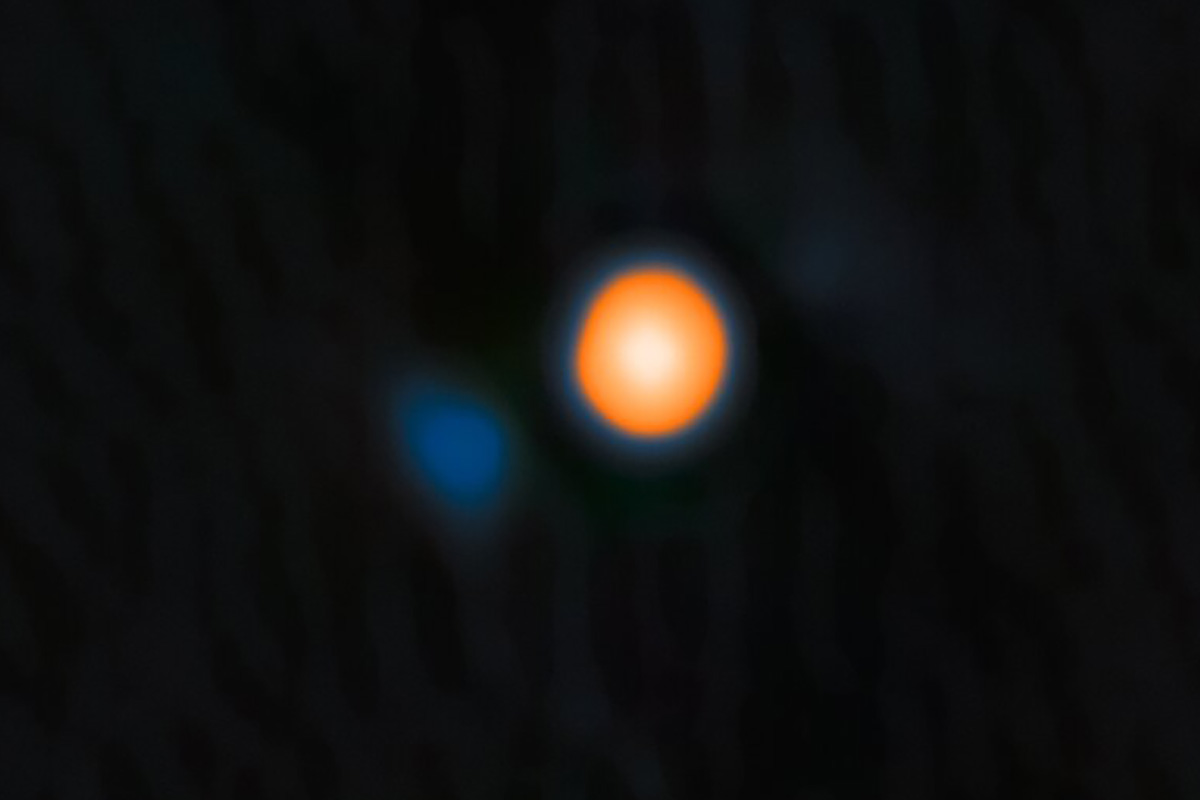
The new research points out that we may not be observing the companion directly.
Instead, as it moves through its surroundings, what we see is the reflection of Betelgeuse’s light off the dense clumps of dust it stirs up.
If that’s right, then a companion of relatively modest mass – certainly less than the 2–3 solar masses originally assumed – could appear bright enough to be detected via its influence on the dust.
With a smaller, cooler star, there’s no problem with its apparent invisibility in the UV.
It’s a neat solution and it passes the researchers’ back-of-the-envelope tests.
To find out more, we may just have to be a little patient, waiting as the companion’s orbit carries it away from its present position behind the disc of material that surrounds Betelgeuse, making it observable once again.
One particular test that seems worth doing as soon as it appears is to look for heavily polarised light.
Just as polarised sunglasses cut out glare from light scattered off the surface of a road, astronomers use polarisation as a diagnostic property for light which has been scattered from dust.
An absence of polarisation would be hard to reconcile with this new, dusty idea – so we may be able to put it to the test sooner rather than later.
Chris Lintott was reading Disco in the Dust: Reflected Light at the Bow Shock around Betelgeuse’s Companion Explains its Observed Luminosity by Jared A Goldberg et al. Read it online at: arxiv.org/abs/2608.11672