Seestar’s smart scope, the S30 Pro, retains the size, weight and six-hour battery life of the entry-level S30, while adding an improved telescope design, better camera sensors, double the storage space and greater functionality.
In this review, we’ll focus primarily on how these new features perform.
Read more
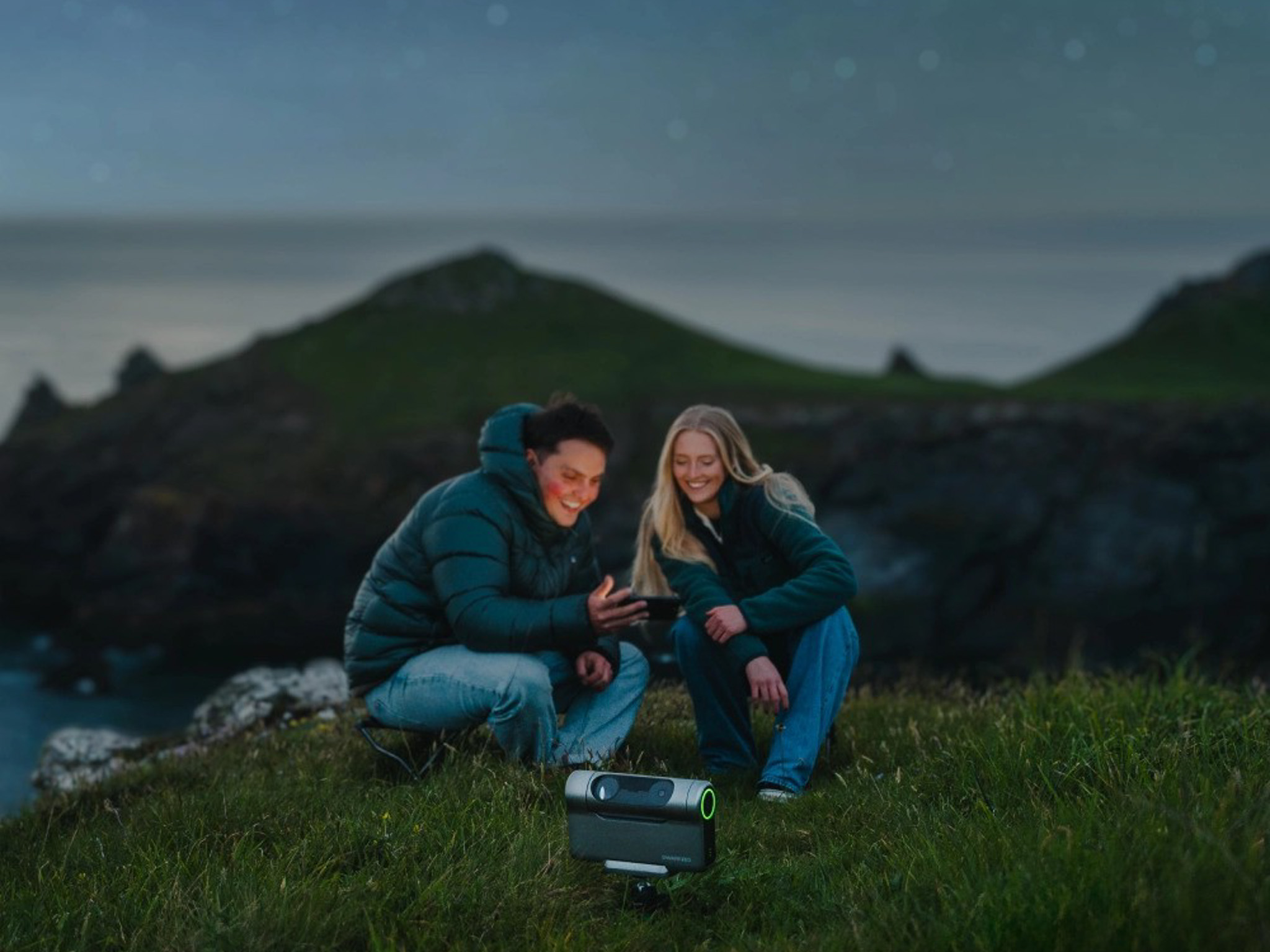
Unboxing and setting up
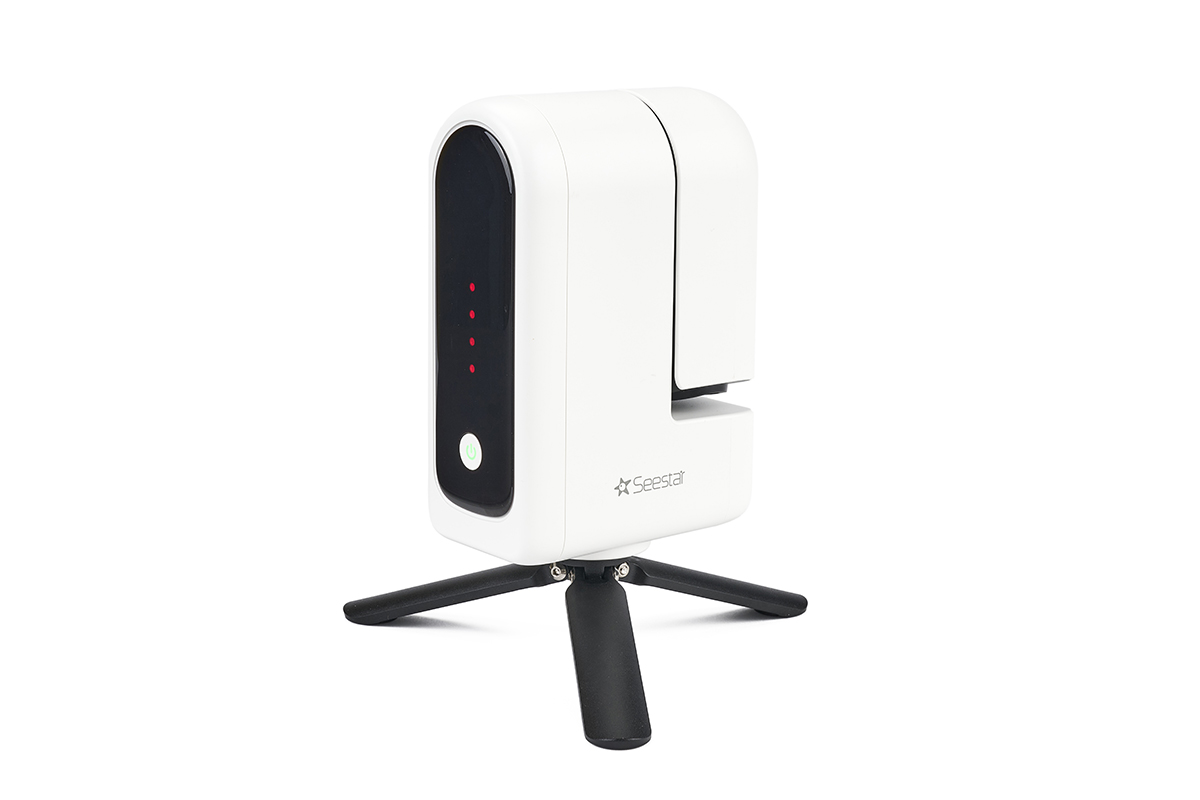
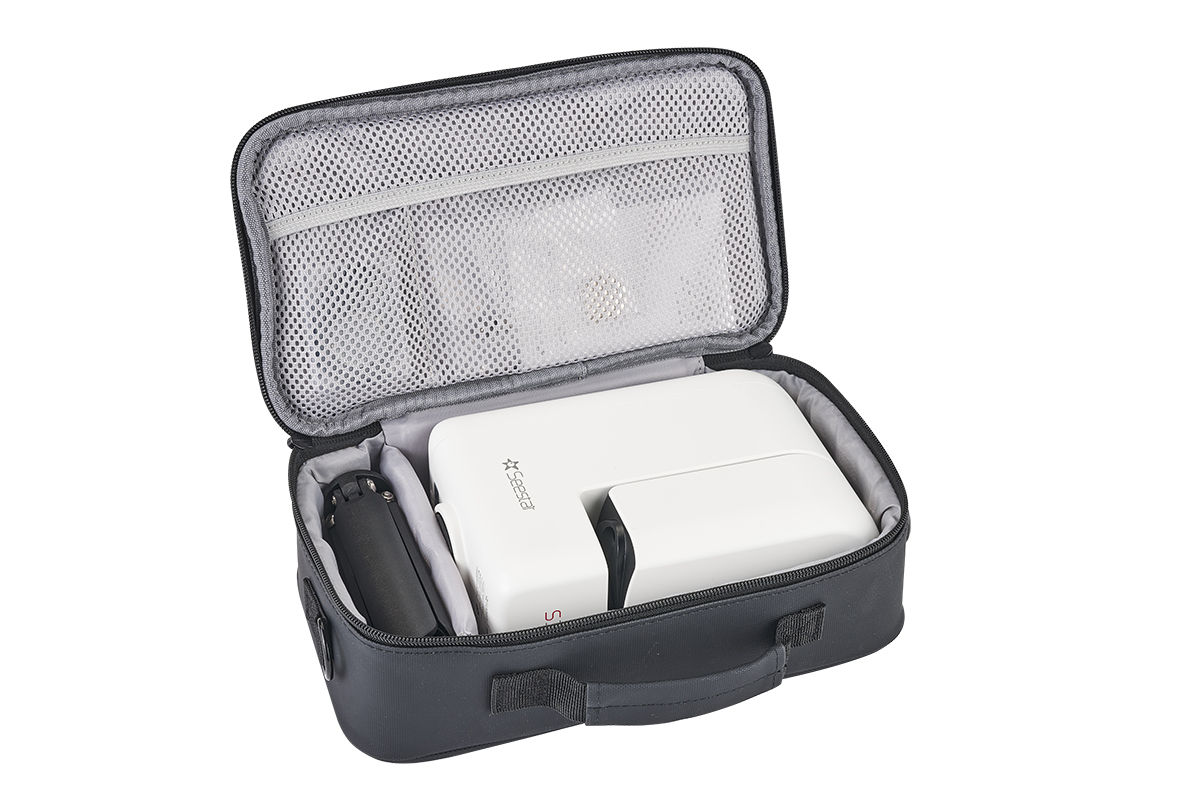
The S30 Pro comes in a soft, padded carry bag that also accommodates the USB-C cable, solar filter and a small tripod that’s great for altazimuth use.
Seestar also offers a separate smartscope fluid tripod head and base (ZWO TH10 and ZWO TC20) that tilt the scope towards the celestial pole for equatorial tracking and longer exposures.
The fluid tripod is excellent quality and raises the Seestar higher than the small tripod that’s included, but you may benefit from a higher camera tripod if you have fences or buildings around your garden.
The Seestar has a 3/8-inch thread, but a 1/4-inch adaptor is supplied.
SQUIRREL_13984996
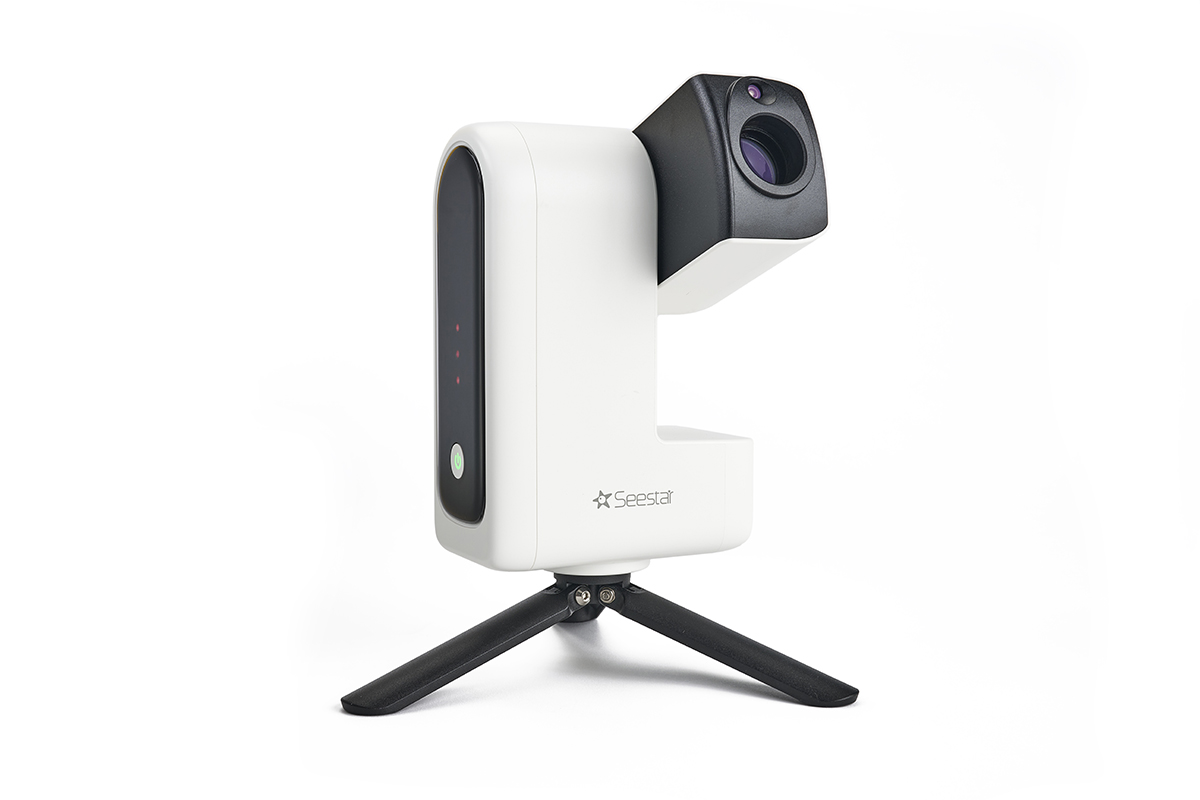
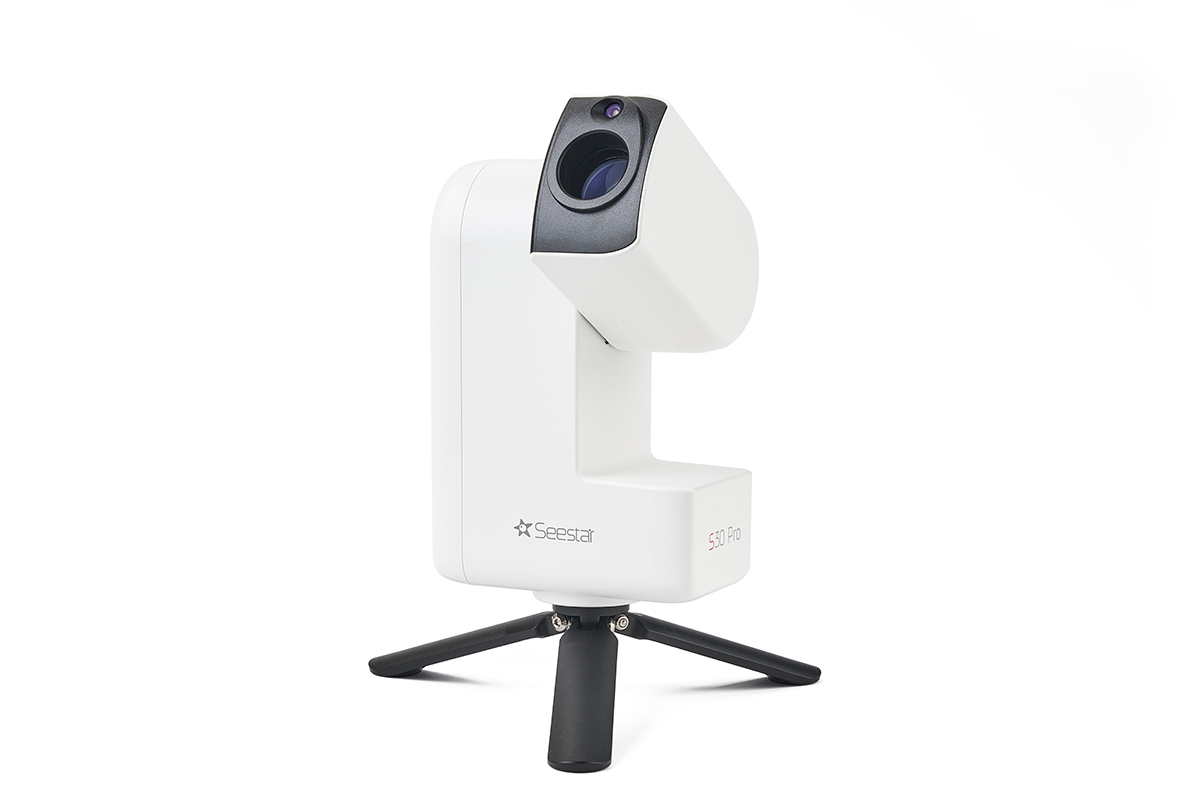
The smartscope’s plastic casing feels solid enough in day-to-day use, though the USB port of our test unit became loose within a couple of months.
The unit is controlled from the Seestar app on a smart device.
The core functions of the app are easy to use, with the more in-depth features found in the advanced menus.
A great new feature is near-field communication (NFC): simply turn on the S30 Pro and hold your NFC-compatible smart device towards the battery indicator to instantly connect, significantly speeding up the set-up process.
Astrophotography with the S30 Pro
The S30 Pro is marketed towards traditional astrophotographers who want to take longer exposures in equatorial mode.
The app shows real-time positional adjustments to help with EQ mode set-up. The new scheduling tool allows you to plan a full night of imaging and the S30 can run from mains power if needed.
During capture, pre-processing enhancements are applied each time a new image is stacked, which improves the raw stacked results.
The in-app processing tools are straightforward and produce decent results.
The individual frames can be saved in FITS format, then stacked and processed with external software, such as DeepSkyStacker (DSS) or Astro Pixel Processor (APP).
With a maximum exposure time of 60 seconds, the raw, non-enhanced subs proved very dark, with an extremely narrow data peak.
DSS failed to stack these unless the brightness level was increased to 2.
APP handled them better and although stacking was a slow process, especially when we had hundreds of subs, re-stacking and then processing with PixInsight produced better results than the in-app processing, particularly for faint nebulae.
Images are captured in portrait orientation, optimised for phone-screen viewing and social-media sharing.
While it’s possible to change the framing in the S30 Pro, this seems to just crop out a section of the image and can leave black lines around the edges of the frame.
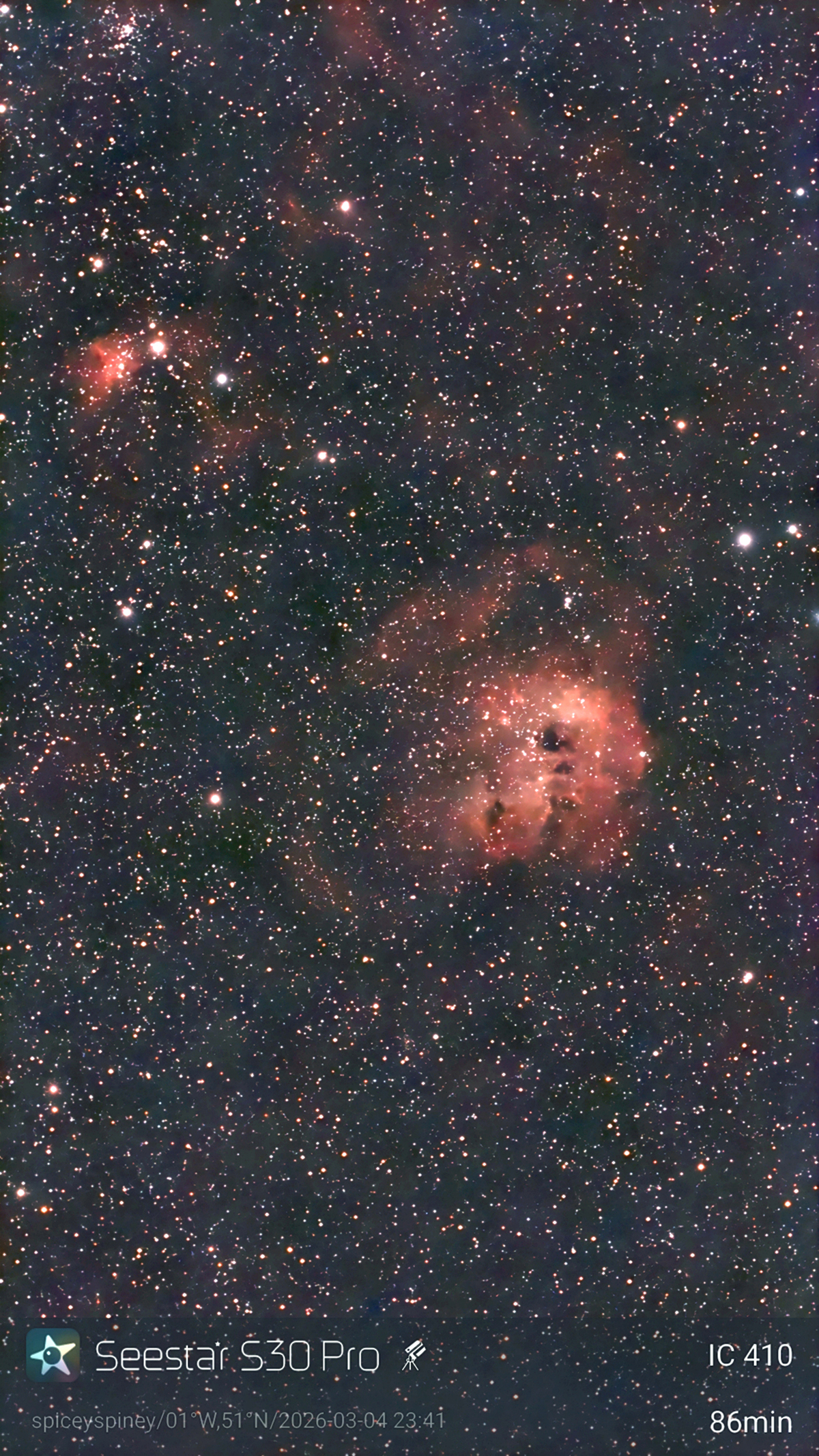
How the images looked
Although the S30 Pro widefield camera sensor is capable of capturing at 48MP, in low-light conditions this chip is binned to 12MP and further cropped by the Seestar firmware to 8.3MP.
Even so, star-trail images showed excellent clarity and star colour. The Milky Way was very low at the time of testing, but what we did capture looked very promising for the summer.
For the Go-To to work accurately, the S30 Pro needs your exact location.
If you share your images with the Seestar community in-app, the default setting shows your exact imaging location, so if sharing pictures taken from home, remember to drag the pin away from your address to a nearby public area.
A complete beginner would be able to get the S30 Pro imaging within minutes using altaz mode.
More experienced astrophotographers will enjoy the new widefield features, the improved image clarity, better colour rendering and the reduced noise for imaging deep-sky objects.
The S30 Pro also supports ASCOM, allowing connection to third-party astrophotography software such as NINA.
Of the 128GB internal storage, 100GB is available for saving data – that’s plenty of space for hours of imaging fun.
Quad optics for deep sky
The S30 Pro’s telescope is a 30mm-aperture quadruplet refractor with a four-element apochromatic lens made with extra-low-dispersion glass.
It has a focal length of 160mm and a focal ratio of f/5.3 which, coupled with the IMX585 sensor, is excellent for photographing deep-sky objects.
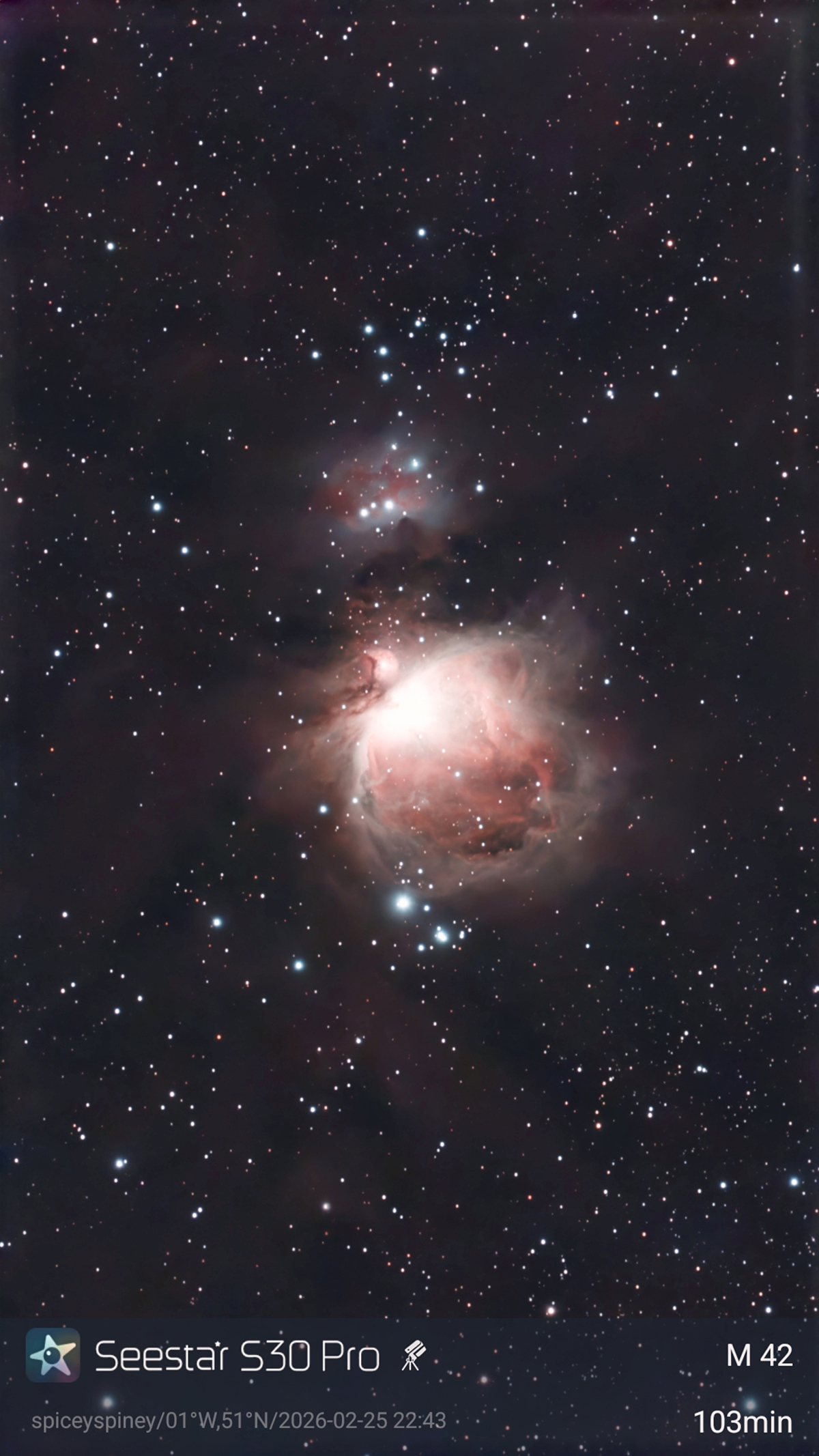
We imaged 12 clusters, 15 nebulae and nine galaxies from a Bortle 4 location.
The stars were well resolved, with natural colours and great clarity, showing impressive detail within a short imaging time.
The telephoto lens provides a 4.6° field of view, which is great for large nebulae and galaxies, but the resolution is such an improvement that cropping images of smaller deep-sky objects gives better results than images taken at the same time with the S30.
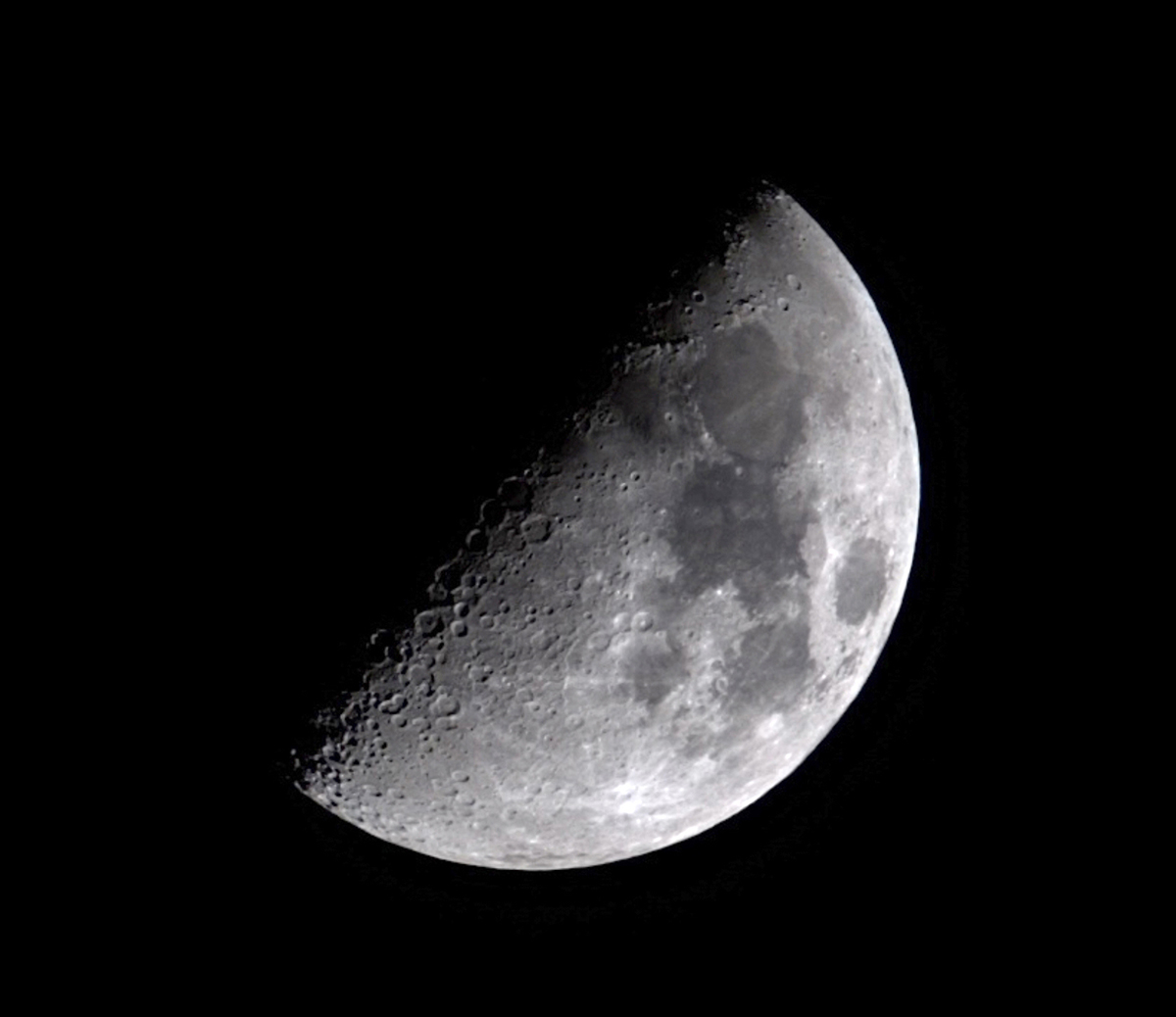
The Moon and Sun (with the solar filter in place) are small with this field of view, but you can do a live 2x or 4x crop to digitally zoom in.
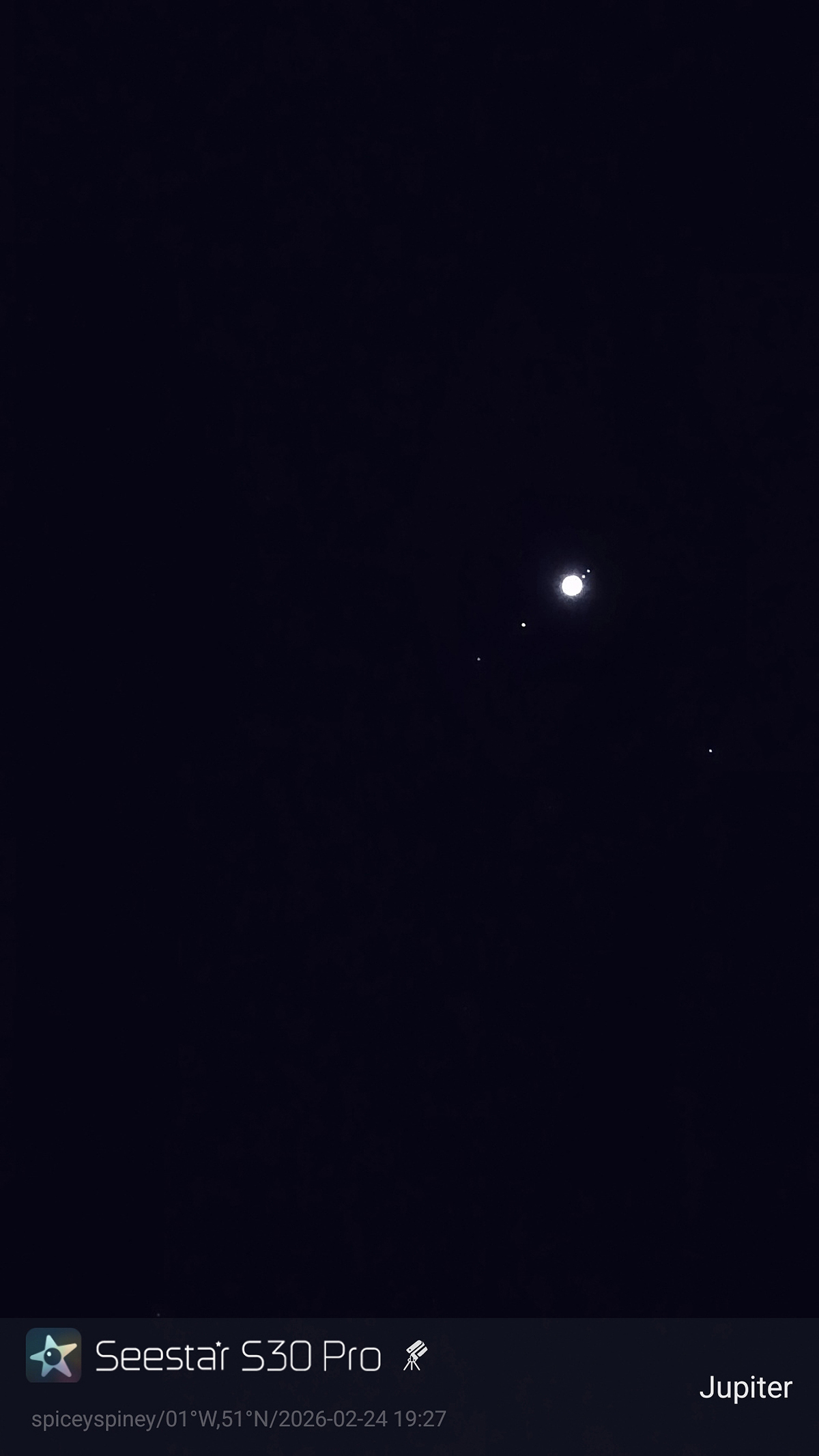
Planets are too small to show any detail, but we were able to capture Jupiter and its Galilean moons.
5 best features
Widefield camera
The Sony IMX586 sensor (running at 8.3MP) offers 4x greater resolution and a 2.7x larger field of view than the S30. The 63° field of view can automatically capture star trails or the Milky Way with no vignetting. It can also create an 84° Milky Way panorama with a sharp foreground in one tap.
Built-in filters
The built-in UV/IR cut filter removes infrared light, keeping star colours true. The light-pollution filter is optimised for oxygen-III and hydrogen-alpha, which cuts out moonlight and increases nebulae detail. The appropriate filter is selected automatically after choosing a target. The dark field filter suppresses some of the noise of long exposures.
Portability
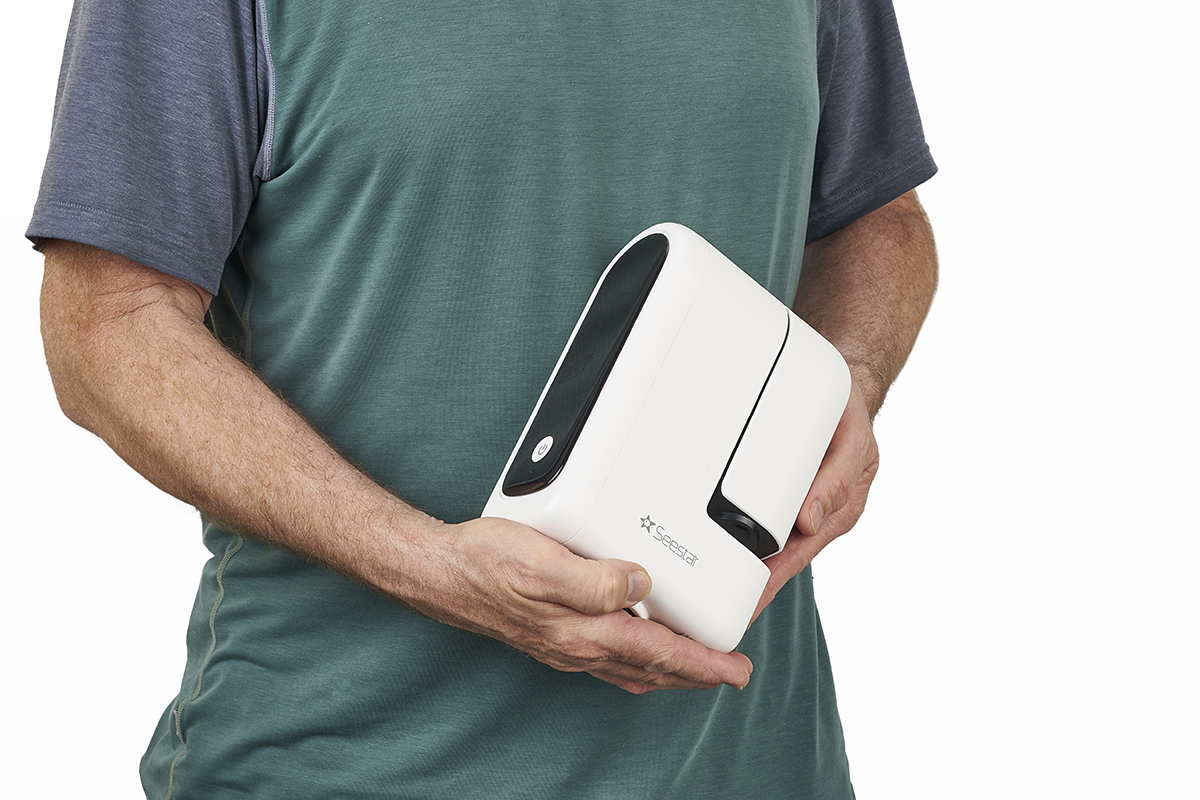
Measuring 210mm x 140mm x 80mm and weighing only 1.65kg, the S30 Pro is very portable and easy to transport in the provided carry case, allowing for easy imaging on the go. This case doesn’t have a hard shell like the S30’s, but it is well-padded and has a shoulder strap.
Dew heater
The S30 Pro has a built-in dew heater that regulates the temperature of the lens to prevent the formation of condensation. Simply switch on the dew control in the app and it will adapt to changing temperatures and humidity levels to ensure your lens stays clear all night long.
Telephoto camera sensor
The Sony IMX585 8MP camera sensor offers 4x greater resolution and this larger chip has a field of view of 4.6° – much larger than the S30 – so large clusters, nebulae and galaxies can be imaged without creating mosaics. The stars resolved nicely across the whole sensor with minimal vignetting.
Key specs
- Price: £649
- Optics: Quadruplet apo refractor
- Aperture: 30mm (tele); 3.4mm (wide)
- Focal length: 160mm, f/5.3 (tele); 6mm, f/1.75 (wide)
- Sensors: Sony IMX585 (tele); Sony IMX586 (wide)
- Resolution: 2,160 x 3,840
- Mount: Altaz/equatorial
- Storage: 128GB
- Power: 6,000mAh battery, USB-C DC
- Connectivity: Wi-Fi, NFC, Bluetooth, USB-C
- App control: Seestar app
- Extras: Carry case, USB-C cable, solar filter, tripod
- Weight: 1.65kg
- Supplier: First Light Optics
- www.firstlightoptics.com