There are hundreds of moons in our patch of space. Some are tiny, some huge; some neatly spherical, some potato-shaped.
Some harbour hidden oceans, some crackle with static electricity, and others shoot out lava plumes so immense that they’re visible from Earth.
More space oddities
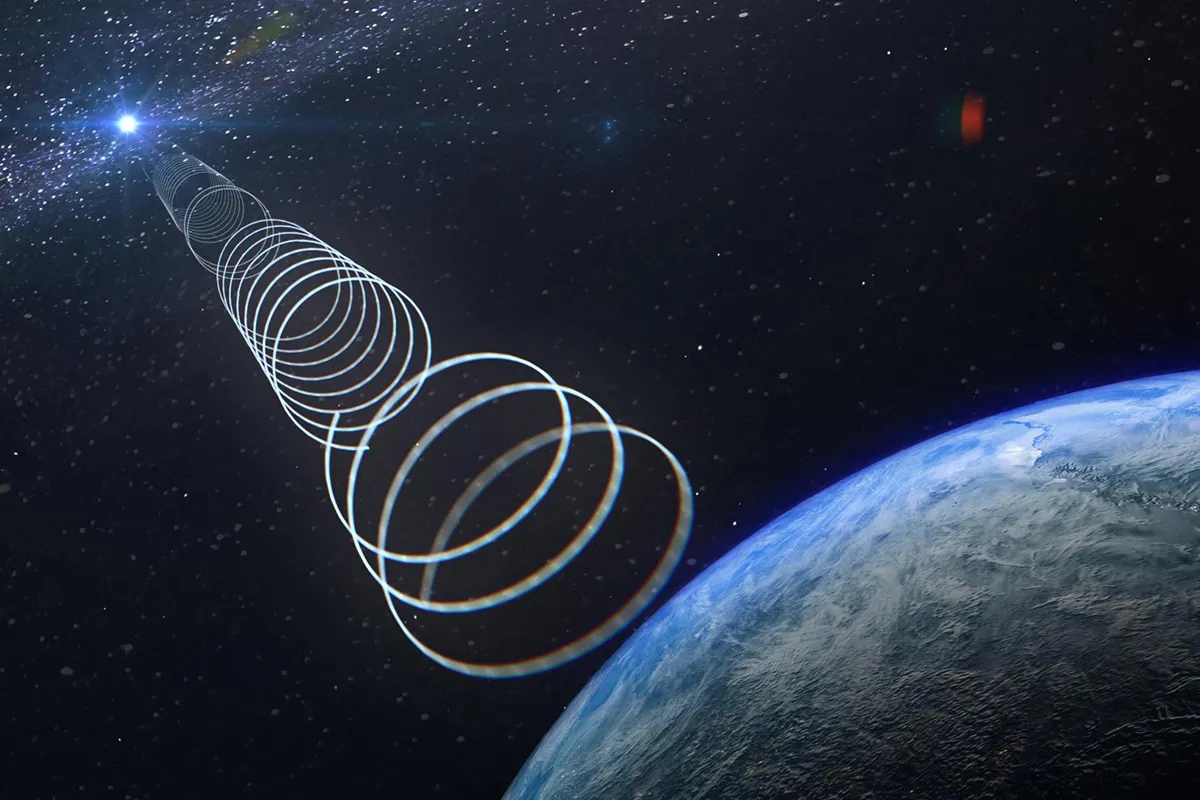
Some tumble around chaotically, some orbit the ‘wrong’ way; some are thought to have formed where they are today, while others were captured long ago from more distant parts of the cosmos.
Only two planets in the Solar System don’t have moons, Mercury and Venus, and despite their incredible diversity, a few of these moons stand out from the rest. Here’s the best of the bunch.
A world of two halves: Iapetus
- Orbits: Saturn
- Total moons orbiting Saturn: 274
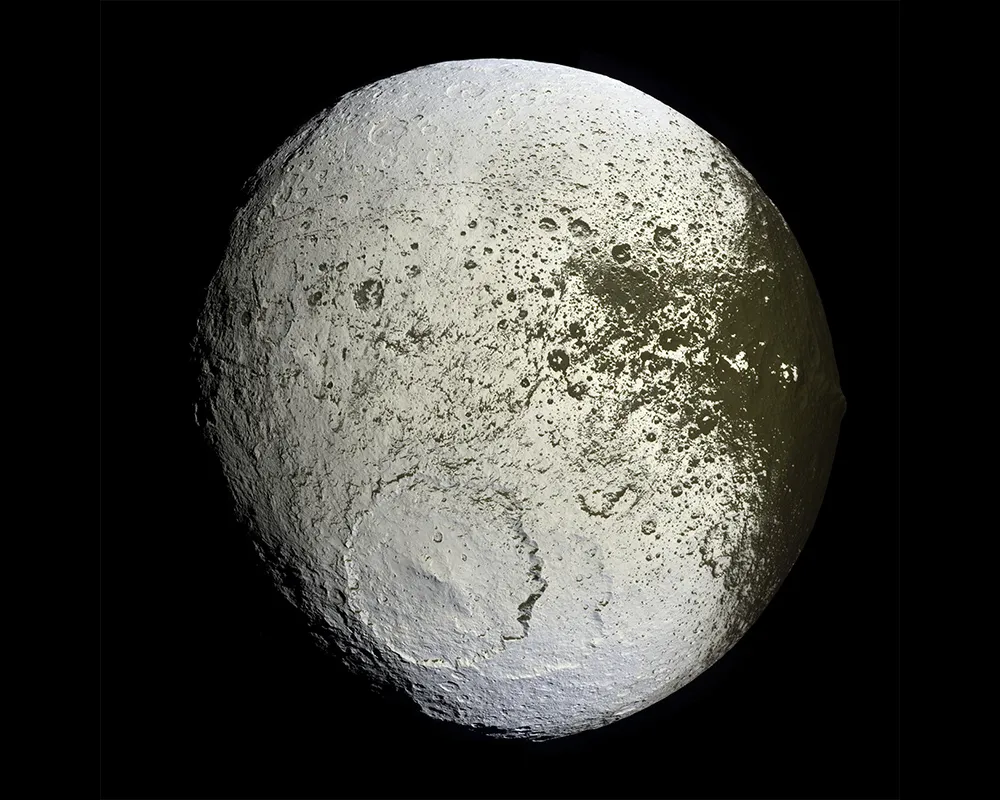
Pretty much all moons have some kind of colour differences across their surface, but Iapetus is extreme.
It’s a world of two halves: one half is light, while the other is startlingly dark. We know the two-toned moon is made mostly of ice, which accounts for the pale side.
The dark side is thinly coated in iron-rich material – perhaps swept up from another of Saturn’s moons, distributed by ice volcanoes, or made dark due to ongoing heating processes driven by the Sun.
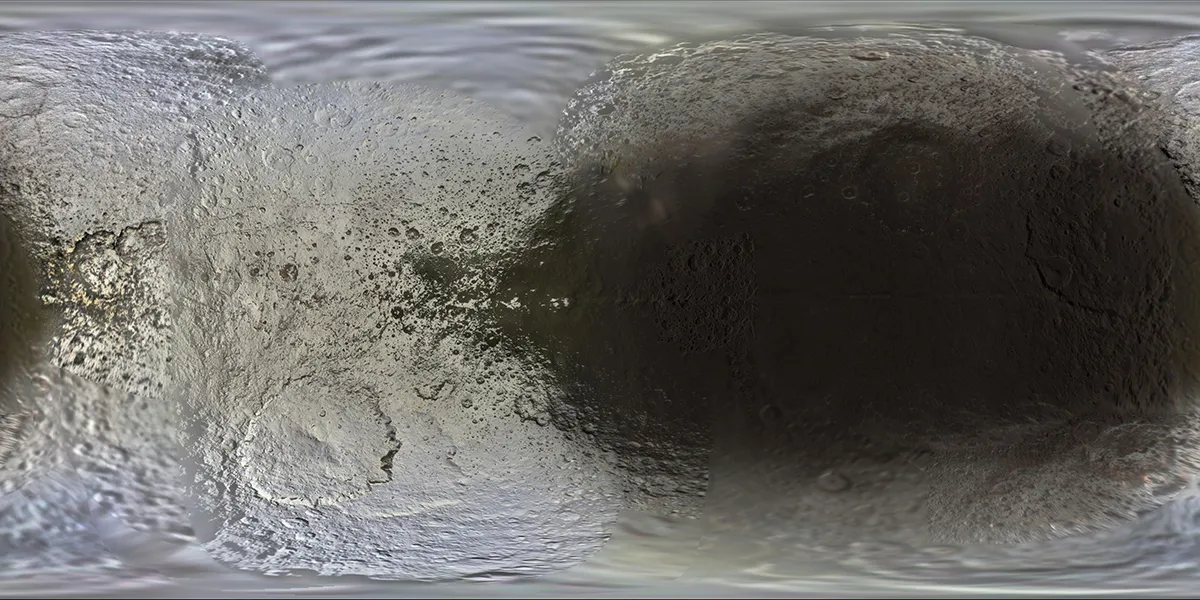
Iapetus is also peppered with craters, with the largest one measuring some 800km (500 miles) across.
It has a strange ridge that wraps around its centre, giving it the shape of an unshelled walnut.
This ridge is tens of kilometres wide and up to 20km (12 miles) high; it breaks up in places, giving way to mountains, and its formation remains a mystery.
It could have formed back when Iapetus whirled round far faster than it does today, built up as a long-gone ring system collapsed onto the moon, or may have emerged due to some kind of internal processes taking place within Iapetus itself.
Saturn’s space sponge: Hyperion

- Orbits: Saturn
- Total moons orbiting Saturn: 274
Just one look at Hyperion and you’ll realise it’s one of the weirdest worlds in the Solar System.
Hyperion resembles a loofah or sponge floating in the inky blackness of the deep sea. Its sponginess is so extreme that up to 48% of the moon is actually empty space.
When rocks hurtle inwards to collide with Hyperion, it’s so brittle that they smash deep into the moon, making it look even more spongy and porous.

Hyperion’s sponginess was seen in amazing detail during a 2005 flyby by NASA’s Cassini spacecraft – a visit that also saw Cassini hit by a colossal 200-volt electric shock, a super-charged electron beam from the moon.
It turns out that Cassini was magnetically connected to Hyperion for a brief moment, and so became the unwilling recipient of a burst of static electricity.
Hyperion doesn’t just look weird – it behaves weirdly, too.
It tumbles chaotically through space, swirling round erratically and making it almost impossible for us to figure out any predictable pattern of motion.
This almost random way of moving is likely caused by dynamic interactions between the orbits of Hyperion and Saturn’s largest moon, Titan.
We still don't really know why Hyperion is so bizarre. It’s possible that the moon is a chunk of rock – either a whole chunk, or a reassembled jigsaw of debris – left over from a larger body that broke into pieces.
It could also be an ancient body captured from the distant reaches of the Solar System.
Covered in cryolava: Triton
- Orbits: Neptune
- Total moons orbiting Neptune: 16
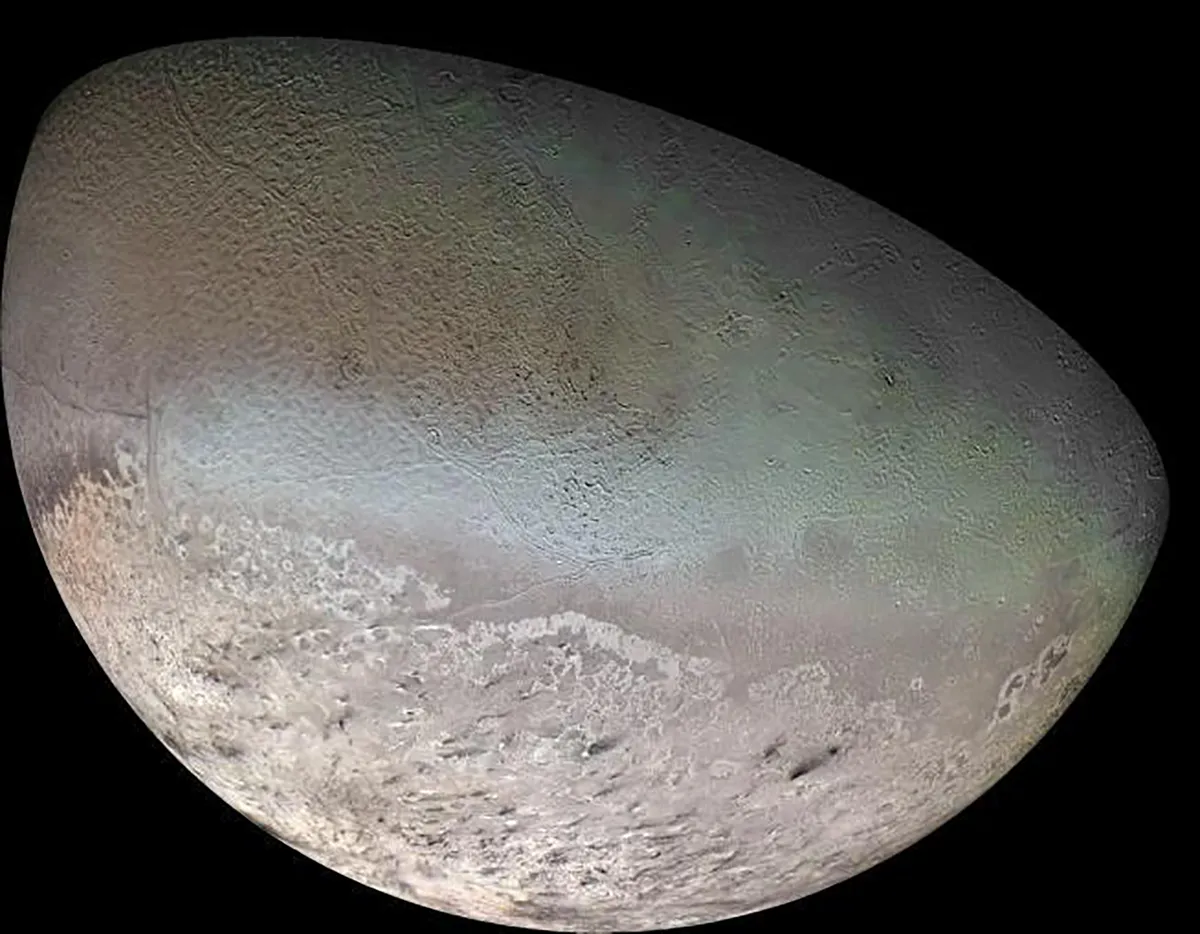
Neptune’s biggest moon, Triton, is one of the coldest worlds in the Solar System. It’s so far from the Sun that temperatures drop to around –240ºC (–400ºF).
It’s also a very active world, one of the most active in our system, with this combination of activity and frostiness making it truly unique.
We see ice geysers and cryovolcanoes spitting methane, dust and liquid nitrogen up into Triton’s air – air that’s so cold that these plumes promptly freeze before raining back down to the surface as snow.
Large swathes of Triton’s crust look to have been formed and continually covered over by volcanism, with colossal ‘cryolava’ lakes of ammonia-rich ice covering areas the size of Spain.
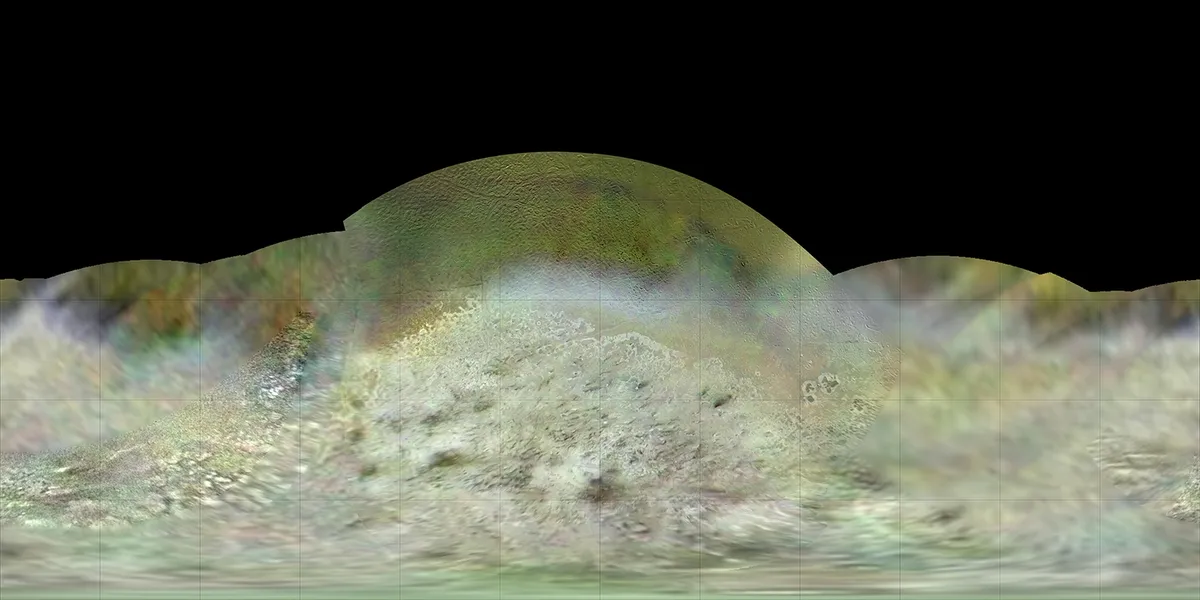
It’s also the only large Solar System moon to show something known as ‘retrograde rotation’: It loops around Neptune in the opposite direction to the planet’s spin.
As a result, Neptune’s strong gravity is continually tugging at and slowing down Triton, causing it to ever-so-gradually fall towards its parent planet.
At some point in the future – still many millions of years away – it will come close enough to be ripped apart.
We think Triton may have once been a dwarf planet like Pluto, orbiting further out in space, before Neptune’s strong gravity swept it up and claimed it as a moon.
A tortured inferno: Io
- Orbits: Jupiter
- Total moons orbiting Jupiter: 97
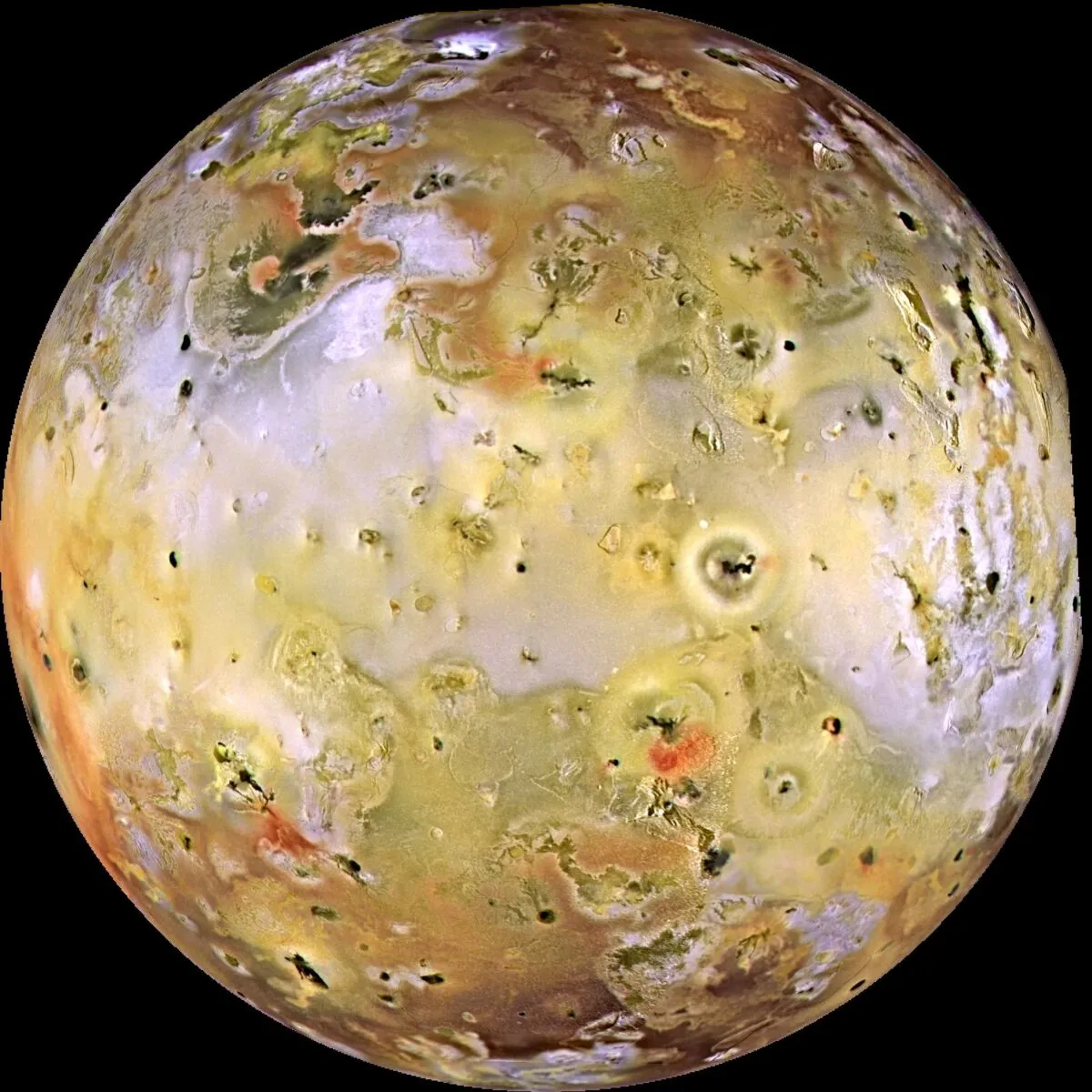
Io is a fire-world. It hosts hundreds of volcanoes, which pour lava out across Io’s surface and keep it looking freshly smooth.
Some of Io’s volcanoes fire lava up into the air for dozens or even hundreds of kilometres, and are so explosive that they can be seen by large telescopes on Earth.

The turbulent world is locked in a tug-of-war between Jupiter and two of its largest moons, Europa and Ganymede, with all three pulling and squeezing Io in different directions.
This flexing causes Io’s interior to heat up and melt, giving rise to the moon’s intense volcanism. Beneath its surface, Io has numerous chambers of roiling magma, each feeding a volcano above.
Io has also been nicknamed a “mouldy pizza” due to the mottled blacks, yellows, and oranges seen across its surface (an off-putting palette created by sulphurous material at different temperatures).
A mix-and-match mosaic: Miranda
- Orbits: Uranus
- Total moons orbiting Uranus: 29
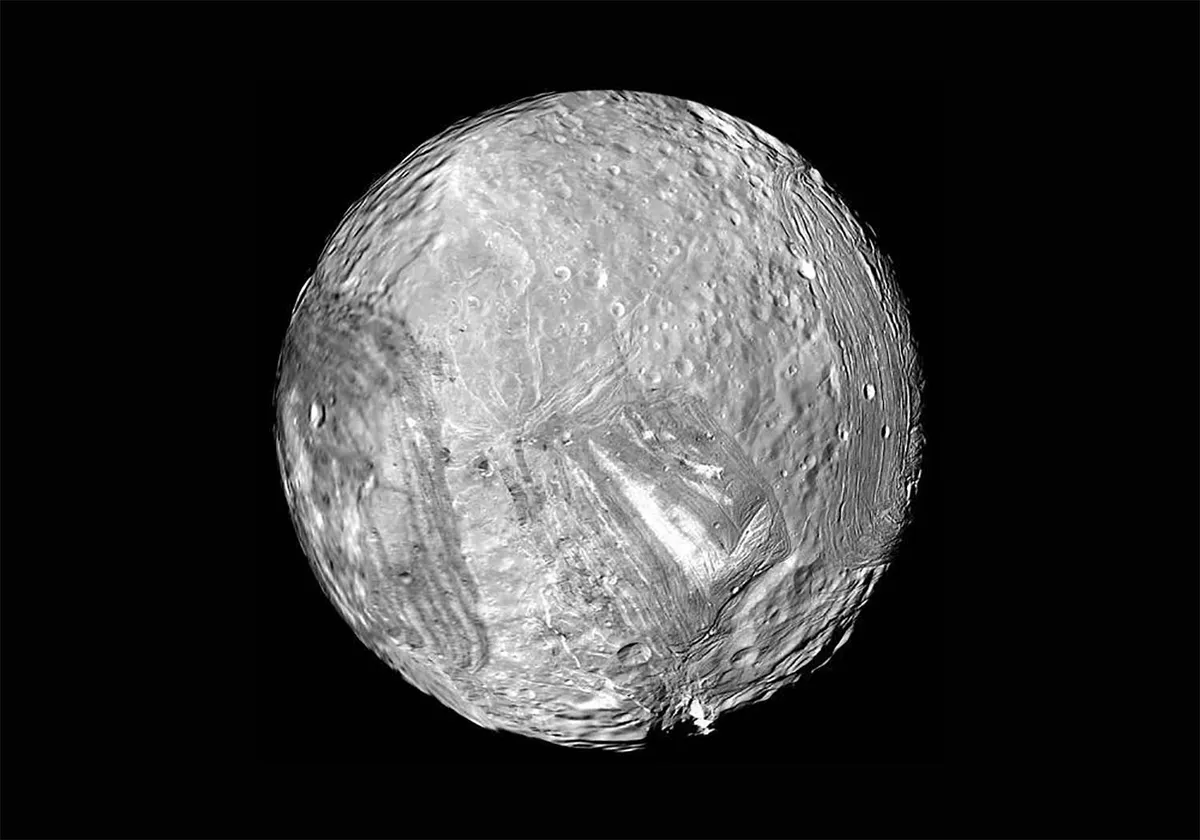
Moons are rarely perfectly neat and smooth, but Miranda is odd-looking even by these standards.
Its surface is a shattered jigsaw of textures and terrains, with grooves, cliffs, valleys, faults and canyons all bumping up against one another to form a strange patchwork.
These features are grand in scale. One of Miranda’s cliffs, Verona Rupes, is up to 20km (12 miles) high – some 10 times the depth of the Grand Canyon on Earth – making it the highest cliff not only on Miranda but in the entire Solar System.

We think that Miranda was either broken apart by a past collision and then haphazardly reformed; or that rocks continually head down to hit the surface of the moon, causing its inner layers to partially melt, seep upwards and refreeze, and maintaining Miranda’s mosaic-like appearance.
Our planet’s best friend: The Moon

- Orbits: Earth
- Total moons orbiting Earth: 1
Our Moon, the most familiar of night-sky companions, likely doesn’t seem odd at all – but it is.
For one, most moons of the Solar System are relatively small compared to their parent planet, but that’s not the case for the Moon.
It’s larger and more massive than all the dwarf planets we know of – about one-quarter as big as the Earth, making it the biggest moon relative to its planet in the Solar System.

Secondly, although we can’t see from Earth, the Moon is actually shaped more like a lemon than a sphere, with slightly flattened poles and an elongated bulge at its equator. This is likely due to its relationship with Earth early on in its formation.
The Moon is thought to have formed following a giant collision between the still-forming Earth and a Mars-sized planet around four billion years ago, which threw rocky debris – the ‘stuff’ now making up the Moon – out into space.
As the Moon was pulling itself together as a lump of molten rock, we think that Earth stretched and tugged at the malleable adolescent Moon, flexing its crust and pinching it into its unusual shape.
Mimas, the Death Star moon

Saturn’s small moon Mimas is eerily similar to the Death Star from Star Wars, with a large indent – the Herschel crater, which measures roughly 140km (87 miles) across – marking the place of the space station’s deadly super-laser.
What are your favourite moons of the Solar System? Let us know by emailing contactus@skyatnightmagazine.com