For more than two decades, astronauts aboard the International Space Station (ISS) have enjoyed one of the most extraordinary views imaginable – a constantly changing panorama of Earth and space from an average altitude of 400km (250 miles), roughly 4.5 times the height of our planet’s tallest mountain.
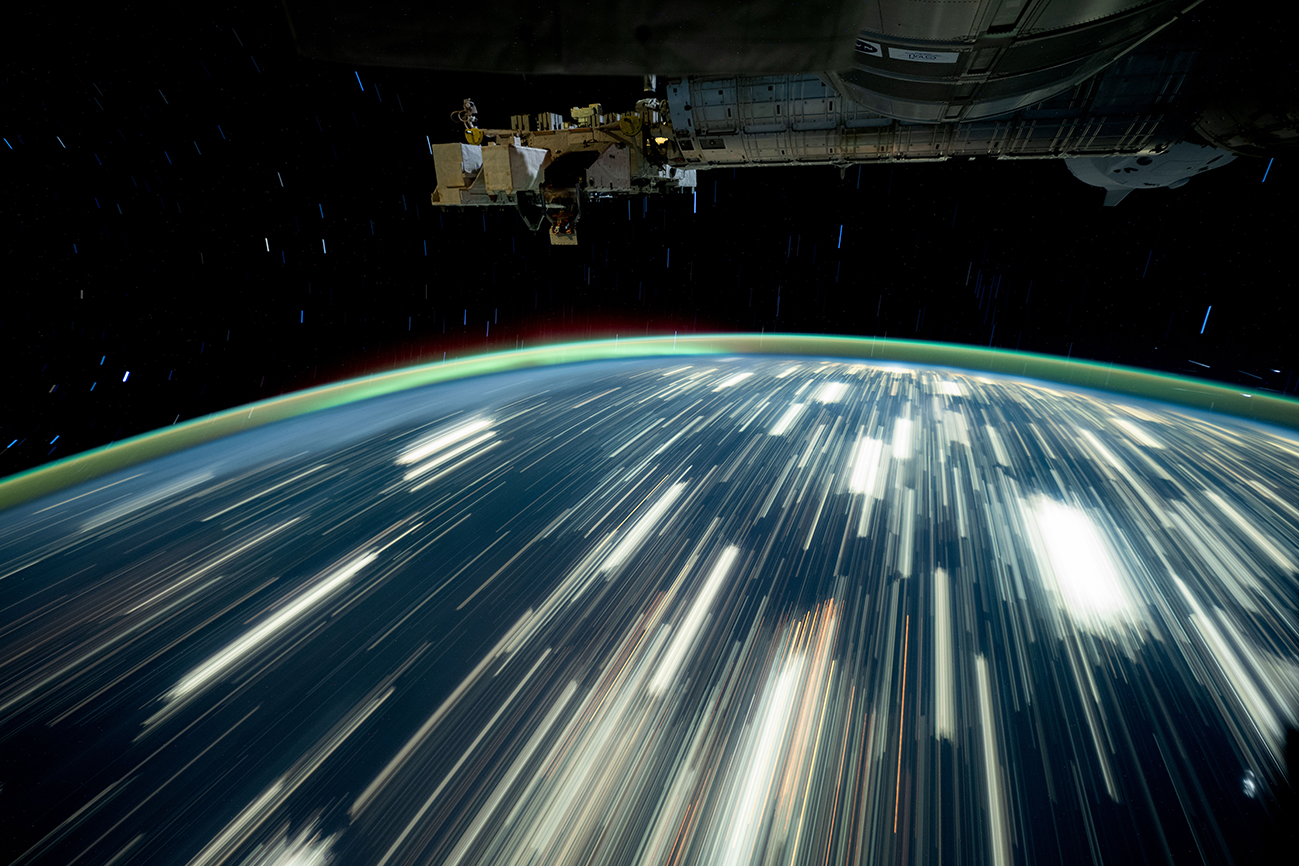
Orbiting at around 28,000km/h (17,400mph), the station circles Earth once every 90 minutes and completes just under 16 orbits in 24 hours, giving its crews front-row seats to glowing aurorae, explosive thunderstorms, sprawling city lights and the thin blue line of Earth’s atmosphere.
Here are 17 of the most amazing photographs ever taken from the ISS.
A room with a view
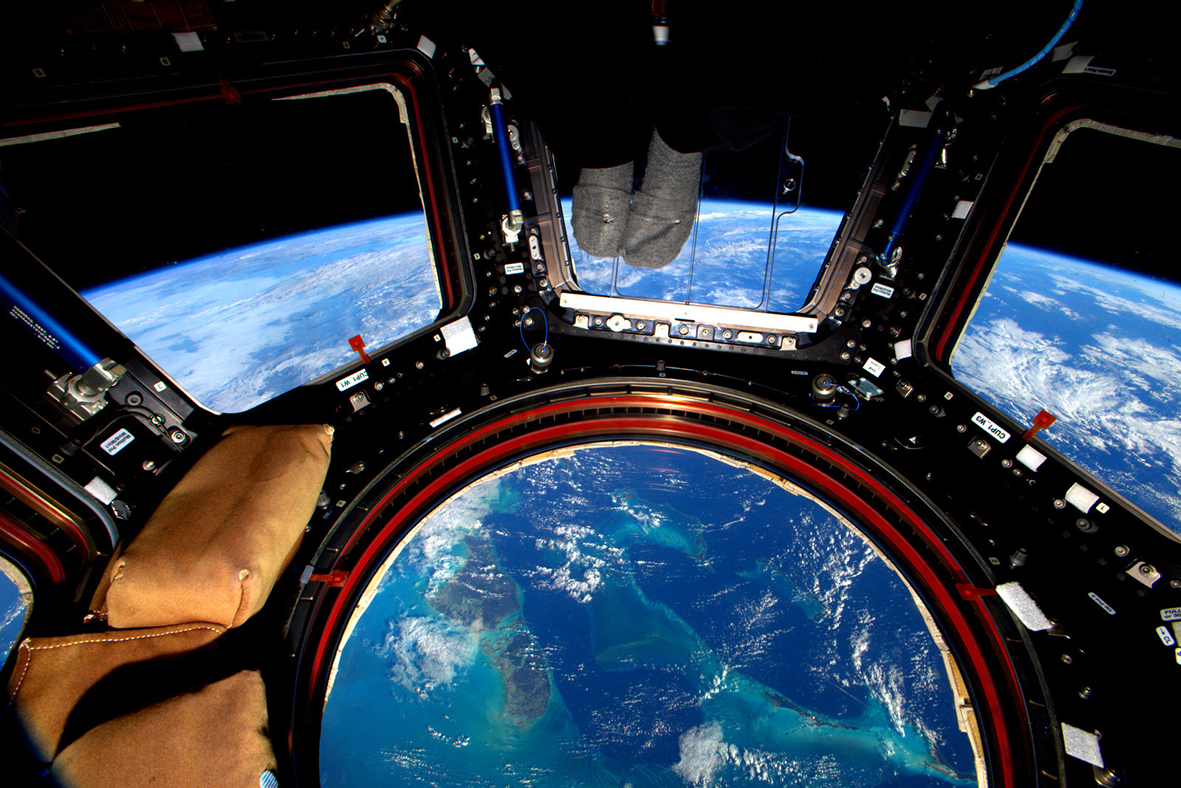
You might think you have a great view from your bedroom or lounge window, but astronauts on board the ISS have a view that is, literally, out of this world.
On December 26th, 2015, astronaut Scott Kelly, floating in the cupola – which is essentially the ISS’s huge bay window – looked down on the beautiful Caribbean islands of the Bahamas from an altitude of more than 370km (230 miles). He posted this photo on social media with the caption, “Glass bottom spaceship over The Bahamas!”
A sprite from space
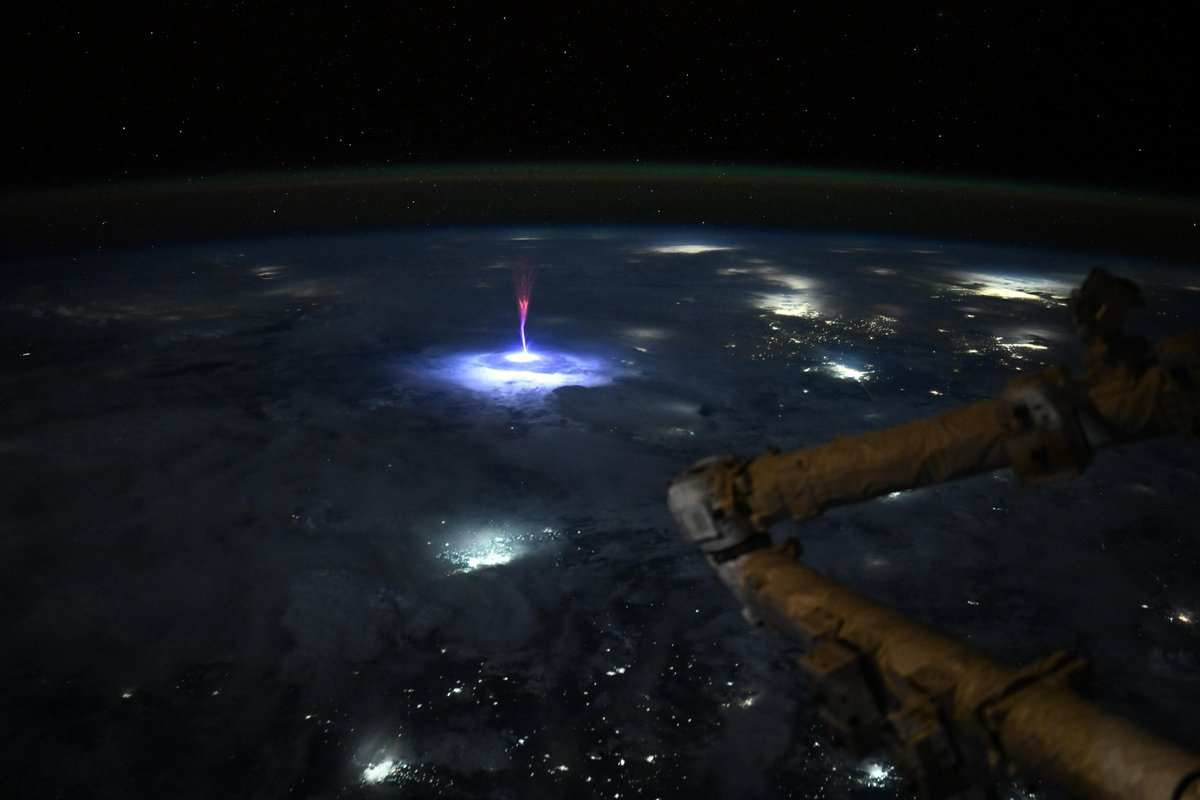
On July 3rd, 2025, as the ISS flew over Mexico and the United States, NASA astronaut Nichole ‘Vapor’ Ayers photographed a spectacular and rare event – a sprite. Sprites, also known as TLEs or transient luminous events, are bursts of light that occur above the clouds, triggered by intense electrical activity in thunderstorms below.
Although sprites can be imaged from the ground, from their home in space high above the clouds astronauts on the ISS have a much better view. Meteorologists and other scientists can use their images to study TLEs and learn more about how they form.
More space photography
The Richat Structure
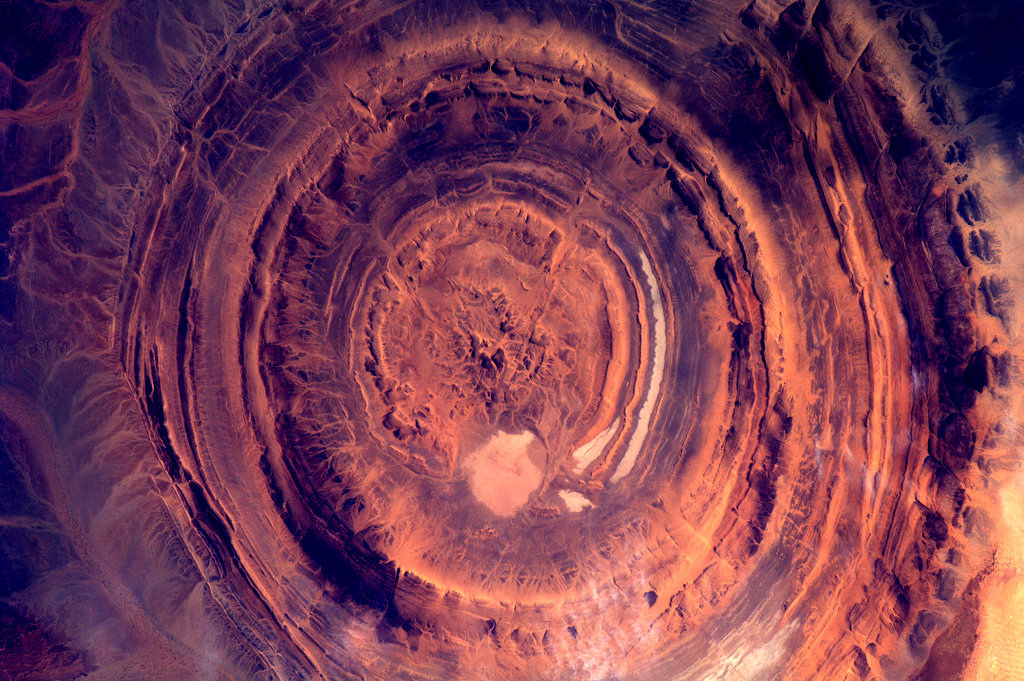
Although this looks like a huge impact crater that was blasted out of the Sahara Desert millennia ago, the Richat Structure is in fact a dome of eroded volcanic rock. Situated in Mauritania in northwest Africa, it measures 40km (20 miles) across and was created when volcanic igneous rock pushed up on overlying sedimentary layers from below.
Over time it has eroded away, leaving the ring structure we see today. This photo was taken by ESA astronaut André Kuipers, who spent six months on board the ISS from December 2011.
California wildfires
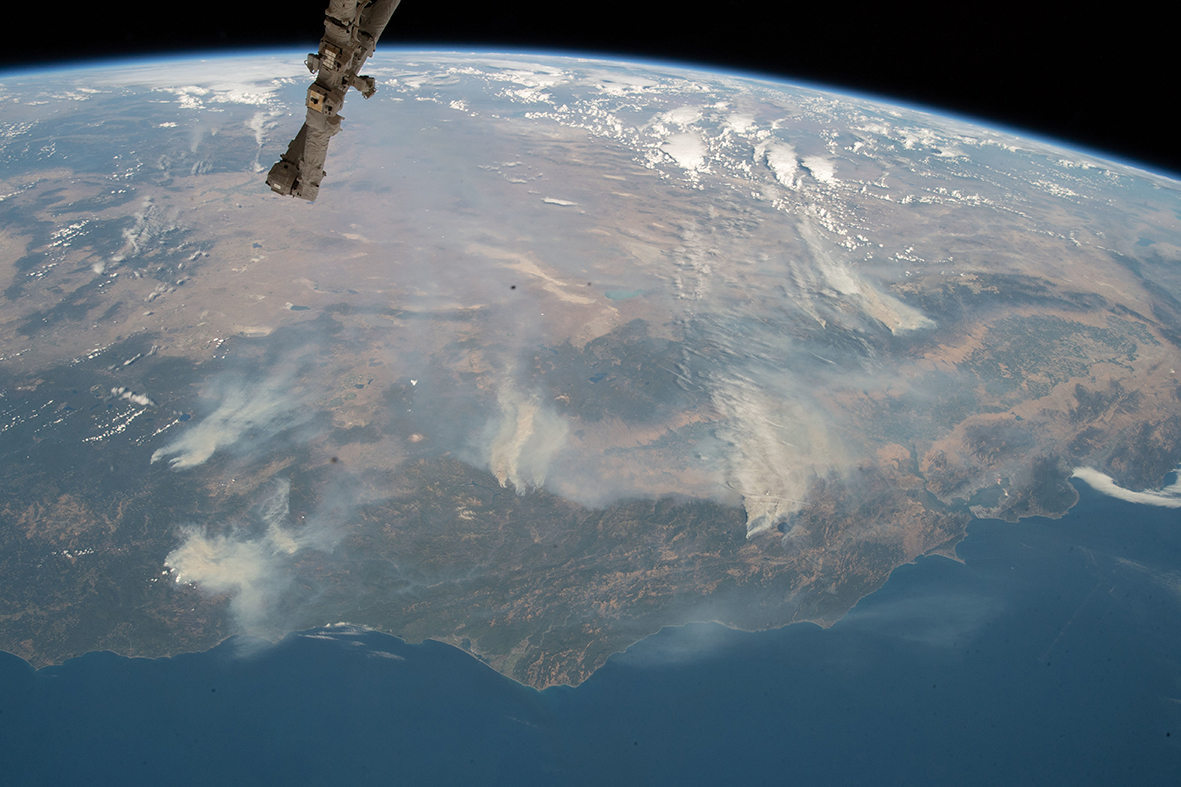
In August 2018 a number of wildfires raged across Northern California. The fires which tore through the Mendocino National Forest were among the most severe, covering almost half a million acres of land.
Fuelled by a combination of dry vegetation, high temperatures and strong winds, the fires sent huge plumes of smoke into the sky – which were clearly visible from the ISS as it passed 405km (252mi) above them.
Lighting strikes from above
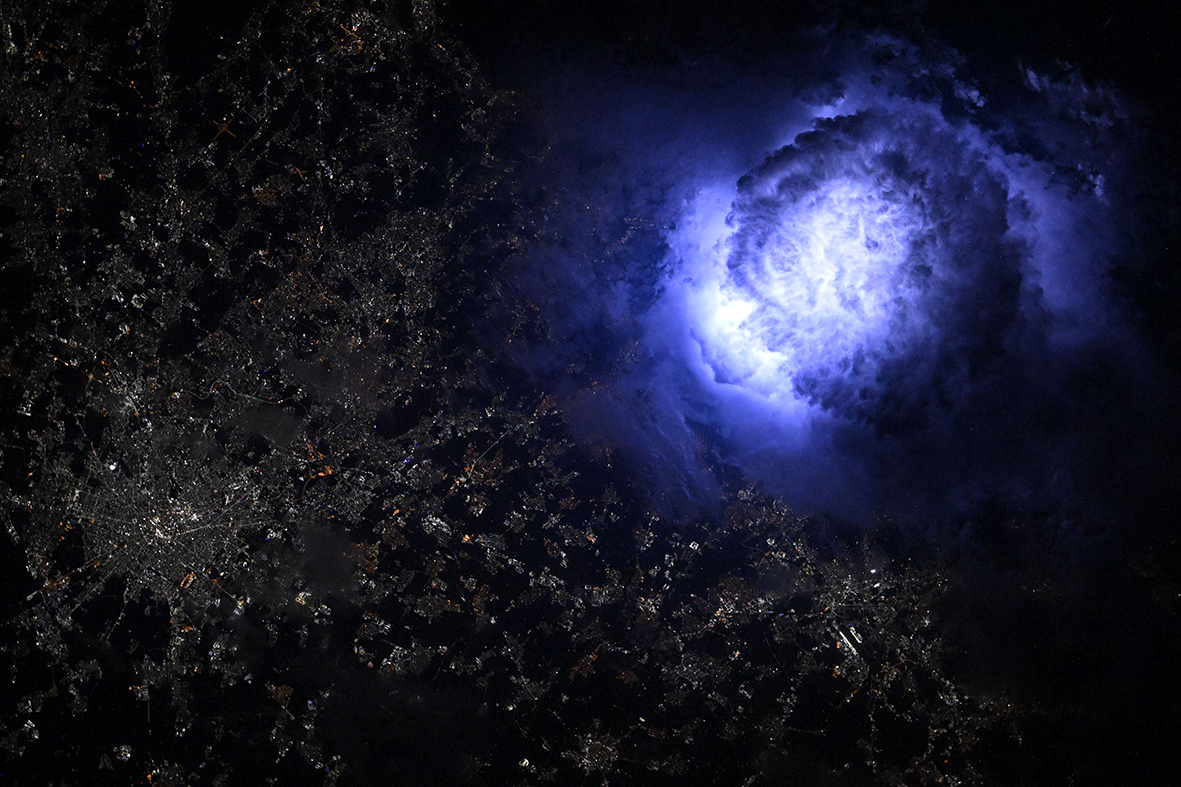
Dedicated satellites take images of Earth 24 hours a day, faithfully recording storms, atmospheric currents and rainfall for meteorologists to use in their weather forecasts, but sometimes it takes a human eye to capture something amazing.
On July 1st, 2025, as the ISS was passing over the city of Milan, NASA astronaut Nichole Ayers captured this beautiful image of lightning illuminating and jumping between storm clouds above the city of Milan.
Hurricane Florence
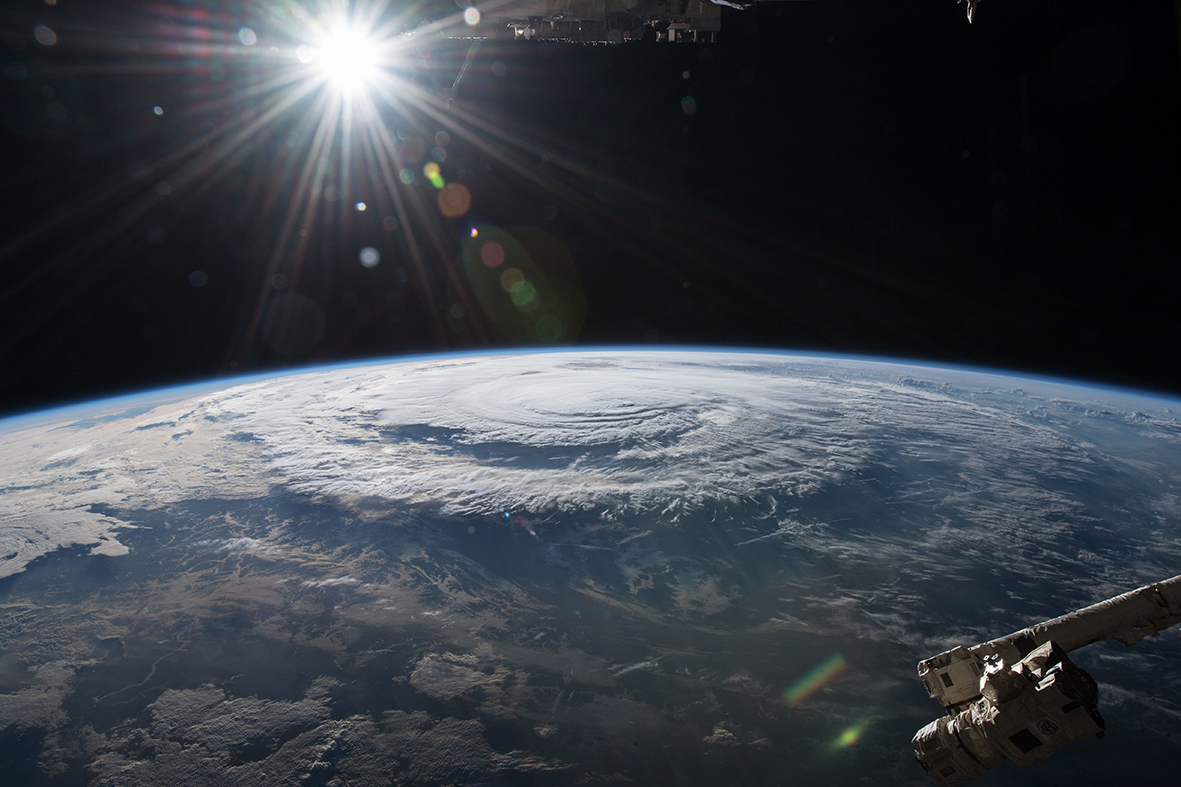
Earth’s weather systems look incredible from Earth orbit, and the most stunning of all are hurricanes.
On September 13th, 2018 Hurricane Florence, a Category 1 storm at the time, was photographed from the ISS as it was making landfall near Wrightsville Beach, North Carolina.
Cloudscape at dawn, Northwest Atlantic
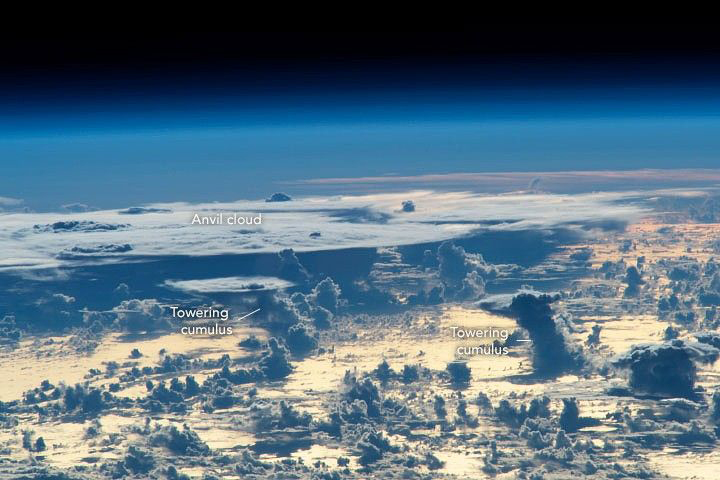
If you enjoy cloud-spotting you’d love the view from the ISS. The astronauts have a grandstand view of these dynamic features in Earth’s turbulent atmosphere. The best views come during dawn or dusk, when the ISS sees clouds near Earth’s limb at an oblique angle.
This dawn image, taken by an External High-Definition Camera (EHDC) mounted on the outside of the station, was taken when the station was over the northwest Atlantic, just off the coast off Nova Scotia. It shows a wide variety of cloud forms, including towering cumulus clouds. Towards the back of the image are some very large thunderstorms, their tops flattened out into the distinctive anvil shapes.
The golden glow of sunrise
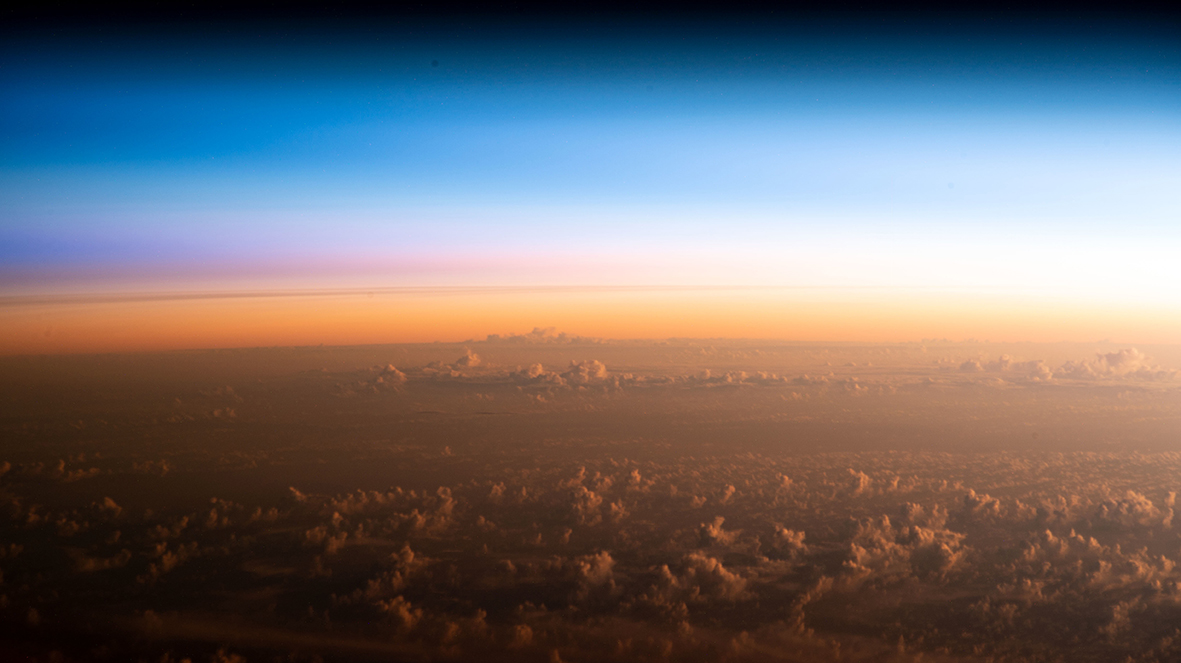
You have to wonder how astronauts onboard the ISS get any work done at all when they are faced with views like this!
Taken on February 10th, 2023, this image shows sunrise above the Pacific Ocean. The clouds are painted soft hues of orange, red and gold by the slanting rays of the rising Sun.
A Dragon arrives
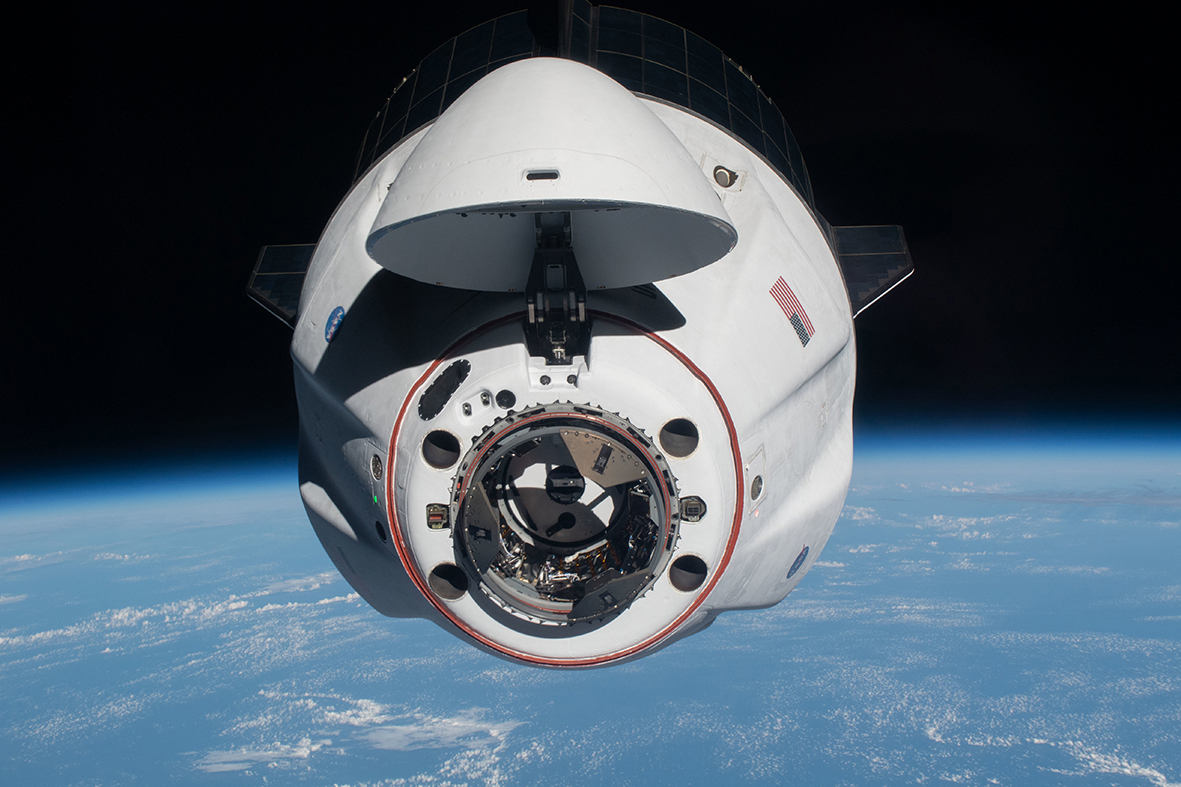
Many sci-fi films and TV series have shown small spacecraft arriving at space stations or orbiting shipyards, but the ISS is now so busy with American and Russian craft coming and going, both crewed and uncrewed, that science fiction has become science fact.
In this lovely image, we see SpaceX’s Crew Dragon Endeavour as it approached the ISS on April 24th, 2024, carrying a crew of four international astronauts, less than 24 hours after launching from the Kennedy Space Center in Florida. The nose cone of the capsule has been raised to expose the docking mechanisms that will attach it to the ISS’s docking port.
Star trails
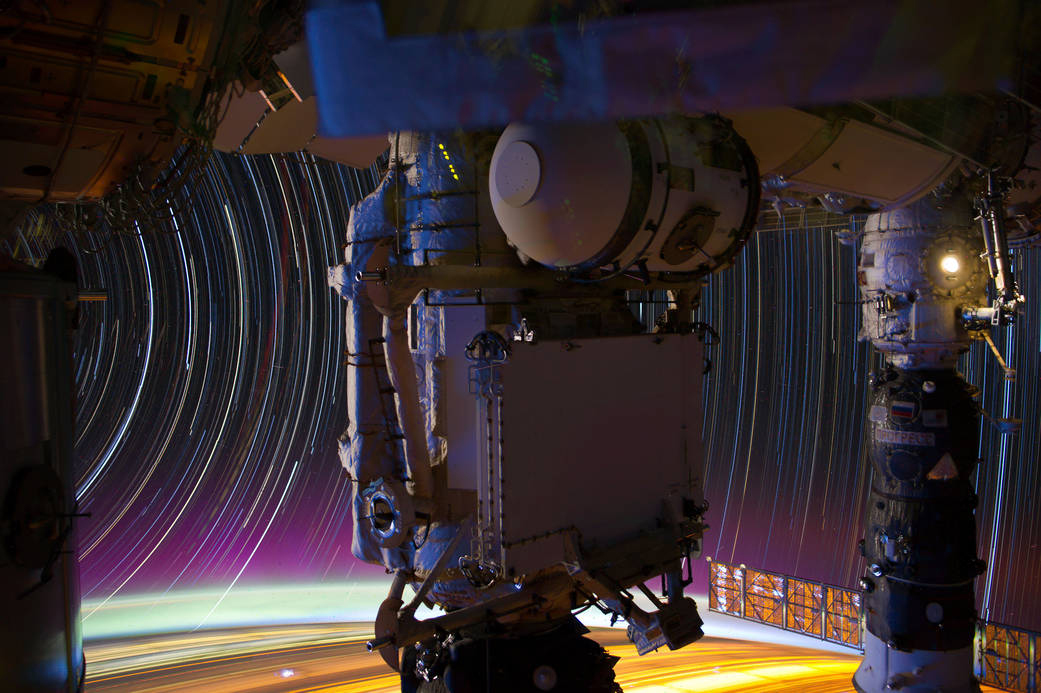
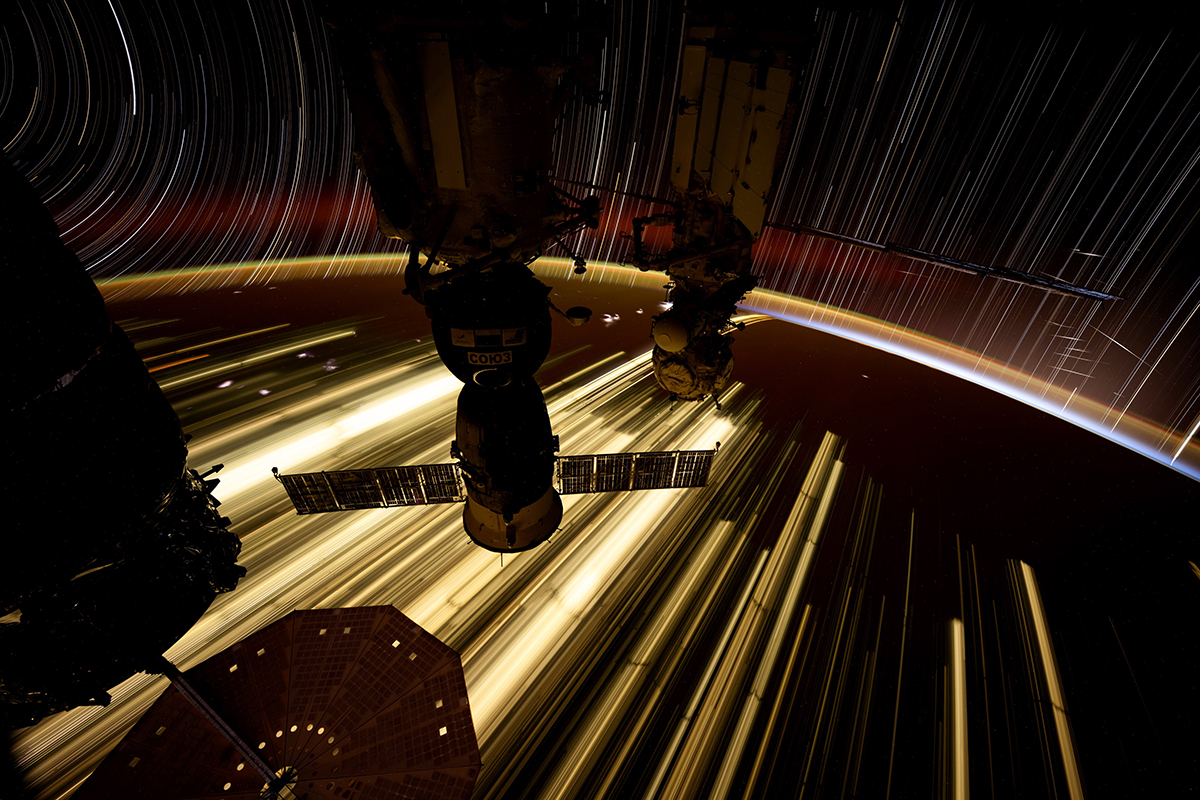
Taking star trail images is a popular pastime for many photographers – and that’s what NASA astronaut and ISS Expedition 31 Flight Engineer Don Pettit did. To capture this beautiful star trail photo, he used image-processing software to stitch together 47 separate 30-second exposures taken by a stationary camera onboard the ISS.
But instead of placing trees, a castle or hills in his foreground, Pettit composed the image with the space station’s Mini-Research Module (MRM1) in the centre of the image and a docked Russian Progress vehicle at Pirs Docking Compartment to the right.
Soyuz rocket launch
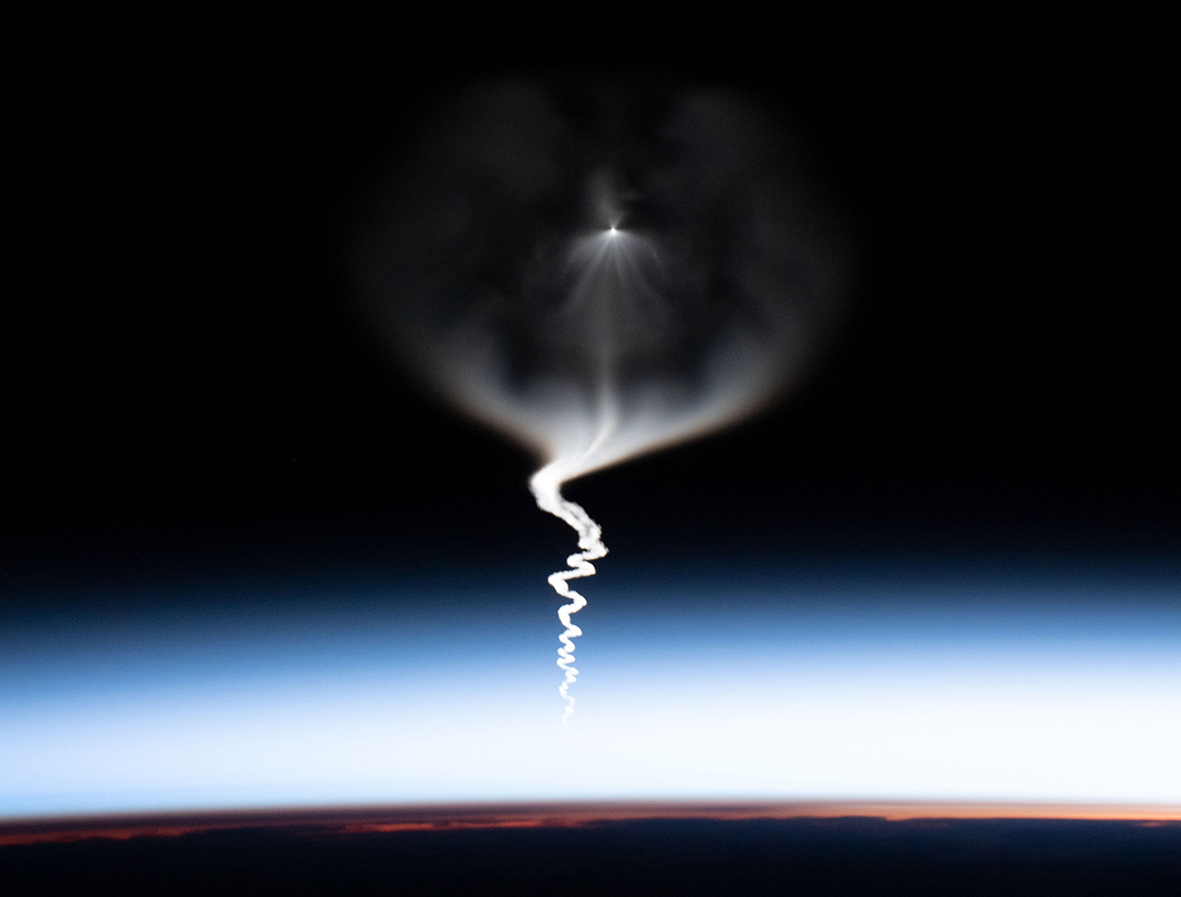
Rocket launches are a spectacular sight from the ground, but occasionally the astronauts on board the ISS have a great view, too.
On September 25th, 2019, Expedition 60’s Flight Engineer Christina Koch – who would go on to fly around the Moon as part of the Artemis II crew – took this spectacular shot of the Soyuz MS-15 crew ship launching from Kazakhstan.
A sky full of stars
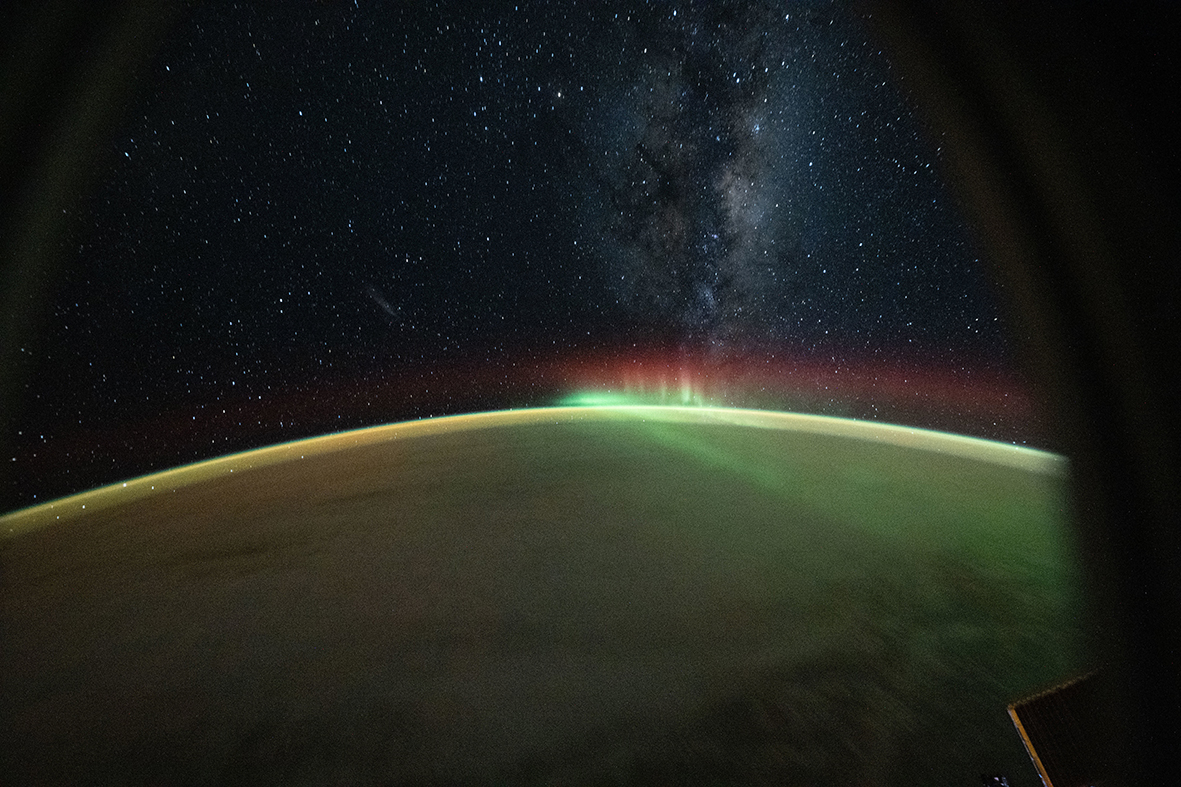
From a dark-sky location, the heart of the Milky Way is a beautiful sight, its millions of stars forming a glowing froth easily visible to the naked eye. A display of the Northern Lights is equally captivating – even more so when they dance and sway.
NASA astronaut Chris Williams was fortunate enough to see and photograph both at the same time when the ISS flew over the Indian Ocean on April 17th, 2026.
The dark shadow of a total solar eclipse
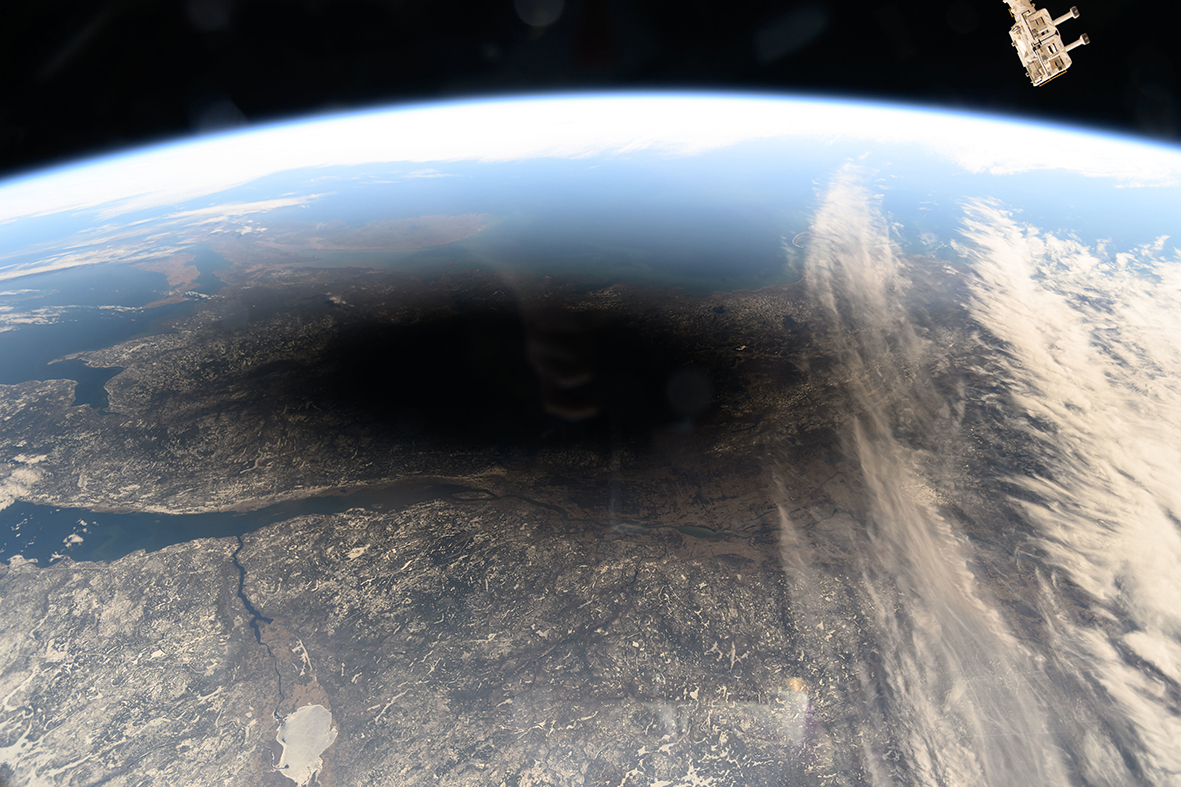
On April 8th, 2024 a total eclipse of the Sun was visible across the United States, and while millions of people down on the ground whooped and cheered in the Moon’s shadow, 420km (260 miles) above them the crew of the ISS were able to see that shadow dramatically cast on Earth.
A Dragon departs
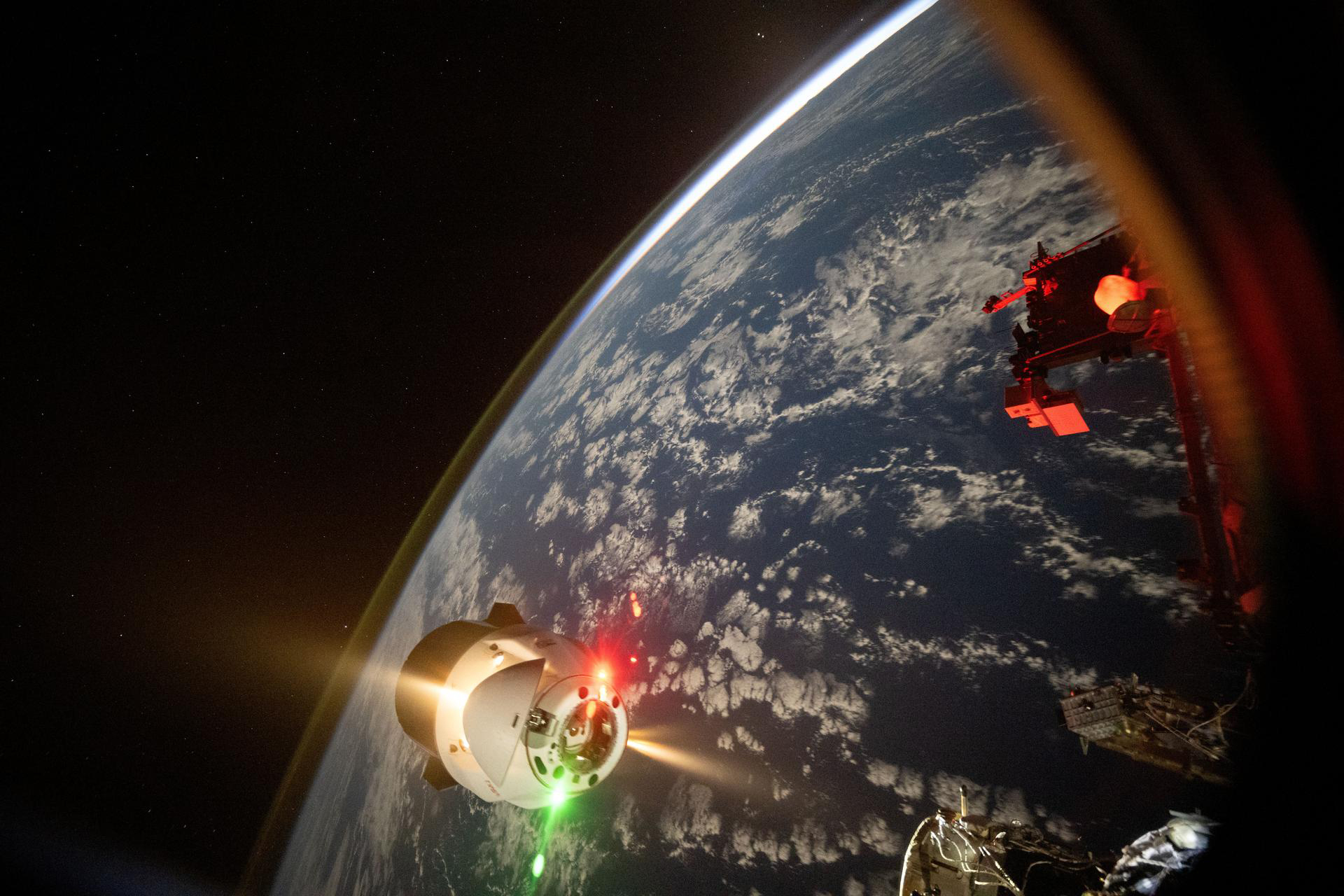
Astronaut and ace photographer Don Pettit filmed another of SpaceX’s fleet of Dragon spacecraft, this time departing from the ISS on December 16th, 2024 as the station was over the Pacific Ocean, west of the island chain of Hawaii.
This frame from his timelapse video shows the cargo spacecraft backing away from its docking port on the Harmony Module, engine thrusters firing and lights blinking in the darkness.
Flying through the aurora
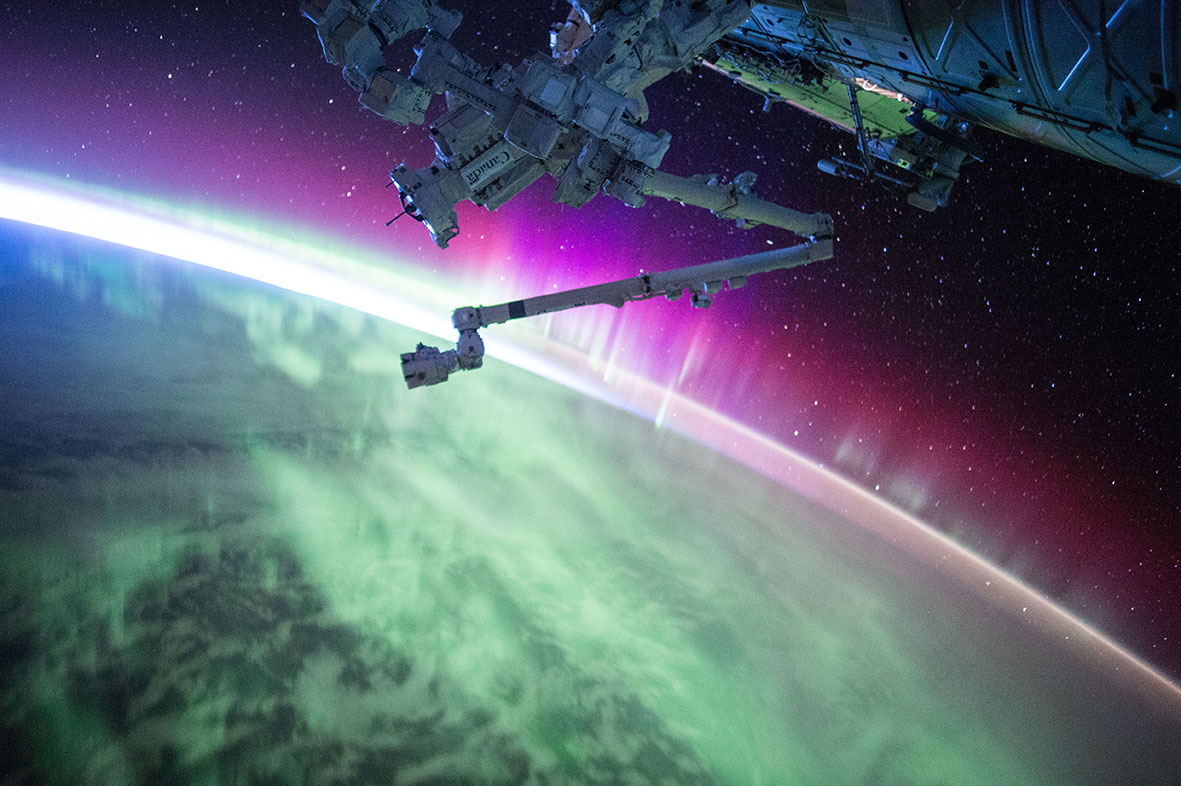
Looking up at a sky ablaze with the Northern Lights, watching the aurora’s ruby red beams and swaying green curtains, is one of the most thrilling experiences one can have.
But as they stare out of their quadruple-pane, 20cm-thick (8in) windows the astronauts onboard the ISS have an even better view – they look down on the Northern Lights, and sometimes even fly through them as they shimmer and dance above our planet.
Out for a walk
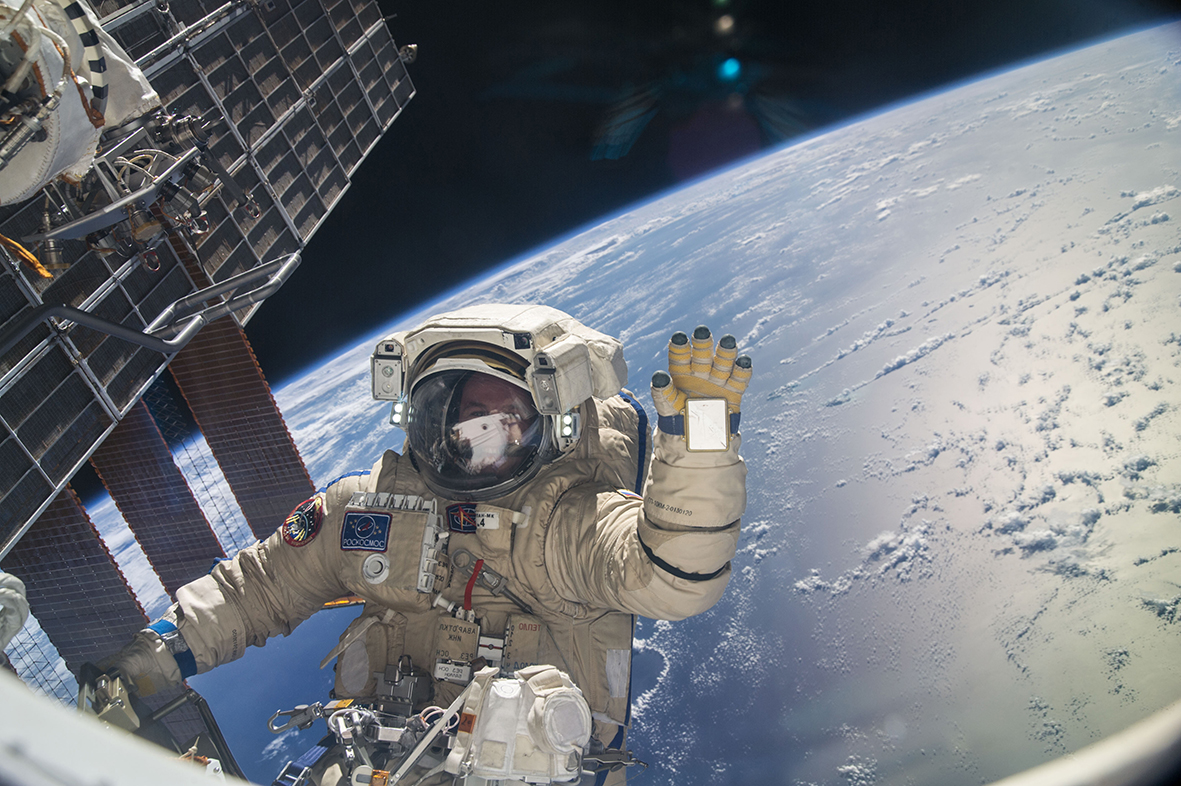
Although astronauts onboard the ISS spend a lot of time photographing Earth, they also have to document and record activities onboard their orbiting outpost – and outside it, too.
On August 22nd, 2013, Russian cosmonaut Sergey Ryazansky took part in a marathon, six-hour spacewalk. As he took a much-deserved break, dangling in the blackness of space and tethered to the exterior of the station, one of his crewmates inside captured this shot of him casually waving.
Off duty
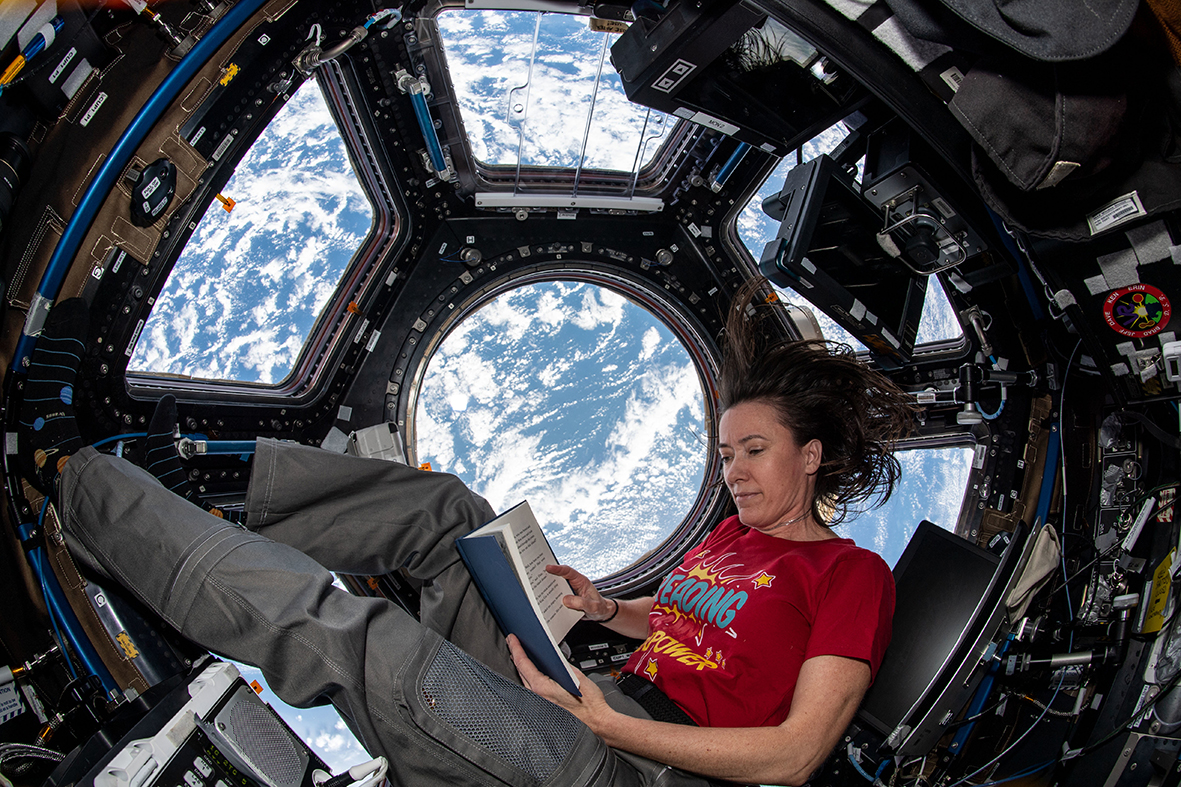
Astronauts are kept very busy during their all-too-brief stays on the ISS. Their days are crammed full of doing experiments, exercising, photographing Earth and much more.
When they do get some time off, they tend to retreat to the cupola, the ISS’s huge ‘bay window’ – but sometimes you just want to curl up and lose yourself in a good book, and on August 11th, 2021, Expedition 65 Flight Engineer Megan McArthur did just that, 426km (265 miles) above the North Atlantic.
What are your favourite images captured from Space Station? Let us know by emailing contactus@skyatnightmagazine.com