When NASA’s second giant white-and-orange SLS rocket blasts off from Kennedy Space Center on the Florida coast, it will send a crew of four astronauts on the Artemis II mission.
The first crewed mission to the Moon in over 50 years is currently scheduled to lift off no earlier than 1 April 2026.
After the dramatic launch, the Orion capsule will detach from the SLS’s upper stage and orbit Earth several times.
More on Artemis II

Once the crew has checked out their spacecraft’s systems, they will fire its mighty main engine to send them towards the Moon.
Several days later, their capsule will loop around the Moon before returning to Earth and splashing down in the ocean, blackened and hissing after a fiery re-entry through Earth’s atmosphere.
Apollo 8 redux?
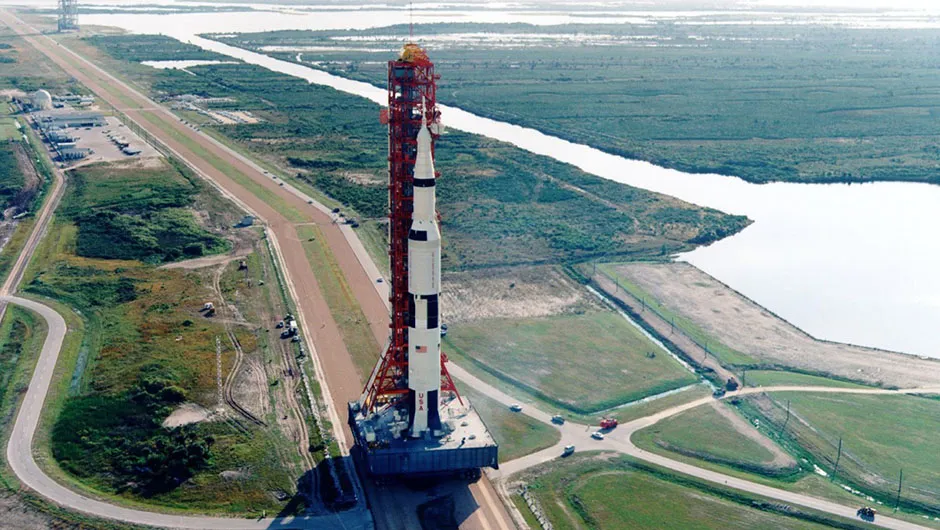
Many space enthusiasts are tremendously excited about the mission, but others are asking, with a Spock-like raised eyebrow: “Didn’t we already do that half a century ago? Isn’t this just Apollo 8 again?”.
Well, yes, we did – but no, it isn’t. To understand why, we have to go back in time. Back 57 years, to be precise.
On 21 December 1968, a Saturn V rocket blasted off from the same nub of the Florida coast, on what was then the most ambitious, daring and dangerous crewed space mission ever attempted: Apollo 8.
It was a mission of incredible firsts: the first time that astronauts had ridden the enormous, powerful Saturn V into space; the first time human beings had left Earth orbit; and the first time the children of Earth had flown to the Moon.

Many things could have gone wrong, any one of which could have delayed NASA’s plans to land astronauts on the Moon with Apollo 11 the following year and put the Soviet Union ahead in the race to that historic achievement.
Apollo 8 could have failed to make it out of Earth orbit or even undock from the Saturn V’s upper stage.
Either would have been a huge technical setback; even worse was the possibility of the astronauts being stranded in lunar orbit if their engine failed to fire and push them home.
Thankfully, the mission was a spectacular success. Apollo 8’s crew reached lunar orbit and circled the Moon safely 10 times, becoming the first humans to see the lunar far side firsthand.
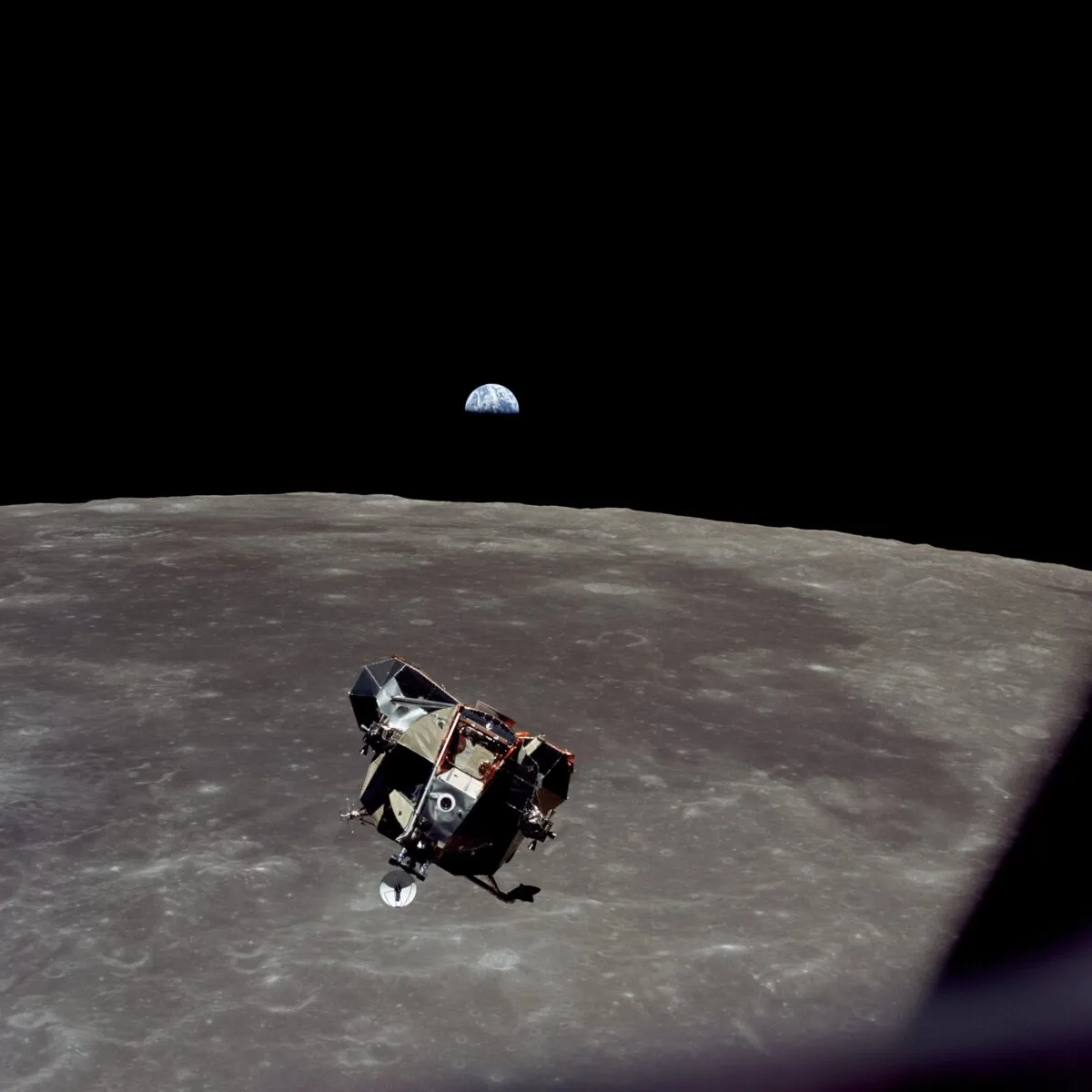
They then returned to Earth without a hitch, having taken invaluable measurements and images needed to land Neil Armstrong and Buzz Aldrin on the Moon months later.
They also took many hundreds of photos, including one of the most famous images ever taken – not just in space, but anywhere, ever: William Anders’s ‘Earthrise’, a portrait of the beautiful blue-and-white Earth rising up from behind the grey lunar limb.
And on Christmas Eve, the three astronauts made a historic broadcast from lunar orbit, reading out passages from the Book of Genesis.
An estimated audience of one billion viewers watched the broadcast on their TVs, uniting the world, albeit briefly, at a time when it seemed to be on its knees.
Artemis II – more than a test flight
Without doubt, Apollo 8 was one of the most ambitious space missions ever. So why are we about to do it all over again?
The answer is, we’re not. Artemis II is not simply a rerun of Apollo 8.
The most obvious difference, and perhaps the greatest criticism of the modern mission, is that the Artemis II crew won’t get to look down on the Moon from orbit because they’re just going to go around it once, like a race car skidding around a bend in the course, before coming straight home again.
So why go all that way just to loop around the Moon without stopping to enjoy the view? Isn’t it like driving through Yosemite Valley without getting out to look around?
Well, while Artemis II’s long lunar loop might seem like a hugely wasted opportunity, it’s not.
The Orion capsule doesn’t need to orbit the Moon on this mission because, unlike Apollo 8 – which was essentially a test flight to check that a spacecraft could keep its crew alive on a trip to the Moon and bring them back safely to Earth – Artemis II is much more than that.
Artemis II will be the first time astronauts have ridden the huge SLS rocket into space.
That’s a big deal. If anything goes catastrophically wrong with the rocket during launch, or even if it just gets stuck on the pad, NASA’s plans to mount a crewed lunar landing before 2030 will be thrown into disarray.
It will almost certainly mean Chinese astronauts – taikonauts – will set their boots and plant their flag into the dust of the lunar south pole years before NASA astronauts do.

In addition, Artemis II will likely carry human beings deeper into space than human beings have ever been before.
The farthest astronauts have travelled beyond Earth so far is 400,171km (248,655 miles), a record set – unintentionally and unplanned – by the crew of Apollo 13 as they slingshotted around the Moon on their failed lunar landing attempt in 1970.
Artemis II’s crew will travel farther than that, perhaps much farther, depending on the exact timing of the launch.

Views of the Moon like never before
The Artemis II crew will also see, and take photographs of, areas of the far side of the Moon never seen by human eyes before.
Because of the Apollo missions’ orbital tracks, their low altitude and the phases of the Moon during their missions, Apollo crews only had limited views of the Moon’s surface and were only able to see and photograph narrow strips of it.
From their much higher fly-by altitude, the Artemis II crew will get to see much wider fields of view of both the Moon’s near and far sides than those witnessed by any of the Apollo crews.
This raises a very exciting prospect. While it has been imaged many times by uncrewed satellites and probes, no human eyes have ever looked down upon the huge bullseye-shaped impact feature Mare Orientale without an extreme viewing angle.

Artemis II’s crew could get a bird’s-eye view (depending on their launch date and the intricacies of orbital mechanics) and any photos they take of this enormous impact basin and its surrounding rings of jagged mountains will be stunning.
So Artemis II is a very important mission indeed and not just a simpler retread of a 57-year-old Apollo mission.
There’s a lot at stake when that rocket blasts off, and what happens in the hours and days that follow will quite possibly dictate who wins the new space race to the Moon.
The same was true of Apollo 8 all those years ago, as the US and the Soviet Union threw everything at their space programmes.
The question is, outside the shadowy world of geopolitics, will the Artemis II mission be as inspiring for the public as Apollo 8?
Will it show people that there is hope, that if we turn our minds to it, we can achieve incredible things?

What we'll see from the Artemis II mission
The shuddery, grainy black-and-white film of Earth shot through Apollo 8’s windows, which inspired and moved so many people, will be replaced by live-streamed, full-colour HD video footage of blue-and-white Earth shining in the blackness of space.
And even though some will inevitably take to X, Instagram and Facebook to shout “Fake!”, “CGI!” and ask “Where are the stars?”, for any sensible person it will be amazing to witness – a view our species has seen only rarely, now shared in real time with millions.
There will also, hopefully, be lots of interactions with the crew, allowing us all to feel like part of the mission, not just observers.
There will likely be live TV broadcasts beamed back to Earth, as they answer questions from around the world and take viewers on sightseeing tours of the Orion capsule.
And as Orion rounds the Moon and the crew gather at the windows to gaze down in awe upon its cratered, grey surface, let’s hope there are microphones and cameras broadcasting their reactions live to the world, so we get to see what they see and feel what they feel.
Perhaps then we’ll all feel – if only for a day, if only for a few hours – that the future will be brighter, for all of us.

Apollo 8 vs Artemis II technology
At first glance, the hardware used in the Artemis II mission doesn’t look much different to that of the Apollo missions.
Both employ a huge rocket to send a cone-shaped capsule to the Moon that then returns through Earth’s atmosphere, protected by a heat shield, before splashing down in the ocean to await recovery by helicopters and divers.
But things have moved a long way since the Apollo days.
The SLS rocket is roughly as big as Apollo’s Saturn V, but two enormously powerful solid rocket boosters will get it off the ground.
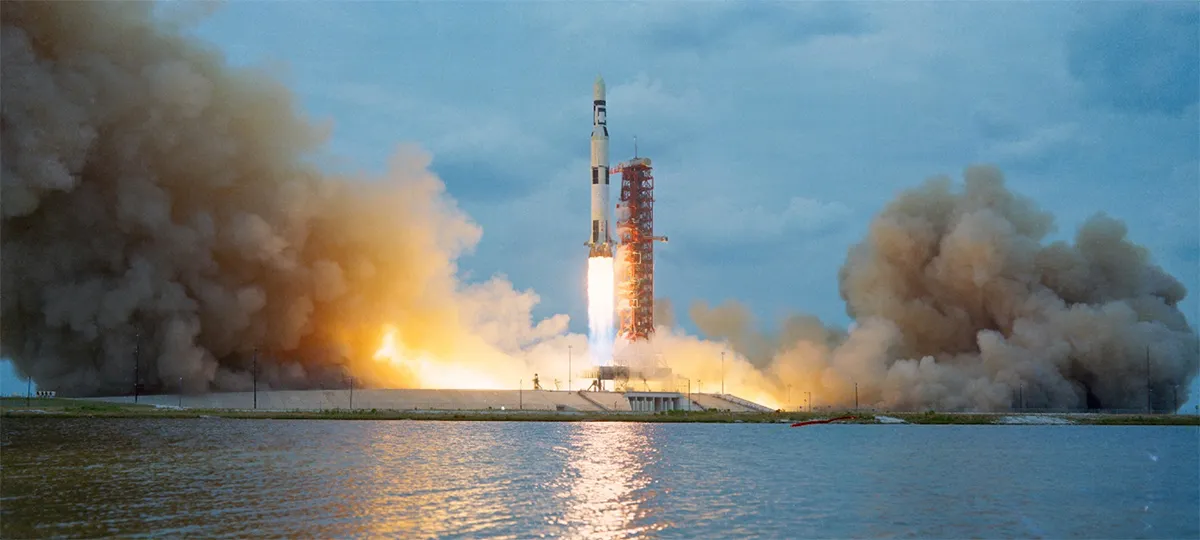
The Orion capsule is much larger than an Apollo command module capsule, comfortably carrying four instead of three astronauts.
Its computers are far more advanced than Apollo’s Guidance Computers, which had roughly the same memory and power as a pocket calculator.
Artemis’s crew will control their craft via large flatscreen monitors instead of banks of switches and toggles.
Once it’s in Earth orbit, Orion will unfurl its wings – four long, slender solar arrays – before heading for the Moon.
And as well as having couches to sit in during their 10-day journey, the Artemis II crew have another important comfort in the Orion capsule: a proper toilet!
What are your memories of Apollo 8 or thoughts about Artemis II? Let us know by emailing contactus@skyatnightmagazine.com