When you launch a spacecraft, you need to propel a very large, heavy object high into the air, so fast that it can overcome Earth’s gravity.
That takes one heck of a lot of energy – which means one heck of a lot of fuel and, hence ,one heck of a lot of money.
There are three key things to consider here:
- The weight of the spacecraft itself
- The weight of its payload (crew, scientific equipment etc)
- The weight of the fuel you’ll need to make such a journey feasible
Read more
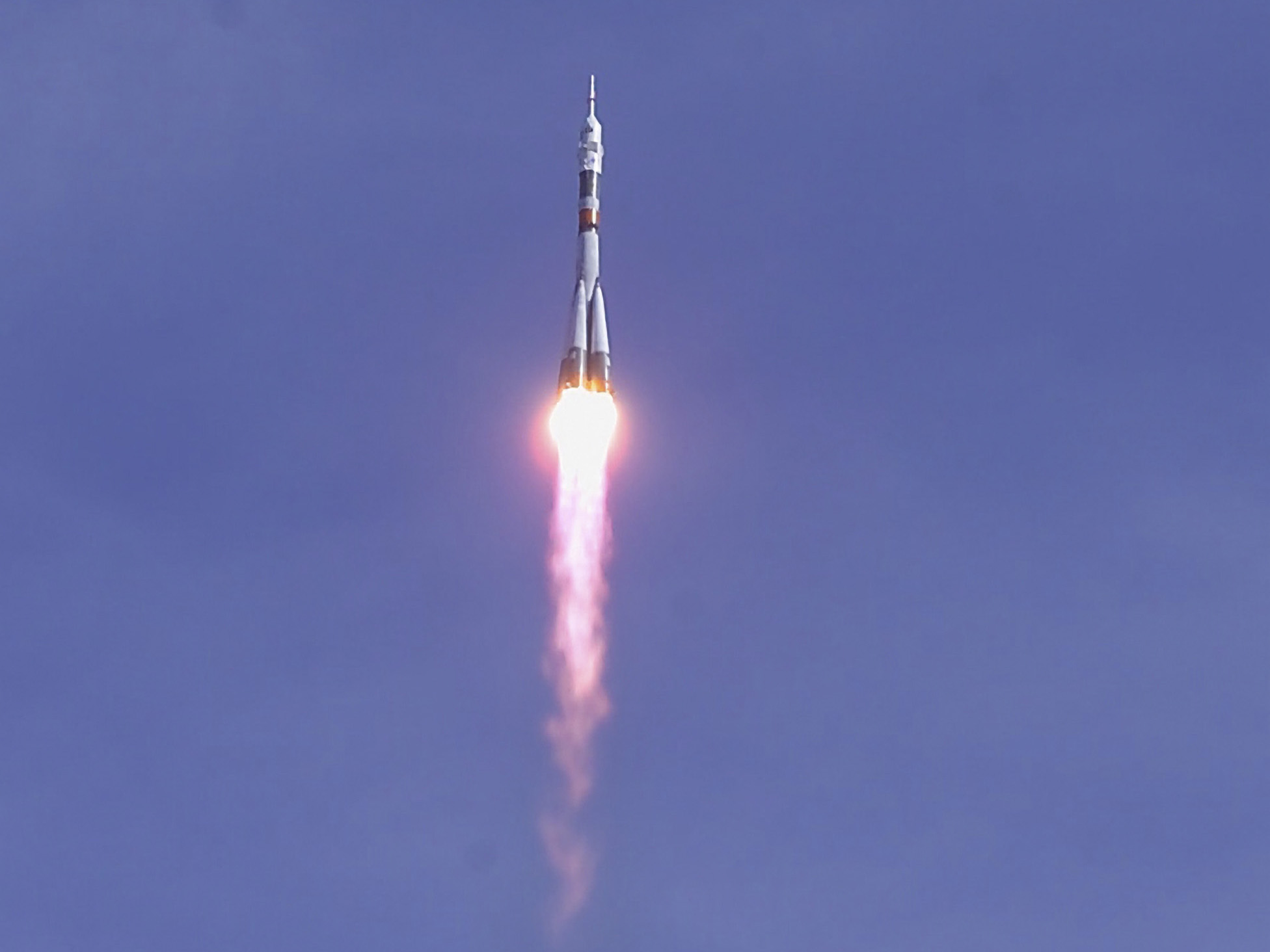
So what does it take to launch a rocket into space – and are there some place on Earth more suitable than others?
What tricks do space engineers use to launch their rockets into space more effectively.
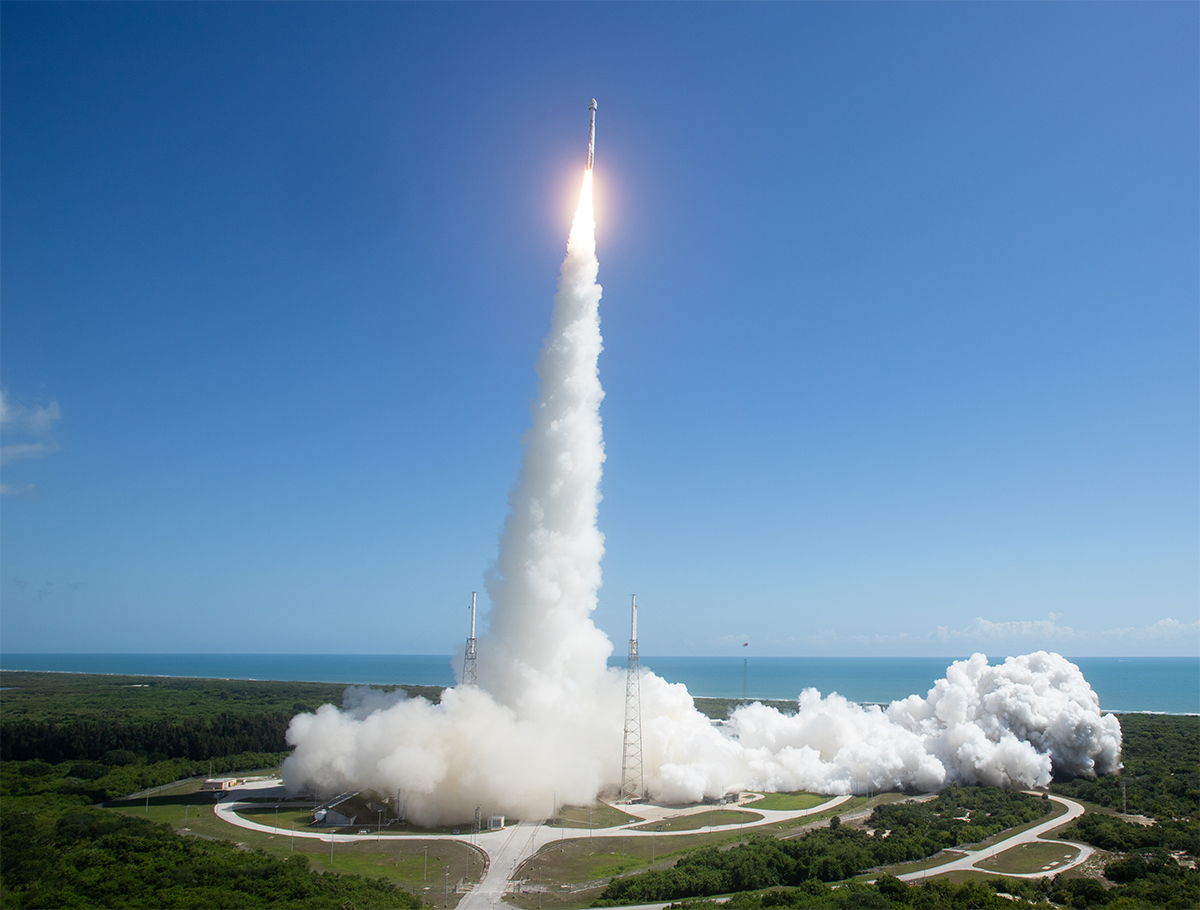
Fuel mass and payload weight – a tricky relationship
The ratio between fuel mass and payload weight is determined by something called the Tsiolkovsky rocket equation – and it’s a high one.
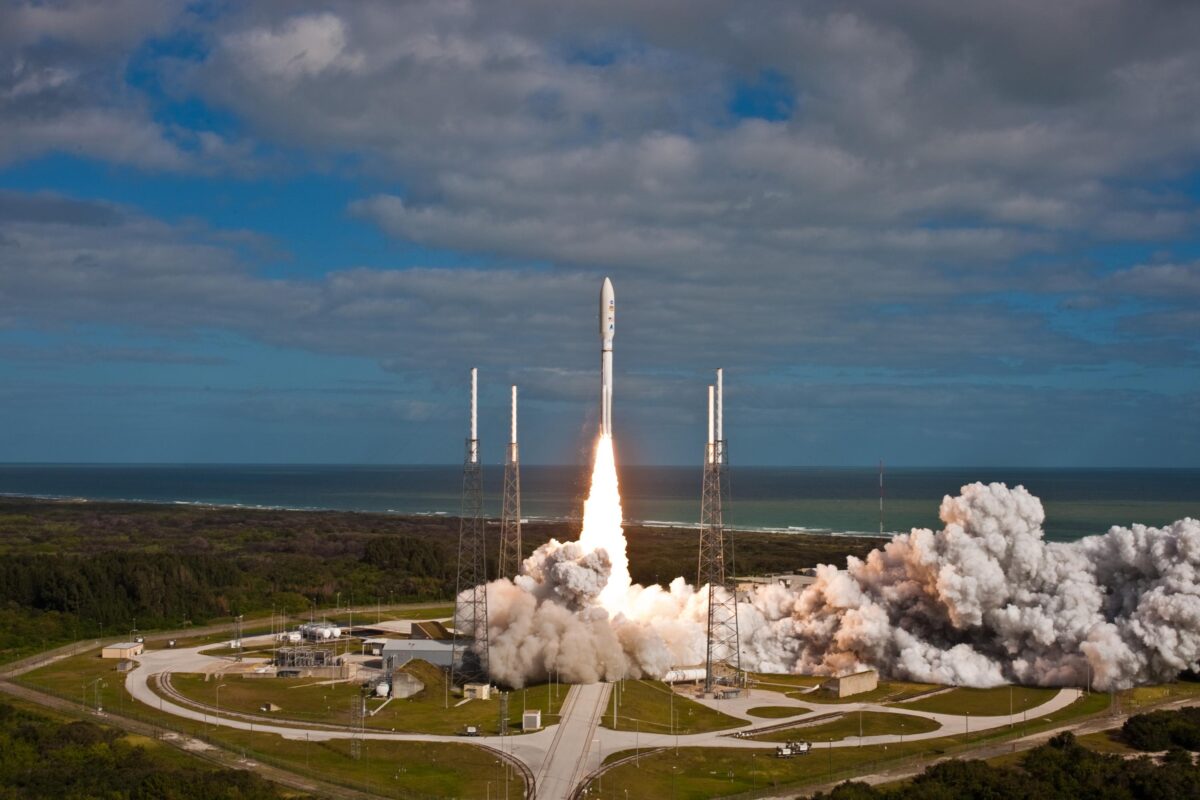
For instance, NASA’s Mars rover Curiosity has a mass of over 900kg (1,980lbs), of which its scientific instruments make up just 75kg (165lbs).
But the total mass, at liftoff, of the Atlas V 541 rocket that took it to Mars was over 530,000kg, most of which was fuel.
NASA has calculated that if the same fuel-to-payload ratio applied to cars, then the biggest ‘weekly shop’ that the average family car was capable of carrying back from the supermarket would be… a single grape.
Accordingly, aerospace engineers are always looking for ways to lighten the load (both literally and financially).
One way of doing that, of course, is to keep the weight of your spacecraft to an absolute minimum.
Another is to choose your launch site carefully, because certain launch locations can make life a little easier.
Launching from altitude

One obvious idea might be to launch rockets from mountain tops. After all, you’re above much of Earth’s atmosphere already – that’s got to help, surely?
Well, to some extent it does. But the direct benefits of altitude per se are negligible.
Yes, if you’re on top of Mt Everest you’re 8.8km (5.5mi) closer to the Moon than you would be at sea level, but as the Moon is about 380,000km (240,000mi) away that really doesn’t make much difference.
And while Earth’s gravity might be marginally less at that altitude, the real benefit to launching a rocket from a mountaintop would be the reduced atmospheric pressure (which, for technical reasons, means you can have a slightly larger outflow nozzle on your rocket engine, equating to more engine efficiency).
The upshot of all this is that a rocket launched from a mountain top can carry a little more weight than one launched from sea level – and as we’ve already seen, in the world of space flight, ‘free’ weight is always a good thing.
However, there’s a catch: mountain tops are quite hard places to reach, and the cost and logistics of building a launch site or spaceport on top of a mountain tend to far outweigh the savings in terms of fuel and payload.
Launching near the equator
Earth, as we’re sure you know, is spinning on its axis, and takes 24 hours to rotate completely.
That means every location on Earth has 24 hours to describe a circle and get back to where it is now, with locations close to the poles describing the smallest circle and those at the equator describing the largest.
Which in turn means that, as counter-intuitive as it sounds, Earth spins fastest at the equator, and more slowly elsewhere.
In fact, if you’re standing at the Equator, you’re already moving at a speed of 1,650km/h relative to Earth’s centre – a sizeable chunk of the 28,000km/h or so you need to achieve to get yourself into Earth orbit.
So can you give a rocket a ‘head start’ by launching it at or close to the equator?
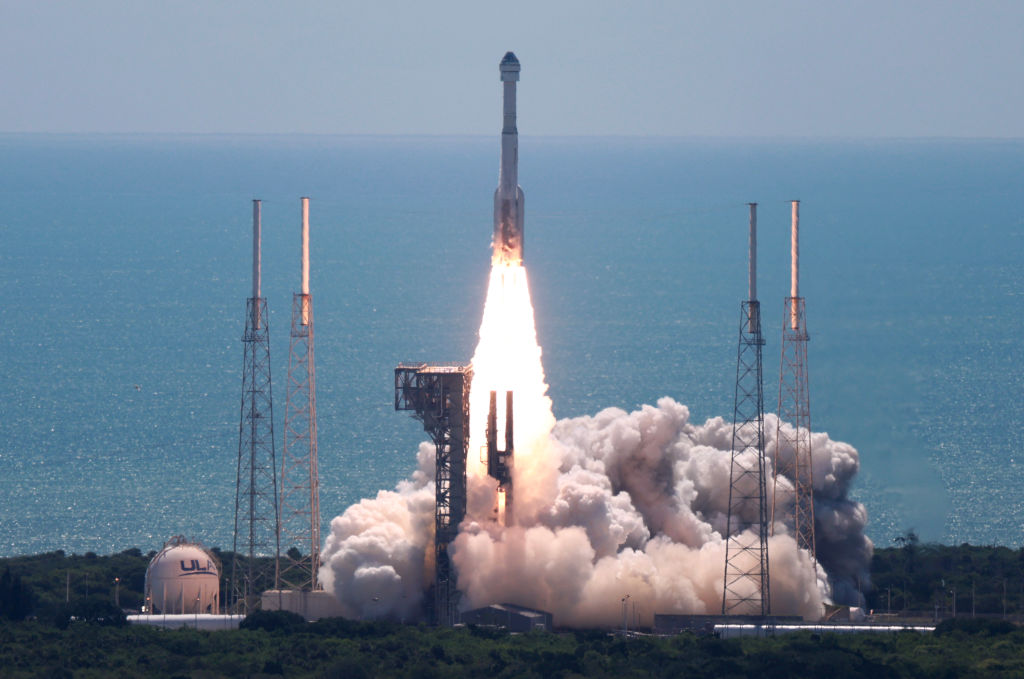
Yes you can, is the answer to that – launching from the equator means you can either use less fuel to launch the same payload, or put more mass into space using only the same amount of fuel.
But how much of an advantage that is depends where the spaceship in question is heading after you launch it.
Launching from the equator brings the biggest benefits when you’re putting satellites into geostationary orbit. Such satellites orbit on the equatorial plane anyway, so it makes sense to start as you mean to go on!
Equatorial launches don’t bring quite such an advantage if you’re hoping to put something into a more inclined orbit (i.e. one that is at an angle to Earth’s equatorial plane), because in such cases an equatorially-launched spacecraft will have to carry out fuel-intensive course adjustments once in-flight.
And for objects being launched into polar orbit – one that traverses the two poles once in each orbit, as is the case for many weather- and climate-monitoring satellites – then an equatorial launch makes very little sense.
You are in fact better off launching from as far north or south as possible.
However, even if an equatorial launch does make sense for your mission, there are still other factors to consider, including logistics and cost.
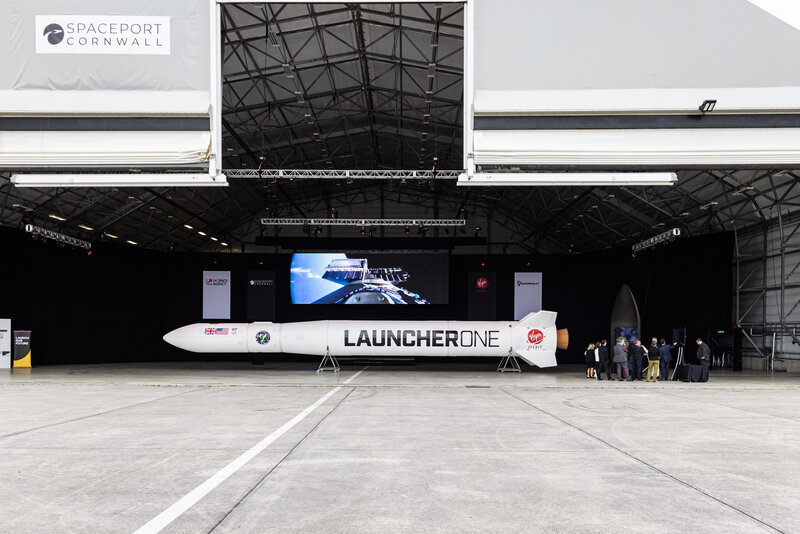
Making the best of your location
If you’re the European Space Agency or Roscosmos, for instance, then your headquarters and most of your manufacturing facilities are going to be a long, long way from the equator.
And just as it might be too expensive or too difficult to transport all the personnel and hardware require to launch a rocket up a mountain, such hurdles often make equatorial launches similarly infeasible.
In fact, of around 100 rocket launch sites listed on Wikipedia, only nine sit within 10° of the equator.
These include Shaba North in Zaire, the Broglio Space Centre in Kenya, Gan Island in the Maldives and Coronie in Surinam, all of which are now defunct, as well as India’s Vikram Sarabhai Space Centre (AKA Thumba), Indonesia’s LAPAN Rocket Launcher Station, Brazil’s Alcantara Launch Center and Natal-Barreira do Inferno, and – perhaps most famously – the Guiana Space Center in Kourou, French Guiana.
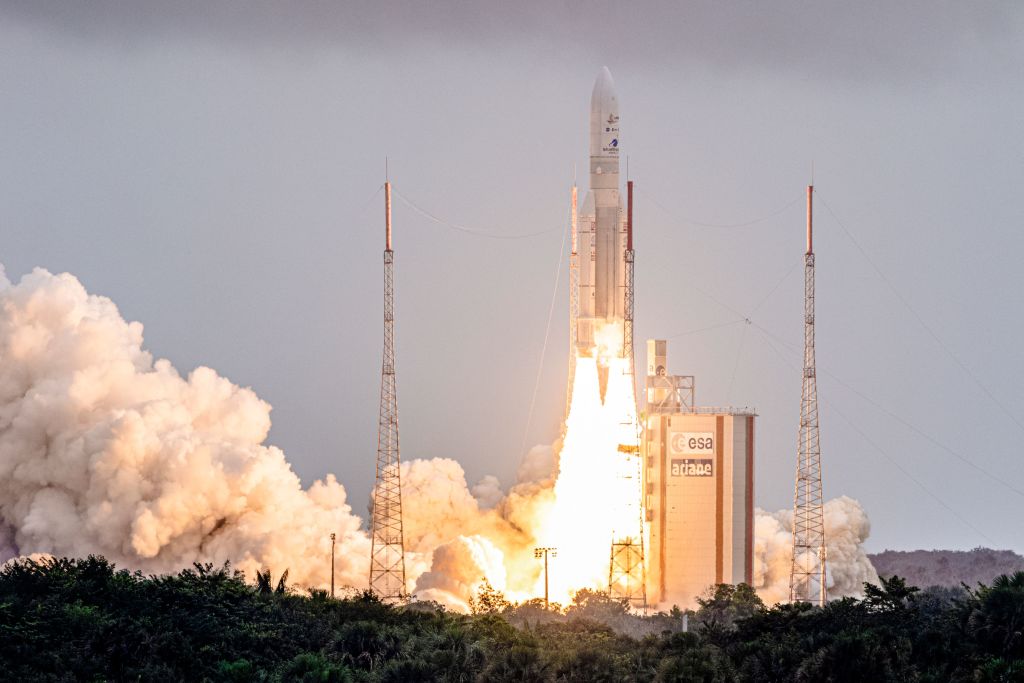
It’s worth noting, however, that many other launch sites do sit as close to the equator as the nation in question can manage – Cape Canaveral and the Kennedy Space Center in Florida, for instance, sit at a latitude of 28°N, while China’s Wenchang Space Launch Site is at a latitude 19°N and India’s Satish Dhawan Space Centre sits at 13°N.
At those sort of latitudes, you won’t get the same sort of ‘equatorial advantage’ as you would from launching at the equator itself – but you’ll still get SOME.
Particularly if you do the one thing that can give any rocket launch a boost – launch with the rocket facing east.
Apart from some polar-orbiting satellites, almost all rockets launch in an easterly direction, whether they’re taking off from close to the equator in French Guiana, or from Roscosmos’s Baikonur Cosmodrome, at a latitude of 45°N.
That’s because Earth is spinning from west to east already – so you’re effectively swimming with the tide rather than against it.