It’s one of the most controversial accidents in the history of spaceflight. On 15 February 1996, a Chinese rocket carrying American-built communications satellites veered off course seconds after launch, crashing into a nearby village in a terrifying fireball.
What followed was more than a launch failure. It became a story of disputed casualties, international suspicion, technological espionage and political fallout – the consequences of which are still being felt 30 years later.
There have been many launch failures throughout the Space Age.
Rockets are, after all, carefully controlled explosions trying to throw hundreds of tonnes of machinery out of the atmosphere. Occasionally, they don’t quite cooperate.
More spaceflight history
But the failure of Long March 3B became something more than we’d seen before.
It was not just an engineering disaster but a diplomatic flashpoint that transformed US-China relations in space, contributed to some of the strictest technology export controls ever imposed by Washington, and helped shape the divided future between the two countries which we now see playing out in orbit.
If you’ve ever wondered why American astronauts cannot simply visit China’s Tiangong space station, the answer is here.
A new era for commercial launches
Let’s start with some backstory. In the 1990s, the global launch market was changing rapidly.
China had entered the commercial launch business by offering lower prices than many Western competitors, attracting operators eager to reduce the enormous cost of placing satellites in orbit.
One such customer was Intelsat, whose Intelsat 708 communications satellite had been built by American manufacturer Space Systems/Loral.
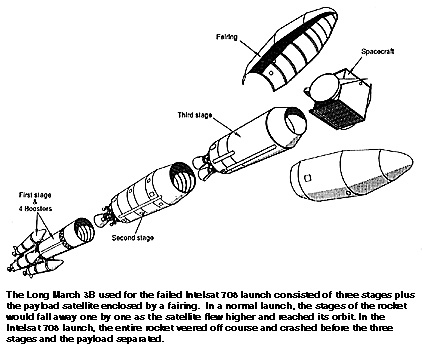
It was due to launch aboard China’s newest rocket, the Long March 3B, from the Xichang Satellite Launch Centre in Sichuan Province, southwest China.
It was intended to demonstrate China’s growing reliability in the lucrative commercial launch market. However, it would become famous for different reasons.
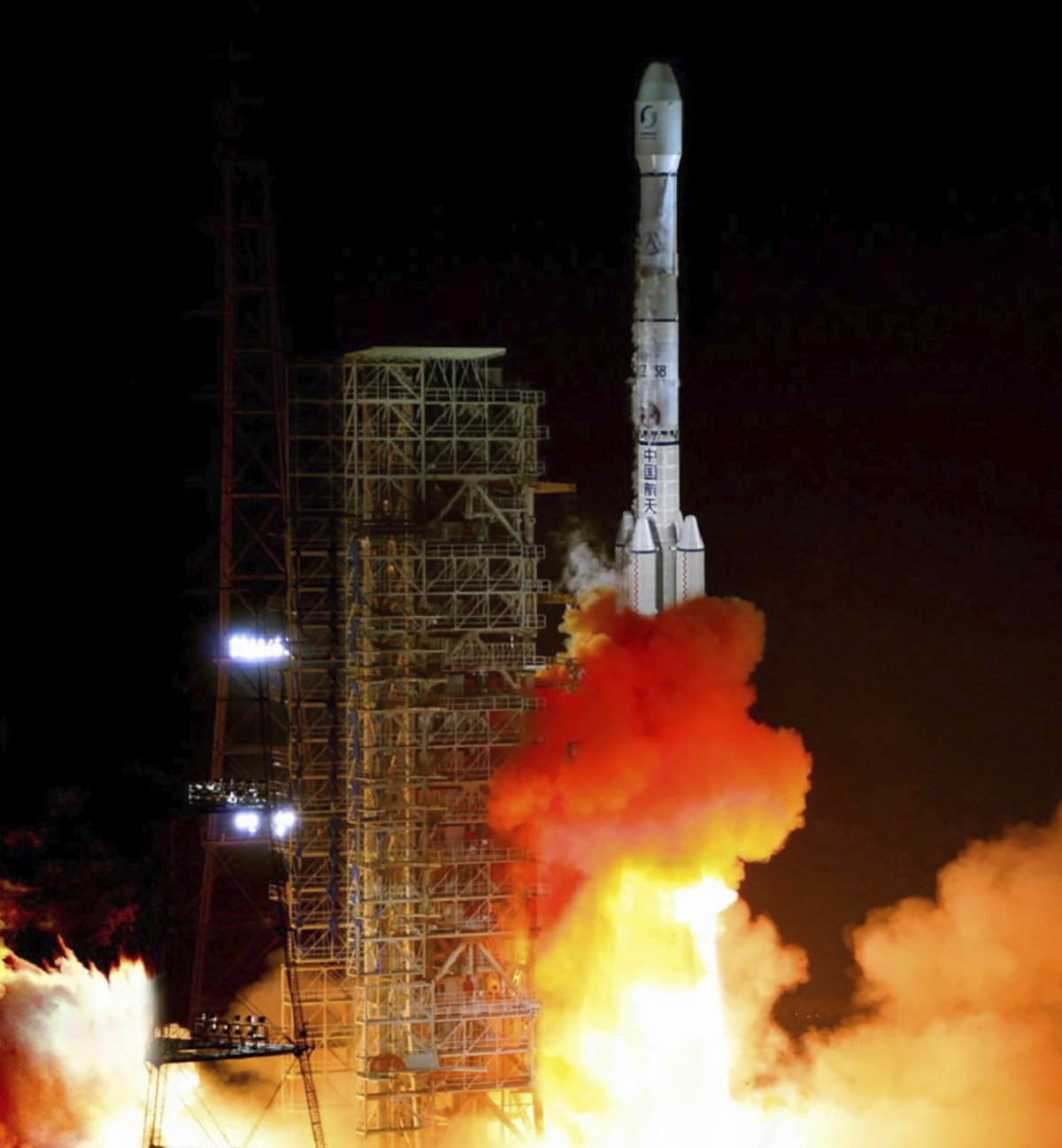
Thirty seconds to catastrophe
Immediately after launch at around 03:00 local time on 15 February, observers noticed something was terribly wrong.
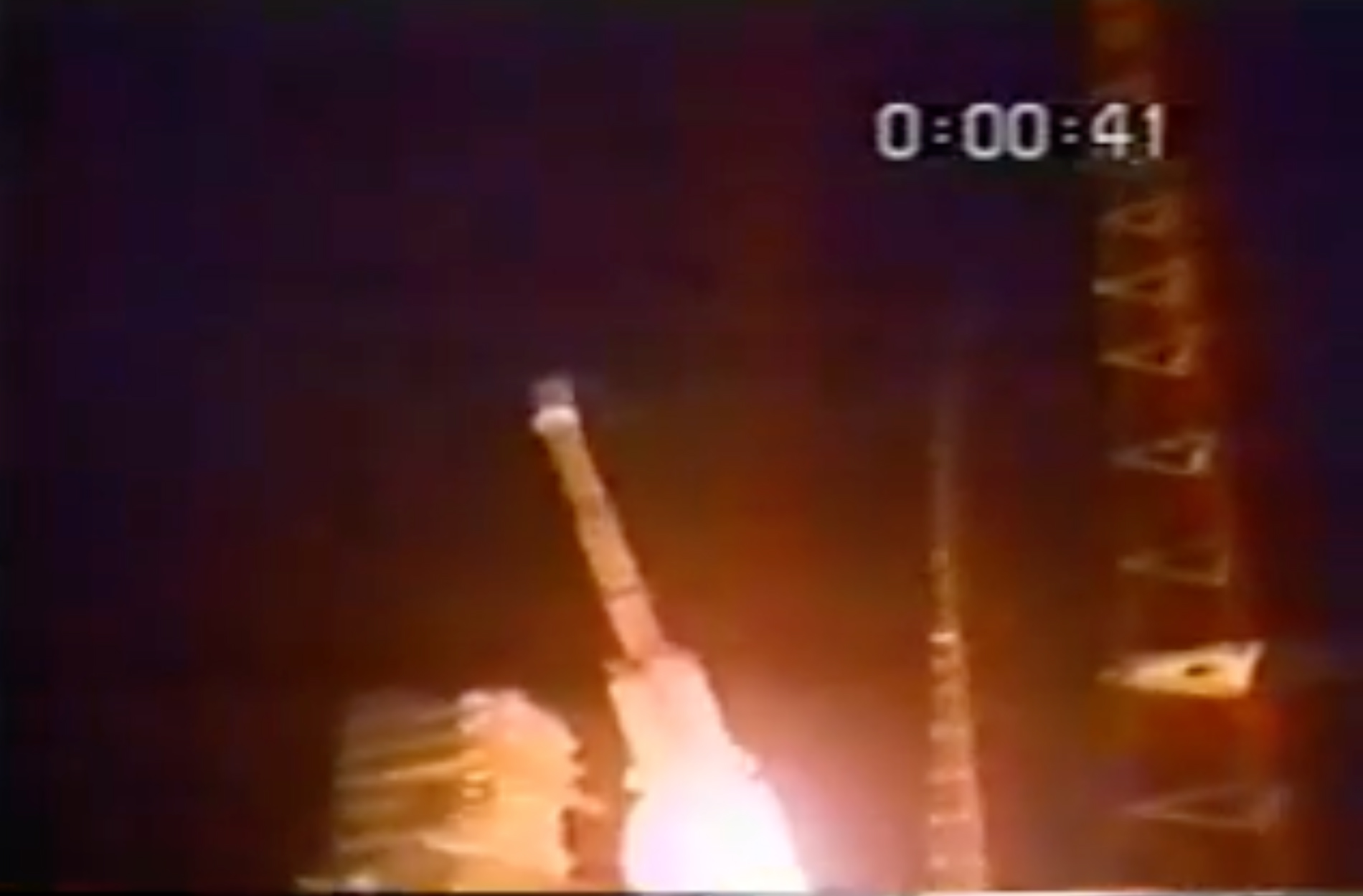
Just four seconds after ignition, the Long March 3B began its pitch manoeuvre early and as it headed over the top of the launch tower it continued to pitch over.
Just 14 seconds after ignition, the rocket had pitched over 90 degrees from vertical and was heading towards the ground, its engines still firing.
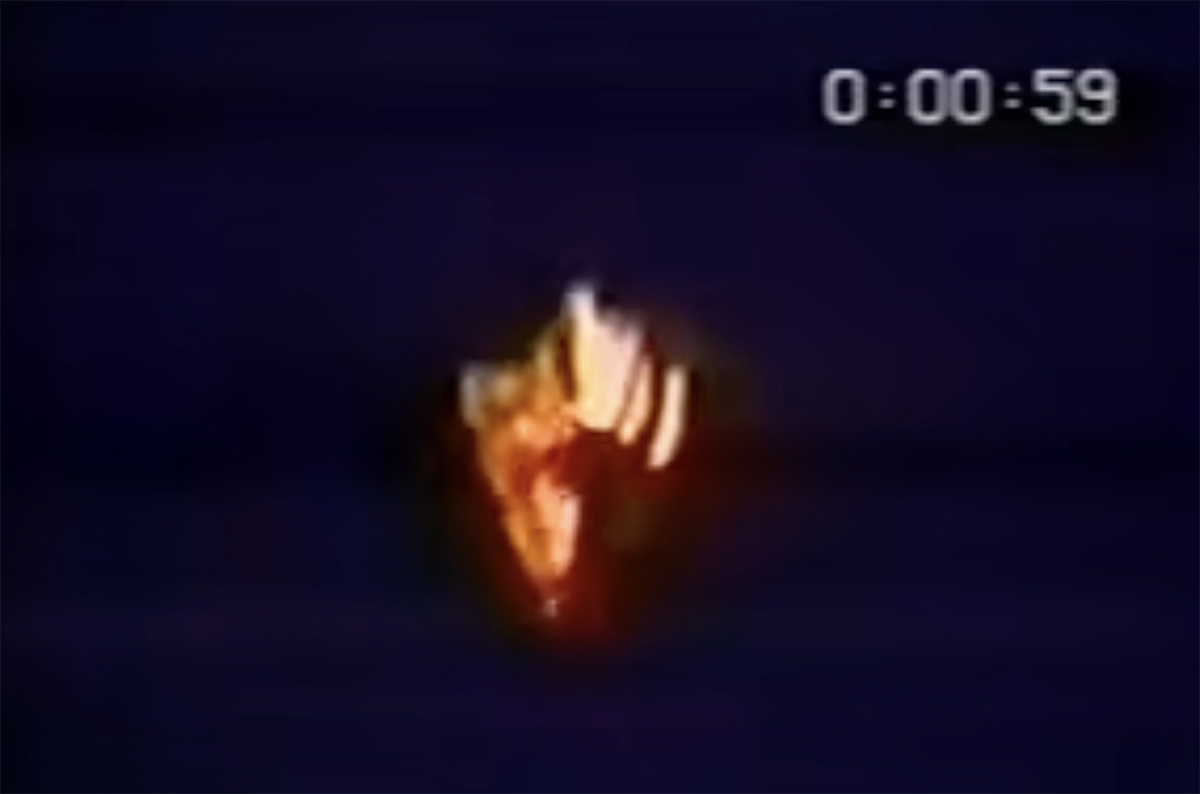
Within 25 seconds of launch it had collided with a local hillside, near the village of Mayelin. The explosion was enormous.
The rocket still carried hundreds of tonnes of propellant, including highly toxic nitrogen tetroxide and unsymmetrical dimethylhydrazine.
Combined with the remaining fuel in its satellite cargo, the impact created a fireball that could be seen from miles away.
Chinese television later broadcast sensational footage of the launch. The launch site, however, had much more tightly controlled access.
The true toll
This is where the story becomes far less certain. Chinese authorities announced that six people were killed and 57 injured.
Western journalists and analysts have questioned these figures, suggesting that the crash’s proximity to nearby Mayelin, as well as the worker residences and facilities near the launch centre, caused a death toll that was substantially higher.
Some even claimed hundreds of fatalities.
But none of those larger estimates have ever been verified.
Foreign journalists were prevented from independently examining the site in the accident’s immediate aftermath, while satellite imagery available in 1996 lacked the resolution to settle the question.
Eyewitness accounts also varied considerably, though this is not uncommon when it comes to major events.
Ultimately, neither the official nor unofficial counts can be independently confirmed due to the lack of access at the time.
Historians tend to prefer to distinguish between the fact that people were killed and injured, and the unverified claims around casualty numbers.
It remains one of the enduring mysteries of the disaster.

An engineering failure
The cause of the explosion is more certain, however. This was traced back to a fault within the rocket’s inertial guidance system.
Investigators concluded that defective wiring caused the guidance platform to lose orientation after launch.
Without accurate attitude information, the rocket was unable to determine which way it was pointing.
That guidance system would be completely redesigned before the Long March 3B returned to flight – where, despite its catastrophic debut, the launcher went on to become one of China’s most dependable rockets, completing over 100 successful missions alongside the Long March 3B/E and 3B/G5 updates.
Sadly, faulty wiring is a little easier to fix than fraught politics.
A political explosion
It wasn’t actually the crash that caused the ensuing political fallout, more what happened afterwards.
As the manufacturers of Intelsat 708, Space Systems/Loral engineers joined the technical investigations into the launch failure, alongside other specialists analysing why the rocket had failed.
The controversy centred on whether those American companies had inadvertently transferred sensitive missile guidance knowledge to China.
While Space Systems/Loral maintained their work focused solely on commercial launch safety, not military capability, critics argued that their recommendations could improve the reliability of Chinese launch vehicles, whose technology overlapped with ballistic missile systems.
The truth of that is still debated to this day, but congressional investigations concluded that export controls governing satellite technology had been too lax. This prompted a reassessment of US policy towards commercial launches in China.
A new era
In 1999, responsibility for licensing commercial satellite exports returned to the US State Department under the International Traffic in Arms Regulations (ITAR), making it much harder for American satellites to fly aboard Chinese rockets.
As a result, American satellite manufacturers increasingly avoided Chinese launch providers, while China accelerated efforts to develop satellites free of US components. The result was a gradual separation of technology in the two countries’ space industries.
The final chapter arrived in the form of the Wolf Amendment. Named for Representative Frank Wolf, and passed in 2011, the amendment prohibits NASA and the White House Office of Science and Technology Policy from engaging in bilateral cooperation with China without explicit congressional authorisation and certification that such activities pose no national security risk.
Why Tiangong has no NASA astronauts
Today, we see the consequences of that failed launch three decades ago and the political fallout that followed.
The Wolf Amendment effectively prevents NASA from pursuing bilateral missions with China, leaving the world’s two largest space powers operating separate human spaceflight programmes, despite sharing many of the same long-term ambitions.
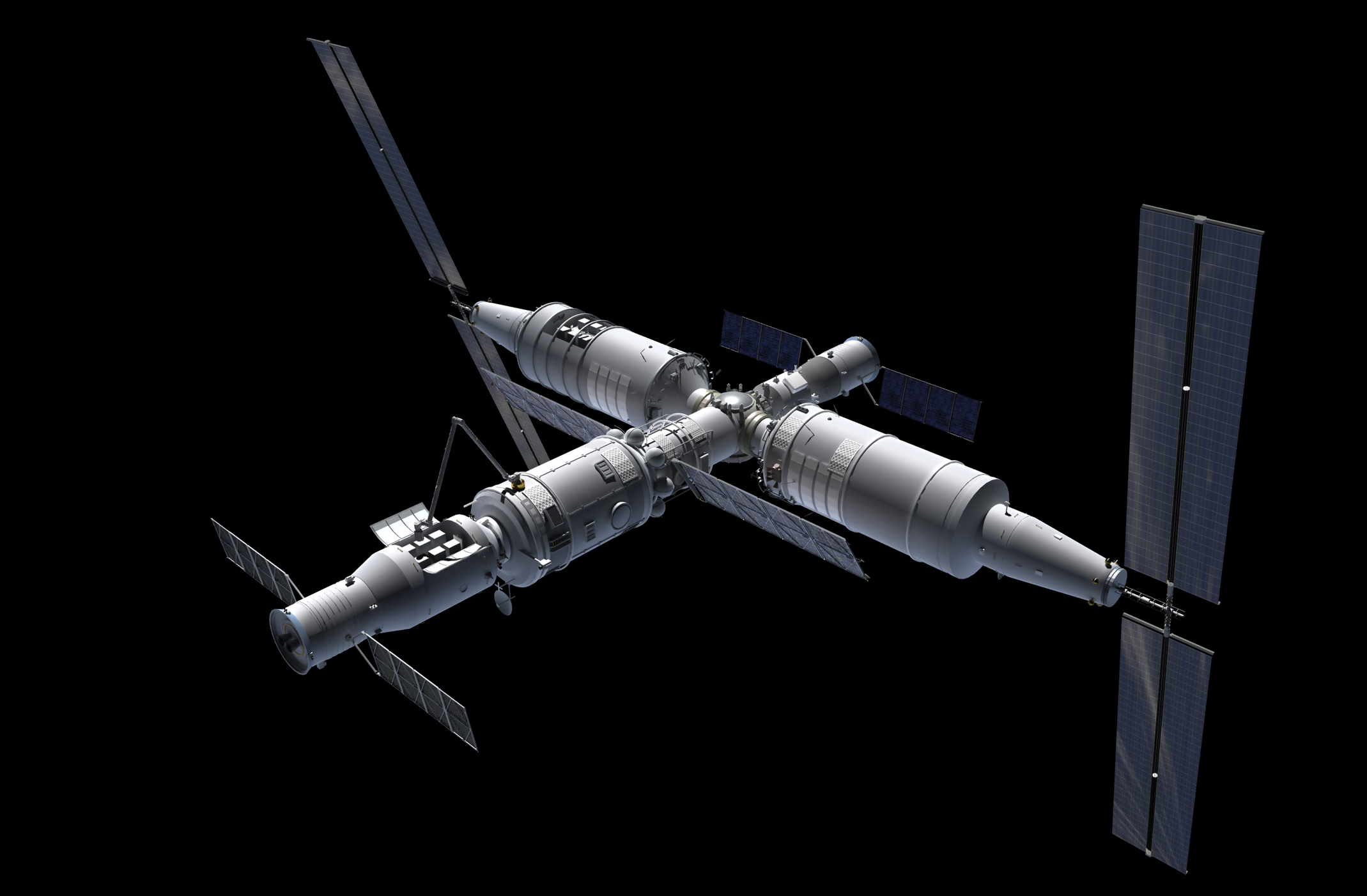
China now operates Tiangong, a permanently crewed space station.
While the International Space Station has so far welcomed astronauts from 26 different countries, China is not among them, while no American astronaut has ever visited Tiangong.
The Long March 3B’s maiden voyage is remembered for the tragic impact of a rocket crashing near a populated area, but its greater significance is as the precipitating factor in a 30-year separation of global powers in space.