
Eleven years ago, I was watching a talk by superstar astronaut Chris Hadfield, and when he was asked what one of the most interesting things about going into space was, he mentioned that his bone density started to decrease as soon as he left our planet.
Some mechanism in his body knew that as there was less gravity, he no longer needed such a bulky skeleton, so it started to get rid of it.
More on health in space

What’s more, when he landed back on Earth, his skeleton started to build back up almost as quickly.
He pointed out that if we could understand the process that triggers this, it could help with treating osteoporosis.
He wasn’t wrong. Since then, extensive space-based research into the mechanisms of bone demineralization and possible countermeasures has directly influenced drug development, nutritional strategies and exercise protocols to combat bone loss in aging populations.

This is not the only case where there has been a strong crossover between space research and healthcare – and no wonder: the human body is a fragile thing, and keeping it safe from the effects of microgravity, extreme cold and solar radiation isn’t easy.
Often the technologies that made it possible had to be created from scratch. However, once it had been done, other applications for these innovations quickly presented themselves, genuinely revolutionising healthcare back on Earth.
As Ann-Kathrin Vlacil, Human Exploration Enabling Science Team Lead at the European Astronaut Centre in Cologne, told BBC Sky at Night Magazine: "Space research can significantly contribute to understanding and treating various health conditions, including cardiovascular diseases, immune system disorders and fluid balance disorders.”
Below, we explore four ways crewed spaceflight has given a profound dividend back here on Earth – a revolution in healthcare.
1. Remote health monitoring

Space research’s impact on medical practices back on Earth dates to the early era of crewed space travel.
The Gemini missions of the mid 1960s, collectively labelled ’the bridge to the Moon’, were designed to prepare astronauts for longer space missions.
As part of this, NASA needed a way to monitor astronauts’ health in real time, while they were in orbit, thousands of miles from mission control.
NASA had to create this from scratch, with the help of what was to become the manufacturing company Spacelabs Medical.

With the technology of the time, it was a big ask. The monitoring devices had to be small, lightweight, portable and highly reliable in the face of severe and changeable environmental conditions.
Gemini astronauts wore a belt that tracked four key signs of body health: an oral probe monitored temperature, electrodes provided electrocardiogram (ECG) heart with a sound transducer over an artery measured blood pressure. The information from these sensors was then transmitted to the ground.
"The NASA contract was a fundamental enabler of this technology. It allowed people to think about how to invent this and make it happen," says James Green, now president of Spacelabs Healthcare Inc.
Soon after the mission was over, the company started working with hospitals in LA to help with remote health monitoring for intensive care patients.
As Green says: "You could watch them not just in the room, but from room to room and down the hall."
Nowadays, this technology is used everywhere – from ICUs to at-home monitoring.
As Green points out, "It’s a pretty good chance, if you walk into any hospital, somewhere along your stay, you’ll run into Spacelabs Healthcare technology."
2. Advances in treating heart disease

Long-term exposure to microgravity can have a profound effect on the heart.
For a start, a study by the American College of Cardiology found that astronauts’ hearts become more spherical in space – close to 10% rounder in fact!
Heart problems in space are caused by ‘fluid shift’, where gravity is no longer pulling the blood down towards your feet – this is why astronauts get puffy faces and ‘chicken legs’ in space.
It also means the heart gets fuller with blood. This causes the ventricles to change shape to help deal with this excess.
Over time, the heart remodels itself and loses muscle mass so it can pump blood more efficiently without the downward pull of gravity.
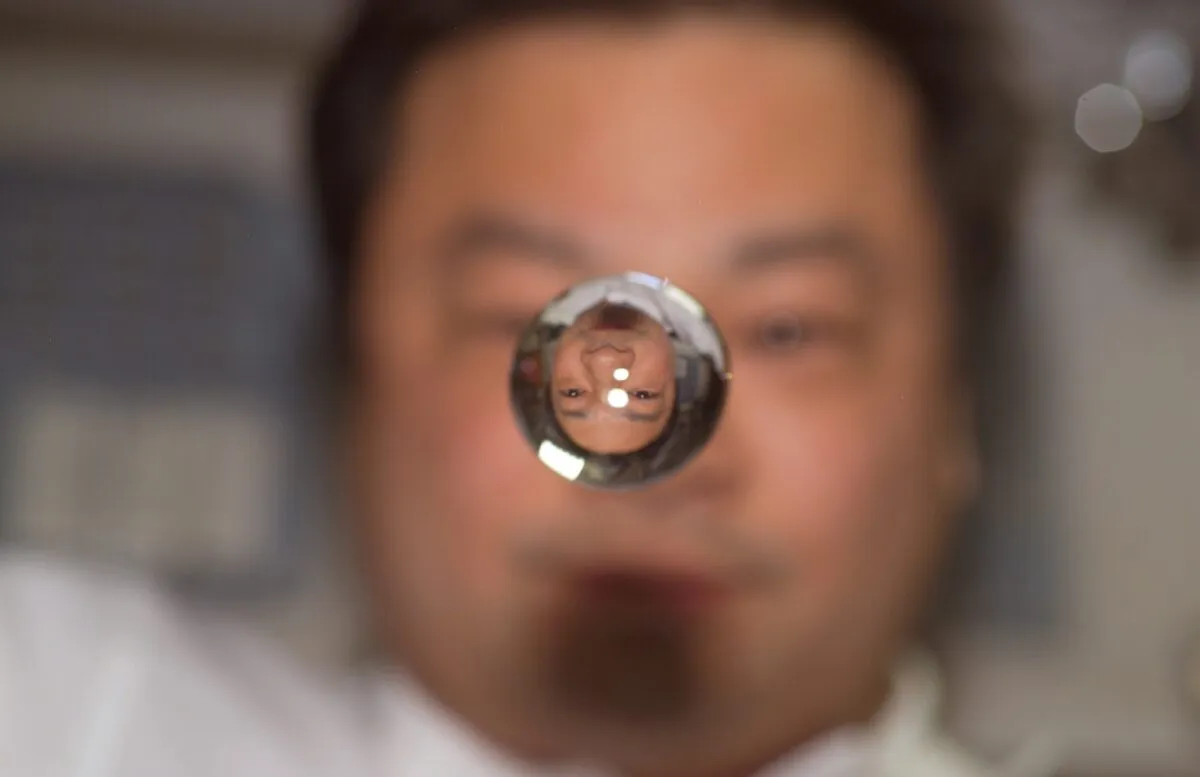
Interestingly, studies by the British Heart Foundation have found that extended exposure to air pollution on Earth can cause similar structural changes – including enlarged ventricles.
Pleasingly, the techniques developed to analyse heart shape and function in astronauts are already being used on Earth to better understand what happens to the heart under stress, as well as common cardiovascular conditions like heart disease.
Not only that, but miniature heart pumps (or ventricular assist devices - VADs) have been developed from NASA Space Shuttle fuel pump technology. Patients suffering from severe heart failure are kept alive as these pumps circulate blood around their body.
What’s more, software designed to process astronomical images has found its way into helping analyse ultrasound scans of arteries, helping with the detection of plaque buildup.
3. Muscle atrophy

As well as the bone density loss Chris Hadfield described at the hands of microgravity, astronauts also face significant muscle loss in space.
On Earth our muscles are constantly being used to combat the gravitational pull of our planet – even when standing or sitting. But in reduced gravity, the body sheds muscle mass in weeks as our efficient bodies realise it isn’t needed.
To combat this astronauts undertake extreme fitness regimes in space and follow specific diets to maintain muscle mass.
Patients with muscle injuries or who have endured prolonged bed rest show similar patterns of muscle loss, and the physical therapy they do to recover often uses technology developed for space missions.
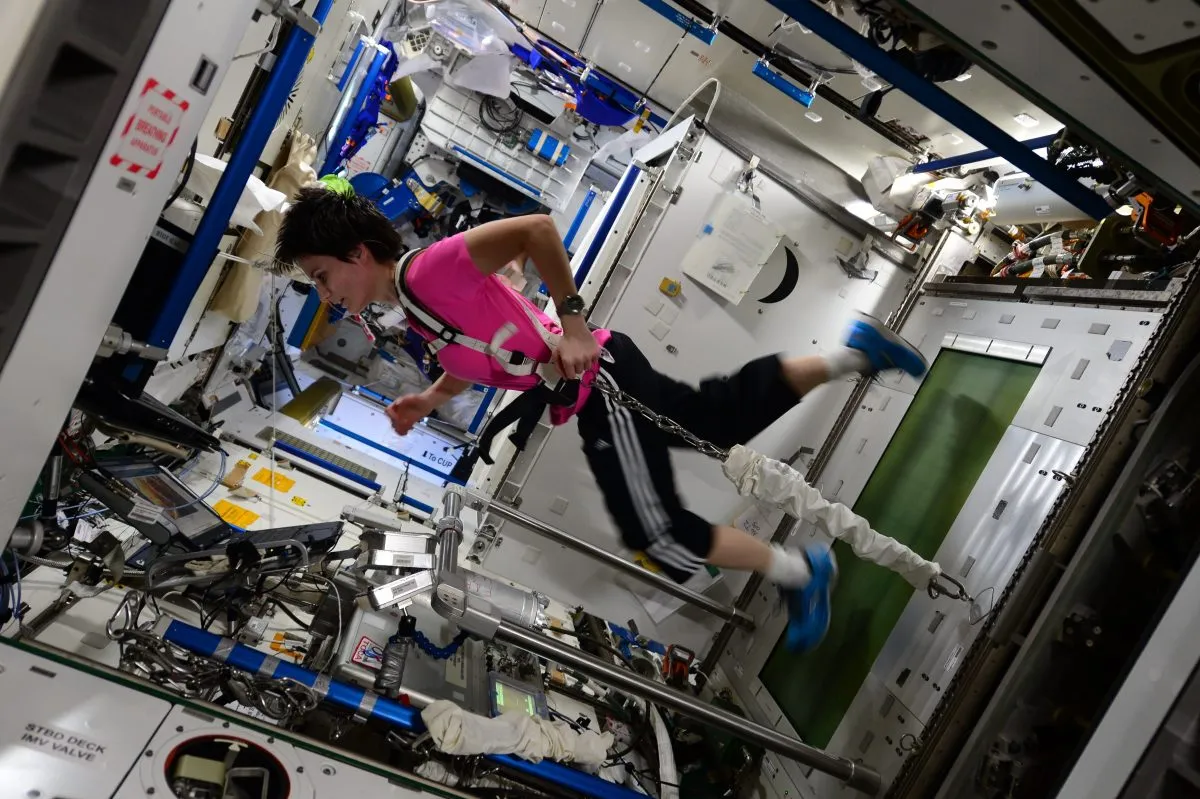
This includes exercise equipment like resistive exercise devices and vibration platforms, the former developed to allow astronauts to lift hundreds of pounds in microgravity while feeling the benefits of weightlifting.
Resistive exercise devices use vacuum tubes and flywheels to recreate the resistance of gravity, and they have already been adapted to provide a gentler way to reactivate wasted muscle mass on Earth.
Vibration plates, meanwhile, use whole-body vibration to stimulate muscles. As well as being developed for use in space, where astronauts would stand on a lightly vibrating plate for 10 to 20 minutes each day, often while doing other tasks, they have many other earthbound applications too.
These include not only building muscle: they can help with burning fat, boosting blood flow and lowering stress levels.
4. Vision impairment

Another condition identified as a problem for those visiting space for extended periods is Spaceflight Associated Neuro-Ocular Syndrome (SANS).
It seems to be caused by the astronaut’s blood and cerebrospinal fluid moving towards the head without gravity helping to pull it down. This can cause a swelling in the optic nerve, folds in the retina and a flattening of the back of the eye.
The research into this disease, which is still not fully understood, has provided ophthalmologists and optometrists here on Earth with new insights, diagnostic tools and potential treatments for a variety of conditions.
These include a better understanding of fluid dynamics in the eye and sophisticated, portable eye-imaging technologies.
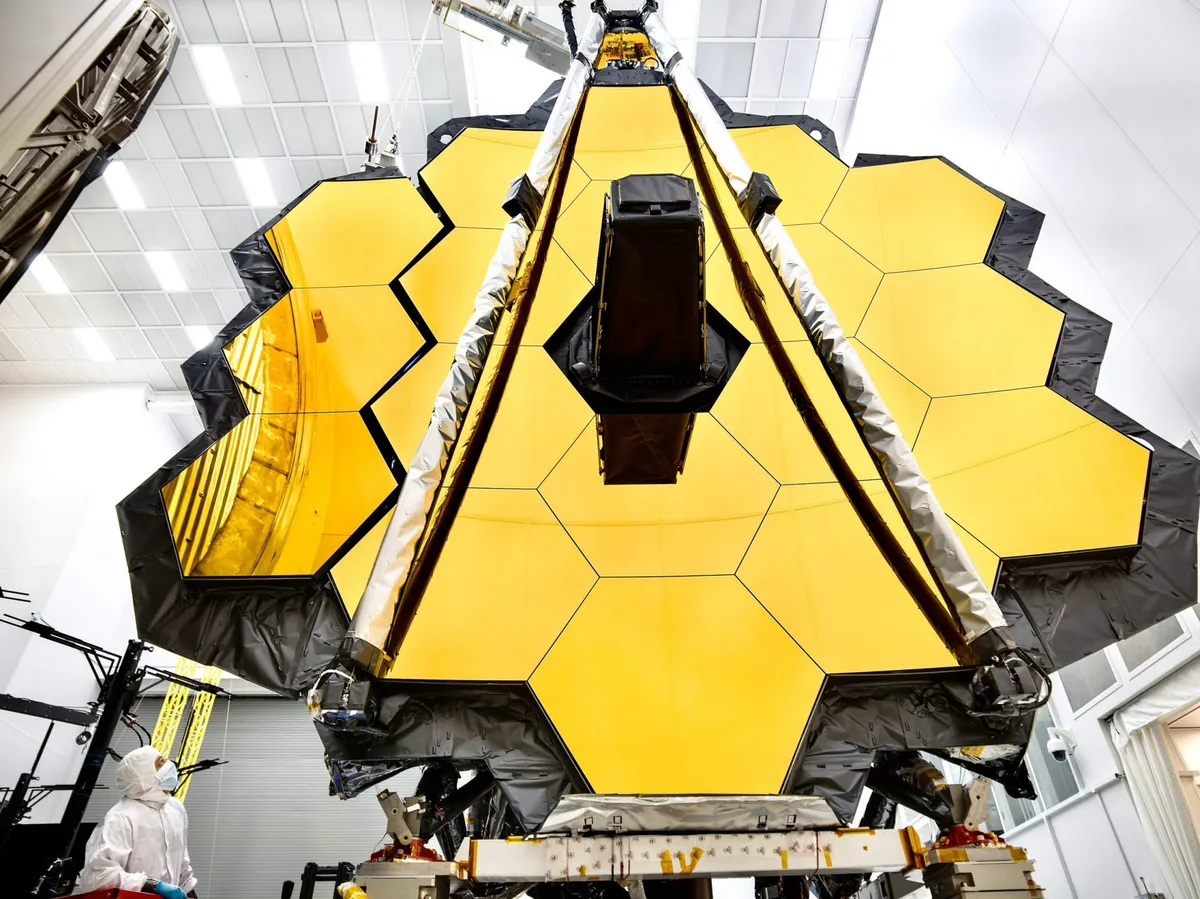
Surprisingly, as well as these astronaut-led benefits, the James Webb Space Telescope is also helping patients with eye problems on Earth.
The technology which was used to map, measure and compare the large mirrors used by the telescope has been repurposed to improve the precision of laser eye surgery.
The technique, which helped ensure the JWST’s mirrors were exactly the same, is now being used to map imperfections in human visual pathways and cornea curvature far more precisely.
The technology is already available to eye doctors in 47 countries, and has enabled over 18 million successful procedures worldwide.
The future
This is in no way an exhaustive list of the many ways human spaceflight has revolutionised our ability to survive longer and more healthily back here on Earth.
And it’s an ongoing process – just imagine how our plans to travel to Mars and beyond is going to help better understand our bodies’ processes and feed yet more technologies into healthcare. Live long and prosper!

