
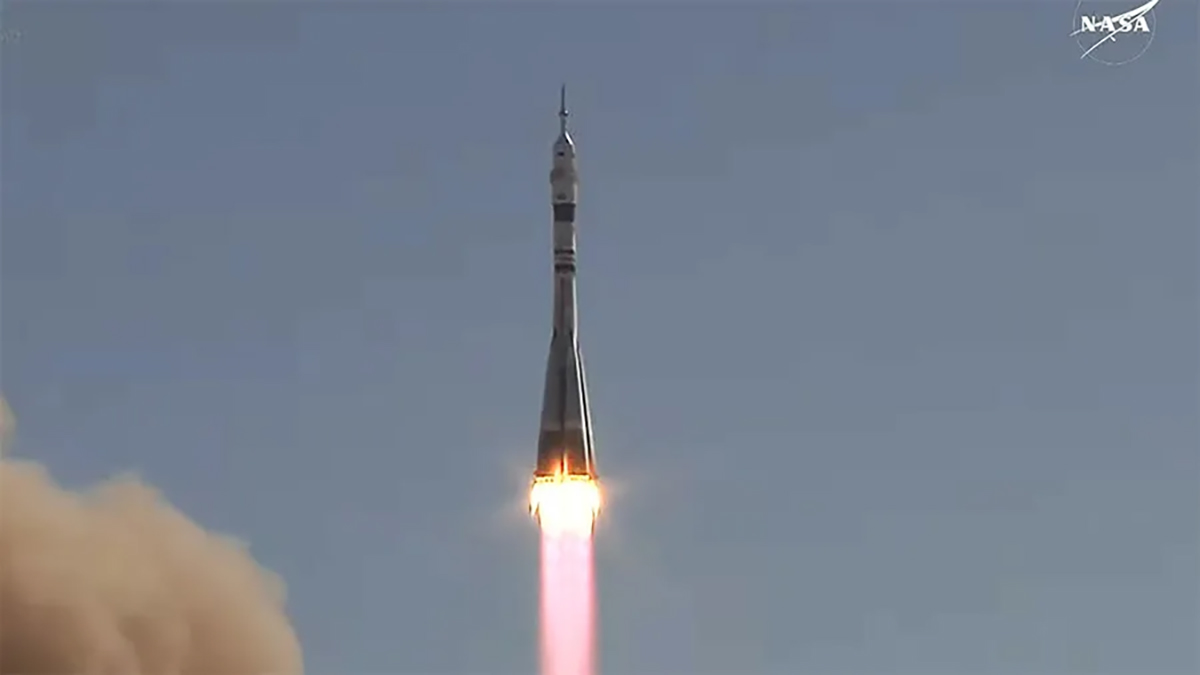
Exploring space has always been a risky endeavour – even the very first human spaceflight, by Yuri Gagarin in April 1961, almost ended in disaster when cables linking its spherical descent module to the ungainly instrument module did not separate as planned and briefly sent the spacecraft into a dangerous spin before finally giving way.
Some 18 people have died during space missions, all but three due to problems at launch or during atmospheric re-entry.
But there have also been daring survivals, as well as chance accidents that could have ended in disaster if things had gone slightly differently.
More spaceflight history
A hazardous first
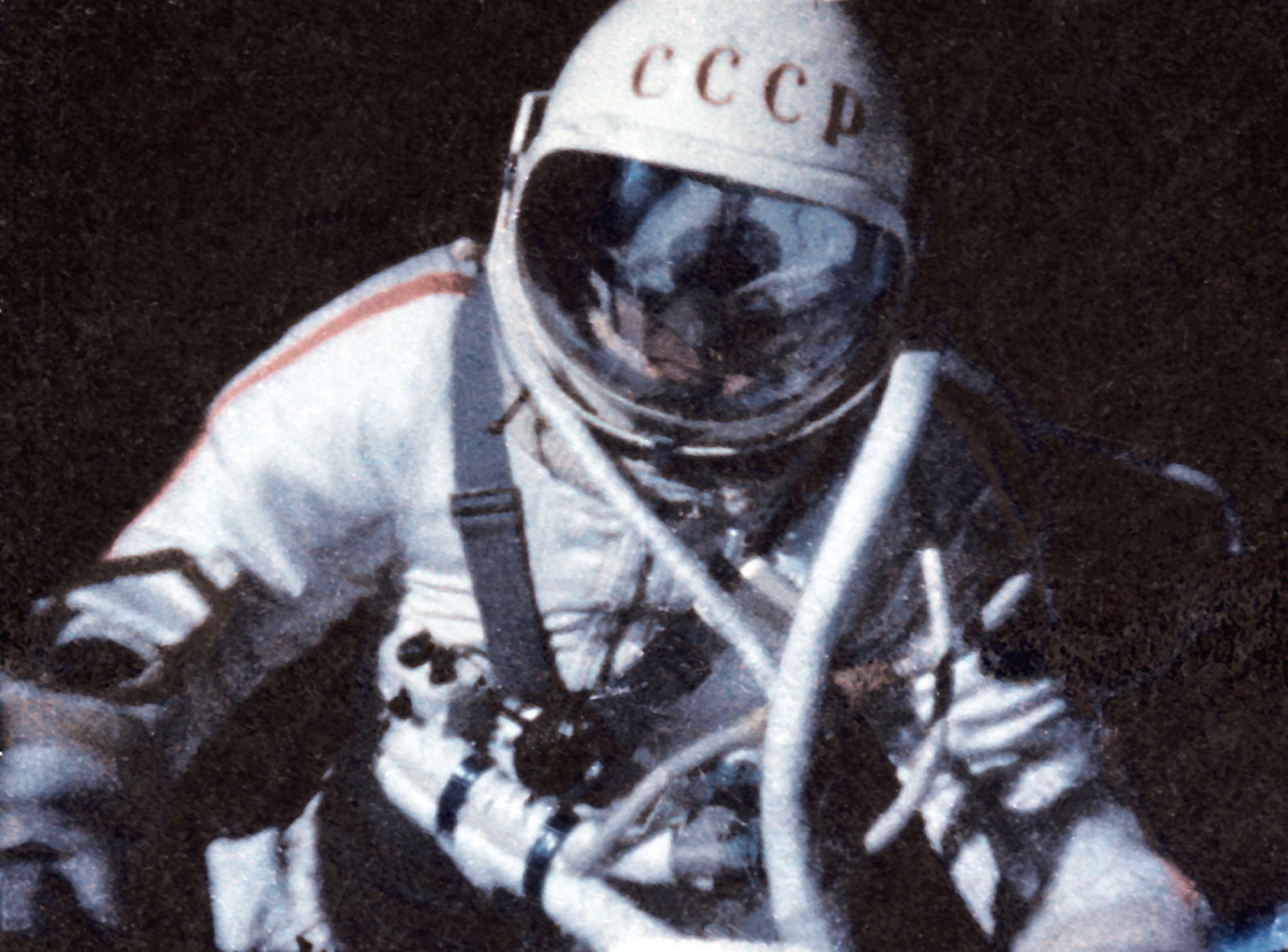
Soviet cosmonaut Alexei Leonov entered the history books when he became the first person to walk in space on 1965’s Voskhod 2 mission, but re-entering the spacecraft after 12 minutes floating above Earth involved unexpected dangers.
In the vacuum of space, Leonov’s Berkut spacesuit had inflated more than expected, and the resulting inflexibility left him struggling to close the outer hatch on his Voskhod spacecraft’s tube-like airlock.
Fortunately, a manual valve allowed him to vent air and lower the suit’s internal pressure, restoring his mobility at the risk of decompression sickness.
In reality, however, heatstroke was a far greater danger, with his body temperature spiking during the 20-minute struggle.
Leonov later revealed that he had been equipped with a suicide pill in case of being unable to return to safety. It was only through his quick thinking that he didn’t have to use it.
A dangerous descent
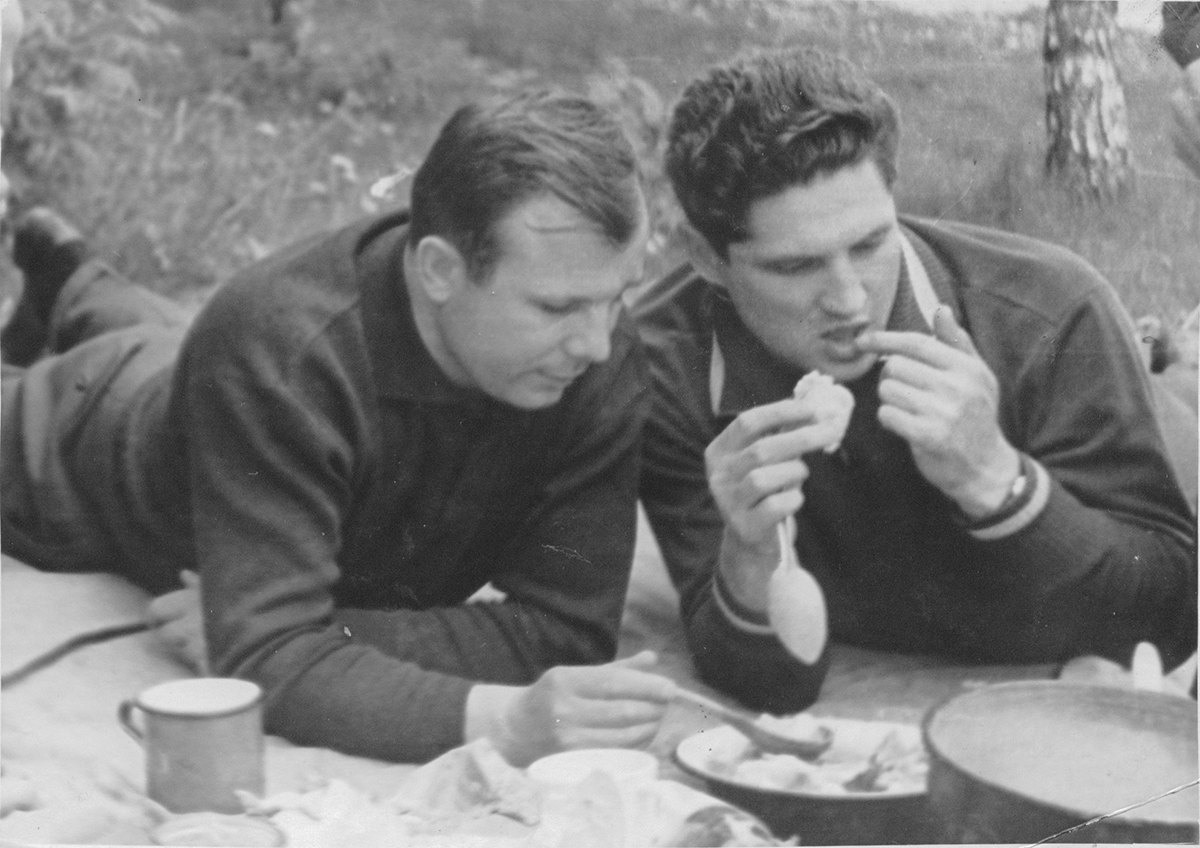
As Soyuz 5 re-entered the atmosphere at the end of its three-day mission in January 1969, its lone pilot Boris Volynov experienced a separation failure on his spacecraft, in a near-repeat of what happened to Yuri Gagarin in 1961.
As the craft’s bulky service module refused to detach from the aerodynamically shaped descent module, air resistance pushed the ungainly vessel into the wrong orientation, and the unshielded nose of the descent module was taking the brunt of the heat as it plunged through the thin upper atmosphere.
Seals around the hatch began to smoke, filling the cabin with dangerous fumes, and Volynov was pulled from his seat by the deceleration instead of being pressed back into it.
Disaster was only averted when the struts linking the two modules gave way, carrying the remains of the service module with them.
The liberated descent module rapidly swung into its proper orientation, with its heat-shield base leading the way through the atmosphere.
But even then Volynov’s ordeal wasn’t over.
His altered flight path brought him down in the wilderness of the Ural Mountains, hundreds of kilometres from the target landing site in Kazakhstan, while tangled parachutes and a failure of the capsule’s braking retro-rockets caused a landing that left the cosmonaut with several broken teeth.
Apollo 13 – The lifeboat around the Moon
The April 1970 flight of Apollo 13 is probably the best-known story of space survival against the odds.
The mission saw the US lunar spacecraft crippled by a Service Module explosion when already committed to a Moon-bound trajectory.
With no means of turning back, astronauts Jim Lovell, Jack Sweigert and Fred Haise endured an almost six-day mission that saw them slingshot around the Moon on a ‘free return’ route to Earth.
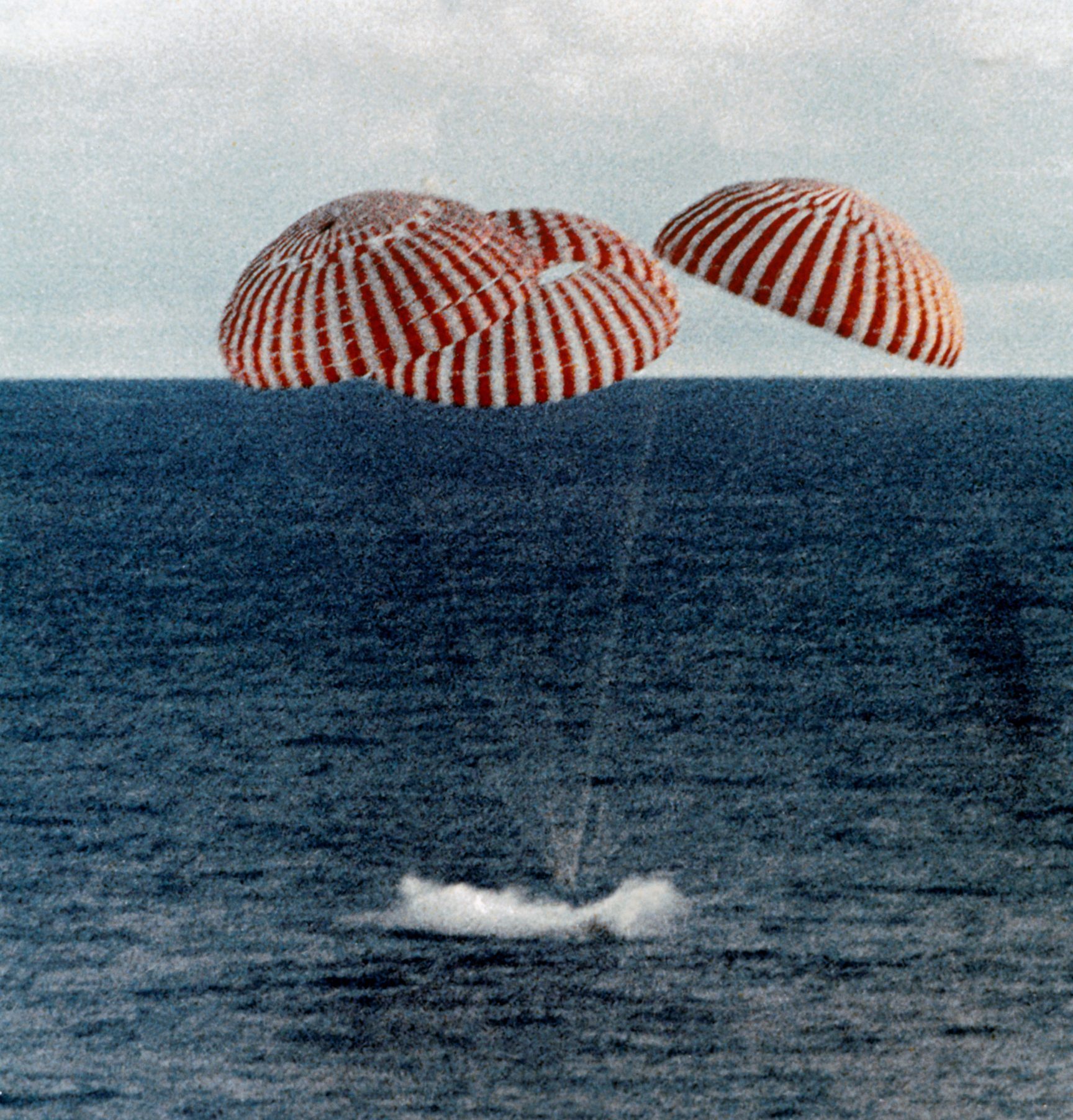
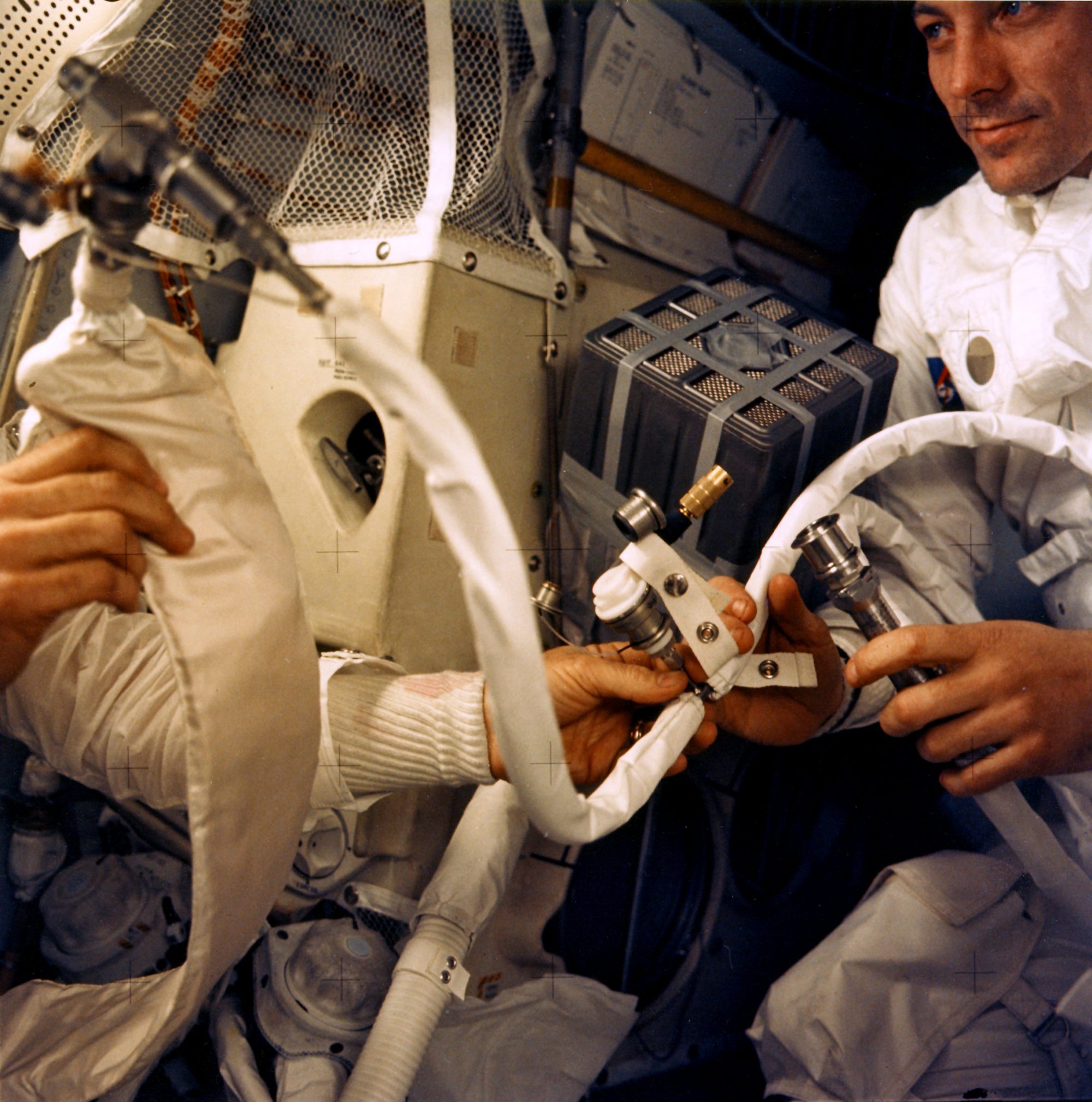
With reduced power in the main Command Module of their craft and a leaking air supply, the crew pressed the spider-like Lunar Module into service as a cramped lifeboat, enduring freezing temperatures to preserve power while building makeshift filters to prevent a dangerous build-up of carbon dioxide in the cabin.
Finally returning to the Command Module as they neared Earth, they then jettisoned the damaged Service Module and the Lunar Module, before re-entering Earth’s atmosphere at a speed of almost 40,000 km/h (24,854 mph) to splash down within sight of the recovery fleet and the relief of the world.
Plunging back to Earth
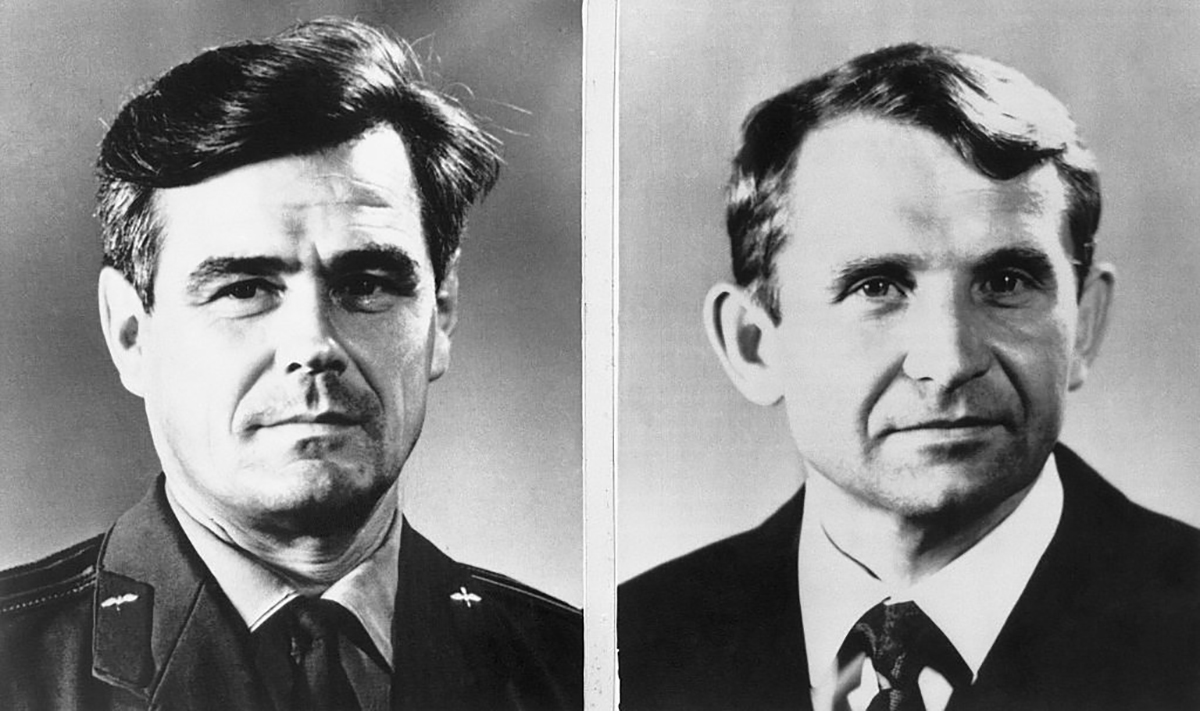
Cosmonauts Vasily Lazarev and Oleg Makarov experienced a short but traumatic hop into space in April 1975 when the upper stages of their Soyuz rocket failed to separate properly at an altitude of 145km (90 miles).
As the rocket’s third stage ignited with the stage beneath it still attached, it pushed the spacecraft onto a downward trajectory back towards Earth.
As the second stage finally broke away, automated systems triggered the abort routine, blasting the spacecraft free with a peak acceleration of more than 21 g – 6 g more than the maximum expected in an emergency abort scenario.
Fortunately, the descent parachutes and retro-rockets performed even beyond their planned limits to ensure a safe landing – a mere 21 minutes after launch.
The crew’s ordeal was not yet over, however – landing amid high terrain in Kazakhstan's Altai mountains, their capsule began to slide downhill and was only saved from a sheer drop when parachute cables became tangled in vegetation.
The landing site also proved to be so isolated that the cosmonauts were forced to endure a snowbound night before they could be safely airlifted out. The injured Lazarev never flew to space again.
A toxic leak
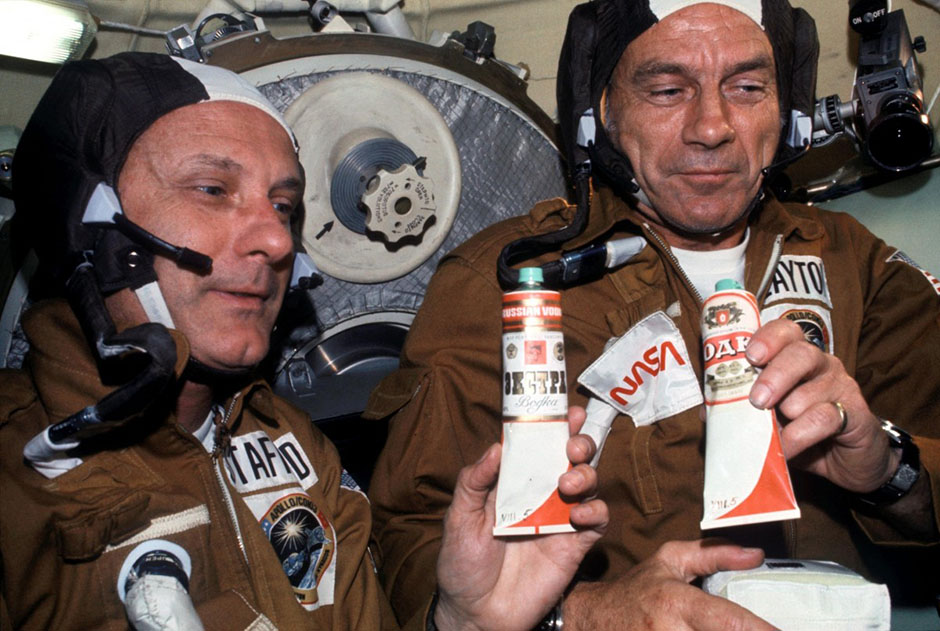
The July 1975 docking of Apollo and Soyuz spacecraft in Earth orbit was a public relations coup that brought an official end to the Space Race between the United States and the Soviet Union – but it almost ended in disaster.
When the US crew were preparing to return the Earth, the Apollo module’s Reaction Control System (RCS) thrusters weren’t properly shut down.
They leaked unused toxic propellant into the air around the spacecraft during re-entry, and fumes were drawn into the command module’s air intake vents, filling the cabin.
Astronaut Vance Brand briefly lost consciousness, but Commander Thomas Stafford quickly distributed emergency oxygen masks for himself, Brand and crewmate Deke Slayton.
Nevertheless, all three astronauts were hospitalised for two weeks after their return.
Explosive debris
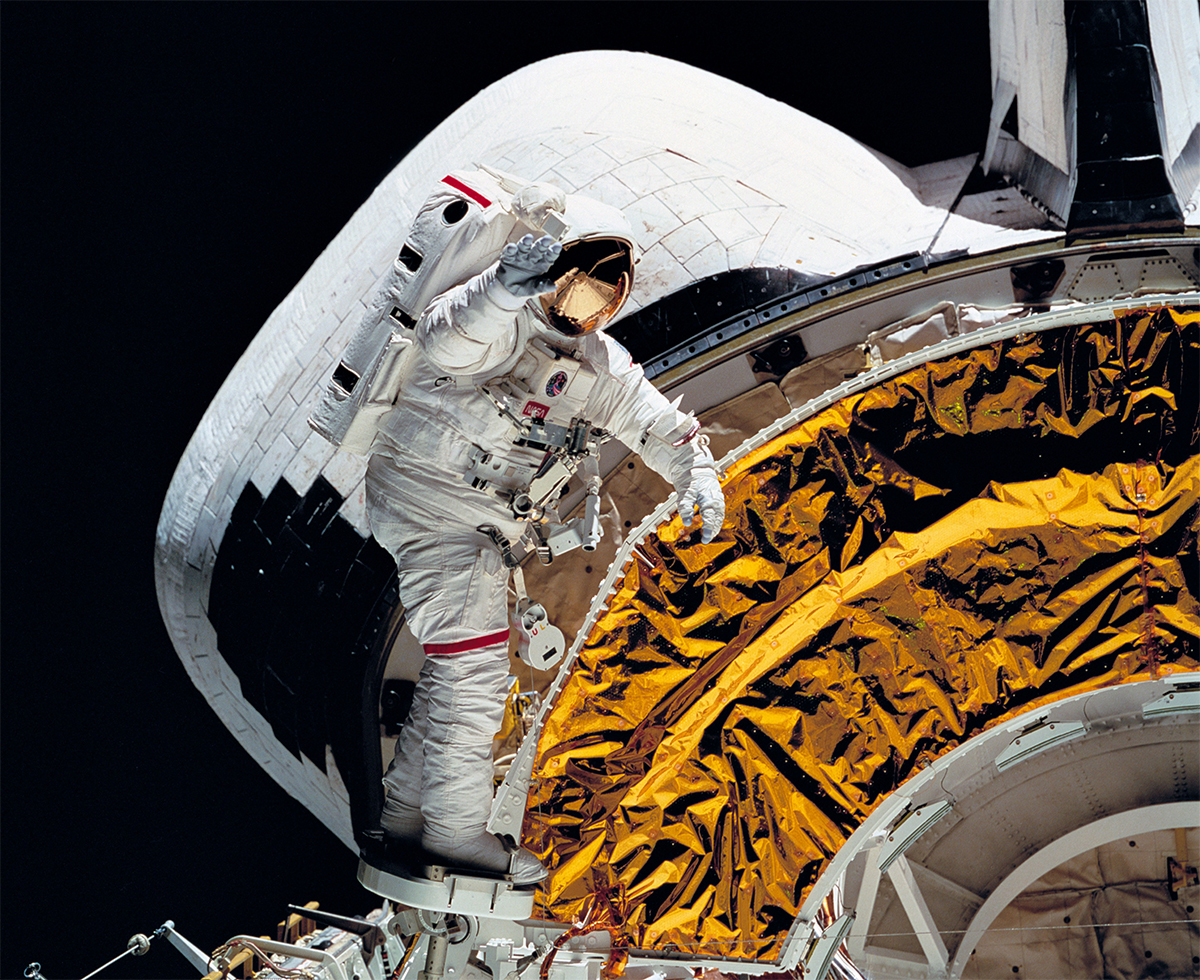
During almost three decades working in orbit, Space Shuttle orbiters picked up several minor craters from fast-moving micrometeoroid particles and orbiting space debris.
In September 1993 however, while on mission STS-51, the Shuttle took self-inflicted damage which, though not ultimately harmful, illustrates the vulnerabilities of such a large and complex vehicle.
The accident happened while the Advanced Communications Technology Satellite was being deployed from the Discovery orbiter’s cargo bay.
Held in place for launch within a special deployment cradle, a small pyrotechnic charge in an explosive cord had been designed to release the satellite.
When this was detonated, however, it triggered not only the main cord but its backup too.
The resulting explosion sent debris flying across the open Shuttle cargo bay, tearing through insulation and punching a small hole in the aft bulkhead of the main crew cabin, coming close to critical equipment.
Fire and collision
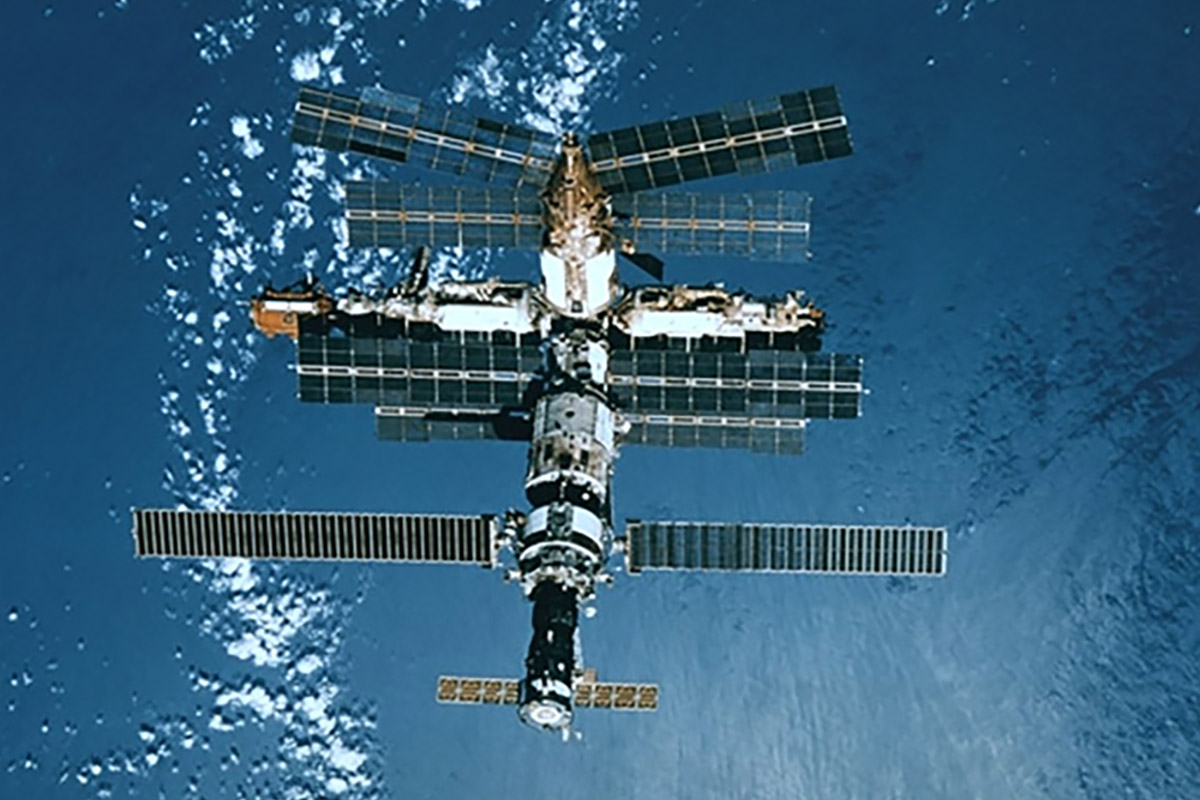
The Soviet space station Mir suffered several near-disasters during its 15 years in orbit, but the EO-23 mission of 1997 was particularly troubled.
In February, a backup fuel canister inside Mir’s Kvant-1 module caught fire, filling the station with smoke and burning with such intensity that the crew (two Russian cosmonauts and one American astronaut) briefly feared it might melt a hole through the module’s hull.
Then, on 24 June, miscalculations during docking with a Progress cargo ferry saw the uncrewed re-supply vehicle veer badly off course. It collided with the station’s Spektr module, damaging its solar array and puncturing the hull.
Air and power cables running from Spektr to the rest of the station had to be cut in order to close a hatch and seal it off to isolate the damaged section.
The rest of Mir was still habitable, but the accident left the station spinning, powerless and out of contact with Russian ground control.
Mir’s orbit was soon stabilised using the engines of the docked Soyuz spacecraft, but it was several months before the station could be restored to full power.
A troubled spacewalk
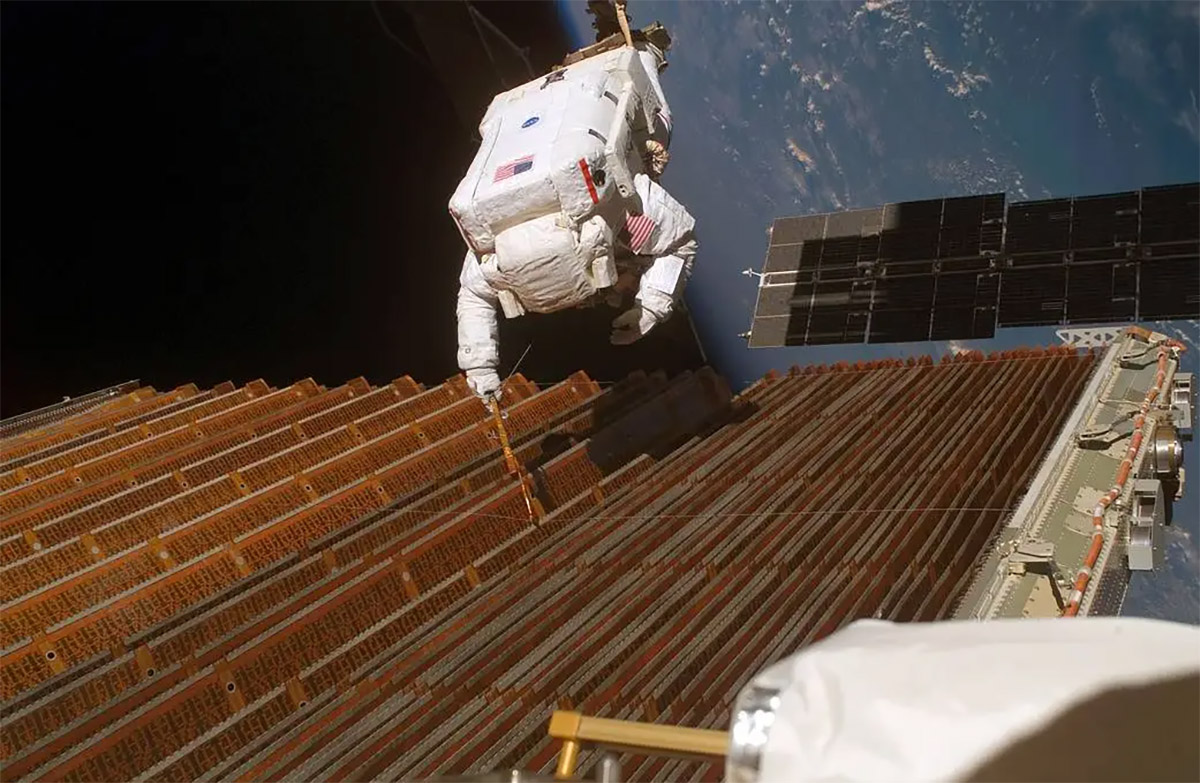
In recent decades, space travel has become increasingly routine – but there are still risks, especially when astronauts don their spacesuits for extra-vehicular activity (EVA).
Impacts from tiny particles of orbiting space debris are an ever-present risk, but hazardous materials can also cause problems.
For instance, in 2001, an early construction spacewalk for the International Space Station hit problems when coolant ammonia escaping from a faulty valve covered the suit and helmet of astronaut Robert Curbeam in thick frost.
Curbeam and his spacewalk colleague Thomas Jones were forced to delay their return until sunlight had evaporated the ice, while the crew aboard Space Shuttle Atlantis had to wear oxygen masks until it was clear that any hazardous materials brought through the airlock with the returning spacewalkers had been expelled.
Such stories of danger and survival in space show that we will never make travel to this implacable environment entirely safe, but the urge to explore has driven many to face the risks over some 65 years of human space exploration.
As more people travel into space on an increasingly wide variety of spacecraft and missions in the decades to come, there will undoubtedly be further stories of hazard, disaster and near-miraculous escape to tell.
